Cables & Accessories
The unglamorous parts that decide whether a charger lasts: the right NEMA 14-50 outlet, a rated extension cable, and a holster to keep the connector off the floor.
The charger gets the attention, but the accessories decide whether the whole setup is safe and lasts. The most important part of a plug-in install isn’t the charger at all — it’s the outlet. A continuous 40A EV load is far harder on a NEMA 14-50 receptacle than the oven it was designed for, and the bargain-bin outlets have a documented habit of overheating and melting under exactly this use.
So this section is about the unglamorous, high-leverage parts: the industrial-grade receptaclethat won’t cook itself, the extension cablethat adds reach safely when the charger cord won’t stretch to the port, and the holster that keeps the connector off the garage floor and out of the grit. None of it is expensive, and all of it pays for itself in a charger that keeps working.
Everything in Accessories
Best NEMA 14-50 Outlets for EV Charging
Why the $10 hardware-store outlet melts under EV load, and the industrial-grade receptacles that don't.
Our top pick
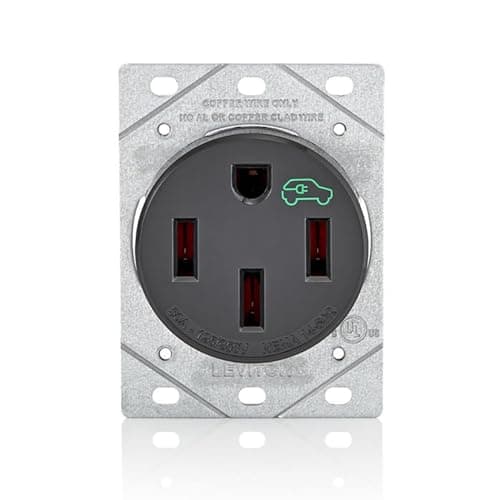
Leviton 1450R Heavy-Duty EV Receptacle (NEMA 14-50)
$42.78 · View on AmazonPrice as of October 18, 2026. #ad How we’re funded
Best EV Charging Cables & Extensions
How to add reach safely when the charger cord won't stretch to the port — and the amp rating that actually matters.
Our top pick
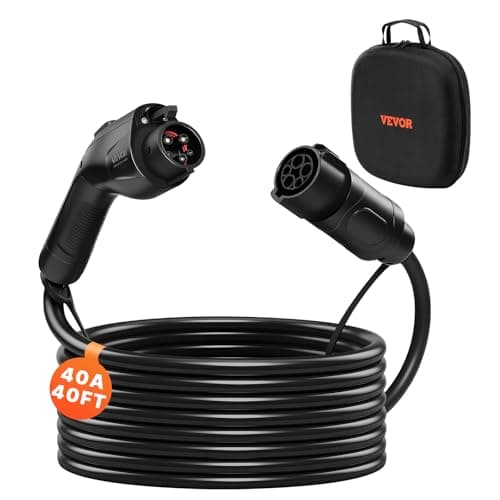
VEVOR J1772 Extension Cable (40A, 40 ft)
$160.90 · View on AmazonPrice as of October 18, 2026. #ad How we’re funded
Best EV Charger Holsters & Docks
The cheapest way to make a charger last: keep the J1772 connector off the garage floor and out of the grit.
Our top pick
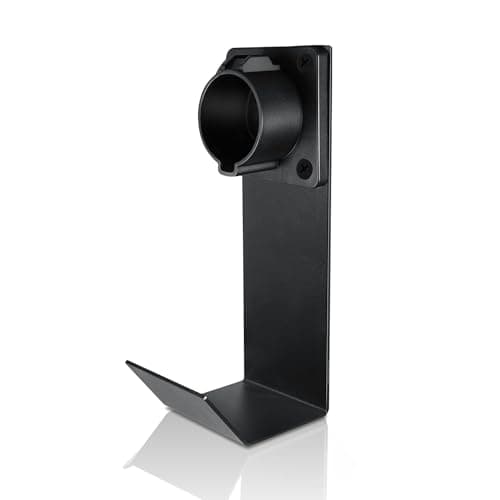
Lectron J1772 Holster / Wall Dock
$19.99 · View on AmazonPrice as of October 18, 2026. #ad How we’re funded
Best EV Charging Cable Organizers
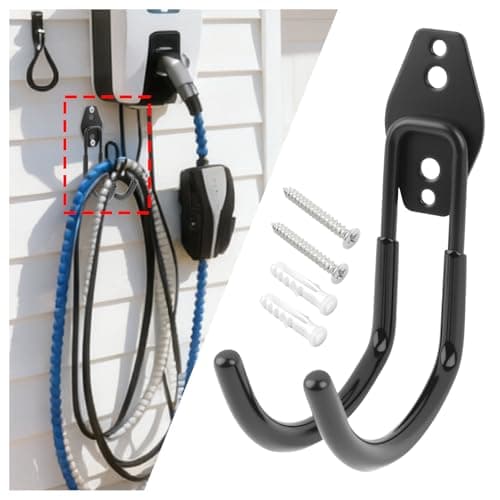
The cheapest upgrade in EV charging: get the cable off the floor. Hooks, docks and combo mounts compared on load rating and cable protection.
Our top pick
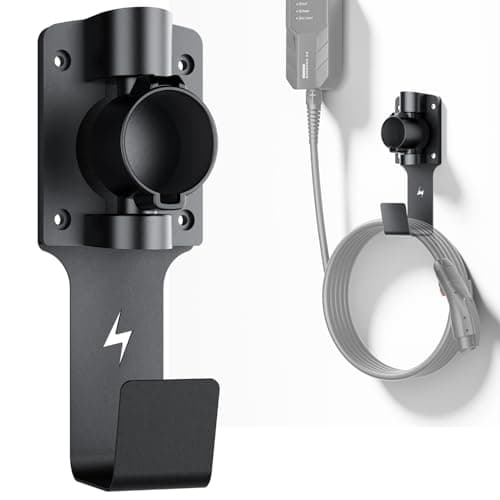
FOCSPROD Rotating Nozzle Dock + J-Hook
Best Gifts for EV Owners
What to buy someone who drives electric — organized by budget, chosen so you can pick without knowing their exact car.
Our top pick
VKQTS Heavy-Duty J-Hook Cable Holder
$6.29 · View on AmazonPrice as of October 18, 2026. #ad How we’re funded
Best NEMA Adapters for EV Chargers
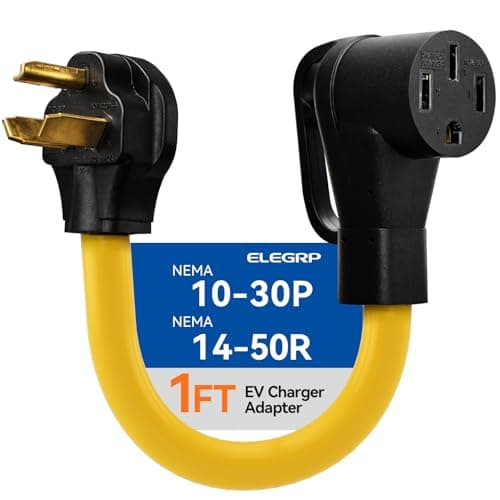
The short cords that let a 14-50 charger use the dryer or welder outlet you already have — and the amp limit you must set yourself, because the adapter won't.
Our top pick
ELEGRP NEMA 10-30P to 14-50R Adapter (1 ft)
Best EV Charger Covers & Outdoor Enclosures
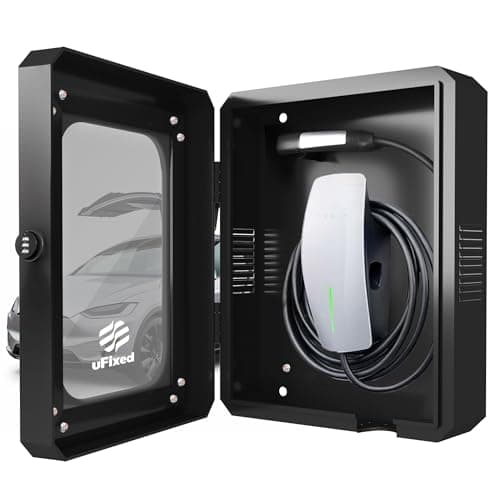
What actually threatens a charger on an exterior wall — UV, not rain — and the covers and lockable boxes that answer it at four very different prices.
Our top pick
Ufixed Outdoor Charger Enclosure with Lock
$129.99 · View on AmazonPrice as of October 18, 2026. #ad How we’re funded
Best EV Charger Pedestals & Mounting Stands
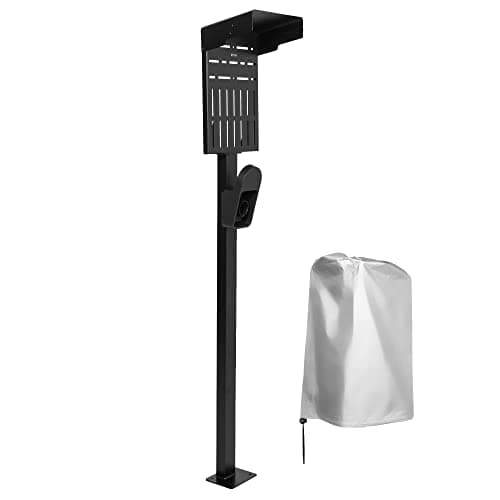
What to buy when there is no wall where the car parks — and the two numbers, standing height and weight capacity, that almost no listing in this category publishes.
Our top pick
VIVO Outdoor EV Charging Stand (STAND-EV01C)
$99.99 · View on AmazonPrice as of October 18, 2026. #ad How we’re funded
Best Tesla Charging Accessories
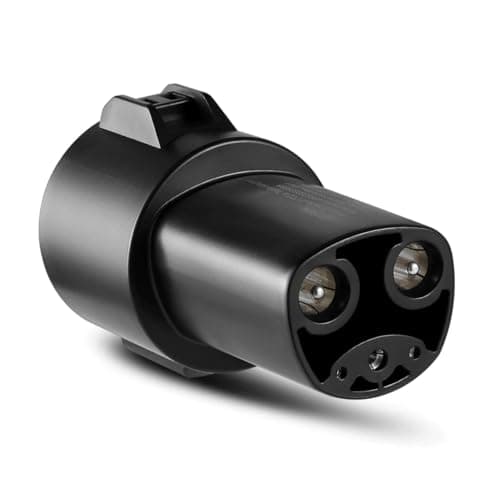
The small parts that make a NACS car easier to live with — the adapter that opens every J1772 station, a holster shaped for the connector, and somewhere to keep it all.
Our top pick
Lectron J1772 to Tesla Adapter
$39.99 · View on AmazonPrice as of October 18, 2026. #ad How we’re funded
The accessories that actually matter
If you’re plugging a charger into a NEMA 14-50 outlet, the single best few dollars you can spend is on an industrial-grade receptacle. Cheap residential 14-50 outlets are built for appliances that cycle on and off, like ovens — not for a car pulling 40A continuously for ten hours. Under that load the contacts in a bargain outlet can loosen, overheat and melt. A heavy-duty receptacle costs several times more and is worth every cent.
Extension cables: reach, done right
When the charger cord ends a foot short of the charge port, a proper J1772 extension cable is the safe fix — but the amp rating matters. A 40A charger needs a 40A-rated cable; undersizing it turns the extension into a resistance point that heats up. Buy the length you need and the amperage that matches your charger, and treat it as a considered purchase, not a grab-the-cheapest one.
Holsters and cable management
A $15-$20 holster keeps the connector head off the floor, out of standing water and away from the dirt that works its way into the pins. It’s the cheapest thing you can do to make a charger last, and it tidies the cable so it isn’t a trip hazard across the garage. Anchor the mount into a stud if you can.
What to skip
You don’t need most of the “EV accessories” that fill marketplace listings — decorative wraps, unrated splitters, novelty plugs. The three things above cover what genuinely affects safety and longevity; the rest is optional.
Frequently asked questions
Why can't I use a cheap NEMA 14-50 outlet for EV charging?
Cheap residential 14-50 outlets are designed for appliances that cycle on and off, like ranges — not for a continuous 40A EV load over many hours. Under sustained load the internal contacts can loosen and overheat, and melted outlets are a well-documented failure. An industrial-grade receptacle is built for continuous load and is the fix.
Is it safe to use an extension cable with an EV charger?
Yes, if it's a proper J1772 extension rated for your charger's amperage. The risk is undersizing: a 40A charger on a cable rated below 40A creates a resistance point that heats up. Buy a cable that matches your charger's amps and only the length you need — it's not a place to save money.
Do I really need a holster for the connector?
It's optional but cheap insurance. A dropped J1772 head picks up dirt and moisture in the pins, and a $15 holster keeps it off the floor and tidies the cable. For a permanently installed charger it's one of the best-value accessories you can add.
What outlet does a Level 2 home charger use?
Most plug-in Level 2 chargers use a NEMA 14-50 — a 240V, 50A outlet also used for RVs and electric ranges. On that plug the charger is capped at 40A; to run 48A or 50A you hardwire instead. Whichever you choose, an electrician must install the circuit to code.
Sources
- U.S. DOE Alternative Fuels Data Center — Charging Electric Vehicles at Home — DOE guidance on Level 1 vs Level 2 home charging, 120V/240V service and installation (accessed July 19, 2026)
- EPA ENERGY STAR — Electric Vehicle Chargers — ENERGY STAR on certified EV chargers, safety certification and standby energy use (accessed July 19, 2026)
- U.S. DOE Alternative Fuels Data Center — Electric Vehicle Charging Stations — DOE overview of charging levels, power output and connector types (J1772, CCS, NACS) (accessed July 19, 2026)