Home EV Chargers
Level 2 wall chargers compared on amperage, install type and outdoor rating — with the circuit-size math shown, so you buy the charger your panel can actually feed.
A Level 2 home charger is the single upgrade that makes owning an EV feel easy: a 240V circuit turns an overnight plug-in into a full battery every morning, versus the trickle you get from a standard wall outlet. The good news is that the hardware is largely a commodity now — most units from reputable brands will charge your car reliably for years. The decision is less about which box is “best” and more about matching the amperage to the circuit your panel can actually feed.
That’s the lens we compare on: maximum amperage (and the circuit it requires), how it installs— a NEMA 14-50 plug for flexibility or hardwired for the highest output — the outdoor ratingif it’s going on an exterior wall, and whether you actually want an app. We show the circuit math for each pick so you don’t buy a 48A charger your 100A panel can’t support, and we lead every roundup with a quick-pick table so the answer is on the first screen.
Everything in Home Chargers
Best Home EV Chargers (Level 2)
Five Level 2 home chargers ranked on amperage, install flexibility and build — with an honest note on how many amps you actually need.
Best Home EV Chargers for a Tesla
The Level 2 wall chargers that ship with a factory NACS plug — no adapter dangling off the handle — ranked on amperage, install type and outdoor rating.
Our top pick
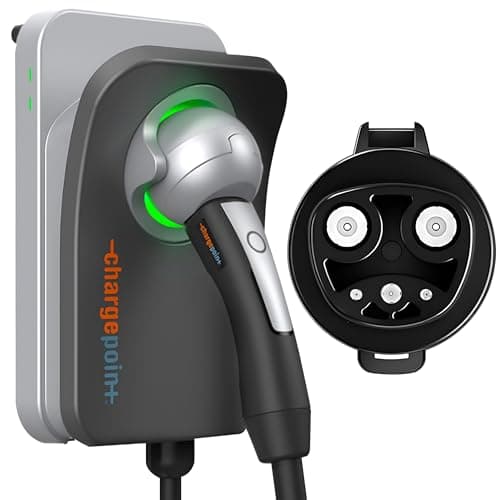
ChargePoint Home Flex NACS (Hardwired)
$516.71 · View on AmazonPrice as of October 18, 2026. #ad How we’re funded
Best Budget Home EV Chargers
The cheapest Level 2 chargers we would actually put on a wall — ranked on certification first, with a clear line between saving money and cutting corners.
Best Outdoor Home EV Chargers
The chargers genuinely rated to live on an exterior wall — NEMA and IP ratings decoded, plus the cold-weather cable problem nobody mentions until January.
Our top pick
Autel MaxiCharger Home
Best 48A and 50A Home EV Chargers
The fastest Level 2 chargers you can put in a house — and the three-part test for whether your panel, your car and your driving actually justify one.
Best Smart Home EV Chargers
The Wi-Fi chargers whose apps do something worth having — scheduling to off-peak rates, load management, energy data — and the honest test for whether you need one at all.
Our top pick
ChargePoint Home Flex (NEMA 14-50 plug)
Best 40A Home EV Chargers
The amperage almost everyone should actually buy: a full overnight charge, a 50A circuit most panels can spare, and no hardwiring bill.
Our top pick
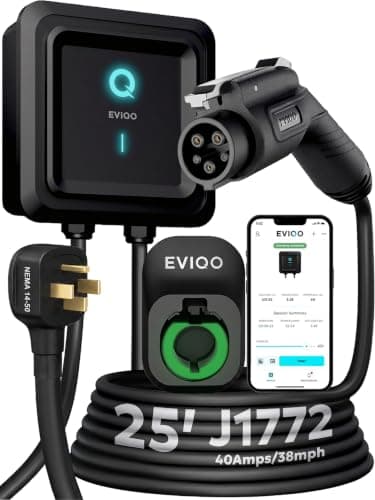
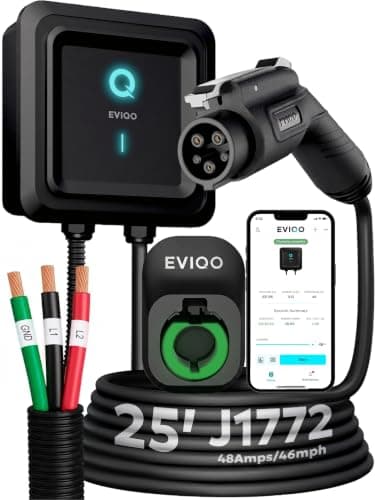
EVIQO Level 2 J1772 Charger (40A, Plug-in)
Best 32A Home EV Chargers
For a panel that can spare a 40A circuit and no more: hardwired and plug-in 32A chargers, the GFCI rule that decides between them, and which carry a checkable ENERGY STAR record.
Our top pick
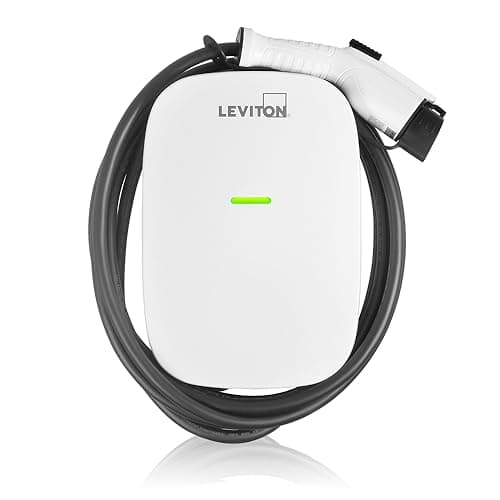
Leviton EV320 32A (hardwired)
$649.00 · View on AmazonPrice as of October 18, 2026. #ad How we’re funded
40 Amp vs 48 Amp EV Charger
Eight amps apart, and the gap shows up in your electrical panel rather than in your morning — matched pairs of the same charger at both amperages, and the three cases where 48A earns the money.
Our top pick
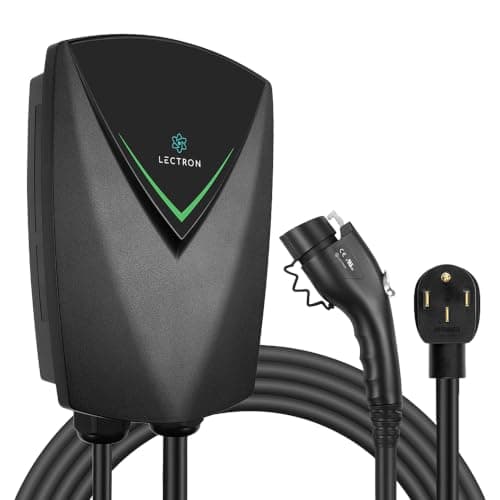
Lectron Nexus Level 2 (40A, plug-in)
$449.99 · View on AmazonPrice as of October 18, 2026. #ad How we’re funded
Best EV Chargers for Renters and Apartments
Charging without owning the wall — what you can install, unplug and take with you, and how to get real range from the outlets a rental actually has.
Our top pick
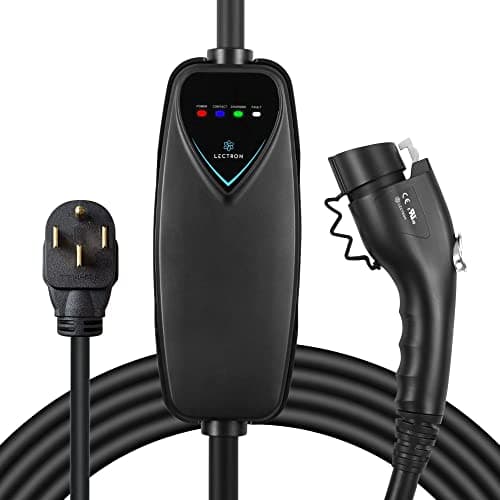
Lectron 40A Portable Level 1/2 Charger
$269.99 · View on AmazonPrice as of October 18, 2026. #ad How we’re funded
EVIQO Level 2 EV Charger Review
A wall-mounted 40A charger on a plug, from a young brand at a serious price — what the listing publishes, what it doesn't, and who should buy the 48A sibling instead.
Our top pick
EVIQO Level 2 J1772 Charger (40A, Plug-in)
ELEGRP Level 2 40A Review
The cheapest ETL-certified 40A charger with a 25 ft cable we can find — where the money was saved, and the one specification it does not compromise.
Our top pick
ELEGRP Level 2 EV Charger (40A, NEMA 14-50)
$209.99 · View on AmazonPrice as of October 18, 2026. #ad How we’re funded
Autel MaxiCharger vs Wallbox Pulsar Plus
Two premium smart chargers with opposite design philosophies — maximum output and enclosure versus the smallest box on the wall.
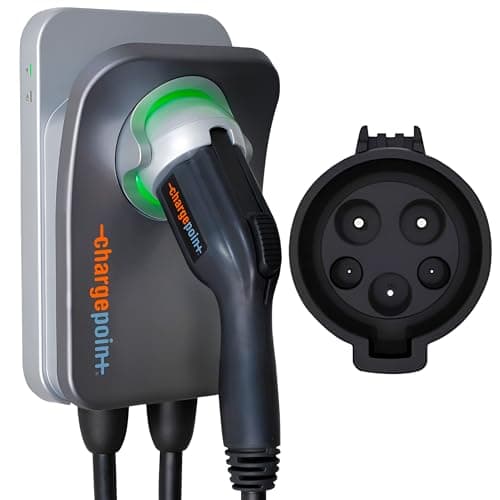
ChargePoint Home Flex Review
The plug-in 40A version of ChargePoint's home charger — what the app and the name actually buy you, what happened to the 16-50A dial, and who should look at a cheaper 40A box instead.
Our top pick
ChargePoint Home Flex (NEMA 14-50 plug)
Grizzl-E Classic Review
The no-app 40A value pick, and why a rugged fixed-amperage charger is the right call for most single-EV homes — plus where to buy it now Amazon has stopped listing it.
Our top pick
Grizzl-E Classic Connect 40A (J1772)
$349.99 · View on AmazonPrice as of October 18, 2026. #ad How we’re funded
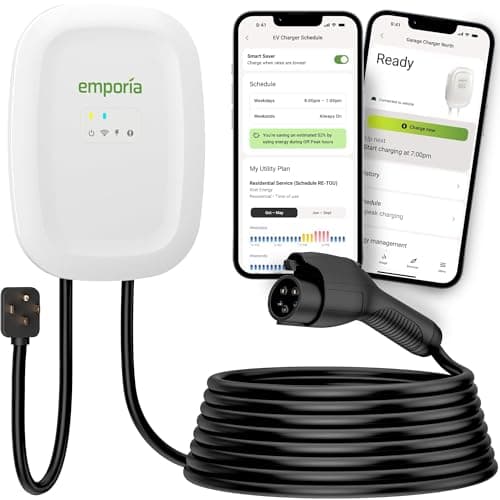
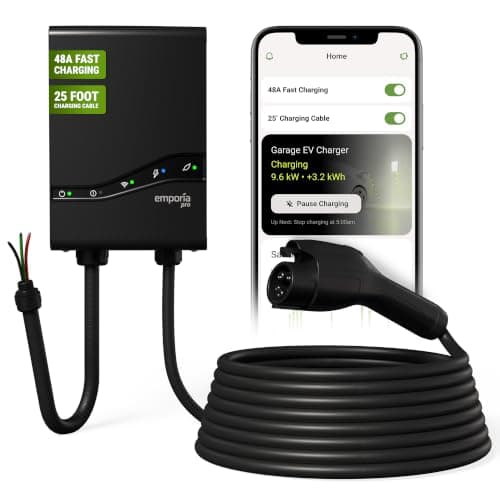
Emporia Level 2 Review
The 48A charger that ships on a plug and converts to hardwired later — why that one property makes it the smartest buy in the mid-range.
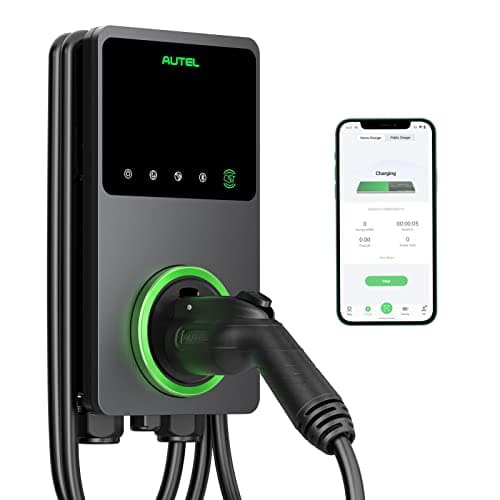
Autel MaxiCharger Home Review
50A output, a NEMA 4 enclosure and a 25 ft cable — the case for Autel's home charger, and the panel headroom it quietly assumes you have.
Our top pick
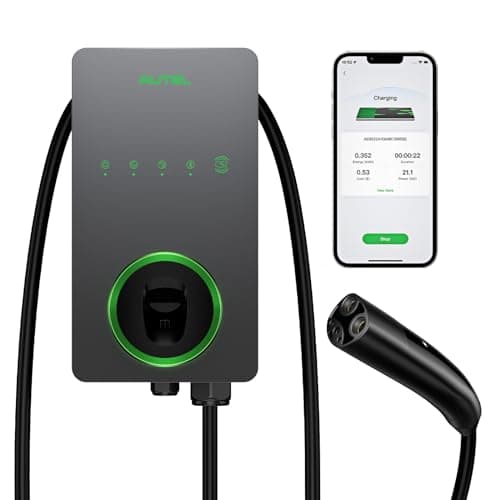
Autel MaxiCharger Home
Wallbox Pulsar Plus Review
The smallest 48A charger you can buy — genuinely compact on the wall, with an app-led design that suits some owners and irritates others.
Our top pick
Wallbox Pulsar Plus
Tesla Wall Connector vs ChargePoint Home Flex
Connector, amperage, install and cross-brand compatibility, side by side — which home charger wins for a Tesla, and which for everyone else.
Emporia vs ChargePoint Home Flex
A 48A charger that converts from plug-in to hardwired against the 40A plug-in Home Flex — amperage, enclosure rating, install path and app maturity, side by side.
Best Home EV Chargers for a Hyundai Ioniq 5
The 800V architecture that makes an Ioniq 5 famous is irrelevant in your garage — the number that actually decides which charger to buy, and where to find it.
Best Home EV Chargers for a Chevy Bolt
The car most likely to be sold a charger it cannot use — the onboard-charger ceiling, what ignoring it costs, and the four units worth buying.
Our top pick
ELEGRP Level 2 EV Charger (40A, NEMA 14-50)
$209.99 · View on AmazonPrice as of October 18, 2026. #ad How we’re funded
Best Home EV Chargers for a Rivian R1T or R1S
A big battery is the one case where paying for amperage genuinely pays back — the arithmetic that proves it, and the chargers that can deliver.
Best Home EV Chargers for a Ford Mach-E or F-150 Lightning
Check the garage before the shopping cart — Ford ships charging hardware with some vehicles, and it changes what you should buy.
Best Home EV Chargers for a Nissan Leaf
Nissan publishes the ceiling that decides this purchase — 6.6 kW on the outgoing car, 7.2 kW on the 2026 one — and the 2026 Leaf's NACS port is not the port that charges it at home.
Best EV Chargers for Two Cars
Four ways to charge two EVs at one house, ranked by what they cost — starting with the one that needs no second charger at all.
Our top pick
Wallbox Pulsar Plus
Tesla Wall Connector Review
Tesla's own 48A wall station — the native NACS handle, the hardwired install it insists on, and the households that should buy something cheaper.
Our top pick
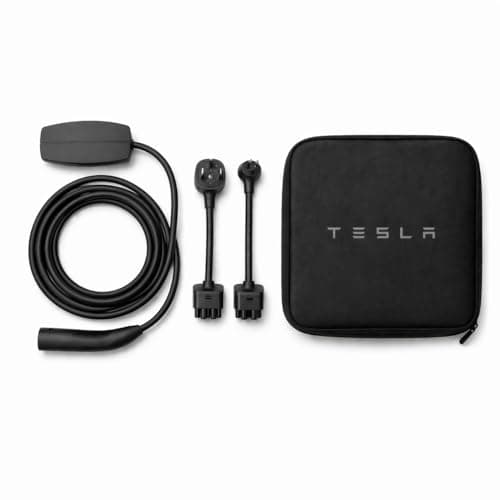
Tesla Wall Connector
$883.99 · View on AmazonPrice as of October 18, 2026. #ad How we’re funded
Tesla Universal Wall Connector Review
The home charger serving both connector standards from one handle — what it solves, what it costs you in install flexibility, and who should buy something else.
Our top pick
Tesla Wall Connector
$883.99 · View on AmazonPrice as of October 18, 2026. #ad How we’re funded
Tesla Wall Connector vs Universal Wall Connector
The same 48A charger twice, except one docks Tesla's own J1772 adapter on its side — and Tesla's manual for the other one says no adapters. Who should pay the difference.
Our top pick
Tesla Universal Wall Connector
$958.71 · View on AmazonPrice as of October 18, 2026. #ad How we’re funded
Tesla Wall Connector vs Mobile Connector
A 48A box bolted to the wall against a 32A cable in the trunk — what each needs on the wall, and the NEMA adapter question that decides most of it.
Our top pick
Tesla Mobile Connector Bundle (32A, NACS)
$400.00 · View on AmazonPrice as of October 18, 2026. #ad How we’re funded
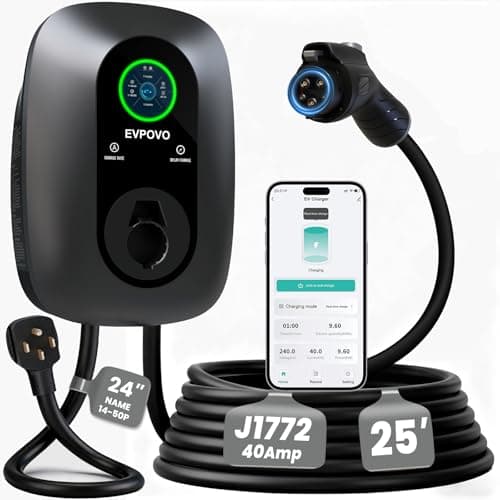
EVPOVO Level 2 40A Review
A wall-mounted 40A charger with a published 25 ft cable at portable-charger money — what the listing states, and what it conspicuously does not.
Our top pick
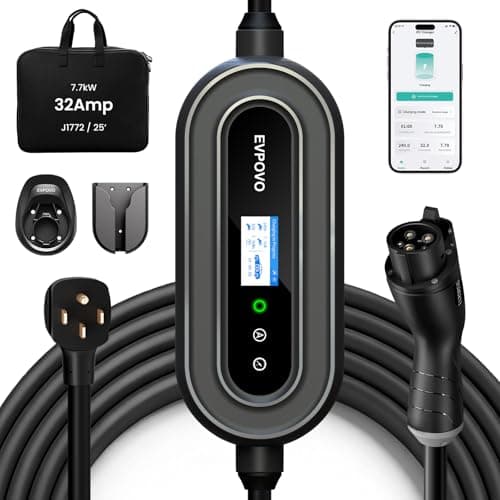
EVPOVO Level 2 Wall Charger (40A, 25 ft)
$243.99 · View on AmazonPrice as of October 18, 2026. #ad How we’re funded
Lectron Nexus Level 2 Review
A no-app wall charger with UL 2594 testing, an IP66 housing and 23 ft of cable — checked against EPA's own ENERGY STAR database, not just the listing.
Our top pick
Lectron Nexus Level 2 (40A, plug-in)
$449.99 · View on AmazonPrice as of October 18, 2026. #ad How we’re funded
Grizzl-E Classic Connect 40A Review
The Classic with a radio in it — 16-40A adjustment, Wi-Fi and a NACS option, and the one certification claim we could not verify in EPA's own database.
Our top pick
Grizzl-E Classic Connect 40A (J1772)
$349.99 · View on AmazonPrice as of October 18, 2026. #ad How we’re funded
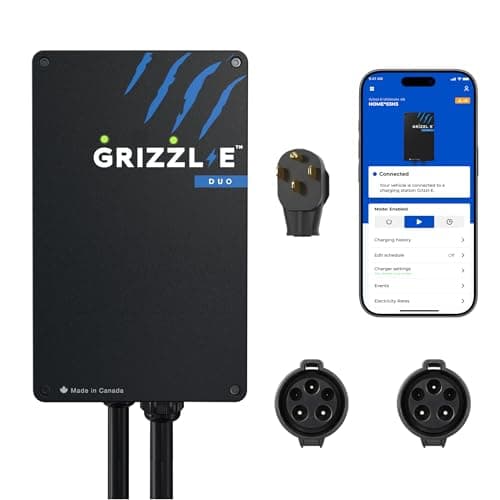
Grizzl-E Duo Connect 40A Review
Two 25 ft cables on one plug-in circuit — the two-EV charger that skips the second circuit, and the 20A-per-car figure that decides whether it suits you.
Our top pick
Grizzl-E Duo Connect 40A (two J1772)
$899.99 · View on AmazonPrice as of October 18, 2026. #ad How we’re funded
Emporia Pro Review
The same 48A as the cheaper Emporia Classic — what the premium actually buys is load management, and a panel monitor to run it. Who that is worth it for.
Our top pick
Emporia Pro (48A, hardwired, J1772)
$599.00 · View on AmazonPrice as of October 18, 2026. #ad How we’re funded
Tesla Wall Connector vs Grizzl-E Classic
A connected wall station against a deliberately dumb cast-aluminum box — the honest case for each, and the install cost that usually settles it.
Tesla Wall Connector vs Emporia Level 2
Two 48A-class chargers at very different prices — and one of them lets you defer the expensive half of the decision until the electrician has been.
Tesla Wall Connector vs a NEMA 14-50 Outlet
A hardwired wall station against an outlet and a cord you may already own — what each really costs, what each really delivers, and the wrong reason people pick one.
Our top pick
Tesla Wall Connector
$883.99 · View on AmazonPrice as of October 18, 2026. #ad How we’re funded
Emporia vs Grizzl-E
48A hardwired with panel-aware load management against a 40A plug-in metal box that adjusts to whatever circuit you have — and the availability problem that decides it for NACS cars.
Our top pick
Grizzl-E Classic Connect 40A (J1772)
$349.99 · View on AmazonPrice as of October 18, 2026. #ad How we’re funded
Best EV Chargers for the Kia EV6
Kia publishes a 10.9 kW onboard charger and a NACS inlet on the current car — two facts that rule out most of the chargers people buy for it.
Our top pick
ChargePoint Home Flex NACS (Hardwired)
$516.71 · View on AmazonPrice as of October 18, 2026. #ad How we’re funded
Best Home EV Chargers for the Honda Prologue
Honda publishes 34.1 miles of range per hour on 240 volts and no onboard-charger rating at all — so the arithmetic, not the marketing, picks the amperage.
Our top pick
Grizzl-E Classic Connect 40A (J1772)
$349.99 · View on AmazonPrice as of October 18, 2026. #ad How we’re funded
Best Home EV Chargers for the Volkswagen ID.4
Volkswagen publishes up to 11 kW of AC charging, which is about 46 amps — just above what a 40A charger can give and exactly inside what a 48A one can.
Our top pick
EVIQO Level 2 J1772 Charger (48A, Hardwired)
Best EV Chargers With a Long Cable
25 feet is the practical ceiling on a home charger, and four of these five hit it — with the reason nobody sells 40 ft, and how to measure the run properly.
Our top pick
Grizzl-E Classic Connect 40A (J1772)
$349.99 · View on AmazonPrice as of October 18, 2026. #ad How we’re funded
Best EV Chargers for a 100-Amp Panel
A 100-amp service does not mean you cannot charge at home — it means buying a charger that manages the panel, or one that asks less of it.
Our top pick
Emporia Pro (48A, hardwired, J1772)
$599.00 · View on AmazonPrice as of October 18, 2026. #ad How we’re funded
Autel vs Emporia
Two hardwired chargers at almost the same price, both NEMA 4, both 25 ft. One gives you 50 amps; the other lets you install on a panel that cannot spare them.
Our top pick
Autel MaxiCharger Home
Best Home EV Chargers for a BMW
BMW's own home equipment tops out at 9.6 kW, which is 40 amps — so that is the number to buy for an i4, an iX or an i5, and the reason 48 amps is usually wasted.
Our top pick
Grizzl-E Classic Connect 40A (J1772)
$349.99 · View on AmazonPrice as of October 18, 2026. #ad How we’re funded
ENERGY STAR Certified EV Chargers
Five chargers we found in EPA's own certified-EVSE database by model number, with the records' cord lengths and qualification dates — and the expired federal credit explained.
Our top pick
Lectron Nexus Level 2 (40A, plug-in)
$449.99 · View on AmazonPrice as of October 18, 2026. #ad How we’re funded
Best EV Chargers Without Wi-Fi
Five Level 2 chargers with no radio, no account and no app — because the scheduling you actually need is already in the car.
Our top pick
Lectron Nexus Level 2 (40A, plug-in)
$449.99 · View on AmazonPrice as of October 18, 2026. #ad How we’re funded
Best EV Chargers for a Plug-In Hybrid
A small battery and a modest onboard charger mean the right purchase is a 16 to 32-amp unit — and sometimes no installation at all.
Our top pick
EVPOVO Level 2 32A (NEMA 14-50)
Wallbox Pulsar Plus vs Tesla Wall Connector
Both are 48-amp hardwired chargers on a 60-amp circuit, so the connector decides it — and Tesla's own manual is unusually blunt about adapters.
Our top pick
Wallbox Pulsar Plus
Best EV Chargers for Cold Weather
Cold slows the car, not the charger — so the only thing to shop for is a published operating temperature range, and roughly half the category publishes none.
Our top pick
Grizzl-E Classic Connect 40A (J1772)
$349.99 · View on AmazonPrice as of October 18, 2026. #ad How we’re funded
Autel MaxiCharger vs ChargePoint Home Flex
Autel publishes more amps, a tougher shell and a wider temperature range. ChargePoint publishes a circuit most houses already have — and that is usually the one that wins.
Our top pick
Autel MaxiCharger Home
Best Home EV Chargers for a Toyota bZ
Toyota publishes an 11-kW onboard charger and puts a NACS port on the car, so the right buy is a native-NACS 48-amp charger — and the cable in the trunk is not it.
Our top pick
ChargePoint Home Flex NACS (Hardwired)
$516.71 · View on AmazonPrice as of October 18, 2026. #ad How we’re funded
Best Home EV Chargers for a Cadillac LYRIQ
Cadillac lists two AC onboard modules by trim, 11.5 kW and 19.2 kW. One of them is more AC power than any home charger sold in the US can give you — here is what to buy instead.
Our top pick
Autel MaxiCharger Home NACS (50A)
$569.00 · View on AmazonPrice as of October 18, 2026. #ad How we’re funded
Grizzl-E vs ChargePoint Home Flex
A cast-metal Canadian box with a published temperature range against the best-documented charger in the category. Same 40 amps, same plug — and one of them publishes almost nothing.
Our top pick
Grizzl-E Classic Connect 40A (J1772)
$349.99 · View on AmazonPrice as of October 18, 2026. #ad How we’re funded
Emporia Pro vs Wallbox Pulsar Plus
Two 48-amp hardwired chargers on the same 60-amp circuit. The split is load management against physical size, and only one of them publishes an outdoor rating.
Our top pick
Emporia Pro (48A, hardwired, J1772)
$599.00 · View on AmazonPrice as of October 18, 2026. #ad How we’re funded
Level 2 EV Charger Comparison Chart
Every Level 2 charger we cover in one sortable-by-eye table: amps, kW, cord length, install type, enclosure rating and warranty, as each manufacturer publishes them.
Our top pick
Grizzl-E Classic Connect 40A (J1772)
$349.99 · View on AmazonPrice as of October 18, 2026. #ad How we’re funded
Leviton EV320 Review
A deliberately dumb 32-amp hardwired charger from a 120-year-old wiring-devices company, with the longest published standards list here and the shortest warranty.
Our top pick
Leviton EV320 32A (hardwired)
$649.00 · View on AmazonPrice as of October 18, 2026. #ad How we’re funded
How to choose a home EV charger
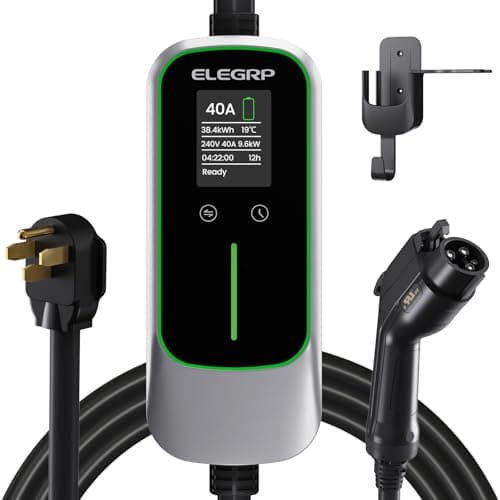
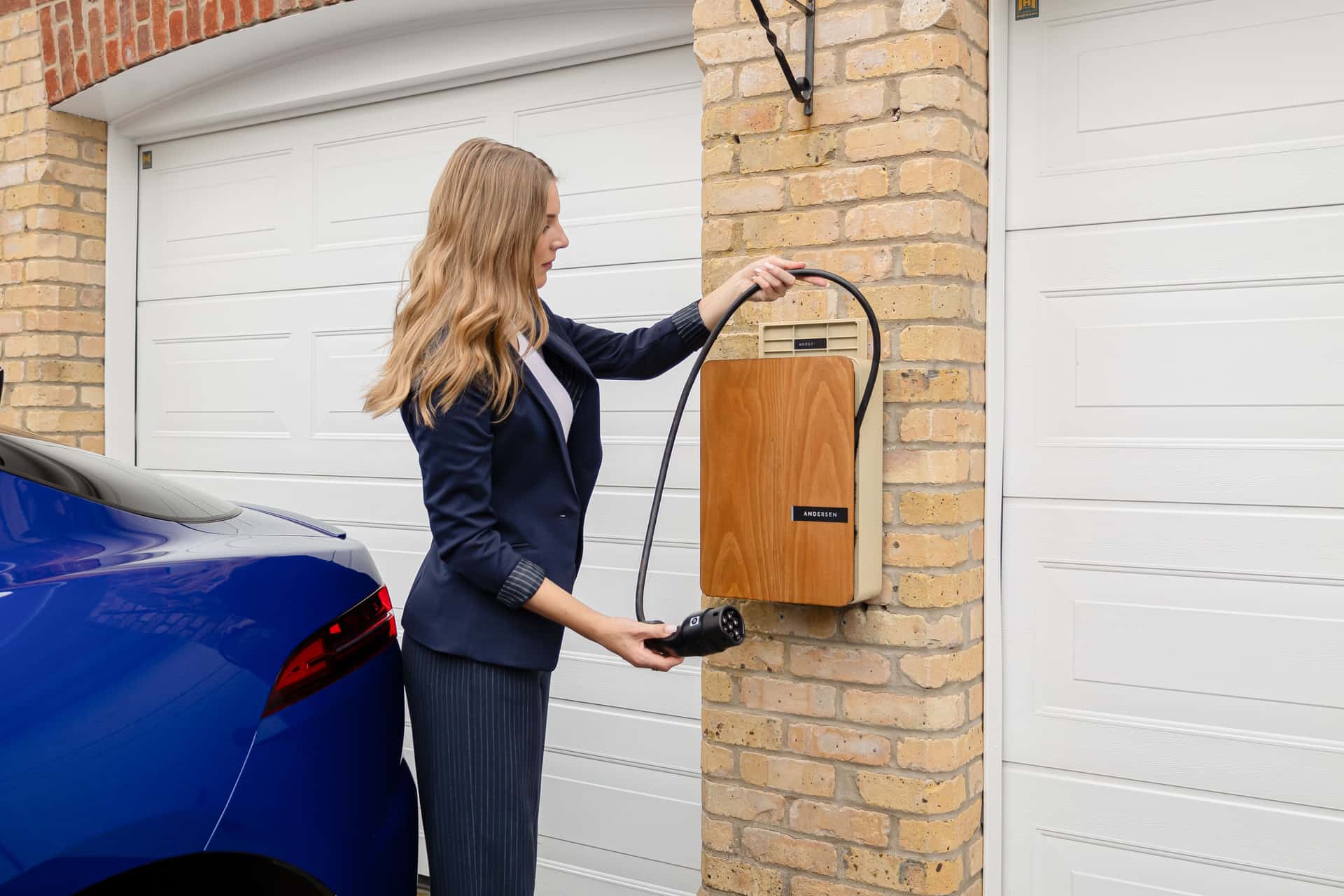
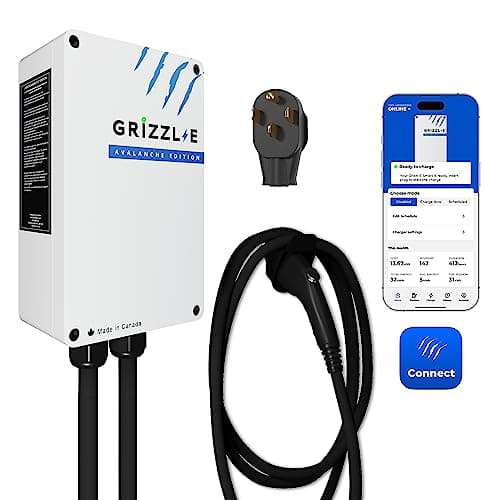
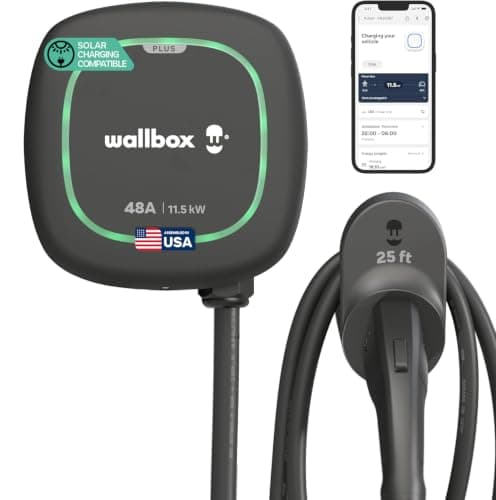
Start from your panel, not the product. A charger draws its rated amperage continuouslyfor hours, so electrical code requires the circuit to be sized about 25% above the charger’s draw — the 80% continuous-load rule. That means a 40A charger needs a 50A breaker, and a 48A charger needs a 60A breaker. Before you fall in love with a 50A unit, find out what spare capacity your service panel has; an electrician can tell you in a few minutes, and it may steer you to a 40A charger that costs less and installs more easily.
How many amps do you really need?
Less than the marketing implies. A 40A charger adds roughly 30 miles of range per hour — more than 300 miles overnight. Unless you drive enormous daily distances or need to top up two cars on one circuit, 40A is plenty, and stepping up to 48A mainly matters if you routinely arrive near empty and leave early. Pay for the amps you’ll use, not the biggest number.
Plug-in or hardwired?
A NEMA 14-50 plug lets you unplug the charger and take it with you, and it keeps the install simple — but on a plug it’s capped at 40A. To pull the full 48A or 50A you have to hardwire, which also removes the outlet as a potential failure point. If you’re plugging in, spend the few extra dollars on an industrial-grade receptacle; the cheap ones aren’t built for continuous EV load. We cover that trade-off in full in our plug-in-vs-hardwired guide.
The mistake buyers make
Overbuying amperage and underbuying the outlet. A 50A “smart” charger throttled to 40A on a bargain receptacle is slower, less safe and more expensive than a solid 40A unit on a proper install. Size to your panel first, then pick the charger.
Frequently asked questions
Do I need a Level 2 charger, or is the included cord enough?
The Level 1 cord your car came with adds only 3-5 miles of range per hour — fine if you drive little and can leave the car plugged in for days, slow for most people. A Level 2 charger on a 240V circuit adds 25-40+ miles per hour, which is what makes overnight charging genuinely full-battery-by-morning.
Can I install a home charger myself?
The charger itself often plugs into a NEMA 14-50 outlet, but that outlet and its circuit must be installed by a licensed electrician to code — a continuous 40A load is not a DIY receptacle job. Hardwired installs are always an electrician's work. Budget for the install, not just the charger.
Does the charger brand affect charging speed?
No — speed is set by the lower of your car's onboard charger, the charger's amperage and the circuit size. A 48A wall unit won't charge a car that only accepts 32A any faster than a 32A charger would. Match the amps to your car and circuit, not to the brand.
Do I need Wi-Fi and an app?
Only if you'll use them. Scheduling to charge during cheap overnight rates and tracking energy can be genuinely useful, but a 'dumb' charger that just delivers power is more reliable and cheaper, with one less thing to fail. Both are valid choices.
Sources
- U.S. DOE Alternative Fuels Data Center — Charging Electric Vehicles at Home — DOE guidance on Level 1 vs Level 2 home charging, 120V/240V service and installation (accessed July 19, 2026)
- EPA ENERGY STAR — Electric Vehicle Chargers — ENERGY STAR on certified EV chargers, safety certification and standby energy use (accessed July 19, 2026)
- U.S. DOE Alternative Fuels Data Center — Electric Vehicle Charging Stations — DOE overview of charging levels, power output and connector types (J1772, CCS, NACS) (accessed July 19, 2026)