Amp & Adapter

Best Home EV Chargers (Level 2)

Five Level 2 home chargers compared on amperage, install flexibility and build — with the circuit each one needs, and an honest note on how many amps you actually require.

By Stephen V.Last updated How we rank

Home Level 2 charging hardware is close to a commodity now: any of these units from a reputable brand will charge your car reliably for years. So the “best” charger is less about a winner and more about matching the amperage to the circuit your panel can feed — and deciding whether you actually want an app. We’ve picked five that cover the real range of needs, from a rugged value box to a fully-featured 48A unit.

One thing to settle before you shop: a charger draws its rated amps continuously, so its circuit must be sized about 25% higher (the 80% rule) — a 40A charger needs a 50A breaker, a 48A charger needs a 60A. For most people 40A is plenty; it adds more than 300 miles of range overnight. Read our amps and circuits guide before you buy more amperage than your panel — or your car — can use.

How this is funded: we earn a commission if you buy through our links, at no extra cost to you. It never changes which product we recommend, and we’ll tell you plainly when we’d skip one. Full disclosure.

Quick picks

Ranked on published specs, install flexibility and buyer fit. Select a row to jump to the full write-up. We have not bench-tested these units — here is exactly what we do instead.

#ProductBest forPrice
1
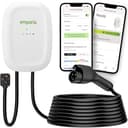
Emporia Level 2 EV Charger

Emporia Level 2 EV Charger

The most charger for the money right now: 48A output and a genuinely useful app at a price that undercuts the premium names. If you have (or can get) a 60A circuit, this is the one that turns the extra amps into the lowest cost per kW installed.

Best overall
2
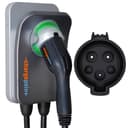
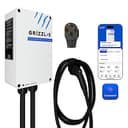
Grizzl-E Classic Connect 40A (J1772)

Grizzl-E Classic Connect 40A (J1772)

The Grizzl-E Classic with a radio in it: the same made-in-Canada metal box, the same UL Type 4 indoor/outdoor rating and the same 25 ft cable, now with Wi-Fi scheduling and 16–40A adjustment. The adjustment is the upgrade worth paying for, because it lets one charger fit whatever circuit your panel can actually spare. The connectivity is the part to think twice about — this line's reputation was built on having nothing to fail.

Best value
$349.99 · View on Amazon

Price as of October 18, 2026. #ad How we’re funded

3
ChargePoint Home Flex (NEMA 14-50 plug)

ChargePoint Home Flex (NEMA 14-50 plug)

The plug-in Home Flex: 40A on an existing NEMA 14-50 outlet, UL Listed and ENERGY STAR certified, with the most mature app in the category. You pay more than a bare 40A box for the polish and the ChargePoint name, and you no longer get the 16-50A dial — that is the hardwired model, which is not currently sold on Amazon.

Best app
$599.00 · View on Amazon

$657.999% off

Price as of October 18, 2026. #ad How we’re funded

4
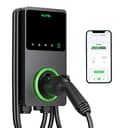
Autel MaxiCharger Home

Autel MaxiCharger Home

A polished 50A unit with Wi-Fi, Bluetooth and a clean app, built to a higher hardware standard than most — and the widest published temperature range in this registry, -40 to 131 °F behind an IP65 / NEMA 4X shell. The catch is the circuit: Autel's own store page asks for a 70-amp feed to reach 50 amps, which is a bigger panel ask than the 60-amp circuit a 48-amp charger needs.

Best features
$529.00 · View on Amazon

$599.0012% off

Price as of October 18, 2026. #ad How we’re funded

5
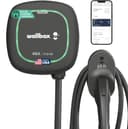
Wallbox Pulsar Plus

Wallbox Pulsar Plus

The compact one. It's the smallest 48A charger here by a wide margin, so it suits a tight garage wall or a design-conscious install — with power sharing if you end up charging two cars.

Best compact / two-car
$699.00 · View on Amazon

$799.9913% off

Price as of October 18, 2026. #ad How we’re funded

The picks in full

#1Best overall

Emporia Level 2 EV Charger

The most charger for the money right now: 48A output and a genuinely useful app at a price that undercuts the premium names. If you have (or can get) a 60A circuit, this is the one that turns the extra amps into the lowest cost per kW installed.

Strengths

  • 48A / 11.5 kW on a 60A circuit — near the top of home output
  • Load management and scheduling in the app, at a budget price
  • Plug-in or hardwired, NEMA 4 outdoor-rated

Trade-offs

  • 48A requires a 60A circuit, which not every panel has room for
  • Newer brand than ChargePoint or Wallbox, with a shorter track record
ConnectorJ1772
Max output48 A
Max power11.5 kW
Cable length25 ft
InstallPlug-in (NEMA 14-50), convertible to hardwired
Outdoor ratingNEMA 4 (outdoor)
Warranty3 years

Spec note. Ships on a NEMA 14-50 plug, which limits it to 40A; to pull the full 48A an electrician hardwires it on a 60A breaker. Pairs with Emporia's energy monitor for whole-home load management. Emporia now markets this unit as the Emporia Classic on its own store; the Amazon listing still uses the original name.

Specs read from the product listing, on August 26, 2026. “Not published” means the manufacturer does not state that figure.

#2Best value

Grizzl-E Classic Connect 40A (J1772)

The Grizzl-E Classic with a radio in it: the same made-in-Canada metal box, the same UL Type 4 indoor/outdoor rating and the same 25 ft cable, now with Wi-Fi scheduling and 16–40A adjustment. The adjustment is the upgrade worth paying for, because it lets one charger fit whatever circuit your panel can actually spare. The connectivity is the part to think twice about — this line's reputation was built on having nothing to fail.

Strengths

  • 16–40A adjustable output, so one unit fits a 20A, 30A, 40A or 50A circuit — the outgoing Classic was fixed at 40A
  • UL Type 4 indoor/outdoor rated metal enclosure, made in Canada, rated from -30°C to +50°C
  • 25 ft published cable, which is more reach than most wall chargers at any price
  • Plugs into a NEMA 14-50 outlet, so no hardwiring bill and it moves house with you
  • Wi-Fi (2.4 GHz) with scheduling, charging statistics, remote control and utility demand-response participation
  • 3-year warranty as standard, with a 5-year extension sold separately by the manufacturer

Trade-offs

  • Not in EPA's ENERGY STAR certified-EVSE database as of 2 September 2026, although the Classic it succeeds is — check before counting on a rebate that requires ENERGY STAR
  • Wi-Fi is not optional, on a product line whose whole appeal was that there was no app to fail
  • NEMA 14-50 only: the Classic also offered a NEMA 6-50 plug variant, and that option is gone
  • New for December 2025, so there is far less long-term owner feedback than the Classic has
  • United Chargers publishes “40A 10 kW” while the Amazon listing says 9.6 kW; 40A at 240V is 9.6 kW, so size the circuit off 40A, not off either kW figure
ConnectorJ1772
Max output40 A
Max power9.6 kW
Cable length25 ft
InstallPlug-in (NEMA 14-50)
Outdoor ratingUL Type 4 (indoor/outdoor)
Warranty3 years

Spec note. United Chargers publishes: AC Level 2, 40A adjustable down to 16A, NEMA 14-50 plug, J1772 or NACS output cable, 25 ft (7.6 m) cord, UL Type 4 indoor/outdoor rating, UL/cUL listing E510712, Wi-Fi 2.4 GHz with the Grizzl-E Connect app, a 3-year warranty, an operating range of -30°C to +50°C and a 10.25 × 6.25 × 3.75 in enclosure. Two caveats we checked rather than assumed. EPA's ENERGY STAR certified-EVSE database lists eight Grizzl-E models under United Chargers Inc. and the Classic Connect is not among them, so we do not repeat the ENERGY STAR claim that appears on one sibling listing. And ENERGY STAR records the outgoing Classic's cord at 24 ft against the same 25 ft marketing figure, so if reach is tight, plan around 24 ft.

Specs read from the product listing, on September 2, 2026. “Not published” means the manufacturer does not state that figure.

#3Best app

ChargePoint Home Flex (NEMA 14-50 plug)

The plug-in Home Flex: 40A on an existing NEMA 14-50 outlet, UL Listed and ENERGY STAR certified, with the most mature app in the category. You pay more than a bare 40A box for the polish and the ChargePoint name, and you no longer get the 16-50A dial — that is the hardwired model, which is not currently sold on Amazon.

Strengths

  • Plugs into a NEMA 14-50 outlet at up to 40A / 9.6 kW, which is a full overnight charge for almost any EV
  • Mature app with scheduling, energy tracking and utility rate integration, backed by ChargePoint's network account
  • UL Listed, ENERGY STAR certified and rated NEMA 3R for indoor or outdoor mounting, with a 23 ft cable
  • 3-year parts warranty

Trade-offs

  • Costs more than 48A hardwired units that deliver more power
  • The plug-in model runs only at 32A or 40A; the 16-50A range that made the Home Flex famous is the hardwired model, which Amazon does not currently list
  • App-forward design is more than a set-and-forget owner needs
ConnectorJ1772
Max output40 A
Max power9.6 kW
Cable length23 ft
InstallPlug-in (NEMA 14-50); hardwired 50A and NEMA 6-50 sold as separate models
Outdoor ratingNEMA 3R (indoor/outdoor)
Warranty3 years

Spec note. ChargePoint sells the Home Flex as three separate models, and the one linked here is the NEMA 14-50 plug-in (part CPH50-NEMA14-50-L23). ChargePoint publishes it for circuits rated 40A or 50A, delivering 32A or 40A respectively (up to 9.6 kW) — its installation FAQ states that all other amperage settings require the hardwired model, which takes circuits from 20A to 80A and reaches 50A on a 60A breaker. Both are UL Listed, ENERGY STAR certified, NEMA 3R rated, carry a 23 ft cable and a 3-year warranty. Use an industrial-grade 14-50 receptacle: the charger is only as safe as the outlet it plugs into.

Specs read from the product listing, on September 20, 2026. “Not published” means the manufacturer does not state that figure.

#4Best features

Autel MaxiCharger Home

A polished 50A unit with Wi-Fi, Bluetooth and a clean app, built to a higher hardware standard than most — and the widest published temperature range in this registry, -40 to 131 °F behind an IP65 / NEMA 4X shell. The catch is the circuit: Autel's own store page asks for a 70-amp feed to reach 50 amps, which is a bigger panel ask than the 60-amp circuit a 48-amp charger needs.

Strengths

  • Up to 50A / 12 kW, adjustable down to 16A in the app
  • IP65 / NEMA 4X enclosure rated -40 to 131 °F — the widest published range of any charger here
  • Wi-Fi, Bluetooth and Ethernet, with scheduling and access control
  • Autel lists Adaptive Load Management and charger-to-charger Dynamic Load Balancing
  • CSA certified and ENERGY STAR certified, with a 3-year warranty

Trade-offs

  • Autel publishes a 70A circuit for full 50A output — more than the 60A a 48A charger needs, and more than many panels can spare
  • Hardwired only at this output; the plug-in NEMA 14-50 and 6-50 versions are separate 40A models
  • Autel does not publish what sensor hardware Adaptive Load Management needs, so you cannot cost the feature before buying
  • Connectivity adds a failure point a charger with no radio does not have
ConnectorJ1772
Max output50 A
Max power12 kW
Cable length25 ft
InstallHardwired (70A circuit for 50A); plug-in sold as separate 40A models
Outdoor ratingIP65 / NEMA 4X (indoor/outdoor)
Warranty3 years

Spec note. Autel sells this as the MaxiCharger AC Elite Home 50A. Autel's own US store listing publishes: "Maximum 12 kW (240 VAC @ 50 A model)" adjustable 16-50A, hardwired with a 70A circuit required for full output, an SAE J1772 connector on a "25 ft. (7.5 m)" cable, "IP65 / NEMA 4X", "-40 to 131 °F (-40 to 55 °C)" operating temperature, Bluetooth / Wi-Fi / Ethernet / CAN / RS485, "Adaptive Load Management (ALM); Dynamic Load Balancing (DLB)", CSA and ENERGY STAR certification, a 3-year warranty and about 15.4 lb with the in-body holster. Autel's product page repeats the NEMA 4X rating and the -40°F to 131°F figure and describes ALM as sharing power between loads in the home, but neither page states what sensor hardware ALM requires or (on the product page) the circuit size for 50A. The 50A unit is hardwired — the plug-in NEMA 14-50 and NEMA 6-50 versions are separate 40A models, so the install type is chosen at purchase rather than configured on the wall. The listing we link is the hardwired 50A.

Specs read from the product listing, on October 12, 2026. “Not published” means the manufacturer does not state that figure.

#5Best compact / two-car

Wallbox Pulsar Plus

The compact one. It's the smallest 48A charger here by a wide margin, so it suits a tight garage wall or a design-conscious install — with power sharing if you end up charging two cars.

Strengths

  • Up to 48A / 11.5 kW in the smallest housing in its class
  • Power Boost and Power Sharing for multi-car or limited-panel homes
  • App scheduling and energy metering

Trade-offs

  • Hardwired only for the 48A version — no plug option at full output
  • The compact body runs the cable management tighter than a bigger box
ConnectorJ1772
Max output48 A
Max power11.5 kW
Cable length25 ft
InstallHardwired (48A) or plug-in (40A)
Outdoor ratingNEMA 3R (indoor/outdoor)
Warranty3 years

Spec note. The 40A plug-in variant exists, but the 48A model is hardwired on a 60A circuit. Power Sharing lets two Pulsar Plus units split one circuit — the cleanest answer to charging two EVs without a panel upgrade.

Specs read from the product listing, on July 19, 2026. “Not published” means the manufacturer does not state that figure.

How to choose between them

Three constraints send readers to a narrower page than this one. If the cable has to reach around the car, start with our long-cable roundup. If your service is 100 amps, start with the 100-amp panel roundup. And if you are deciding between the two brands we recommend most often, our Autel versus Emporia comparison settles it on one question about your panel.

Three more, if one of them is your binding constraint. If a utility rebate requires certification, our ENERGY STAR rounduplists only the chargers we could find in EPA’s own database by model number. If you would rather have no app and no account at all, the no-Wi-Fi roundupcovers the units with no radio in them. And if the car is a plug-in hybrid rather than a full EV, almost everything on this page is more charger than you need — start with the PHEV page instead.

Work from your panel outward. If your electrician can only give you a 40A circuit, the Grizzl-E Classic Connect 40A does the same overnight job as anything here for less: the same made-in-Canada metal box, now adjustable from 16A to 40A so it fits whatever circuit your panel can actually spare, with a NACS option if you drive a Tesla. Its one real drawback is that the Wi-Fi is not optional, on a product line whose whole reputation was having no app to fail — our review of it is here. It replaces the outgoing Grizzl-E Classic in this slot, which as of 5 September 2026 is no longer sold on Amazon under any listing; United Chargers still sells it direct, and our Classic review explains the switch. If you have room for a 60A circuit and want the extra speed and a genuinely useful app, the Emporiais the most charger per dollar — and it is now our overall pick, because it also hedges the circuit question: it ships on a NEMA 14-50 plug at 40A and converts to a hardwired 48A install later. The ChargePoint Home Flexheld that slot for years on the strength of its 16–50A amperage dial, but ChargePoint now sells the hardwired and plug-in versions as separate models, and as of 20 September 2026 the hardwired one is not listed on Amazon. The Home Flex we link is the NEMA 14-50 plug-in, a fixed 40A unit that ChargePoint publishes at 32A or 40A. It is still a UL Listed, ENERGY STAR certified charger with the most mature app in the category — which is exactly what it wins for here — but by our own rule, when a cheaper unit does the same job and more, the cheaper unit is the pick. Our Home Flex review explains the change.

When to spend more

The Autel is worth it if you want ChargePoint-grade features and outdoor toughness while comparing on price, and the compact Wallbox Pulsar Plusearns its place on a tight garage wall or in a two-car home, where its power-sharing lets two units split one circuit. None of these will charge your car faster than your car’s onboard charger allows — so if your EV accepts only 32A of AC, you’re paying for headroom, not speed.

If you drive a Tesla

Every unit here has a J1772 plug, which charges a Tesla fine using the adapter that came with the car. If you’d rather skip the adapter entirely, several of these same models are also sold with a factory NACS connector — we compare that shortlist in best home EV chargers for a Tesla.

Buying now, or waiting for a sale?

A wall charger is where the dollar amounts are large enough for the question to be worth asking. Two things decide it, and neither is the discount: the electrician’s calendar, which fills up toward the end of the year, and your utility’s rebate, which is often worth more than a retail sale and frequently requires a certified unit. Our Black Friday and Cyber Monday page works through buy-now versus wait by product class, and shows the reductions our daily price check actually finds on the chargers above.

What we’d skip

Skip any charger that won’t state its amperage or its enclosure rating, and skip a 50A “smart” unit if you’re going to run it on a bargain NEMA 14-50 outlet throttled to 40A — that’s slower, less safe and more expensive than a solid 40A charger on a proper install. Size the outlet before you size the charger.
Frequently asked questions

Which home charger should most people buy?

For most single-EV homes, a 40A charger like the Grizzl-E Classic Connect is plenty and the best value — it adds 300+ miles of range overnight. Step up to a 48A unit like the Emporia only if you drive very high mileage or have little time to charge, and you have a panel with room for a 60A circuit.

Do I need a smart charger with an app?

Only if you'll use it. Scheduling to charge during cheap overnight rates and tracking energy use are genuinely handy, but a 'dumb' charger that just delivers power is cheaper and has one less thing to fail. Both are valid, though the choice is narrowing: the Grizzl-E Classic skipped the app on purpose, but it is no longer sold on Amazon and its replacement, the Classic Connect, has Wi-Fi you cannot switch off. Every pick on this page now includes an app; if you specifically want a no-app wall charger, the Lectron Nexus 40A is the one we would buy.

Can I plug these in, or do they have to be hardwired?

Most of these offer both. On a NEMA 14-50 plug they're capped at 40A; to pull the full 48A you hardwire. The exception is the ChargePoint Home Flex we link, which is the plug-in model only — ChargePoint's hardwired version is a separate product that is not currently sold on Amazon. Whichever you choose, the circuit must be installed by a licensed electrician, and if you plug in, use an industrial-grade outlet.

How many amps do I actually need at home?

For the vast majority of drivers, 40A is plenty — that's roughly 30 miles of range per hour, over 300 miles in a typical overnight charge. 48A mainly helps if you routinely arrive near empty and leave early. Don't buy more amps than your car's onboard charger can accept.

Sources

Keep reading