Portable & Travel Chargers
Level 2 chargers that travel — a real 40A charge on a NEMA 14-50, a Level 1 fallback for any outlet, and the honest limits of charging on the road.
A portable charger is the most misunderstood item in EV charging. Half the listings are slow 120V Level 1 units best kept in the trunk for emergencies; the other half are genuine 40A Level 2 chargers that plug into a NEMA 14-50 outlet and charge as fast as a fixed wall unit — but pack into a bag and come with you. Knowing which is which is the entire buying decision.
We compare on amperage (a real 40A unit is a different product from a 16A one), plug flexibility (a good portable includes adapters so it works off both a 240V and a standard outlet), and build qualityfor something that gets coiled, dropped and rained on. For a lot of people, a 40A portable on a 14-50 outlet is all the “home charger” they need — and it still travels.
Everything in Portable
Best Portable EV Chargers
Portable Level 2 chargers ranked on amperage, plug flexibility and build — including which one can double as your home charger.
Our top pick
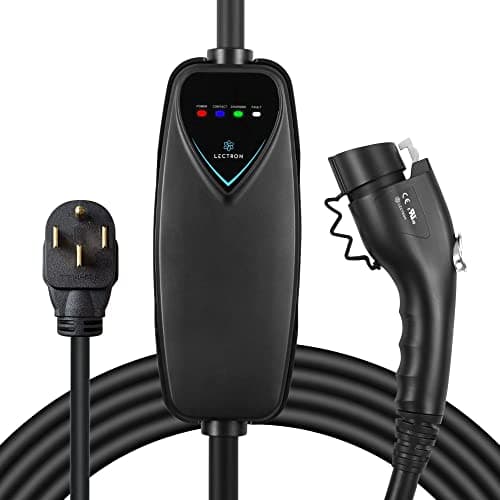
Lectron 40A Portable Level 1/2 Charger
$269.99 · View on AmazonPrice as of October 18, 2026. #ad How we’re funded
Best Portable Chargers for a Tesla
How a Tesla (or any NACS car) charges from a portable J1772 unit, the adapter you'll need, and the picks that make it painless.
Our top pick
Lectron 40A Portable Level 1/2 Charger
$269.99 · View on AmazonPrice as of October 18, 2026. #ad How we’re funded
Best Level 1 EV Chargers
The 120V chargers that plug into any household outlet — what they are genuinely good for, and the certification line that matters most here.
Our top pick
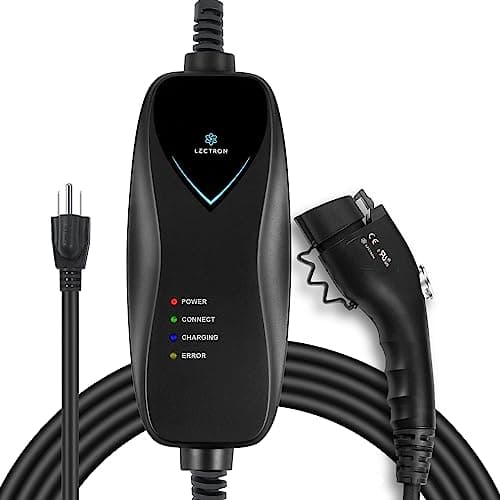
Lectron Level 1 EV Charger (15A, 110V)
Lectron 40A Portable Charger Review
A 40A Level 2 charger on a NEMA 14-50 that packs in the trunk — why it's the one portable that can also be your home charger.
Our top pick
Lectron 40A Portable Level 1/2 Charger
$269.99 · View on AmazonPrice as of October 18, 2026. #ad How we’re funded
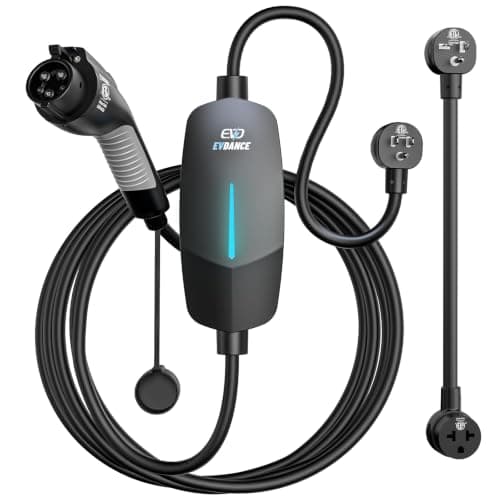
EVDANCE 40A Portable Charger Review
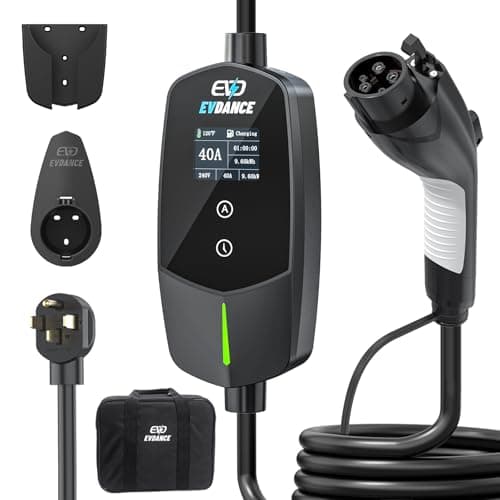
A 40A Level 2 charger with an IP67-rated connector that packs in the trunk — what the sealing rating buys you on a charger that travels.
Our top pick
EVDANCE 40A Portable Level 2 Charger
Best Portable EV Chargers for Road Trips
What to carry when the destination has an outlet but no charger — the units, the plug adapters, and the honest maths on how much range a night actually adds.
Our top pick
Lectron 40A Portable Level 1/2 Charger
$269.99 · View on AmazonPrice as of October 18, 2026. #ad How we’re funded
Lectron Level 1 Charger Review
An ETL-certified 15A charger for an ordinary wall socket — genuinely useful for some drivers, genuinely inadequate for others. Which one you are, in numbers.
Our top pick
Lectron Level 1 EV Charger (15A, 110V)
bokman Level 1 & 2 Portable Charger Review
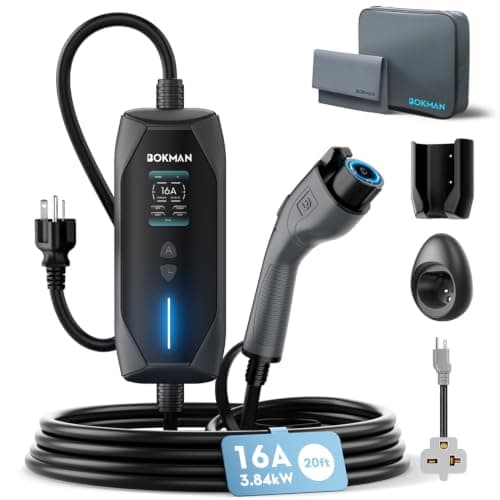
The dual-plug travel charger that doubles its rate wherever a 240V outlet exists — and why that second plug is the entire reason to buy it.
Our top pick
bokman Portable Level 1 & 2 Charger (16A)
$114.99 · View on AmazonPrice as of October 18, 2026. #ad How we’re funded
TLE LEVEL 40A Portable Charger Review
A genuine 40A portable with a 25 ft cable at one of the lowest prices we can find — and the one line on the listing we would want to see before ordering.
Our top pick
TLE LEVEL Portable Level 2 Charger (40A, 25 ft)
EVDANCE Level 1 & 2 Portable Charger Review
A dual-voltage travel charger with an ETL listing and a 25 ft cable — and an honest look at the 240V outlet it needs to be worth buying.
Our top pick
EVDANCE Level 1 & 2 Portable Charger (16A, 25 ft)
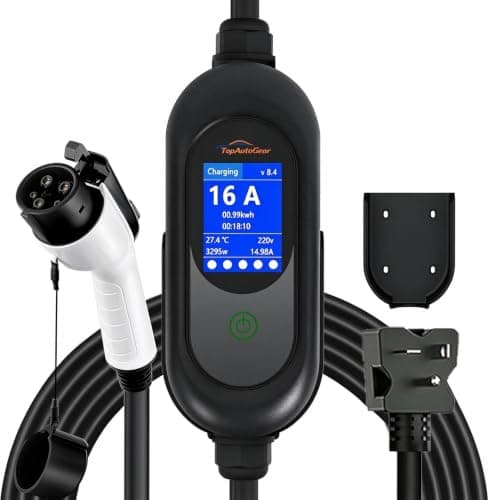
TopAutoGear 16A Level 1 & 2 Charger Review
The cheapest charger we recommend — 16A from any household outlet, an IP54 rating and a five-year warranty, and the short cable that comes with the price.
Our top pick
TopAutoGear Portable Level 1 & 2 Charger (16A)
MEGEAR Skysword II Level 1 Charger Review
The cheap 16A trunk charger we used to recommend — the arithmetic that still holds, and what to buy now the listing has gone.
Our top pick
TopAutoGear Portable Level 1 & 2 Charger (16A)
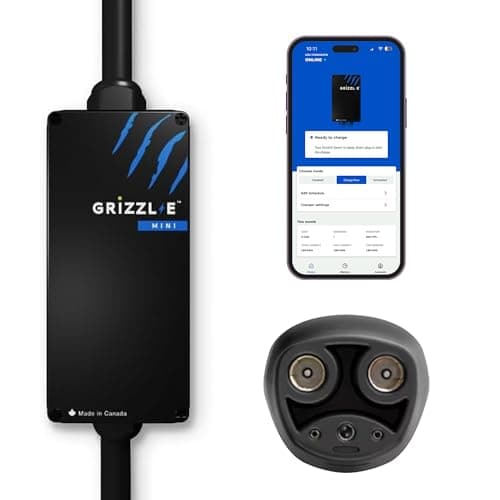
Grizzl-E Mini Connect 40A Review
A cast-aluminum 40A portable that dials from 7A to 40A and ships with four plug adapters — plus the three published figures, cable length among them, that do not agree with each other.
Our top pick
Grizzl-E Mini Connect 40A (NACS)
$479.99 · View on AmazonPrice as of October 18, 2026. #ad How we’re funded
How to choose a portable EV charger
Decide first whether you want a primary charger that travels, or a backup for the trunk. A 40A Level 2 portableon a NEMA 14-50 plug adds ~30 miles of range per hour — the same overnight speed as a fixed wall charger — and can be your everyday home charger if you have (or install) a 14-50 outlet in the garage. A 16A Level 1 unit runs off any standard outlet but only adds a few miles per hour; it’s insurance against arriving somewhere with a low battery, not a daily driver.
Plugs and adapters
The best portables ship with, or accept, multiple plug adapters — typically a NEMA 14-50 for Level 2 and a standard 5-15 for Level 1 — so one charger covers a friend’s dryer outlet, an RV park pedestal and a regular wall socket. Adjustable amperage is a bonus: it lets you dial the charger down for a weaker circuit so you don’t trip a breaker.
Charging a Tesla with a portable
Most portables have a J1772 connector, so a Tesla (or other NACS car) needs a cheap J1772-to-Tesla adapter to use one. That combination — a 40A J1772 portable plus a small adapter — is often the most flexible travel setup a Tesla owner can carry.
The honest limit
No portable overcomes the outlet it’s plugged into. On a standard 120V socket, even a capable Level 2 unit falls back to Level 1 speed — that’s the physics of the outlet, not a flaw in the charger. Plan for a 14-50 outlet if you want real speed.
Frequently asked questions
Is a portable charger as fast as a wall-mounted one?
A 40A Level 2 portable on a NEMA 14-50 outlet charges at the same speed as a 40A wall charger — around 30 miles of range per hour. The wall unit's advantages are permanence, cable management and (sometimes) higher amperage; the portable's advantage is that it travels.
Can I use a portable charger as my only home charger?
Yes, if you have a NEMA 14-50 outlet in the garage. Many owners do exactly this — a good 40A portable is cheaper than a smart wall unit, charges just as fast overnight, and comes on road trips. The trade-off is no permanent mount and usually no app.
What can I plug a portable charger into?
It depends on the included plug. Level 2 units use a NEMA 14-50 (a common 240V outlet also used for RVs and ranges); many bundle a 120V adapter for standard outlets so they double as a Level 1 charger. Check the exact plug and any included adapters before buying.
Are portable EV chargers safe to leave outside?
The connector and body are typically weather-resistant (look for an IP rating), but the outlet they plug into should be protected and installed to code. Don't leave the plug end sitting in standing water, and use a covered, GFCI-protected outlet for outdoor use.
Sources
- U.S. DOE Alternative Fuels Data Center — Charging Electric Vehicles at Home — DOE guidance on Level 1 vs Level 2 home charging, 120V/240V service and installation (accessed July 19, 2026)
- U.S. DOE Alternative Fuels Data Center — Electric Vehicle Charging Stations — DOE overview of charging levels, power output and connector types (J1772, CCS, NACS) (accessed July 19, 2026)
- EPA ENERGY STAR — Electric Vehicle Chargers — ENERGY STAR on certified EV chargers, safety certification and standby energy use (accessed July 19, 2026)