Amp & Adapter

Best EV Chargers Without Wi-Fi

Five Level 2 chargers with no radio, no account and no app — because a charger with nothing to connect has nothing to drop, and the scheduling you actually need is already in the car.

By Stephen V.Last updated How we rank

Buy the Lectron Nexus 40A. EPA’s own certification record lists its network capability as “No” — so the absence of a radio is a documented specification rather than a marketing claim — and it still carries an IP66 housing, a 23 ft cable and full-unit UL testing. If the budget is the binding constraint, the ELEGRP 40A at pick two is the cheapest certified way to get 40 amps on a wall.

People look for this deliberately, and the reason is usually one of three. A charger that depends on a cloud account can stop working when the account, the app or the company does. A charger on your home network is one more device with firmware on it. And a charger with nothing to configure is a charger a house-sitter, a tenant or a future owner can use without being handed a login.

Here is the honest trade. The only thing you give up by removing the radio is scheduling and energy reporting from the charger. That is not nothing — if your utility has time-of-use rates, charging at 2am is worth real money. But almost every EV sold in the last decade can schedule its own charging from the car’s screen or its own app, and the car is the better place for it anyway, because the schedule travels with the car rather than living in the garage.

What you do not give up: amperage, cable length, outdoor rating, safety certification or warranty. Three of the five picks here are in EPA’s ENERGY STAR database under their own model numbers.

We own no units and we do not bench-test chargers — here is exactly what we do instead. Every figure below is the manufacturer’s own published specification, the live listing, or EPA’s certification record.

How this is funded: we earn a commission if you buy through our links, at no extra cost to you. It never changes which product we recommend, and we’ll tell you plainly when we’d skip one. Full disclosure.

Quick picks

Ranked on published specs, install flexibility and buyer fit. Select a row to jump to the full write-up. We have not bench-tested these units — here is exactly what we do instead.

#ProductBest forPrice
1
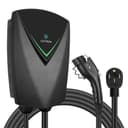
Lectron Nexus Level 2 (40A, plug-in)

Lectron Nexus Level 2 (40A, plug-in)

A deliberately dumb wall box with a certification sheet most chargers at this price cannot match: tested to UL 2594, ETL listed, IP66, and present in EPA's own ENERGY STAR database rather than merely claiming the logo. You give up the app entirely. If that trade appeals, the 23 ft cable and the plug-in install make this the easiest version of it to live with.

Best overall — no radio, fully certified
$429.99 · View on Amazon

Price as of October 10, 2026. #ad How we’re funded

2
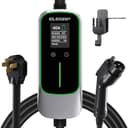
ELEGRP Level 2 EV Charger (40A, NEMA 14-50)

ELEGRP Level 2 EV Charger (40A, NEMA 14-50)

The cheapest way we found to get a genuinely ETL-certified 40A charger with a long cable. It is a plain plug-in unit with no app and no frills, which is exactly why it undercuts the name brands — buy it if the budget is the binding constraint and you already have a 14-50 outlet.

Best value
$209.99 · View on Amazon

Price as of October 10, 2026. #ad How we’re funded

3
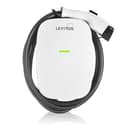
Leviton EV320 32A (hardwired)

Leviton EV320 32A (hardwired)

The plainest well-documented 32A wall charger you can buy: hardwired on a 40A breaker, ENERGY STAR certified under its own model number, and nothing to connect to Wi-Fi. That last point cuts both ways, since there is no app to fail and no app to schedule with, and the 18 ft cable is the shortest here, so measure before you buy.

Best hardwired
$649.00 · View on Amazon

Price as of October 10, 2026. #ad How we’re funded

4
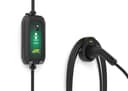
Battery Tender eCharge 32 (Level 1 + 2)

Battery Tender eCharge 32 (Level 1 + 2)

A 32A plug-in charger from a long-established battery-charger brand, ENERGY STAR certified under its own model number, with a 120V adapter in the box so it doubles as a Level 1 travel cord. It has no app by design. You pay well over the budget 32A units for that paper trail and the 3-year warranty.

Best for home and trips
$349.99 · View on Amazon

$399.9512% off

Price as of October 10, 2026. #ad How we’re funded

5
EVPOVO Level 2 Wall Charger (40A, 25 ft)

EVPOVO Level 2 Wall Charger (40A, 25 ft)

A wall-mounted 40A charger with a published 25 ft cable, at a price that normally buys a portable unit. Cable length is the spec most budget chargers quietly shorten, so a unit that publishes 25 ft at this price is worth a look — with the usual small-brand caveats.

Best cable reach on a budget
$243.99 · View on Amazon

Price as of October 10, 2026. #ad How we’re funded

The picks in full

#1Best overall — no radio, fully certified

Lectron Nexus Level 2 (40A, plug-in)

A deliberately dumb wall box with a certification sheet most chargers at this price cannot match: tested to UL 2594, ETL listed, IP66, and present in EPA's own ENERGY STAR database rather than merely claiming the logo. You give up the app entirely. If that trade appeals, the 23 ft cable and the plug-in install make this the easiest version of it to live with.

Strengths

  • Tested to UL 2594, UL 2231 and UL 2251 and ETL listed — whole-unit certification, not just the handle
  • Listed in EPA's ENERGY STAR certified-EVSE database, so the certification claim is independently checkable
  • 23 ft published cable (22 ft on the ENERGY STAR record) — far more reach than the 16 ft common at this price
  • IP66 housing, so an outdoor wall is a supported install rather than a gamble
  • Plugs into a NEMA 14-50 outlet, so no hardwiring and it moves with you
  • 3-year warranty published by the manufacturer

Trade-offs

  • New model — ENERGY STAR records it as available from April 2026, so there is very little long-term owner feedback yet
  • No app, no WiFi, no scheduling: ENERGY STAR records network capability as 'No'
  • Lectron does not publish an amperage-adjustment setting, so treat 40A as fixed and size the circuit for it
  • Lectron sells the Nexus on its own store as well as Amazon, and the two prices are not always the same
ConnectorJ1772
Max output40 A
Max power9.6 kW
Cable length23 ft
InstallPlug-in (NEMA 14-50)
Outdoor ratingIP66 (indoor/outdoor)
Warranty3 years

Spec note. Lectron publishes 40A at 240V (9.6 kW), a J1772 connector on a NEMA 14-50 plug, a 23 ft cable, an IP66 housing, a 3-year warranty and testing to UL 2594, UL 2231, UL 2251 and UL 817 with ETL listing. EPA's ENERGY STAR certified-EVSE database carries the same model (LECHGNexusNEMA14-50J1772) at 40A / 9.6 kW with 8 AWG cable, network capability 'No', and an output cord length of 22 ft — a foot shorter than the marketing figure. If reach is tight, plan around 22 ft.

Specs read from the product listing, on August 26, 2026. “Not published” means the manufacturer does not state that figure.

#2Best value

ELEGRP Level 2 EV Charger (40A, NEMA 14-50)

The cheapest way we found to get a genuinely ETL-certified 40A charger with a long cable. It is a plain plug-in unit with no app and no frills, which is exactly why it undercuts the name brands — buy it if the budget is the binding constraint and you already have a 14-50 outlet.

Strengths

  • ETL certified at 40A — the safety listing is the one thing you should never cut
  • 25 ft cable is longer than several units costing considerably more
  • Plugs into a NEMA 14-50 outlet, so there is no electrician bill for the charger itself

Trade-offs

  • No app, no scheduling — if you need off-peak automation, look at the Emporia
  • ELEGRP is a fixtures brand rather than an EV specialist; long-term support is the open question
  • The listing does not publish an outdoor enclosure rating, so treat it as a garage unit
ConnectorJ1772
Max output40 A
Max power9.6 kW
Cable length25 ft
InstallPlug-in (NEMA 14-50)
Outdoor ratingNot published
WarrantyNot published

Spec note. The listing publishes 40A, 240V, an ETL certification, a NEMA 14-50 plug and a 25 ft cable. It does not publish a NEMA/IP enclosure rating or a warranty term, so both read as not published here. A 40A charger requires a 50A circuit under the 80% rule.

Specs read from the product listing, on August 11, 2026. “Not published” means the manufacturer does not state that figure.

#3Best hardwired

Leviton EV320 32A (hardwired)

The plainest well-documented 32A wall charger you can buy: hardwired on a 40A breaker, ENERGY STAR certified under its own model number, and nothing to connect to Wi-Fi. That last point cuts both ways, since there is no app to fail and no app to schedule with, and the 18 ft cable is the shortest here, so measure before you buy.

Strengths

  • Hardwired, so a plain breaker feeds it and there is no receptacle to wear, overheat or trip a GFCI
  • Leviton publishes its full standards list, including UL 2594, and EPA's ENERGY STAR dataset lists the EV320 by model number
  • NEMA Type 3R enclosure and a cable Leviton says is designed not to freeze and crack, rated -30°C to 50°C
  • Optional RFID access control, switched off out of the box

Trade-offs

  • 18 ft cable, the shortest in our 32A roundup
  • 2-year limited warranty, against 3 to 5 years on the other 32A picks
  • No Wi-Fi or app, so any scheduling has to come from the car
  • Amazon showed 'Only 11 left in stock (more on the way)' when we checked on 18 September 2026
ConnectorJ1772
Max output32 A
Max power7.7 kW
Cable length18 ft
InstallHardwired (40A breaker)
Outdoor ratingNEMA Type 3R (indoor/outdoor)
Warranty2 years (limited)

Spec note. Leviton publishes: 32A, 208/240 VAC, 7.6 kW output, a 40A breaker, an 18 ft (5.5 m) cable, hardwired only, a PC+PBT plastic NEMA Type 3R enclosure, -30°C to 50°C operation, a 20 mA CCID per UL 2231, certification to UL 2594, UL 2231-1/-2, UL 2251 and others with cETLus, and ENERGY STAR. EPA's dataset lists model EV320 (qualified 2022-10-24, 18 ft cord). It has no Wi-Fi; the Wi-Fi sibling is the EV32W. Leviton's own store listed it above the Amazon price when we checked.

Specs read from the product listing, on September 18, 2026. “Not published” means the manufacturer does not state that figure.

#4Best for home and trips

Battery Tender eCharge 32 (Level 1 + 2)

A 32A plug-in charger from a long-established battery-charger brand, ENERGY STAR certified under its own model number, with a 120V adapter in the box so it doubles as a Level 1 travel cord. It has no app by design. You pay well over the budget 32A units for that paper trail and the 3-year warranty.

Strengths

  • ENERGY STAR certified: EPA's dataset lists the 022-3017 family, and the maker publishes cETLus to UL 2594
  • Level 1 and Level 2 in one box: a NEMA 14-50 plug plus a 14-50R-to-5-15P adapter
  • 25 ft output cord, an IP66 rating and a 3-year warranty
  • No app to set up or fail; status and error messages show on an LCD

Trade-offs

  • Costs well over twice the cheapest 32A plug-in units
  • Plug-in, so a GFCI-protected garage receptacle can trip with it
  • No scheduling app, so off-peak timing has to come from the car
  • Amazon showed 'Only 4 left in stock (more on the way)' when we checked on 18 September 2026
ConnectorJ1772
Max output32 A
Max power7.7 kW
Cable length25 ft
InstallPlug-in (NEMA 14-50; 120V 5-15 adapter included)
Outdoor ratingIP66
Warranty3 years

Spec note. Battery Tender publishes: 32A Level 2 at about 7.7 kW (about 20-25 miles of range per hour), about 1.9 kW on 120V, a dedicated 240V 40 Amp circuit minimum, a 25 ft output cord, IP66, cETLus (UL 2594), ENERGY STAR, FCC and ICES, 6.37 lb, and a 3-year warranty. EPA's ENERGY STAR dataset lists the 022-3017-XX-XX family as a Level 1/Level 2 dual-input charger (qualified 2024-01-04, 25 ft cord). The maker's own store listed it above the Amazon price when we checked. A bundle with a Tesla adapter is sold as a separate listing.

Specs read from the product listing, on September 18, 2026. “Not published” means the manufacturer does not state that figure.

#5Best cable reach on a budget

EVPOVO Level 2 Wall Charger (40A, 25 ft)

A wall-mounted 40A charger with a published 25 ft cable, at a price that normally buys a portable unit. Cable length is the spec most budget chargers quietly shorten, so a unit that publishes 25 ft at this price is worth a look — with the usual small-brand caveats.

Strengths

  • 25 ft cable is published up front — enough to reach a charge port on the far side of the car
  • 40A / 9.6 kW on a NEMA 14-50 plug, so no hardwiring is required
  • Wall-mounted design at a price closer to the portable units

Trade-offs

  • EVPOVO is a small brand with essentially no service track record
  • The listing does not name a certification body, an enclosure rating or a warranty
  • No app or scheduling — if your utility has time-of-use rates, check the car can schedule instead
ConnectorJ1772
Max output40 A
Max power9.6 kW
Cable length25 ft
InstallPlug-in (NEMA 14-50)
Outdoor ratingNot published
WarrantyNot published

Spec note. The listing publishes 40A, a J1772 connector, a NEMA 14-50 plug, wall-mounted construction and a 25 ft cable. It does not name a certification body, an enclosure rating or a warranty term, so those read as not published. Verify the certification on the listing page before buying — it is the one spec we would not trade away.

Specs read from the product listing, on August 11, 2026. “Not published” means the manufacturer does not state that figure.

How we established that these have no radio

This sounds trivial and it is not. “No app” is rarely a specification a listing states; it is usually an absence you have to infer, and inference is how roundups get this wrong.

Two of these have it documented by a third party. EPA’s certified-EVSE dataset carries a network capabilityfield, and it records “No” for both Lectron Nexus models. Leviton publishes “no Wi-Fi” for the EV320 in its own specification and sells a separate model, the EV32W, as the Wi-Fi version — which is about as clear as a manufacturer can be.

For the remaining three, the basis is the manufacturer’s own published description: the ELEGRP and EVPOVO 40A units publish no app or scheduling function, and Battery Tender publishes an LCD for status and errors rather than connectivity. Where a listing simply does not mention Wi-Fi we have not treated silence as proof — those units are not on this page.

Getting your off-peak charging back

If you are on a time-of-use rate, this is the part that matters, so here is the full answer rather than a reassurance.

Schedule from the car.Every current EV lets you set a departure time or a charging window, and most let you set it per location so the schedule only applies at home. This is strictly better than scheduling from the charger: it survives you buying a different charger, it works at a friend’s house too, and it is one fewer system to keep online. Check your car’s manual for “scheduled charging” or “departure time”.

Or just plug in late. Unglamorous and completely effective if your off-peak window starts at a civilised hour. A 40-amp charger on a mid-size battery is done in a handful of hours, so starting at 10pm is rarely a constraint. Our charging-time guide has the arithmetic for your own battery.

What you cannot get backis per-session energy reporting from the charger itself, and whole-home load management. If you need the second one — because your panel genuinely cannot spare the circuit — a dumb charger is the wrong tool and you should read our load management guide and the 100-amp panel page instead. Load management requires a charger that can read a sensor, which requires electronics that talk.

What to look for when there is no app to distract you

Strip out the connectivity and a charger is four things. Rank them in this order.

  1. Safety certification, and preferably a checkable one.UL 2594 testing with an ETL or UL listing covers the whole unit. A presence in EPA’s ENERGY STAR database under a model number is better still, because you can look it up rather than take it on trust. Our certification guide explains what each claim covers, and our ENERGY STAR page lists the records.
  2. Cable length, measured honestly. Down the wall, along the floor, around the car to the side the port is on, up to the port, plus three feet of slack. Most people underestimate by ten feet because they measure a straight line through the vehicle. Two picks here publish 25 ft, which is the market ceiling.
  3. Enclosure rating, if the wall is outside.IP66 or NEMA 3R/4 is a supported outdoor install. “Weather-resistant” with no number is a garage unit, and we have said so in the picks where the maker does not publish a rating.
  4. Amperage that matches your circuit, not your ambition. 32A needs a 40A circuit, 40A needs 50A, 48A needs 60A, because code sizes a continuous load at 125% of its draw. Our amps and circuits guide covers the load calculation.

Plug-in or hardwired, on a dumb charger specifically

Four of the five picks here plug into a NEMA 14-50 outlet and one is hardwired, and the trade-off is slightly different when there is no app involved.

A plug-in unit on a 14-50 is the cheapest install and the charger moves house with you, which is a real argument for a product you are buying partly because it is simple. The cost is the receptacle: plug-in chargers have a reputation for nuisance-tripping GFCI protection, because NEC 210.8(A) requires GFCI for 125- to 250-volt garage receptacles and NEC 625.54 requires it for receptacles installed for EV charging, and the charger’s own ground-fault protection can conflict with an external GFCI. A hardwired charger is not subject to that receptacle requirement.

If you go plug-in, the receptacle grade matters more than the charger brand — see NEMA 14-50 outlets. Our plug-in versus hardwired guide makes the general case.

Who should buy a smart charger instead

Three situations, stated plainly so you do not buy the wrong thing off this page.

  • Your panel cannot spare the circuit. Whole-home load management is the one feature that genuinely requires a connected charger, and it is cheaper than a service upgrade.
  • Your car cannot schedule. Rare on anything recent, but if the car will not do it, the charger has to.
  • You are on a utility managed-charging program that pays you to let the utility shift your charging. Those programs need a networked charger to participate.

If any of those is you, our smart charger roundup is the right page and this one is not.

The short answer

The Lectron Nexus 40A is the best version of this: a documented absence of networking, a certification you can look up, an IP66 housing and a 23 ft cable. The ELEGRP is the cheap one and still ETL certified. The Leviton is the pick if you are hardwiring on a 40A circuit. The Battery Tender covers home and travel in one box. The EVPOVO buys you a 25 ft cable for not much money. Set the schedule in the car and forget the whole subject.

One buying note. Several of these brands sell direct as well as on Amazon and the prices are not always the same. We earn a commission on the links here and nothing on the direct ones, and we would still rather you paid less — check both.
Frequently asked questions

Do EV chargers need Wi-Fi to work?

No. A Level 2 charger is a safety-interlocked switch and a communication pilot to the car; none of that needs a network. Wi-Fi adds scheduling, energy reporting, remote control, firmware updates and utility program participation. Charging itself happens whether or not the charger has ever seen your router.

How do I schedule off-peak charging without a smart charger?

From the car. Every current EV lets you set a departure time or charging window, and most let you set it per location so it only applies at home. That is arguably the better place for the schedule anyway — it survives a charger swap and works away from home. Failing that, plug in when the off-peak window opens.

Are non-Wi-Fi EV chargers cheaper?

Often, but not always. The cheapest pick on this page is a plug-in 40A unit well under the price of the networked name brands, while the hardwired Leviton here costs more than several smart chargers. You are paying for certification, cable and enclosure rather than for the absence of a radio.

What do I lose by not having an app?

Scheduling and energy reporting from the charger, remote start/stop, firmware updates, access control, and the ability to join a utility managed-charging program. Most importantly you lose whole-home load management, which genuinely requires a connected charger — if your panel cannot spare the circuit, buy a smart charger instead.

How can I be sure a charger has no Wi-Fi?

Check EPA's certified-EVSE dataset, which carries a network capability field — it records 'No' for both Lectron Nexus models here. Otherwise look for a manufacturer that sells the connected version as a separate model number, as Leviton does with the EV320 and the Wi-Fi EV32W. A listing that simply never mentions Wi-Fi is not proof.

Is a dumb charger safer than a smart one?

Not inherently — safety comes from the certification, not the connectivity, and every pick here carries UL 2594 testing. What a non-networked charger removes is a software attack surface and a dependency on a company's servers staying up. That is a durability and privacy argument rather than an electrical-safety one.

Sources

Keep reading