Amp & Adapter

Best EV Chargers for a Plug-In Hybrid

A plug-in hybrid has a small battery and a modest onboard charger, which means the right purchase is usually a 16 to 32-amp unit — and sometimes no installation at all. Here is how to tell which, before you spend on amps the car cannot take.

By Stephen V.Last updated How we rank

Buy the EVPOVO 32A. It adjusts between 16, 20, 24 and 32 amps, so one charger fits whatever circuit your panel can spare, and on a PHEV the lower settings are not a compromise — they are the setting your car will actually use. If you cannot install anything, the EVDANCE Level 1 & 2 portable at pick two runs from an ordinary household socket and still has a 25 ft cable.

This is the one corner of home charging where the honest advice is to spend less, and it is worth understanding why before you read a single product card. Two numbers decide a PHEV’s charging, and neither one is the charger’s amperage.

The first is the battery. A plug-in hybrid pack is typically somewhere in the teens of kWh against 60 to 100-plus kWh in a full EV. There is simply not much to fill. The second is the onboard charger— the AC-to-DC converter inside the car, which is the real ceiling on how fast any wall charger can deliver. PHEV onboard chargers are rated low because the pack is small and a bigger converter would be dead weight the car carries on petrol.

Put those together and a 48-amp charger on a plug-in hybrid delivers exactly what a 16-amp charger would. The extra amps have nowhere to go. That is not a marginal difference you can ignore — it is the difference between a $140 purchase and a $700 purchase plus a 60-amp circuit.

We own no units and we do not bench-test chargers — here is exactly what we do instead. Every charger figure below is the manufacturer’s own published specification, and we tell you plainly where a figure is not published rather than estimating it.

How this is funded: we earn a commission if you buy through our links, at no extra cost to you. It never changes which product we recommend, and we’ll tell you plainly when we’d skip one. Full disclosure.

Quick picks

Ranked on published specs, install flexibility and buyer fit. Select a row to jump to the full write-up. We have not bench-tested these units — here is exactly what we do instead.

#ProductBest forPrice
1
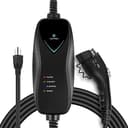
EVPOVO Level 2 32A (NEMA 14-50)

EVPOVO Level 2 32A (NEMA 14-50)

The cheapest route to 32A in our roundup that still publishes a safety listing, a 3-year warranty and a 25 ft cable. Every figure is the seller's own claim, and the model number is not among the families EPA certifies, so this is the pick for a buyer who wants the price and accepts a thinner paper trail.

Best overall for a PHEV
$141.53 · View on Amazon

$148.985% off

Price as of October 10, 2026. #ad How we’re funded

2
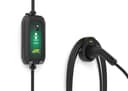
EVDANCE Level 1 & 2 Portable Charger (16A, 25 ft)

EVDANCE Level 1 & 2 Portable Charger (16A, 25 ft)

The genuinely useful dual-voltage unit: 12A from an ordinary household socket, 16A from a 240V NEMA 6-20, with a 25 ft cable and an ETL listing. It is not a fast charger and does not pretend to be — it is the one to keep in the trunk for wherever you end up parked.

Best if you cannot install anything
$119.99 · View on Amazon

Price as of October 10, 2026. #ad How we’re funded

3
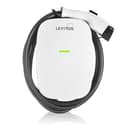
Leviton EV320 32A (hardwired)

Leviton EV320 32A (hardwired)

The plainest well-documented 32A wall charger you can buy: hardwired on a 40A breaker, ENERGY STAR certified under its own model number, and nothing to connect to Wi-Fi. That last point cuts both ways, since there is no app to fail and no app to schedule with, and the 18 ft cable is the shortest here, so measure before you buy.

Best permanent install
$649.00 · View on Amazon

Price as of October 10, 2026. #ad How we’re funded

4
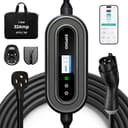
Battery Tender eCharge 32 (Level 1 + 2)

Battery Tender eCharge 32 (Level 1 + 2)

A 32A plug-in charger from a long-established battery-charger brand, ENERGY STAR certified under its own model number, with a 120V adapter in the box so it doubles as a Level 1 travel cord. It has no app by design. You pay well over the budget 32A units for that paper trail and the 3-year warranty.

Best one charger for home and trips
$349.99 · View on Amazon

$399.9512% off

Price as of October 10, 2026. #ad How we’re funded

5
Lectron Level 1 EV Charger (15A, 110V)

Lectron Level 1 EV Charger (15A, 110V)

The one Level 1 charger we would actually recommend, because it is ETL certified and comes from a brand that specializes in EV charging. A Level 1 unit is a spare and a safety net, not a primary charger — buy it on that basis and it is a genuinely useful thing to own.

Best certified Level 1 spare
$159.99 · View on Amazon

Price as of October 10, 2026. #ad How we’re funded

The picks in full

#1Best overall for a PHEV

EVPOVO Level 2 32A (NEMA 14-50)

The cheapest route to 32A in our roundup that still publishes a safety listing, a 3-year warranty and a 25 ft cable. Every figure is the seller's own claim, and the model number is not among the families EPA certifies, so this is the pick for a buyer who wants the price and accepts a thinner paper trail.

Strengths

  • Adjustable 16/20/24/32A from the buttons or the app, so it fits a 20A to 40A circuit
  • The listing claims ETL listing to UL 2594 and UL 2231-1/-2, with CCID20 leakage protection
  • 25 ft cable the seller says stays flexible down to -22°F
  • 3-year warranty per the listing, and optional Wi-Fi scheduling (Smart Life app, 2.4 GHz)

Trade-offs

  • Its model number (ZA11 prefix) is not among the families EPA's ENERGY STAR dataset certifies, so it will not satisfy a rebate that requires ENERGY STAR
  • The listing publishes no numeric enclosure rating
  • Plug-in, so a GFCI-protected garage receptacle can trip with it
  • A young brand with far less owner history than Leviton or Battery Tender
ConnectorJ1772
Max output32 A
Max power7.7 kW
Cable length25 ft
InstallPlug-in (NEMA 14-50)
Outdoor ratingNot published
Warranty3 years

Spec note. The listing publishes: 32A, 7.68 kW, a NEMA 14-50 plug, a 25 ft TPU cable rated flexible to -22°F, adjustable 16/20/24/32A, Wi-Fi through the Smart Life app (2.4 GHz) or button control, ETL listing to UL 2594 and UL 2231-1/-2, CCID20 leakage protection and a 3-year warranty, with the seller's estimate of about 22-25 miles of range per hour. Amazon reports model ZA11-U007KBF-F004. EPA's ENERGY STAR dataset certifies the Zopoise ZA05 and ZA10 families at 32A but not ZA11, so we do not treat it as ENERGY STAR certified. The enclosure is described only as weather-resistant, with no rating number.

Specs read from the product listing, on September 18, 2026. “Not published” means the manufacturer does not state that figure.

#2Best if you cannot install anything

EVDANCE Level 1 & 2 Portable Charger (16A, 25 ft)

The genuinely useful dual-voltage unit: 12A from an ordinary household socket, 16A from a 240V NEMA 6-20, with a 25 ft cable and an ETL listing. It is not a fast charger and does not pretend to be — it is the one to keep in the trunk for wherever you end up parked.

Strengths

  • ETL listed — a named testing lab, which several cheaper travel units cannot claim
  • Runs from a standard 120V socket or a 240V NEMA 6-20, roughly doubling the rate on the latter
  • 25 ft cable is unusually long for a travel unit, which matters when the outlet is nowhere near the car

Trade-offs

  • 16A maximum — this is a top-up charger, not a replacement for a 40A home install
  • The 240V mode needs a NEMA 6-20 outlet, which most houses do not have
  • No published enclosure rating or warranty term
ConnectorJ1772
Max output16 A
Max power3.8 kW
Cable length25 ft
InstallPlug-in (NEMA 5-15 or 6-20)
Outdoor ratingNot published
WarrantyNot published

Spec note. The listing publishes 12A at 120V and 16A at 240V, a 25 ft cable, an ETL listing and both NEMA 5-15 and 6-20 plug options, stated as compatible with all EVs and PHEVs. It does not publish an enclosure rating or a warranty term.

Specs read from the product listing, on August 11, 2026. “Not published” means the manufacturer does not state that figure.

#3Best permanent install

Leviton EV320 32A (hardwired)

The plainest well-documented 32A wall charger you can buy: hardwired on a 40A breaker, ENERGY STAR certified under its own model number, and nothing to connect to Wi-Fi. That last point cuts both ways, since there is no app to fail and no app to schedule with, and the 18 ft cable is the shortest here, so measure before you buy.

Strengths

  • Hardwired, so a plain breaker feeds it and there is no receptacle to wear, overheat or trip a GFCI
  • Leviton publishes its full standards list, including UL 2594, and EPA's ENERGY STAR dataset lists the EV320 by model number
  • NEMA Type 3R enclosure and a cable Leviton says is designed not to freeze and crack, rated -30°C to 50°C
  • Optional RFID access control, switched off out of the box

Trade-offs

  • 18 ft cable, the shortest in our 32A roundup
  • 2-year limited warranty, against 3 to 5 years on the other 32A picks
  • No Wi-Fi or app, so any scheduling has to come from the car
  • Amazon showed 'Only 11 left in stock (more on the way)' when we checked on 18 September 2026
ConnectorJ1772
Max output32 A
Max power7.7 kW
Cable length18 ft
InstallHardwired (40A breaker)
Outdoor ratingNEMA Type 3R (indoor/outdoor)
Warranty2 years (limited)

Spec note. Leviton publishes: 32A, 208/240 VAC, 7.6 kW output, a 40A breaker, an 18 ft (5.5 m) cable, hardwired only, a PC+PBT plastic NEMA Type 3R enclosure, -30°C to 50°C operation, a 20 mA CCID per UL 2231, certification to UL 2594, UL 2231-1/-2, UL 2251 and others with cETLus, and ENERGY STAR. EPA's dataset lists model EV320 (qualified 2022-10-24, 18 ft cord). It has no Wi-Fi; the Wi-Fi sibling is the EV32W. Leviton's own store listed it above the Amazon price when we checked.

Specs read from the product listing, on September 18, 2026. “Not published” means the manufacturer does not state that figure.

#4Best one charger for home and trips

Battery Tender eCharge 32 (Level 1 + 2)

A 32A plug-in charger from a long-established battery-charger brand, ENERGY STAR certified under its own model number, with a 120V adapter in the box so it doubles as a Level 1 travel cord. It has no app by design. You pay well over the budget 32A units for that paper trail and the 3-year warranty.

Strengths

  • ENERGY STAR certified: EPA's dataset lists the 022-3017 family, and the maker publishes cETLus to UL 2594
  • Level 1 and Level 2 in one box: a NEMA 14-50 plug plus a 14-50R-to-5-15P adapter
  • 25 ft output cord, an IP66 rating and a 3-year warranty
  • No app to set up or fail; status and error messages show on an LCD

Trade-offs

  • Costs well over twice the cheapest 32A plug-in units
  • Plug-in, so a GFCI-protected garage receptacle can trip with it
  • No scheduling app, so off-peak timing has to come from the car
  • Amazon showed 'Only 4 left in stock (more on the way)' when we checked on 18 September 2026
ConnectorJ1772
Max output32 A
Max power7.7 kW
Cable length25 ft
InstallPlug-in (NEMA 14-50; 120V 5-15 adapter included)
Outdoor ratingIP66
Warranty3 years

Spec note. Battery Tender publishes: 32A Level 2 at about 7.7 kW (about 20-25 miles of range per hour), about 1.9 kW on 120V, a dedicated 240V 40 Amp circuit minimum, a 25 ft output cord, IP66, cETLus (UL 2594), ENERGY STAR, FCC and ICES, 6.37 lb, and a 3-year warranty. EPA's ENERGY STAR dataset lists the 022-3017-XX-XX family as a Level 1/Level 2 dual-input charger (qualified 2024-01-04, 25 ft cord). The maker's own store listed it above the Amazon price when we checked. A bundle with a Tesla adapter is sold as a separate listing.

Specs read from the product listing, on September 18, 2026. “Not published” means the manufacturer does not state that figure.

#5Best certified Level 1 spare

Lectron Level 1 EV Charger (15A, 110V)

The one Level 1 charger we would actually recommend, because it is ETL certified and comes from a brand that specializes in EV charging. A Level 1 unit is a spare and a safety net, not a primary charger — buy it on that basis and it is a genuinely useful thing to own.

Strengths

  • ETL certified — the single most important thing on a device left plugged in overnight
  • Plugs into any standard 110V household outlet, so it works anywhere
  • Includes a 16 ft extension cord alongside the J1772 cable

Trade-offs

  • Level 1 is slow — plan on topping up rather than a full charge overnight
  • Costs more than the no-name Level 1 units, which is the trade for the certification
  • 15A on a shared household circuit can trip a breaker if something else is on it
ConnectorJ1772
Max output15 A
Max powerNot published
Cable length16 ft
InstallPlug-in (standard 110V outlet)
Outdoor ratingNot published
WarrantyNot published

Spec note. The listing publishes 110V, 15A, ETL certification and a 16 ft extension cord with a J1772 cable. 110V at 15A works out to roughly 1.6 kW, but the listing does not publish a kW figure so the spec table leaves it blank rather than printing our arithmetic as a manufacturer spec.

Specs read from the product listing, on August 11, 2026. “Not published” means the manufacturer does not state that figure.

Find your car’s onboard charger rating first

Everything on this page is secondary to one figure, and we are not going to guess it for you. Manufacturers publish PHEV onboard-charger ratings inconsistently — some state a kW figure in the specification sheet, some publish only a charge time, and some publish neither — so there is no table we could put here that would be true for your car.

Three places to look, in order of reliability:

  1. The owner’s manual, charging section.Look for “onboard charger”, “maximum AC charging power”, or a kW figure next to Level 2 charging. This is the authoritative answer for your model year.
  2. The manufacturer’s published charge time on a 240V charger. If they publish a full charge in roughly two hours on Level 2, you can work backwards: pack size divided by hours is roughly the rate the car accepts. It is an estimate rather than a specification, and we would treat it as one.
  3. The car itself, while charging. Most PHEVs show the current charging power on the dash or in the app. Plug into any 240V charger and read the number. That is the ceiling, measured on your actual car.

Once you have it, the decision is mechanical. A charger needs to supply at least the car’s rate and there is no benefit to supplying more. Our slow-charging guide covers what happens when the two numbers do not match, which on a PHEV is most of the time.

When Level 1 is genuinely enough

Do the arithmetic for your own situation rather than taking anyone’s word, including ours. A standard 120V household outlet at 12 amps delivers roughly 1.4 kW. Over a twelve-hour overnight window that is around 17 kWh— which for a great many plug-in hybrids is the entire battery.

If your pack is in that range and the car sits still overnight, a Level 1 cord fills it every night with no electrician, no permit and no circuit. That is the whole case, and for a large share of PHEV owners it is the correct answer. The included cord that came with the car may already be doing this job perfectly well.

Level 1 stops being enough in three specific situations:

  • Short dwell times. If the car is home for five hours rather than twelve, 1.4 kW gets you about 7 kWh and you start each day part-charged.
  • Two trips a day. A midday top-up is where Level 2 earns its money on a small battery, because it turns a two-hour lunch stop into a meaningful charge.
  • Cold weather. At 120V a meaningful share of the power can go to conditioning the pack rather than filling it, so the margin that worked in July can disappear in January. Our cold-weather guide covers it.

Why adjustable amperage is the feature to pay for

Pick one leads this page because of one specification: it steps down to 16, 20, 24 or 32 amps from buttons on the unit.

On a PHEV that is worth more than raw output. It lets you install on whatever circuit exists — a 20-amp circuit supports 16 amps, a 30-amp circuit supports 24 — rather than paying for a new 50-amp run to feed a car that will draw half of it. Code sizes a continuous load at 125% of its draw, so matching the charger to the circuit you have is often the difference between a $200 install and a $1,500 one. Our amps and circuits guide covers the sizing, and our installation cost guide covers the bill.

It also means the charger is not wasted if the PHEV is a stepping stone. When the next car is a full EV, dial the same unit up to 32 amps and it is still the right charger.

Outlets you may already have

Before you quote a new circuit, check what is already in the garage. A PHEV’s modest appetite means existing outlets are far more likely to be sufficient than they are for a full EV.

A NEMA 6-20(a 240V 20-amp outlet) supports 16 amps continuous, which is roughly 3.8 kW — comfortably more than many PHEV onboard chargers can take. Pick two runs on exactly that. A dryer outlet is a different and more complicated question, and we have written it up separately in charging an EV from a dryer outlet, because derating a 30-amp circuit properly is not a plug adapter decision. Our NEMA outlet guide decodes the numbering so you can identify what is on your wall.

What we left out, and why

  • Every 40A and 48A charger on this site. They are good products and they are the wrong purchase here. A PHEV cannot draw 40 amps, so the money goes into the circuit rather than into charging. If a full EV is arriving within a year or two, read the main roundup and buy for that car instead.
  • Whole-home load management. Worth paying for when a charger is asking for 48 amps on a constrained panel. At 16 amps the problem it solves mostly does not arise.
  • Native-NACS chargers. Plug-in hybrids sold in the US take J1772 for AC charging. Every pick here is J1772.

The short answer

Look up your car’s onboard-charger rating, then buy the cheapest certified charger that meets it. For most PHEV owners that is the adjustable 32-amp unit at pick one on whatever circuit the garage already has, or the dual-voltage portable at pick two if there is nothing to install on. Buy the Leviton if you want it hardwired and permanent. Do not buy 48 amps for a car that cannot use 20.

One buying note. Several of these brands sell direct as well as on Amazon and the prices are not always the same. We earn a commission on the links here and nothing on the direct ones, and we would still rather you paid less — check both.

Frequently asked questions

Do I need a Level 2 charger for a plug-in hybrid?

Often not. PHEV batteries are small and their onboard chargers are rated low, so an overnight Level 1 charge frequently fills the pack completely — a 120V outlet at 12 amps delivers roughly 1.4 kW, which over twelve hours is around 17 kWh. Work out your pack size and your parking window before assuming you need a 240V install.

Will a 40A charger charge my PHEV faster?

Only up to your car's onboard-charger rating, which on a PHEV is usually modest. If the car accepts around 3.3 kW, a 40-amp wall charger delivers exactly what a 16-amp one would — the extra amps have nowhere to go. Look the figure up in your owner's manual before buying any charger.

What size charger should I buy for a plug-in hybrid?

Match the car's onboard-charger rating, then match the circuit you have. An adjustable charger that steps down to 16 or 20 amps is the most useful purchase, because it installs on an existing small circuit rather than requiring a new 50-amp run — and it can be dialled up later if your next car is a full EV.

Can I charge a plug-in hybrid from a normal wall socket?

Yes. That is what the cord supplied with the car is for, and for many PHEVs it is sufficient every night. Use a dedicated, properly grounded outlet, do not run it through a household extension cord, and check the plug for warmth in the first few sessions.

How long does it take to charge a plug-in hybrid?

It depends on the pack size and the onboard-charger rating, both of which vary widely. The reliable way to find out for your car is the manufacturer's published charge time for Level 1 and Level 2, which most publish even when they do not publish a kW rating. On Level 2 a PHEV is commonly a small number of hours rather than overnight.

Is it worth installing a charger if I might buy a full EV later?

Yes, and it changes which charger to buy. An adjustable unit lets you run at 16 amps for the PHEV today and 32 amps for the EV later on the same hardware. If the full EV is arriving soon and you want 40 amps or more, it is cheaper to have the electrician size the circuit for that now than to pay for a second visit.

Sources

Keep reading