Amp & Adapter

Best EV Chargers for Two Cars

Four ways to charge two EVs at one house, ranked by what they cost — starting with the one that needs no second charger at all.

By Stephen V.Last updated How we rank

The second EV arrives and the assumption arrives with it: two cars, two chargers, two circuits. That is one of four possible answers, and it is the most expensive one. It is also, for a large share of two-EV households, unnecessary.

The reason is that overnight charging capacity is enormous relative to how much most households actually use. A single 40A charger delivers roughly 9.6 kW. Across a ten-hour night that is close to 100 kWh — considerably more than two ordinary commutes consume between them. The constraint is almost never total energy. It is whether both cars need it at the same time, and how much you mind moving a plug.

So work through the four routes below in order of cost and stop at the first one that fits your week. Each has picks attached, and the honest ranking is that most people should stop at route one or two.

How this is funded: we earn a commission if you buy through our links, at no extra cost to you. It never changes which product we recommend, and we’ll tell you plainly when we’d skip one. Full disclosure.

Quick picks

Ranked on published specs, install flexibility and buyer fit. Select a row to jump to the full write-up. We have not bench-tested these units — here is exactly what we do instead.

#ProductBest forPrice
1
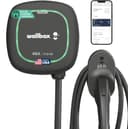
Wallbox Pulsar Plus

Wallbox Pulsar Plus

The compact one. It's the smallest 48A charger here by a wide margin, so it suits a tight garage wall or a design-conscious install — with power sharing if you end up charging two cars.

Best for power sharing
$614.99 · View on Amazon

$699.9912% off

Price as of September 2, 2026. #ad How we’re funded

2
ChargePoint Home Flex

ChargePoint Home Flex

The default recommendation for most homes: an adjustable amperage from 16A up to 50A means one unit fits almost any panel, and the app is the most mature in the category. You pay a little for the polish, but it's the safe pick.

Best single shared charger
$456.74 · View on Amazon

Price as of September 2, 2026. #ad How we’re funded

3
Emporia Level 2 EV Charger

Emporia Level 2 EV Charger

The most charger for the money right now: 48A output and a genuinely useful app at a price that undercuts the premium names. If you have (or can get) a 60A circuit, this is the one that turns the extra amps into the lowest cost per kW installed.

Best value second charger
$449.00 · View on Amazon

Price as of September 2, 2026. #ad How we’re funded

4
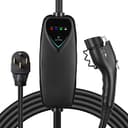
Lectron 40A Portable Level 1/2 Charger

Lectron 40A Portable Level 1/2 Charger

The best all-round portable: a real 40A / 9.6 kW Level 2 charger on a NEMA 14-50 plug, with a Level 1 adapter for a standard outlet. For many people this is all the home charger they need, and it comes with you on trips.

Cheapest second charger
$269.99 · View on Amazon

Price as of September 2, 2026. #ad How we’re funded

The picks in full

#1Best for power sharing

Wallbox Pulsar Plus

The compact one. It's the smallest 48A charger here by a wide margin, so it suits a tight garage wall or a design-conscious install — with power sharing if you end up charging two cars.

Strengths

  • Up to 48A / 11.5 kW in the smallest housing in its class
  • Power Boost and Power Sharing for multi-car or limited-panel homes
  • App scheduling and energy metering

Trade-offs

  • Hardwired only for the 48A version — no plug option at full output
  • The compact body runs the cable management tighter than a bigger box
ConnectorJ1772
Max output48 A
Max power11.5 kW
Cable length25 ft
InstallHardwired (48A) or plug-in (40A)
Outdoor ratingNEMA 3R (indoor/outdoor)
Warranty3 years

Spec note. The 40A plug-in variant exists, but the 48A model is hardwired on a 60A circuit. Power Sharing lets two Pulsar Plus units split one circuit — the cleanest answer to charging two EVs without a panel upgrade.

Specs read from the product listing, on July 19, 2026. “Not published” means the manufacturer does not state that figure.

#2Best single shared charger

ChargePoint Home Flex

The default recommendation for most homes: an adjustable amperage from 16A up to 50A means one unit fits almost any panel, and the app is the most mature in the category. You pay a little for the polish, but it's the safe pick.

Strengths

  • Amperage is dial-set from 16A to 50A, so it matches whatever circuit your electrician can give you
  • Sold hardwired or with a NEMA 14-50 / 6-50 plug, so there is a version for the install you want
  • Mature app with scheduling, energy tracking and utility rate integration

Trade-offs

  • Costs more than a bare-bones 40A unit that does the same core job
  • App-forward design is more than a set-and-forget owner needs
ConnectorJ1772
Max output50 A
Max power12 kW
Cable length23 ft
InstallHardwired (plug-in 14-50 / 6-50 sold as separate models)
Outdoor ratingNEMA 3R (indoor/outdoor)
Warranty3 years

Spec note. ChargePoint sells the Home Flex as separate hardwired and plug-in models, so pick the install before you buy. The hardwired version — the one linked here — takes circuits from 20A to 80A and reaches the full 50A, which needs a 60A breaker at full output (the continuous-load 80% rule). The NEMA 14-50 and 6-50 plug-in versions are capped at 40A / 9.6 kW, which is plenty for overnight charging.

Specs read from the product listing, on July 19, 2026. “Not published” means the manufacturer does not state that figure.

#3Best value second charger

Emporia Level 2 EV Charger

The most charger for the money right now: 48A output and a genuinely useful app at a price that undercuts the premium names. If you have (or can get) a 60A circuit, this is the one that turns the extra amps into the lowest cost per kW installed.

Strengths

  • 48A / 11.5 kW on a 60A circuit — near the top of home output
  • Load management and scheduling in the app, at a budget price
  • Plug-in or hardwired, NEMA 4 outdoor-rated

Trade-offs

  • 48A requires a 60A circuit, which not every panel has room for
  • Newer brand than ChargePoint or Wallbox, with a shorter track record
ConnectorJ1772
Max output48 A
Max power11.5 kW
Cable length25 ft
InstallPlug-in (NEMA 14-50), convertible to hardwired
Outdoor ratingNEMA 4 (outdoor)
Warranty3 years

Spec note. Ships on a NEMA 14-50 plug, which limits it to 40A; to pull the full 48A an electrician hardwires it on a 60A breaker. Pairs with Emporia's energy monitor for whole-home load management. Emporia now markets this unit as the Emporia Classic on its own store; the Amazon listing still uses the original name.

Specs read from the product listing, on August 26, 2026. “Not published” means the manufacturer does not state that figure.

#4Cheapest second charger

Lectron 40A Portable Level 1/2 Charger

The best all-round portable: a real 40A / 9.6 kW Level 2 charger on a NEMA 14-50 plug, with a Level 1 adapter for a standard outlet. For many people this is all the home charger they need, and it comes with you on trips.

Strengths

  • True 40A Level 2 on a 14-50 outlet — same overnight speed as a wall unit
  • Includes a 120V adapter to fall back to any standard outlet
  • Packs in the trunk for road trips and destination charging

Trade-offs

  • Needs a 14-50 outlet installed to hit full speed at home
  • No wall bracket or scheduling — it's a cable, not a smart charger
ConnectorJ1772
Max output40 A
Max power9.6 kW
Cable length21 ft
InstallPlug-in (NEMA 14-50 + 5-15 adapter)
Outdoor ratingIP66 connector
Warranty1 year

Spec note. Adjustable amperage on some units lets you dial it down for a weaker outlet. On a standard 120V outlet it drops to Level 1 speed (a few miles of range per hour), which is the physics of the outlet, not the charger.

Specs read from the product listing, on July 19, 2026. “Not published” means the manufacturer does not state that figure.

Route 1 — One charger, moved between cars. Cost: nothing.

Genuinely the right answer for more households than admit it. One Level 2 charger, a cable long enough to reach both parking spots, and whoever is emptier gets it tonight. Most EVs let you set a charge limit and a schedule, so you can top one car to 80% and switch.

The two things that make this work or fail are cable length and where the charger is mounted. Measure from the proposed charger position to the charge port of each car as they actually park, and buy for the longer distance plus slack. Mounting between the two bays rather than at one end frequently turns an impossible reach into an easy one. A 25 ft cable covers a two-car garage from a central position in most layouts.

Fails when: both cars regularly arrive near empty and leave early, or one driver keeps unusual hours, or nobody will reliably swap the plug. Those are real reasons — but check that they are your reasons before spending.

Route 2 — Power sharing. Cost: a second charger, one circuit.

This is the answer most two-EV households should actually buy, and the one least understood. Power sharing (some brands call it load sharing or power management) lets two compatible chargers sit on a single circuitand negotiate between themselves — each takes a share while both cars are plugged in, and whichever is still charging when the other finishes takes the full circuit.

Why that matters financially: the expensive part of a two-charger install is almost never the second charger. It is the second circuit— the breaker space, the conduit run, and in older houses the panel or service upgrade that a second 50A branch triggers. Power sharing skips all of it. Both cars are plugged in every night, nobody moves a cable, and the electrician runs one circuit.

The Wallbox Pulsar Plusis our pick here specifically because it publishes this capability, and it is by a wide margin the smallest unit in its class — which matters when you are hanging two of them on one garage wall. The Pulsar Plus review covers what you trade for that size. Confirm the feature and the exact model pairing with the manufacturer before ordering: power sharing works between specific units, not between any two chargers of the same brand.

Our load management guide covers the wider family of techniques this belongs to, including load-managed chargers that throttle themselves against the whole house rather than just each other.

Route 3 — Two chargers, two circuits. Cost: the most.

The straightforward answer, and the right one when both cars genuinely need a full charge on the same schedule — two long commutes, or a household where one car is a large-battery truck that arrives empty.

Before you commit, get a load calculation. Two 40A chargers means two 50A circuits, which is 100A of continuous-rated load added to a service that also runs a range, an air conditioner and a dryer. Many panels will not take that without an upgrade, and a service upgrade routinely costs more than both chargers together. That single quote is what pushes most households back to route 2. Our installation cost guide covers what drives it.

If you go this way, the Emporia Level 2is our value pick for the second charger: it starts on a NEMA 14-50 plug at 40A and converts to hardwired higher output later, so you can install the cheaper circuit now and revisit. And there is no rule that both chargers must match — a capable unit for the car that needs it and a cheaper one for the car that does not is a perfectly sensible split.

Route 4 — One wall charger plus a portable. Cost: least of the two-unit options.

The underrated compromise. Keep your existing wall charger for the primary car, and buy a portable 40A unitfor the second. Plug it into a NEMA 14-50 outlet — which is a far cheaper thing to have installed than a hardwired charger circuit, and useful for other purposes — and it delivers exactly the same rate as a wall-mounted 40A charger, because it is one.

The Lectron 40A Portable does this well and then keeps earning: it packs into the trunk for trips where the destination has an outlet and no charger. Our road-trip guide covers that second job, and our NEMA adapter guide covers running one from a dryer or welder outlet you may already have.

The caution: if both cars charge simultaneously on separate circuits, you are back to a real load question, so this route works best when the two cars charge on different nights or the outlet is on a circuit with headroom.

How to choose in one paragraph

If both cars can charge on alternate nights, buy one good charger with a long cable and stop. If they must both plug in nightly but your panel is tight, buy power sharing— it is the answer this problem actually has. If both need full charges simultaneously and your panel can feed it, run two circuits. And if you already own one charger and just need to cover a second car cheaply, a portable on an outlet does the job for the least money. In every case, get the load calculation before you buy anything: it is the number that decides which of these four you can afford, and it costs a service call.
Frequently asked questions

Can two EVs share one home charger?

Yes, and for many households it is the right answer. One Level 2 charger delivers far more energy across an overnight window than two ordinary commutes consume, so the constraint is scheduling rather than capacity. It works if the cable reaches both parking spots and someone will move the plug; it fails if both cars regularly arrive empty and leave early.

What is power sharing on an EV charger?

It lets two compatible chargers run on a single circuit and negotiate the available current between them — each takes a share while both cars charge, and whichever is still going when the other finishes takes the full circuit. It avoids the cost of a second circuit, which is usually the expensive part of a two-charger install.

Do I need two circuits for two EV chargers?

Not if the chargers support power sharing. Without it, yes — each charger needs its own appropriately sized circuit, which means two 50A breakers for two 40A chargers. That is 100A of continuous-rated load added to your service, which many older panels cannot take without an upgrade.

Can I use a portable charger as a second home charger?

Yes. A 40A portable plugged into a NEMA 14-50 outlet delivers the same 9.6 kW as a wall-mounted 40A unit, because it is functionally the same hardware in a different housing. It also travels, which a wall charger does not. Have the outlet installed by an electrician on a properly sized circuit.

How many amps do I need for two EVs?

Usually far fewer than expected. Two ordinary commutes rarely consume more energy overnight than a single 40A charger can deliver. The question is simultaneity, not total capacity — so before sizing up, work out whether both cars genuinely need charging at the same time or merely on the same night.

Sources

Keep reading