Amp & Adapter

Level 2 EV Charger Comparison Chart

Every Level 2 charger we cover, in one table, on the figures their manufacturers actually publish: amps, kW, cord length, install type, enclosure rating and warranty. Deliberately not a ranking.

By Stephen V.Last updated How we rank

If you want the short version: the Grizzl-E Classic Connect 40A is the charger we point most people at, because it is the least expensive unit in the table from a manufacturer that publishes a cast-metal UL Type 4 enclosure, a 25 ft cord and an operating range down to -22 °F. Need every amp you can get? The 48- and 50-amp hardwired units are at the top of the table. Need the cheapest thing that works? The 32-amp units at the bottom are real chargers, and on a small battery they are the right answer.

But a verdict is not what this page is for. This is the page for the buyer who has read three roundups, has four tabs open, and wants one table with every charger in it so they can see the trade-offs at once. Our best home chargers roundup ranks five units editorially and argues the case for each; this page ranks nothing. It sorts by output and shows you what each manufacturer publishes, including the gaps.

Which brings us to the single most useful habit this table can teach you. Count the “Not published” cells before you count the amps. A manufacturer that states an enclosure rating, a cord length and a warranty has committed to those figures and has to honor them. A charger whose specification sheet is mostly silence may well be fine — but you are buying on hope, and when it fails in February you have nothing in writing to point at. Several otherwise decent chargers in this table publish no warranty term at all.

We own none of these units and we do not bench-test chargers — here is exactly what we do instead. Every cell below is read from the manufacturer’s own page or from the retail listing our registry cites, on the dates recorded there. Nothing is estimated, and where a figure is not published the cell says so.

How this is funded: we earn a commission if you buy through our links, at no extra cost to you. It never changes which product we recommend, and we’ll tell you plainly when we’d skip one. Full disclosure.

Quick picks

Ranked on published specs, install flexibility and buyer fit. Select a row to jump to the full write-up. We have not bench-tested these units — here is exactly what we do instead.

#ProductBest forPrice
1
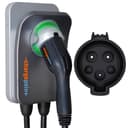
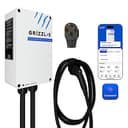
Grizzl-E Classic Connect 40A (J1772)

Grizzl-E Classic Connect 40A (J1772)

The Grizzl-E Classic with a radio in it: the same made-in-Canada metal box, the same UL Type 4 indoor/outdoor rating and the same 25 ft cable, now with Wi-Fi scheduling and 16–40A adjustment. The adjustment is the upgrade worth paying for, because it lets one charger fit whatever circuit your panel can actually spare. The connectivity is the part to think twice about — this line's reputation was built on having nothing to fail.

Best overall balance
$349.99 · View on Amazon

Price as of October 18, 2026. #ad How we’re funded

2
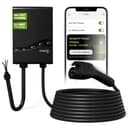
Emporia Pro (48A, hardwired, J1772)

Emporia Pro (48A, hardwired, J1772)

Not a faster charger than the Emporia Classic — Emporia's own comparison puts both at 48A — but a charger you can install where 48A would not otherwise fit. The premium buys PowerSmart load management and the Vue 3 panel monitor it depends on, which throttles charging to whatever headroom your service has left. On a 100A panel that is the difference between charging fast and rewiring the house; on a roomy 200A panel it is a feature you are paying for and will not use.

Most output with load management
$599.00 · View on Amazon

Price as of October 18, 2026. #ad How we’re funded

3
ChargePoint Home Flex (NEMA 14-50 plug)

ChargePoint Home Flex (NEMA 14-50 plug)

The plug-in Home Flex: 40A on an existing NEMA 14-50 outlet, UL Listed and ENERGY STAR certified, with the most mature app in the category. You pay more than a bare 40A box for the polish and the ChargePoint name, and you no longer get the 16-50A dial — that is the hardwired model, which is not currently sold on Amazon.

Most thoroughly documented
$599.00 · View on Amazon

$657.999% off

Price as of October 18, 2026. #ad How we’re funded

4
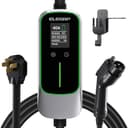
ELEGRP Level 2 EV Charger (40A, NEMA 14-50)

ELEGRP Level 2 EV Charger (40A, NEMA 14-50)

The cheapest way we found to get a genuinely ETL-certified 40A charger with a long cable. It is a plain plug-in unit with no app and no frills, which is exactly why it undercuts the name brands — buy it if the budget is the binding constraint and you already have a 14-50 outlet.

Lowest price for 40 amps
$209.99 · View on Amazon

Price as of October 18, 2026. #ad How we’re funded

The picks in full

#1Best overall balance

Grizzl-E Classic Connect 40A (J1772)

The Grizzl-E Classic with a radio in it: the same made-in-Canada metal box, the same UL Type 4 indoor/outdoor rating and the same 25 ft cable, now with Wi-Fi scheduling and 16–40A adjustment. The adjustment is the upgrade worth paying for, because it lets one charger fit whatever circuit your panel can actually spare. The connectivity is the part to think twice about — this line's reputation was built on having nothing to fail.

Strengths

  • 16–40A adjustable output, so one unit fits a 20A, 30A, 40A or 50A circuit — the outgoing Classic was fixed at 40A
  • UL Type 4 indoor/outdoor rated metal enclosure, made in Canada, rated from -30°C to +50°C
  • 25 ft published cable, which is more reach than most wall chargers at any price
  • Plugs into a NEMA 14-50 outlet, so no hardwiring bill and it moves house with you
  • Wi-Fi (2.4 GHz) with scheduling, charging statistics, remote control and utility demand-response participation
  • 3-year warranty as standard, with a 5-year extension sold separately by the manufacturer

Trade-offs

  • Not in EPA's ENERGY STAR certified-EVSE database as of 2 September 2026, although the Classic it succeeds is — check before counting on a rebate that requires ENERGY STAR
  • Wi-Fi is not optional, on a product line whose whole appeal was that there was no app to fail
  • NEMA 14-50 only: the Classic also offered a NEMA 6-50 plug variant, and that option is gone
  • New for December 2025, so there is far less long-term owner feedback than the Classic has
  • United Chargers publishes “40A 10 kW” while the Amazon listing says 9.6 kW; 40A at 240V is 9.6 kW, so size the circuit off 40A, not off either kW figure
ConnectorJ1772
Max output40 A
Max power9.6 kW
Cable length25 ft
InstallPlug-in (NEMA 14-50)
Outdoor ratingUL Type 4 (indoor/outdoor)
Warranty3 years

Spec note. United Chargers publishes: AC Level 2, 40A adjustable down to 16A, NEMA 14-50 plug, J1772 or NACS output cable, 25 ft (7.6 m) cord, UL Type 4 indoor/outdoor rating, UL/cUL listing E510712, Wi-Fi 2.4 GHz with the Grizzl-E Connect app, a 3-year warranty, an operating range of -30°C to +50°C and a 10.25 × 6.25 × 3.75 in enclosure. Two caveats we checked rather than assumed. EPA's ENERGY STAR certified-EVSE database lists eight Grizzl-E models under United Chargers Inc. and the Classic Connect is not among them, so we do not repeat the ENERGY STAR claim that appears on one sibling listing. And ENERGY STAR records the outgoing Classic's cord at 24 ft against the same 25 ft marketing figure, so if reach is tight, plan around 24 ft.

Specs read from the product listing, on September 2, 2026. “Not published” means the manufacturer does not state that figure.

#2Most output with load management

Emporia Pro (48A, hardwired, J1772)

Not a faster charger than the Emporia Classic — Emporia's own comparison puts both at 48A — but a charger you can install where 48A would not otherwise fit. The premium buys PowerSmart load management and the Vue 3 panel monitor it depends on, which throttles charging to whatever headroom your service has left. On a 100A panel that is the difference between charging fast and rewiring the house; on a roomy 200A panel it is a feature you are paying for and will not use.

Strengths

  • PowerSmart load management is bundled, not an upsell — the Vue 3 panel monitor it needs is in the box
  • 48A / 11.5 kW hardwired, or 40A on a NEMA 14-50 outlet, from the same unit
  • NEMA 4 rated for indoor or outdoor installation, with a 25 ft cable
  • Rear-entry hardwire option the Classic does not offer, which hides the conduit
  • Solar excess-charging and whole-home energy monitoring in the same app, with no subscription
  • 3-year warranty, and Emporia publishes UL Listed, NEMA rated and ENERGY STAR certification

Trade-offs

  • No faster than the cheaper Emporia Classic — both are 48A, so if you do not need load management you are paying for nothing
  • PowerSmart depends on the Vue 3 sending load data to Emporia's cloud, so the throttling that protects your panel is a connected service, not local hardware
  • The Vue 3 clamps onto your service mains, so an electrician still has to open the panel — 'no panel upgrade' does not mean 'no panel work'
  • Emporia's own “$3,000-$8,000 panel upgrade” saving is the manufacturer's marketing figure, not an independent estimate
  • Emporia does not publish the Pro's ENERGY STAR model number, which rebate forms usually ask for
ConnectorJ1772
Max output48 A
Max power11.5 kW
Cable length25 ft
InstallHardwired (48A); a NEMA 14-50 plug-in SKU runs at 40A
Outdoor ratingNEMA 4 (outdoor)
Warranty3 years

Spec note. Emporia publishes: up to 48A hardwired on a 60A circuit, up to 40A on a NEMA 14-50 outlet (50A circuit), a 25 ft cable, a NEMA 4 indoor/outdoor rating, a rear-entry hardwire option, a 3-year warranty, and UL Listed / NEMA Rated / ENERGY STAR Certified marks. Its own Classic-vs-Pro table lists BOTH models at up to 48A, 25 ft and 3 years — the Pro's differences are PowerSmart load management, the bundled Vue 3 energy monitor, solar and peak-demand features, the square case and rear entry. EPA's ENERGY STAR certified-EVSE database holds one Emporia Corp. family record (EMEVSE1, 48A, 25 ft output cord, 6 AWG, network capability 'Yes', qualified May 2022) covering fifteen further model numbers; Emporia does not publish which one the Pro carries, so confirm the model number with Emporia before filing a rebate that requires it.

Specs read from the product listing, on September 2, 2026. “Not published” means the manufacturer does not state that figure.

#3Most thoroughly documented

ChargePoint Home Flex (NEMA 14-50 plug)

The plug-in Home Flex: 40A on an existing NEMA 14-50 outlet, UL Listed and ENERGY STAR certified, with the most mature app in the category. You pay more than a bare 40A box for the polish and the ChargePoint name, and you no longer get the 16-50A dial — that is the hardwired model, which is not currently sold on Amazon.

Strengths

  • Plugs into a NEMA 14-50 outlet at up to 40A / 9.6 kW, which is a full overnight charge for almost any EV
  • Mature app with scheduling, energy tracking and utility rate integration, backed by ChargePoint's network account
  • UL Listed, ENERGY STAR certified and rated NEMA 3R for indoor or outdoor mounting, with a 23 ft cable
  • 3-year parts warranty

Trade-offs

  • Costs more than 48A hardwired units that deliver more power
  • The plug-in model runs only at 32A or 40A; the 16-50A range that made the Home Flex famous is the hardwired model, which Amazon does not currently list
  • App-forward design is more than a set-and-forget owner needs
ConnectorJ1772
Max output40 A
Max power9.6 kW
Cable length23 ft
InstallPlug-in (NEMA 14-50); hardwired 50A and NEMA 6-50 sold as separate models
Outdoor ratingNEMA 3R (indoor/outdoor)
Warranty3 years

Spec note. ChargePoint sells the Home Flex as three separate models, and the one linked here is the NEMA 14-50 plug-in (part CPH50-NEMA14-50-L23). ChargePoint publishes it for circuits rated 40A or 50A, delivering 32A or 40A respectively (up to 9.6 kW) — its installation FAQ states that all other amperage settings require the hardwired model, which takes circuits from 20A to 80A and reaches 50A on a 60A breaker. Both are UL Listed, ENERGY STAR certified, NEMA 3R rated, carry a 23 ft cable and a 3-year warranty. Use an industrial-grade 14-50 receptacle: the charger is only as safe as the outlet it plugs into.

Specs read from the product listing, on September 20, 2026. “Not published” means the manufacturer does not state that figure.

#4Lowest price for 40 amps

ELEGRP Level 2 EV Charger (40A, NEMA 14-50)

The cheapest way we found to get a genuinely ETL-certified 40A charger with a long cable. It is a plain plug-in unit with no app and no frills, which is exactly why it undercuts the name brands — buy it if the budget is the binding constraint and you already have a 14-50 outlet.

Strengths

  • ETL certified at 40A — the safety listing is the one thing you should never cut
  • 25 ft cable is longer than several units costing considerably more
  • Plugs into a NEMA 14-50 outlet, so there is no electrician bill for the charger itself

Trade-offs

  • No app, no scheduling — if you need off-peak automation, look at the Emporia
  • ELEGRP is a fixtures brand rather than an EV specialist; long-term support is the open question
  • The listing does not publish an outdoor enclosure rating, so treat it as a garage unit
ConnectorJ1772
Max output40 A
Max power9.6 kW
Cable length25 ft
InstallPlug-in (NEMA 14-50)
Outdoor ratingNot published
WarrantyNot published

Spec note. The listing publishes 40A, 240V, an ETL certification, a NEMA 14-50 plug and a 25 ft cable. It does not publish a NEMA/IP enclosure rating or a warranty term, so both read as not published here. A 40A charger requires a 50A circuit under the 80% rule.

Specs read from the product listing, on August 11, 2026. “Not published” means the manufacturer does not state that figure.

The full comparison table

30Level 2 chargers, sorted by published output and then by cord length. The circuit column is arithmetic, not a manufacturer claim: a continuous load is sized at 125% of its draw under NEC Article 625, so a 40-amp charger wants a 50-amp breaker and a 48-amp charger wants 60. Where a manufacturer publishes a different requirement — Autel publishes a 70-amp circuit for its 50-amp output — the manufacturer’s figure wins, and we say so in the notes below. The clearest case of that is ChargePoint: the arithmetic puts its 50-amp hardwired unit on a 70-amp circuit, but ChargePoint publishes that the charger “Works with circuits rated from 20 to 80A” and is configured at install — so read that row as the circuit needed for full output, not as a minimum.

ChargerAmpskWCircuitCordConnectorEnclosureWarranty
Autel MaxiCharger Home50 A12 kW70 A25 ftJ1772IP65 / NEMA 4X (indoor/outdoor)3 years
Autel MaxiCharger Home NACS (50A)50 A12 kW70 A25 ftNACS (Tesla)NEMA 4X (outdoor)3 years
ChargePoint Home Flex NACS (Hardwired)50 A12 kW70 A23 ftNACS (Tesla)NEMA 3R (indoor/outdoor)3 years
Emporia Level 2 EV Charger48 A11.5 kW60 A25 ftJ1772NEMA 4 (outdoor)3 years
Wallbox Pulsar Plus48 A11.5 kW60 A25 ftJ1772NEMA 3R (indoor/outdoor)3 years
Emporia Level 2 EV Charger (NACS)48 A11.5 kW60 A25 ftNACS (Tesla)NEMA 4 (outdoor)3 years
Emporia Pro (48A, hardwired, J1772)48 A11.5 kW60 A25 ftJ1772NEMA 4 (outdoor)3 years
Emporia Pro (48A, NACS)48 A11.5 kW60 A25 ftNACS (Tesla)NEMA 4 (outdoor)3 years
Tesla Wall Connector48 A11.5 kW60 A24 ftNACS (Tesla)Indoor/outdoor rated4 years (residential)
Tesla Universal Wall Connector48 A11.5 kW60 A24 ftNACS + J1772 (docked adapter)Type 3R / IP54 (indoor/outdoor)4 years (residential)
Lectron Nexus Level 2 (48A, hardwired)48 A11.5 kW60 A23 ftJ1772IP66 (indoor/outdoor)3 years
EVIQO Level 2 J1772 Charger (48A, Hardwired)48 A11.5 kW60 ANot publishedJ1772Not publishedNot published
EVIQO NACS Level 2 Charger (40A, Plug-in)40 A9.6 kW50 A25 ftNACS (Tesla)IP66 / NEMA 4 (outdoor)3 years
ELEGRP Level 2 EV Charger (40A, NEMA 14-50)40 A9.6 kW50 A25 ftJ1772Not publishedNot published
EVPOVO Level 2 Wall Charger (40A, 25 ft)40 A9.6 kW50 A25 ftJ1772Not publishedNot published
Grizzl-E Classic Connect 40A (J1772)40 A9.6 kW50 A25 ftJ1772UL Type 4 (indoor/outdoor)3 years
Grizzl-E Classic Connect 40A (NACS)40 A9.6 kW50 A25 ftNACS (Tesla)UL Type 4 (indoor/outdoor)3 years
Grizzl-E Duo Connect 40A (two J1772)40 A9.6 kW50 A25 ftJ1772 × 2UL Type 4 (indoor/outdoor)3 years
Grizzl-E Duo Connect 40A (J1772 + NACS)40 A9.6 kW50 A25 ftJ1772 + NACS (Tesla)UL Type 4 (indoor/outdoor)3 years
Grizzl-E Duo Connect 40A (two NACS)40 A9.6 kW50 A25 ftNACS (Tesla) × 2UL Type 4 (indoor/outdoor)3 years
Leviton EV40P 40A (NEMA 14-50 plug, Wi-Fi)40 A9.6 kW50 A25 ftJ1772NEMA Type 3R (indoor/outdoor)2 years (limited)
Grizzl-E Classic40 A9.6 kW50 A24 ftJ1772NEMA 4 (outdoor)3 years
ChargePoint Home Flex (NEMA 14-50 plug)40 A9.6 kW50 A23 ftJ1772NEMA 3R (indoor/outdoor)3 years
Lectron Nexus Level 2 (40A, plug-in)40 A9.6 kW50 A23 ftJ1772IP66 (indoor/outdoor)3 years
EVIQO Level 2 J1772 Charger (40A, Plug-in)40 A9.6 kW50 ANot publishedJ1772Not publishedNot published
Enphase IQ 40 32A (hardwired)32 A7.7 kW40 A25 ftJ1772NEMA 4 (indoor/outdoor)5 years (limited)
Battery Tender eCharge 32 (Level 1 + 2)32 A7.7 kW40 A25 ftJ1772IP663 years
EVPOVO Level 2 32A (NEMA 14-50)32 A7.7 kW40 A25 ftJ1772Not published3 years
AIMILER Level 2 32A NACS (Wi-Fi)32 A7.7 kW40 A25 ftNACS (Tesla)NEMA Type 4 / IP66 (per listing)3 years
Leviton EV320 32A (hardwired)32 A7.7 kW40 A18 ftJ1772NEMA Type 3R (indoor/outdoor)2 years (limited)

Prices are deliberately not in that table, and not because we are hiding them. Prices in this category move weekly, so every price on this site comes from a daily check with an “as of” date stamped on it — which you will find on the four product cards above and on every review page linked below. A price typed into a comparison chart is a price that is wrong by the time you read it.

How to read the five columns that matter

Amps and kW are the same fact twice

Multiply amps by 240 volts and you have watts. 32 A is 7.7 kW, 40 A is 9.6 kW, 48 A is 11.5 kW, 50 A is 12 kW. The useful question is not which number is biggest but what your car’s onboard charger will accept, because that is the real ceiling. Buying a 48-amp charger for a car with a 7.2-kW onboard charger achieves nothing at all — the argument we make on why is my EV charging slowly and 40A vs 48A.

The circuit column is where the money is

The jump from a 40-amp charger to a 48-amp one is a jump from a 50-amp circuit to a 60-amp one, and on a full panel that can be the difference between an afternoon of work and a service upgrade. If your service is 100 or 125 amps, read best for a 100-amp panel before you shop on output, and amps and circuits for how to read your own panel.

Cord length is the spec people regret

Almost nobody shops on cable length and a great many people discover after mounting that 18 ft does not reach the charge port on the far side of the car. The market tops out around 25 ft and the table shows who gets there. Full argument on best chargers with a long cable.

Enclosure rating is a weather promise in writing

NEMA Type 3R covers rain, sleet and snow. Type 4 adds windblown dust, splashing and hose-directed water; 4X adds corrosion resistance, which matters where road salt gets tracked around. “Indoor only” means exactly that. A blank cell means the manufacturer publishes nothing, which for an outdoor install should move the charger off your list — see best outdoor chargers.

Warranty is the closest thing to a published lifespan

No manufacturer publishes how long a charger lasts. The warranty is the number they are prepared to stand behind, and the spread in this table runs from two years to five, with several units publishing nothing. We made that the whole argument of how long do EV chargers last.

Three things the table cannot tell you

  • Whether the certification claim is real.EPA warns in its own ENERGY STAR material that not all chargers for sale are safety certified and that “many products sold by some major retailers may have false safety certifications displayed”. A listing that says “UL” is not the same as a model number in a certification database. We check what we can: our ENERGY STAR roundup lists only models we found in EPA’s database, and the certification guide explains which marks mean what.
  • What the app is like. Wi-Fi in a spec table is a yes or a no. Whether the scheduling works reliably at the edge of your network, and whether the company will still be running the cloud service in six years, is not a published figure. Best smart chargers and best chargers without Wi-Fi argue both sides.
  • Operating temperature. It is not a column here because roughly half the category publishes no figure at all, which would make the column mostly empty. It is a column on best chargers for cold weather, where every pick publishes one.

Where to go next

If the table has narrowed it down to two chargers, we have probably written the head-to-head: Grizzl-E vs ChargePoint Home Flex, Emporia Pro vs Wallbox Pulsar Plus, Autel vs ChargePoint Home Flex, Autel vs Emporia, Emporia vs Grizzl-E or Wallbox vs Tesla Wall Connector. If it has narrowed down to a category instead, the home chargers hub is organised by amperage, by vehicle and by situation.

And if the table has made you realise you do not know your car’s onboard charging limit, start there instead. That one figure decides more of this purchase than every other column combined.
Frequently asked questions

What is the best Level 2 EV charger?

For most households, a 40-amp unit with a published outdoor enclosure rating and a 25 ft cord — our pick is the Grizzl-E Classic Connect 40A, which is the least expensive charger in this comparison from a manufacturer that publishes a cast-metal UL Type 4 enclosure and an operating range to -22°F. 'Best' depends more on your panel and your car's onboard charger than on the charger itself, which is why this page is a table rather than a ranking.

How many amps should a home EV charger be?

As many as your car can accept and your panel can feed, and usually that means 40 amps. A 40-amp charger delivers 9.6 kW on a 50-amp circuit, which fully charges almost any EV overnight. 48 amps needs a 60-amp circuit and only pays off on cars whose onboard charger is rated 11.5 kW or more. 32 amps is plenty for a plug-in hybrid or a small battery.

What size circuit does each charger need?

NEC Article 625 sizes a continuous load at 125% of its draw, so a 32-amp charger needs 40 amps, a 40-amp charger needs 50, and a 48-amp charger needs 60. The exception in this table is Autel, which publishes a 70-amp circuit for full 50-amp output — because 50 × 1.25 is 62.5 and the next standard breaker is 70. Always use the manufacturer's published requirement over the arithmetic.

Why does this comparison chart not show prices?

Because prices in this category move weekly and a price typed into a table is wrong by the time you read it. Every price on this site comes from a daily automated check and is shown with the date it was read — you will find live prices on the product cards on this page and on every review we link to.

What does 'Not published' mean in the table?

It means we read the manufacturer's own page and the retail listing and the figure is not stated anywhere. It is an honest gap, not a judgement on the hardware — but it is worth weighing. A manufacturer that publishes an enclosure rating and a warranty term has committed to them; one that publishes neither has given you nothing to rely on if the charger fails.

Does a more expensive charger charge faster?

No. Charging speed is set by amps, and amps are capped by whichever is lower: the charger's rating or your car's onboard charger. Price in this category buys enclosure quality, cable length, software, load management and warranty length. Two chargers at wildly different prices in this table deliver exactly the same 9.6 kW.

Sources

  • U.S. DOE Alternative Fuels Data Center — Charging Electric Vehicles at Home — DOE guidance on Level 1 vs Level 2 home charging, 120V/240V service and installation (accessed July 19, 2026)
  • U.S. DOE Alternative Fuels Data Center — Electric Vehicle Charging Stations — DOE overview of charging levels, power output and connector types (J1772, CCS, NACS) (accessed July 19, 2026)
  • EPA ENERGY STAR — Electric Vehicle Chargers — ENERGY STAR on certified EV chargers, safety certification and standby energy use (accessed July 19, 2026)
  • EPA ENERGY STAR — Certified Electric Vehicle Chargers (AC Output) — The list of ENERGY STAR certified AC (Level 2) EV chargers (accessed July 19, 2026)
  • EPA ENERGY STAR — Certified Electric Vehicle Supply Equipment, AC-Output (dataset 5jwe-c8xm) — EPA's machine-readable list of certified chargers. It carries both Tesla wall units, each qualified 2023-09-18 at 48A / 11.52 kW: model 1457768 under brand "Tesla" and model 1734412 under brand "Universal Wall Connector", both with a 22 ft cord on the record (accessed September 16, 2026)
  • ChargePoint — Home Flex (CPH50) datasheet — ChargePoint's own datasheet: a "Station Enclosure Rating Type 3R per UL 50E", an operating ambient of -30 °C to 50 °C (-22 °F to 122 °F), storage from -40 °C to 60 °C, operating humidity to 95% at 50 °C non-condensing, a 23 ft (7010.4 mm) cable, and UL and cUL listing to UL 2594, UL 2231-1 and UL 2231-2 with NEC Article 625 compliance (accessed October 12, 2026)
  • United Chargers — Grizzl-E Classic Connect 40A — The maker's own specification block: "Adjustable current 40A - 16A", "Max power 40A 10kW", "Plug type NEMA 14-50", "Connector Type 1 (SAE J1772); NACS", "Output cable length 25ft (7.6m)", a 10.25 x 6.25 x 3.75 in enclosure with "UL Type 4 Indoor/Outdoor Rating", "Operating temperature -30C .. +50C (-22F .. 122F)", "Certifications UL/cUL E510712", "Wi-Fi (2.4 GHz); Mobile Application", and a 3-year or 5-year warranty choice. The description calls it "made-in-Canada"; the formal country-of-origin field is blank (accessed October 12, 2026)
  • Autel Energy (official store) — MaxiCharger AC Elite Home 50A 12 kW EV Charger — Autel's own US store listing: "Maximum 12 kW (240 VAC @ 50 A model)" adjustable 16-50 A, hardwired, and a 70 A circuit required for full output; an SAE J1772 connector on a "25 ft. (7.5 m)" cable; "IP65 / NEMA 4X"; "-40 to 131 °F (-40 to 55 °C)" operating temperature; "Bluetooth, Wi-Fi, Ethernet, CAN, RS485"; "Adaptive Load Management (ALM); Dynamic Load Balancing (DLB)"; CSA and ENERGY STAR certified; "3 years warranty"; about 15.4 lb with the in-body holster (accessed October 12, 2026)
  • Leviton — EV320 32 A Level 2 Charging Station (specifications tab) — Leviton's published specification list, read in full on this date: 32 A, 208/240 VAC, "7.6kW Output", a 40 A breaker, an "18 ft. (5.5 m)" cable, "HARDWIRED ONLY", a "Plastic (PC+PBT)" enclosure at "NEMA Type 3R", -30 °C to 50 °C operation, a "20 mA CCID per UL 2231", "Optional access control; station comes with RFID disabled", "Energy Star Certified", a "2-Year Limited" warranty, and a standards line reading "UL2594, UL 2231-1, UL 2231-2, UL 2251, UL 62, UL 991, UL 1998, NFPA 70 Article 625, UL840, CSA Std. C22.2#280, OCPP 1.6 Compliant, cETLus". The Wi-Fi sibling is named as the EV32W; no price is listed on the page (accessed October 12, 2026)
  • Qmerit — NEMA 14-50 and GFCI Protection for EV Chargers (May 1, 2026) — An installer network's explanation: NEC 210.8(A) requires GFCI protection for 125- through 250-volt garage receptacles, NEC 625.54 requires it for receptacles installed for EV charging, the charger's own ground-fault protection can conflict with an external GFCI, and hardwired chargers are not subject to the 625.54 receptacle requirement (accessed September 18, 2026)

Keep reading