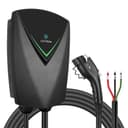
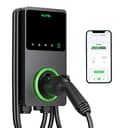
The five alternatives, side by side
Every cell is read from the same registry entries as the reviews above. The install column is the one to read against the Pro: the Pro is hardwired at 48 A (its plug-in SKU runs at 40), and two of these alternatives plug in instead — which changes the electrician’s bill, the GFCI question, and whether the charger moves house with you.
| Product | Connector | Max output | Max power | Cable | Install | Weather rating | Warranty | Price |
|---|
| Lectron Nexus Level 2 (48A, hardwired) | J1772 | 48 A | 11.5 kW | 23 ft | Hardwired only | IP66 (indoor/outdoor) | 3 years | |
|---|
| Emporia Level 2 EV Charger | J1772 | 48 A | 11.5 kW | 25 ft | Hardwired (ships with whip) | NEMA 4 (outdoor) | 3 years | |
|---|
| Autel MaxiCharger Home | J1772 | 50 A | 12 kW | 25 ft | Hardwired (70A circuit for 50A); plug-in sold as separate 40A models | IP65 / NEMA 4X (indoor/outdoor) | 3 years | |
|---|
| Wallbox Pulsar Plus | J1772 | 48 A | 11.5 kW | 25 ft | Hardwired (48A) or plug-in (40A) | NEMA 3R (indoor/outdoor) | 3 years | |
|---|
| Grizzl-E Classic Connect 40A (J1772) | J1772 | 40 A | 9.6 kW | 25 ft | Plug-in (NEMA 14-50) | UL Type 4 (indoor/outdoor) | 3 years | |
|---|
Why people look for an Emporia Pro alternative
Three reasons come up repeatedly, and they point at different answers.
“I want the 48 amps but not the price.”Then you want the Lectron Nexus 48A or Emporia’s own Level 2. Both are 48-amp hardwired units with three-year warranties, and neither includes load management.
“I don’t want to hardwire.”Then you want the Grizzl-E Classic Connect or the plug-in Wallbox configuration. Both accept a NEMA 14-50, which caps them at 40 A — the plug is the limit, not the charger — and in exchange you get a unit you can unplug, swap or take with you. The trade-off is set out in NEMA 14-50 vs hardwired.
“I want the energy monitoring without the Emporia ecosystem.”This is the honest hard case. The Pro’s data is good and its load management depends on an Emporia panel monitor, so the substitutes are partial: the Autel app is the best of the alternatives here, and the Wallbox offers power sharing if the real problem is two cars rather than panel headroom. Our smart charger roundup compares what each app actually does.
How we ranked these five
The Lectron Nexus 48A is the closest like-for-like swap.Same 48 A / 11.5 kW output as the Pro, hardwired, with an IP66 indoor/outdoor rating, a 23-foot cable and a three-year warranty — for less money. We are clear about who it is wrong for, in the registry entry’s own words: most households will pay for amps their car cannot draw and lose the ability to unplug and take it with them. It is right for a large-battery EV on a panel that can carry 60 amps, which is exactly the buyer who was considering the Pro without needing PowerSmart. Our Nexus review has the certification trail.
The Emporia Level 2 is the alternative most Pro shoppers should actually buy, and it is from the same company. Identical 48-amp output by Emporia’s own comparison, the same NEMA 4 outdoor enclosure, the same 25-foot cable, the same three-year warranty and the same app — without PowerSmart load management and the Vue 3 monitor it requires. If your panel has a spare 60-amp circuit, this is the Pro minus the feature you do not need, at a lower price. Our Emporia Level 2 review and the Emporia vs Grizzl-E comparison cover it in depth.
The Autel MaxiCharger Home is the pick for a harsh climate and the best app among these alternatives.Fifty amps, Wi-Fi and Bluetooth, and the widest published temperature range in our registry at −40 °F to 131 °F behind an IP65 / NEMA 4X shell. One caveat is load-bearing and we would not bury it: Autel’s own store page asks for a 70-amp feed to reach 50 amps. If your panel could not spare 60 amps for the Pro, it certainly cannot spare 70 for this, and on a 60-amp circuit the Autel is a 48-amp charger that cost more. See our Autel vs Emporia comparison.
The Wallbox Pulsar Plus is the pick for a tight garage wall. It is the smallest 48-amp charger here by a wide margin, with a NEMA 3R indoor/outdoor rating, a 25-foot cable and a three-year warranty, and it can be configured hardwired at 48 A or plug-in at 40. It also offers power sharing, which is the right answer if what you actually have is two EVs rather than a tight panel. It is the most expensive alternative on this page. Our Pulsar Plus review and Emporia vs Wallbox comparison have the detail.
The Grizzl-E Classic Connect 40A is the budget pick and the biggest saving on this page.It steps down to 40 A / 9.6 kW, which on most cars is an identical overnight result, and in exchange it brings a made-in-Canada metal box with a UL Type 4 rating, a 25-foot cable, a three-year warranty, a NEMA 14-50 plug and 16–40 A adjustment set inside the unit. That adjustment is the closest thing on this page to a poor man’s load management: it will not respond to your panel in real time, but it does let you fit the charger to whatever circuit your panel can spare, permanently. Full detail in the Classic Connect review.
When to keep the Pro
We would not talk anyone out of the Pro in the one case it was built for. If an electrician has told you your service cannot support a dedicated 60-amp circuit, the Pro plus a Vue 3 is almost certainly cheaper than a service upgrade, and no charger below substitutes for it. The same applies if you want whole-home energy data rather than charger-only data, because that is what the Vue hardware is for. Our load management guide explains how the throttling actually works, and best chargers for solarcovers the other case where Emporia’s panel hardware pays for itself.
What to ignore when comparing
Any claim that one of these charges faster than the Pro. The ceiling is 48 amps across the whole page, and three of the five sit exactly there. Amperage above what your car accepts— many EVs cap AC charging at 7.2 kW, in which case the 40-amp budget pick and the 50-amp Autel charge identically. And a hardwired-only unit bought expecting to plug it in. Emporia, Lectron and Autel all sell plug-in and hardwired as separate, separately-configured products, so the decision is locked at purchase.