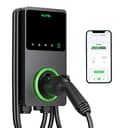
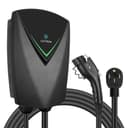
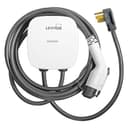
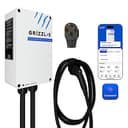
The Home Flex and its six alternatives, side by side
The first row is the original. Every cell below it is read from the same registry entries as the reviews above, and a figure a manufacturer never published prints “Not published” rather than a guess — which is itself the most useful column on this table, because it is where the cheap units separate from the expensive ones.
| Product | Connector | Max output | Max power | Cable | Install | Weather rating | Warranty | Price |
|---|
| ChargePoint Home Flex (NEMA 14-50 plug) | J1772 | 40 A | 9.6 kW | 23 ft | Plug-in (NEMA 14-50); hardwired 50A and NEMA 6-50 sold as separate models | NEMA 3R (indoor/outdoor) | 3 years | |
|---|
| Emporia Level 2 EV Charger | J1772 | 48 A | 11.5 kW | 25 ft | Hardwired (ships with whip) | NEMA 4 (outdoor) | 3 years | |
|---|
| Autel MaxiCharger Home | J1772 | 50 A | 12 kW | 25 ft | Hardwired (70A circuit for 50A); plug-in sold as separate 40A models | IP65 / NEMA 4X (indoor/outdoor) | 3 years | |
|---|
| Lectron Nexus Level 2 (40A, plug-in) | J1772 | 40 A | 9.6 kW | 23 ft | Plug-in (NEMA 14-50) | IP66 (indoor/outdoor) | 3 years | |
|---|
| Leviton EV40P 40A (NEMA 14-50 plug, Wi-Fi) | J1772 | 40 A | 9.6 kW | 25 ft | Plug-in (NEMA 14-50P, 50A circuit) | NEMA Type 3R (indoor/outdoor) | 2 years (limited) | |
|---|
| Grizzl-E Classic Connect 40A (J1772) | J1772 | 40 A | 9.6 kW | 25 ft | Plug-in (NEMA 14-50) | UL Type 4 (indoor/outdoor) | 3 years | |
|---|
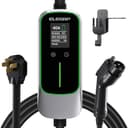
| ELEGRP Level 2 EV Charger (40A, NEMA 14-50) | J1772 | 40 A | 9.6 kW | 25 ft | Plug-in (NEMA 14-50) | Not published | Not published | |
|---|
Our four criteria, before the picks
1. Output you can actually use.A charger is only as fast as the circuit behind it and the car in front of it. The plug-in Home Flex tops out at 40 A / 9.6 kW on a 50-amp circuit; to beat that you need a hardwired unit on a 60-amp circuit (48 A) or a 70-amp circuit (50 A). If your panel cannot spare that, every charger on this page performs identically and you should buy on price, cable and enclosure instead.
2. Cable length, published. ChargePoint publishes 23 feet. Four alternatives here publish 25. That is the difference between reaching the far side of a two-car garage and buying an extension cable later, and it is the specification budget brands most often quietly shorten.
3. A published certification and enclosure rating.The Home Flex publishes UL Listing, ENERGY STAR certification and a Type 3R rating. Where an alternative publishes none of that, we say so and we would site it in a sheltered garage rather than on an exposed wall.
4. What you give up on the app. No alternative here opens a public charger with the same account. If the ChargePoint app is why you were buying, that is the trade you are making, and it is a real one.
Why people look for a Home Flex alternative
“I want more than 40 amps.”The honest answer is that you have to leave the plug-in category. The Emporia Level 2 and the Lectron Nexus 48A both deliver 48 A hardwired on a 60-amp circuit, and the Autel MaxiCharger delivers 50 A on a 70-amp circuit. Our 48A roundup covers that tier, and 40 amps vs 48 amps argues whether the upgrade is worth the electrician.
“It costs more than a 40-amp charger should.”Then the ELEGRP or the Lectron Nexus 40A give you the same 40 A on the same NEMA 14-50 outlet for less. The ELEGRP is the bigger saving and publishes the least; the Nexus publishes an IP66 rating, a three-year warranty and an ENERGY STAR record, which is why it is the swap we would actually make.
“I want the 16–50A dial, not a fixed 40.” That was the hardwired Home Flex, and it is not on Amazon right now. The closest behavior on a plug-in unit is the Grizzl-E Classic Connect, which is set 16–40 A inside the enclosure so one charger fits a 20-, 30-, 40- or 50-amp circuit. See adjustable-amperage chargers for the whole group.
“I drive a Tesla.”ChargePoint sells a NACS Home Flex, hardwired and rated to 50 A, and it is a good charger. If you want a native-NACS alternative instead, the Grizzl-E Classic Connect ships with a NACS handle at the same 40 A, and our Tesla charger roundup ranks the native-NACS field properly.
How we ranked these six
The Emporia Level 2 is the best overall alternativebecause it wins on output and cable without asking for a premium. Forty-eight amps / 11.5 kW, a 25-foot cable two feet longer than the Home Flex’s, a NEMA 4 outdoor enclosure, three years of warranty matching ChargePoint’s, and the most capable app of any alternative here. Two honest conditions: it is hardwiredand ships with a whip, so you lose the plug-in portability that is half the reason people buy a Home Flex, and 48 A needs a 60-amp circuit many older panels cannot spare. Our Emporia vs ChargePoint Home Flex comparison runs the head-to-head, and the Emporia review has the full specification trail.
The Autel MaxiCharger is the only alternative that reaches 50 amps— the figure the hardwired Home Flex publishes and the plug-in one cannot. It also carries the strongest published enclosure rating in this group, IP65 / NEMA 4X, with a 25-foot cable and three years of warranty. The conditions are the real cost: 50 A output needs a 70-amp circuit, which is a bigger ask than 60, and the plug-in Autel models are sold as separate 40-amp units, so this is a hardwired purchase. See Autel vs ChargePoint Home Flex for the full side-by-side.
The Lectron Nexus 40A is the closest like-for-like swap.Same 40 amps, same plug-in NEMA 14-50 install, the same 23-foot cable as the Home Flex, three years of warranty, an IP66 indoor/outdoor rating and specifications that are cross-checkable against EPA’s ENERGY STAR certified-EVSE database, which lists the Nexus under its own model numbers. Where its published cord length disagrees with the ENERGY STAR record we print both rather than choosing the flattering one. What you give up is the app ecosystem. Detail in the Nexus review.
The Leviton EV40P is the plug-in alternative that keeps an app. Forty amps on a NEMA 14-50 plug, a 25-foot cable, Wi-Fi with the My Leviton app, and a NEMA Type 3R shell matching the Home Flex’s rating. Two gaps worth knowing: the warranty is two years limited against ChargePoint’s three, and the app is a household scheduling app, not a public-network account. It is also the better buy than Leviton’s own hardwired 32-amp EV320, which was the dearer of the two when we last checked.
The Grizzl-E Classic Connect is the best-built alternativeand the one that behaves most like the hardwired Home Flex. A cast-metal UL Type 4 enclosure — the strongest construction here — a 25-foot cable, three years of warranty, and 16–40 A adjustment set inside the unit so one charger fits whatever circuit you can spare. Two honest cons: its ceiling is 40 A, so it does not solve the amperage complaint, and the Wi-Fi radio on the Connect generation is the newest and least proven part of a product line whose reputation was built on having nothing to fail. Read Grizzl-E vs ChargePoint Home Flex next.
The ELEGRP Level 2 40A is the budget pick and the biggest saving on this page.It is the cheapest route we have found to a genuinely ETL-certified 40-amp charger with a 25-foot cable: a plain plug-in box, no app, no scheduling, nothing to configure. The certification is the reason it is here rather than the price. What the listing does not publish is an enclosure rating or a warranty term, so we would put it on a sheltered garage wall and not on an exposed one — and if that trade bothers you, the Nexus is the next rung up. Figures in the ELEGRP review.
When to keep the ChargePoint
We would not talk anyone out of a Home Flex in three cases. If you use public charging regularly, one account and one app covering the garage and the road is a genuine convenience no alternative here reproduces. If you want the strongest published paper trail, ChargePoint publishes a full datasheet — Type 3R per UL 50E, an operating range of −30 °C to 50 °C, UL 2594 and UL 2231 listing, NEC Article 625 compliance — where two alternatives here publish no enclosure rating at all. And if your utility runs a rebate that names ENERGY STAR certification, the Home Flex qualifies; so do several alternatives, and our ENERGY STAR rounduplists which ones appear in the EPA’s own database.
What to ignore when comparing
Amperage above your circuit.A 50-amp charger on a 50-amp circuit delivers 40 A, which is exactly what the plug-in Home Flex delivers — so the upgrade is a panel project, not a shopping decision. Amperage above your car.Plenty of EVs cap AC charging at 7.2 kW regardless of what the wall can supply; our amps and circuits guide shows how to check before you spend. “Works with all EVs” as a differentiator— every J1772 charger works with every J1772 car, and with a NACS car through a forty-dollar adapter. And any cable length quoted without a source. Where a manufacturer page and a certification record disagree, we print both.