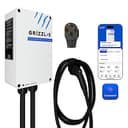
The Wall Connector against the five, side by side
Tesla’s own unit is the first row, so you can see exactly what each alternative matches and where it differs. Every cell is read from the registry entry behind each review, and each row carries its own live price.
| Product | Connector | Max output | Max power | Cable | Install | Warranty | Price |
|---|
| Tesla Wall Connector | NACS (Tesla) | 48 A | 11.5 kW | 24 ft | Hardwired (60A circuit for full output) | 4 years (residential) | |
|---|
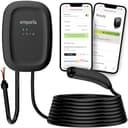
| Emporia Level 2 EV Charger (NACS) | NACS (Tesla) | 48 A | 11.5 kW | 25 ft | Hardwired (ships with whip) | 3 years | |
|---|
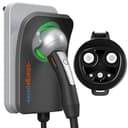
| ChargePoint Home Flex NACS (Hardwired) | NACS (Tesla) | 50 A | 12 kW | 23 ft | Hardwired | 3 years | |
|---|
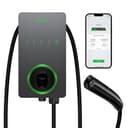
| Autel MaxiCharger Home NACS (50A) | NACS (Tesla) | 50 A | 12 kW | 25 ft | Hardwired | 3 years | |
|---|
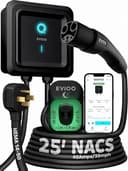
| EVIQO NACS Level 2 Charger (40A, Plug-in) | NACS (Tesla) | 40 A | 9.6 kW | 25 ft | Plug-in (NEMA 14-50) | 3 years | |
|---|
| Grizzl-E Classic Connect 40A (NACS) | NACS (Tesla) | 40 A | 9.6 kW | 25 ft | Plug-in (NEMA 14-50) | 3 years | |
|---|
What you are actually replacing
The 48 amps.Matched outright by the Emporia, and beaten on paper by the ChargePoint and Autel NACS units at 50 A. In practice the difference between 48 and 50 amps is invisible, and both of those need a bigger circuit than Tesla’s 60-amp requirement to reach their full figure — Autel publishes a 20–80 A circuit range and ChargePoint publishes hardwire compatibility from 20 A to 80 A. The real variable is your panel, not the charger. Our 48A roundup covers the circuit question properly.
The cable.Tesla publishes 24 ft. Four of the five alternatives publish 25 ft and the ChargePoint publishes 23. This is a tie, and it is worth saying because cable length is the most common regret in the category — measure the path from your intended mounting point, down the wall, around the car, to the port. Anything under about 20 ft constrains where the charger can go.
The outdoor rating.Tesla’s manual approves indoor or outdoor installation. The Emporia publishes NEMA 4, Autel NEMA 4X, EVIQO IP66 / NEMA 4, ChargePoint NEMA 3R per UL 50E, and the Grizzl-E a cast UL Type 4 with a published UL file number (E510712) and operation to −30 °C. If the charger is going on an exterior wall, that last specification is the one to compare — see outdoor chargers.
The warranty.This one Tesla wins. Four years residential against three from Emporia, ChargePoint, Autel, EVIQO and Grizzl-E. If a long warranty is the reason you were buying Tesla’s unit, that is a legitimate reason and no page should talk you out of it.
The thing nobody mentions: hardwiring
The Wall Connector is hardwired only, by Tesla’s own instruction. So are the Emporia NACS, the ChargePoint NACS and the Autel NACS. That means an electrician, a permanent installation and a charger that stays with the house. Two picks here break that pattern: the EVIQO NACS 40A and the Grizzl-E Classic Connect NACS both run on a NEMA 14-50 plug, which means you can hang them yourself on an existing outlet, swap a failed unit without a service call, and take the charger when you move. For a renter, or anyone who expects to move inside five years, that is a bigger practical difference than the eight amps they give up. The full argument is in plug-in vs hardwired, and the products are on our plug-in roundup.
How we ranked these five
The Emporia Level 2 NACS is the closest like-for-like swap. Same 48 A, same hardwired installation, a foot more cable, a NEMA 4 enclosure, UL Listed and ENERGY STAR certified, with load management and scheduling in the app. The honest caveats: the listing we link is specifically the hardwired SKU with the whip, Emporia sells a plug-in NACS version separately that caps at 40 A, and Emporia is a younger brand with a shorter track record than ChargePoint or Tesla. Our head-to-head against the Wall Connector goes spec by spec.
The ChargePoint Home Flex NACS is the pick if your panel is the problem.ChargePoint publishes hardwire compatibility with breakers from 20 A to 80 A — the widest range here — so one charger fits whatever circuit the electrician can give you, up to 50 A of output on a 60-amp circuit. It is UL Listed, ENERGY STAR certified, rated −22 °F to 122 °F, and runs the most mature app in the category. See the Wall Connector vs Home Flex comparison.
The Autel MaxiCharger NACS is the most output available— 50 A and 12 kW, adjustable from 6 A, NEMA 4X, with Autel’s published figure of roughly 48 miles of range per hour at full tilt. Check the circuit before you fall for the number: Autel publishes a dedicated 20–80 A circuit depending on the setting, and on the J1772 sibling it specifies 70 A for full 50-amp output.
The EVIQO NACS 40A is the best-certified plug-in alternative. UL, ETL, FCC and ENERGY STAR certification published, roughly 38 miles of range per hour at 40 A, a 25 ft cable and IP66 / NEMA 4 — on a NEMA 14-50 plug, so no hardwiring bill. It is the pick for a Tesla owner who wants certification paperwork and portability rather than maximum amps. It also leads our Tesla charger roundup’s plug-in slot.
The Grizzl-E Classic Connect NACS is the budget pick, and the one we would hand to someone who just wants the Wall Connector’s job done cheaply: 40 A adjustable down to 16 A, a NEMA 14-50 plug, 25 ft of cable, Wi-Fi, a cast metal UL Type 4 enclosure, three years, made in Canada. Two things to know before you buy on a rebate: it was not in EPA’s ENERGY STAR certified-EVSE database when we last checked, and United Chargers publishes “40A 10 kW” on its own page while the listing says 9.6 kW — size the circuit from 40 A, not from either kW figure. Our Wall Connector vs Grizzl-E comparison puts them side by side.
When to buy Tesla’s unit anyway
Three cases, and they are real. You want one vendor. Car, app, charger and support in one place has a value that does not appear on a spec sheet. You want the four-year warranty. Nothing here matches it. You want the Universal Wall Connector.If the garage has a Tesla and a J1772 car in it, Tesla’s Universal model docks a J1772 adapter into the unit itself — a genuinely different product, covered in our comparison of the two. And if what you want is the opposite of all this — a charger with no app and no radio at all — see chargers without Wi-Fi.