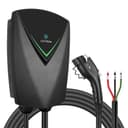
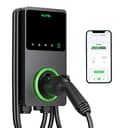
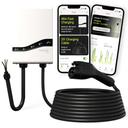
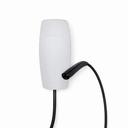
The published specs, side by side
Every cell below is read from the registry entry each review on this page is built from, so the table and the write-ups cannot disagree. The “Check price” button on each row carries that unit’s live price when our daily price check has one, and falls back to the listing when it does not.
| Product | Connector | Max output | Max power | Cable | Install | Warranty | Price |
|---|
| Emporia Level 2 EV Charger | J1772 | 48 A | 11.5 kW | 25 ft | Hardwired (ships with whip) | 3 years | |
|---|
| Lectron Nexus Level 2 (48A, hardwired) | J1772 | 48 A | 11.5 kW | 23 ft | Hardwired only | 3 years | |
|---|
| Autel MaxiCharger Home | J1772 | 50 A | 12 kW | 25 ft | Hardwired (70A circuit for 50A); plug-in sold as separate 40A models | 3 years | |
|---|
| Emporia Pro (48A, hardwired, J1772) | J1772 | 48 A | 11.5 kW | 25 ft | Hardwired (48A); a NEMA 14-50 plug-in SKU runs at 40A | 3 years | |
|---|
| Tesla Wall Connector | NACS (Tesla) | 48 A | 11.5 kW | 24 ft | Hardwired (60A circuit for full output) | 4 years (residential) | |
|---|
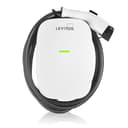
| Leviton EV320 32A (hardwired) | J1772 | 32 A | 7.7 kW | 18 ft | Hardwired (40A breaker) | 2 years (limited) | |
|---|
Why hardwire, in order of how much it matters
1. It is the only way past 40 amps.This is the reason that actually forces the decision. EV charging is a continuous load, so the code limits a circuit to 80% of its rating — and a NEMA 14-50 receptacle is a 50-amp device, which caps a plug-in charger at 40 amps and about 9.6 kW. To get 48 amps and 11.5 kW you need a 60-amp circuit and a permanent connection. Emporia publishes exactly this split on its own help material: the hardwired SKU runs at 48 A on a 60 A breaker, while the NEMA 14-50 version of the same charger is capped at 40 A. Our amps and circuits guide works the arithmetic through in full.
2. There is no receptacle to fail.A 14-50 outlet was designed for a range or an RV — appliances that cycle. Ten hours of continuous 40-amp draw, every night, is a harder life than the part was built for, and cheap receptacles genuinely cook. Hardwiring removes the component entirely. If you are plugging in anyway, do not economise there; our NEMA 14-50 outlet guide explains what separates an industrial-grade one.
3. The GFCI conflict goes away.Every charger here has its own ground-fault detection built in — Leviton publishes a 20 mA CCID per UL 2231 for the EV320, and the others carry equivalent protection. Stack an external GFCI breaker on top of that, as the receptacle rules require, and the two can fight; nuisance trips are the result. Hardwiring sidesteps the receptacle requirement. It is not a license to skip a breaker, and it is not electrical advice — it is a reason the install route changes how often you walk out to the garage to reset something.
The 48-amp trap
The thing nobody tells you is that 48 amps is a panel decision, not a charger decision. A 60-amp branch circuit is where many panels run out of room, and that is where a quote turns into a service upgrade costing more than the charger several times over. Autel is the clearest case on this page: its MaxiCharger publishes 50 A and 12 kW, and Autel’s own store listing states the full output needs a 70-ampcircuit. Get the circuit priced before you fall in love with the output — our installation cost guide covers what drives the number, and 40 amp vs 48 amp puts the same charger at both amperages side by side.
How we ranked these six
The Emporia Level 2 leads because nothing here beats it on the things that are checkable.UL Listed, ENERGY STAR certified, NEMA 4, 25 ft of cable, a 3-year warranty, ships with the whip — and the lowest price in the group. The honest caveat is that the listing we link is the hardwired SKU specifically: Emporia sells a plug-in version of the same charger as a separate product at 40 A, so check which one is in the cart. Our full Emporia review goes further.
The Lectron Nexus 48A publishes more of its own test record than anything else at the price.Lectron names UL 2594, UL 2231, UL 2251 and UL 817 testing with an ETL listing, an IP66 housing, a 23 ft cable and a 3-year warranty, and EPA’s ENERGY STAR certified-EVSE database carries the same model at 48 A and 11.52 kW. It is hardwired-only by design, which on this page is a feature. See the Nexus review for the full figures.
The Autel MaxiCharger is the most charger here and the most circuit.Fifty amps, 12 kW, adjustable from 16 A, IP65 / NEMA 4X and an operating range Autel publishes from −40 °F — which is why it also leads our outdoor roundup. Buy it for a harsh climate or genuine 50-amp need, not for the spec sheet.
The Emporia Pro earns its place on load management rather than amps.It is the answer when the panel, not the car, is the constraint: 48 A hardwired, NEMA 4, rear-entry hardwire, and the Emporia energy platform behind it. If your service is the binding limit, start at chargers for a 100-amp panel.
Tesla’s Wall Connector is on this page because it has no alternative install.Tesla’s own Gen 3 manual says “Do NOT install cord-and-plug type connections” and specifies a 60-amp breaker for the full 48 A. You get a factory NACS handle, Wi-Fi, a 24 ft cable and the longest residential warranty here at four years. You also pay the most. If that is the sticking point, we built a page on the alternatives.
The Leviton EV320 is the pick for a circuit you cannot grow.Thirty-two amps on a 40-amp breaker, hardwired only, ENERGY STAR, an 18 ft cable and a standards list Leviton publishes in full. It is the most expensive way to buy 32 A in our registry and the most thoroughly documented — see the 32A roundup for the cheaper routes to the same output.
When not to hardwire
If you rent, if you expect to move, if you want to be able to swap a dead unit yourself, or if 40 amps covers your driving — and for most people it comfortably does, at roughly 30 miles of range per hour — then plugging in is the better buy and you should not be talked out of it. The full argument is in plug-in vs hardwired, and the products are on our plug-in roundup and renters roundup.
One thing not to compromise on either way: buy nothing that will not name its certification body in plain text. UL and ETL listings both mean an independent lab tested the unit. EPA’s ENERGY STAR program publishes a searchable list of certified EV chargers, and cross-checking a model against it takes under a minute — we do it for every charger on this site.