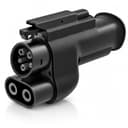
Amp & Adapter

Lectron Vortex Plus NACS to CCS Adapter Review

The only adapter in this category whose maker publishes a full spec sheet and names an independent certification against it — and the only one that tells you, in writing, the two places it will not work.

By Stephen V.Last updated How we rank

Buy the Vortex Plus if you want a NACS-to-CCS adapter with a published specification sheet and a named third-party certification behind it, and you have already checked that your automaker is on Tesla’s access list. That is a narrower recommendation than the marketing around this category, and it is the honest one.

Here is the unusual thing about this product. Almost every NACS-to-CCS adapter on the market is sold on a bullet list — a current figure, a voltage figure, a photograph of a Supercharger — and nothing you could call a specification. Lectron publishes an actual table: rated current, rated voltage, ingress rating, operating temperature, weight, materials, certification, warranty. It is the first maker page this site has been able to cite for a DC adapter at all.

It is also the only one that puts its own limits in writing, and they are the two facts most likely to matter to you: Lectron states the Vortex Plus supports V3 and V4 Superchargers and does not support V2 Superchargers, and it is a DC-only device— not for Tesla Wall Connectors, not for Destination Chargers. If the charger you were planning to plug into is one of those, stop reading and go to the AC adapter page instead, because no amount of money spent here will help.

We own no units and we bench-test nothing — here is exactly what we do instead. Every figure below is read from Lectron’s own product page on the date in the sources list, the listing was verified live and in stock on 2 November 2026, and the price comes from our daily check rather than being typed into the page.

How this is funded: we earn a commission if you buy through our links, at no extra cost to you. It never changes which product we recommend, and we’ll tell you plainly when we’d skip one. Full disclosure.

Quick picks

Ranked on published specs, install flexibility and buyer fit. Select a row to jump to the full write-up. We have not bench-tested these units — here is exactly what we do instead.

#ProductBest forPrice
1
Lectron Vortex Plus NACS to CCS1 Adapter (with Interlock)

Lectron Vortex Plus NACS to CCS1 Adapter (with Interlock)

The only NACS-to-CCS adapter in this registry whose maker publishes a full specification table AND names a third-party safety certification for it — UL 2252, the standard written for this exact device, certified by SGS. It costs more than the A2Z and a lot more than the cheapest UL 2252 listing we have found, and what the money buys is the paper trail rather than a higher current ceiling.

The unit reviewed — UL 2252, 2-year warranty, V3/V4 only
$169.99 · View on Amazon

$199.9915% off

Price as of November 20, 2026. #ad How we’re funded

2
FOCSPROD NACS to CCS1 Adapter (Interlock, 500A)

FOCSPROD NACS to CCS1 Adapter (Interlock, 500A)

The mid-price NACS-to-CCS option that still publishes the two things that matter on a DC adapter: a UL 2252 reference and an electronic interlock. It sits between the budget units and the A2Z, and the interlock is the reason to prefer it over anything cheaper.

The cheaper listing that claims the same certification
$100.70 · View on Amazon

$125.9920% off

Price as of November 20, 2026. #ad How we’re funded

3
A2Z NACS to CCS1 Adapter (Typhoon Pro)

A2Z NACS to CCS1 Adapter (Typhoon Pro)

This is the DC-fast adapter that lets a CCS car (before its NACS retrofit) pull power from a Tesla Supercharger. A2Z's version is the enthusiast favorite for build quality and higher sustained current — a serious piece of kit, priced like one.

The enthusiasts' pick, with a hard case
$169.99 · View on Amazon

Price as of November 20, 2026. #ad How we’re funded

The picks in full

#1The unit reviewed — UL 2252, 2-year warranty, V3/V4 only

Lectron Vortex Plus NACS to CCS1 Adapter (with Interlock)

The only NACS-to-CCS adapter in this registry whose maker publishes a full specification table AND names a third-party safety certification for it — UL 2252, the standard written for this exact device, certified by SGS. It costs more than the A2Z and a lot more than the cheapest UL 2252 listing we have found, and what the money buys is the paper trail rather than a higher current ceiling.

Strengths

  • Lectron publishes a real specification table: 500A DC, 1,000V DC, up to 500 kW, IP67, -22°F to 122°F, 2 lb
  • Certified to UL 2252 by SGS per Lectron's own FAQ — the standard written for NACS adapters, and a claim most listings in this category do not make
  • Two-year warranty, double the term most adapter listings publish
  • Lectron states built-in thermal protection that can reduce or pause power, and a dual interlock that "secures at both ends"
  • Lectron names the 25 automakers it says have Supercharger access, so the compatibility question has a published starting point

Trade-offs

  • Lectron states it supports V3 and V4 Superchargers and "does not support V2 Superchargers" — if your usual site is a V2, this adapter is not the answer
  • DC only: Lectron says plainly it will not work on Tesla Wall Connectors or Destination Chargers, which is where new owners most often try an adapter first
  • No dimensions, no UL certificate number and no interlock mechanism detail are published
  • A rival listing claims the same UL 2252 certification at well under this price, so you are paying for the brand and the warranty, not for a higher rating
  • Still a per-vehicle question: approval belongs to the automaker, not to the adapter
ConnectorNACS (SAE J3400) → CCS1
Max output500 A
Max power500 kW
Cable lengthNot published
InstallPlug-on DC adapter
Outdoor ratingIP67
Warranty2 years

Spec note. Lectron's own page publishes "Rated Current 500A DC", "Rated Voltage 1,000V DC", "Max. Power Up to 500 kW", "Charger Connector NACS (SAE J3400)", "Vehicle Connector CCS1", "Weatherproof Rating IP67", "Operating Temperature -22°F to 122°F", "Weight 2 lbs", "Materials PC / PA66 / Copper", "Safety Certification UL 2252" and "Warranty 2 Years", and the FAQ adds that it is certified to UL 2252 by SGS, that it supports compatible Tesla V3 and V4 Superchargers but NOT V2 Superchargers, and that it is DC-only — not for Tesla Wall Connectors or Destination Chargers. The 500A/1,000V/500 kW figures are the adapter's RATING, not a charging speed: the delivered rate is set by the Supercharger and by the car. No dimensions, UL certificate number, storage temperature or interlock mechanism detail is published.

Specs read from the product listing, on November 2, 2026. “Not published” means the manufacturer does not state that figure.

#2The cheaper listing that claims the same certification

FOCSPROD NACS to CCS1 Adapter (Interlock, 500A)

The mid-price NACS-to-CCS option that still publishes the two things that matter on a DC adapter: a UL 2252 reference and an electronic interlock. It sits between the budget units and the A2Z, and the interlock is the reason to prefer it over anything cheaper.

Strengths

  • Publishes an electronic interlock, so the adapter cannot be pulled off under load
  • Rated to 500A / 1000V — the full envelope of a Supercharger stall
  • Cites UL 2252, the standard written for exactly this part

Trade-offs

  • Smaller brand than Lectron or A2Z, with less of a support track record
  • Supercharger access still depends on your vehicle and account being enabled — the adapter alone is not enough
  • The listing does not publish a warranty term or a cable/handle weight
ConnectorNACS → CCS1
Max output500 A
Max powerNot published
Cable lengthNot published
InstallPlug-on adapter
Outdoor ratingNot published
WarrantyNot published

Spec note. The listing publishes a maximum 500A / 1000V rating, an interlock mechanism and a UL 2252 reference. It does not publish a kW figure, a warranty term or an operating temperature range, so those read as not published. Confirm your own vehicle is enabled for non-Tesla Supercharging before buying any adapter.

Specs read from the product listing, on August 11, 2026. “Not published” means the manufacturer does not state that figure.

#3The enthusiasts' pick, with a hard case

A2Z NACS to CCS1 Adapter (Typhoon Pro)

This is the DC-fast adapter that lets a CCS car (before its NACS retrofit) pull power from a Tesla Supercharger. A2Z's version is the enthusiast favorite for build quality and higher sustained current — a serious piece of kit, priced like one.

Strengths

  • Unlocks the Tesla Supercharger network for a CCS1 vehicle
  • Built for high sustained DC current with a metal housing
  • Widely reported to work across V3 Superchargers with Magic Dock-style support

Trade-offs

  • Expensive — this is the priciest adapter category by far
  • Your car and the network must both allow it; compatibility is vehicle-specific
ConnectorNACS (Tesla) → CCS1
Max outputNot published
Max power500 kW
Cable lengthNot published
InstallPlug-on DC adapter
Outdoor ratingNot published
Warranty1 year

Spec note. DC fast charging adapter. Compatibility depends on the specific vehicle and the Supercharger site — confirm your car is on the supported list before relying on it for a trip.

Specs read from the product listing, on September 23, 2026. “Not published” means the manufacturer does not state that figure.

What Lectron publishes, and what it does not

This is the whole table from Lectron’s own page, with the gaps left as gaps. Nothing here is filled in from a listing bullet or from another adapter’s numbers.

SpecificationPublished figureWhat it means for you
Rated current500A DCThe adapter's rating, not a charging speed
Rated voltage1,000V DCCovers 400V and 800V vehicle architectures
Max powerUp to 500 kWNo Supercharger in service delivers this to a car
Charger connectorNACS (SAE J3400)The Tesla-shape plug it accepts
Vehicle connectorCCS1The plug it presents to your car
Weatherproof ratingIP67Dust-tight; survives temporary immersion
Operating temperature-22°F to 122°FPublished in Fahrenheit only
Weight2 lbHeavy enough to hang on the port — support it
MaterialsPC / PA66 / CopperNot broken down by part
Safety certificationUL 2252Certified by SGS, per Lectron's FAQ
Warranty2 yearsDouble the usual term in this category
DimensionsNot publishedNo length, so case fit is a guess
UL certificate numberNot publishedThe claim is named; the file is not
Interlock mechanismNot publishedOnly the phrase “secures at both ends”

Three of those rows deserve more than a line, and one of them is the reason this review exists.

UL 2252 is the only spec on that table that is hard to copy

Current and voltage ratings are cheap to print. A certification is not, and UL 2252 is specifically the standard written for this device — adapters that sit between a charging coupler and a vehicle inlet. Until it existed, a NACS-to-CCS adapter was an uncertified part in a very high-power circuit, which is exactly why this category earned its reputation for melted plastic photographs on forums.

Lectron’s FAQ says plainly: “Vortex Plus is certified to UL 2252 by SGS.” That is a named standard and a named certifying body, which is more than most of this category offers, and it is the single best reason to pay Lectron’s price rather than the cheapest one on the search page.

Two honest qualifications. First, Lectron does not publish the certificate or file number, so you are taking the claim on the maker’s word rather than looking it up — that is a weaker position than, say, a wall charger whose UL file number appears on its own spec sheet. Second, and more awkwardly for the recommendation, it is no longer the only listing in this category claiming UL 2252. A cheaper interlock adapter now carries the same claim in its listing title at well under this price. We have registered that listing as the second pick above precisely because pretending otherwise would be selling you the expensive one on a false exclusivity. What Lectron adds over it is a maker’s page you can read, a named certifying body, and a two-year warranty.

If you want the longer version of the safety argument across all adapter types, are EV charging adapters safe? is the page that works through what certification does and does not buy you.

The V2 Supercharger limit, which nobody else states

Lectron’s FAQ says the Vortex Plus “supports compatible Tesla V3 and V4 Superchargers” and “does not support V2 Superchargers.”

Read that twice before you buy, because it is a real constraint and not a legal hedge. V2 Superchargers are the older 150 kW cabinets, and there are still a great many of them in service — frequently the oldest, most convenient sites in a city, because they were built first. If the station you had in mind when you started shopping is a V2, this adapter will not open it for you.

The practical move is to look up the specific sites you intend to use before ordering. The Supercharger access guide covers how non-Tesla access works and where to check, and the US Department of Energy’s station locator (cited below) is the neutral database for finding what is actually near you.

The flip side is worth saying too: this is the first adapter spec sheet we have been able to cite that is honest enough to name a limitation at all. Every other listing in the category implies “Superchargers” without qualification.

DC only — the mistake this category creates

The most common disappointment with any NACS-to-CCS adapter has nothing to do with the adapter. It is a driver buying one, finding a Tesla Wall Connector at a hotel or a friend’s garage, and discovering it does nothing.

Lectron states the rule outright: the Vortex Plus is for DC fast charging at compatible Superchargers, and it does not support Tesla AC chargers such as Wall Connectors and Destination Chargers. That is not a Lectron shortcoming — it is physics and protocol. A DC adapter passes high-voltage direct current and the communication that goes with it; an AC charger speaks a different language on different pins. Tesla’s own Wall Connector manual goes further still and carries the caution “No adapters or conversion adapters are allowed to be used.”

The part you actually want for that job is a NACS-to-J1772 adapter, which is a different, cheaper, much lower-risk device. Our AC adapter roundup covers it, and the connector guide explains why one plug shape maps to two completely different electrical conversations. A household with a CCS car and a Tesla in the driveway usually needs one of each.

What 500A and 500 kW actually buy you

Nothing, most likely — and that is fine.

The headline figures on this adapter are a rating: the current and voltage the hardware is built to carry. They are not a charging speed, and Lectron says so on the same page: actual speed depends on your vehicle, its state of charge, the temperature and the Supercharger’s available output. No Supercharger in service delivers 500 kW to a passenger car, and almost no car on the road can accept it.

So the 500A rating is not a performance claim you will ever cash in. It is headroom, which is the right thing to want in a part that sits in series with a 250 kW circuit for twenty minutes at a time. The same is true of the 1,000V rating: it is there so the adapter is not the limiting component on an 800-volt vehicle architecture, not because any station pushes 1,000 volts.

What will actually govern your charging speed is the car and the site, and it is usually slower through an adapter than it would be at a native CCS station. We wrote a whole page on that, with the mechanism rather than the folklore: does a NACS-to-CCS adapter slow charging down?

The automaker list is a starting point, not a guarantee

Under a heading of “Automakers with Supercharger Access,” Lectron’s page names twenty-five: Acura, Audi, BMW, Cadillac, Chevrolet, Ford, GM, Genesis, GMC, Honda, Hyundai, JLR, Kia, Lucid, Mercedes-Benz, MINI, Nissan, Polestar, Porsche, Rivian, Stellantis, Subaru, Toyota, Volkswagen and Volvo.

That is genuinely useful — it is the only published compatibility reference in the box — but treat it as the first step of three, not the answer:

  1. Is your brand on the list? If not, stop.
  2. Is your model year on your automaker’s own list?Access arrived model-year by model-year, and a brand-level “yes” does not mean every car wearing that badge. Check the maker’s own charging page.
  3. Does your automaker sell its own adapter?If it does, that is the part validated against your car’s charging hardware, and it keeps warranty conversations simple. Buy the third-party one when the official route is unavailable, back-ordered, or you want a spare for a second car.

Our vehicle pages do step two for the brands people ask about most — Chevrolet, Ford, Rivian, Hyundai and Nissan, among others.

Living with it: the two-pound problem

Lectron publishes a weight — 2 lb — and that is a more useful number than it looks. Two pounds of metal and polymer hanging off a charge port on a lever arm, with a stiff Supercharger cable pulling on the other end, is a mechanical load the port was not designed around.

Support it. Take the strain on the cable rather than the adapter, do not let it dangle while you walk away, and never leave it clipped to the car between sessions. The IP67 rating means dust-tight and able to survive temporary immersion, which is reassuring about rain and puddles but says nothing about ultraviolet light or the inside of a hot trunk — and Lectron publishes no storage temperature range at all, only an operating one.

Since no dimensions are published, you cannot order a case to fit it with confidence. That is one concrete advantage the A2Z pick above has: it ships with a hard case, so the storage question is answered in the box. If you go with the Lectron, our storage and organizer page covers what we would put it in.

Who should buy something else

Four clear cases, and they cover most people who land on this page.

  • Your automaker sells its own adapter. Buy that one. It is validated against your vehicle and it keeps the warranty conversation short.
  • Your nearest Supercharger is a V2. Lectron says this adapter does not support it. No adapter decision fixes that; a different charging network does.
  • You wanted to use a Tesla Wall Connector or Destination Charger. That is an AC job. You want a NACS-to-J1772 adapter, and it costs a fraction of this.
  • Your car already has a native NACS port. A growing number of 2026 vehicles do, and they need no adapter for a Supercharger at all. What they often need is the reverse part, to use the enormous installed base of J1772 stations.

And one case for buying it without hesitation: you drive a CCS1 car on a brand Tesla has opened, you road-trip on V3 and V4 sites, your automaker’s own adapter is unavailable or you want a second one, and you would rather pay for a published spec sheet and a named certification than save forty dollars. That is what this product is for, and it does that job better documented than anything else in the category.
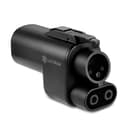
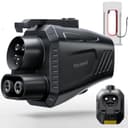
Frequently asked questions

Is the Lectron Vortex Plus UL certified?

Lectron's own page lists “Safety Certification UL 2252” and its FAQ states “Vortex Plus is certified to UL 2252 by SGS.” UL 2252 is the standard written for adapters that sit between a charging coupler and a vehicle inlet, so it is the relevant one. Lectron does not publish the certificate or file number, so the claim rests on the maker's statement rather than on a number you can look up.

What is the difference between the Vortex Plug and the Vortex Plus?

Lectron sells both. The Plus is the model with the interlock and the UL 2252 certification, and it is the one the Amazon listing we link to actually sells — its title names “Vortex Plus”, “with Interlock” and “UL 2252”. If a listing says only “Vortex Plug”, you are looking at the other product, so read the title rather than the thumbnail.

Does the Vortex Plus work on every Tesla Supercharger?

No, and Lectron says so. Its FAQ states the adapter “supports compatible Tesla V3 and V4 Superchargers” and “does not support V2 Superchargers.” V2 sites are the older 150 kW cabinets and plenty are still in service, often at the oldest and most convenient locations. Check which generation your usual stations are before you order.

Can I use it on a Tesla Wall Connector or Destination Charger?

No. Lectron states the Vortex Plus is for DC fast charging only and does not support Tesla AC chargers such as Wall Connectors and Destination Chargers. Tesla's own Wall Connector manual also cautions that no adapters or conversion adapters are allowed to be used. For AC charging from a Tesla-plug unit you want a NACS-to-J1772 adapter, which is a different and much cheaper part.

Will 500A and 500 kW make my car charge faster?

No. Those are the adapter's ratings, not a charging speed. Lectron says on the same page that the actual rate depends on your vehicle, its battery state, the temperature and the Supercharger's available output. No Supercharger in service delivers 500 kW to a passenger car. The rating is headroom, which is what you want in a part carrying a 250 kW circuit for twenty minutes — but it will not speed your car up.

Does using a third-party adapter void my vehicle warranty?

Lectron's product page makes no statement about vehicle warranty either way, so we will not put words in its mouth. The practical position is that the automaker's own adapter, where one exists, is the part validated against your car's charging hardware and the one that keeps a warranty conversation short. Third-party adapters are for owners whose official route is unavailable, or who want a spare.

How long is the warranty?

Lectron publishes “Warranty 2 Years” on the Vortex Plus page. That is double the term most adapter listings in this category publish, and on a part that spends its life being plugged, unplugged and thrown in a trunk, it is a genuine point of difference rather than a marketing line.

Is there a cheaper adapter with the same certification?

Yes — at least one. A cheaper interlock adapter now carries a UL 2252 claim in its listing title at well under the Vortex Plus price, and we have listed it above rather than hide it. What the Lectron adds is a maker's specification page you can actually read, a named certifying body (SGS) and the two-year warranty. If those are worth the difference to you, pay it; if not, the cheaper listing is a legitimate buy.

Sources

  • Lectron — Vortex Plus NACS to CCS Adapter with Interlock (500A / 1,000V) — Lectron's own "Under the Hood" specification table: "Rated Current 500A DC", "Rated Voltage 1,000V DC", "Max. Power Up to 500 kW", "Charger Connector NACS (SAE J3400)", "Vehicle Connector CCS1", "Weatherproof Rating IP67", "Operating Temperature -22°F to 122°F", "Weight 2 lbs", "Materials PC / PA66 / Copper", "Safety Certification UL 2252" and "Warranty 2 Years". The FAQ states "Vortex Plus is certified to UL 2252 by SGS", that it "works with CCS1-equipped EVs whose manufacturers have approved access to the Tesla Supercharger network", that it "supports compatible Tesla V3 and V4 Superchargers" and "does not support V2 Superchargers or Tesla AC chargers such as Wall Connectors and Destination Chargers", and that it is for DC fast charging only. A "Dual Interlock" badge reads "Secures at both ends" with no mechanism described, and the page states "Built-in thermal protection monitors temperature while charging and can automatically reduce or pause power if required." Under "Automakers with Supercharger Access" it lists Acura, Audi, BMW, Cadillac, Chevrolet, Ford, GM, Genesis, GMC, Honda, Hyundai, JLR, Kia, Lucid, Mercedes-Benz, MINI, Nissan, Polestar, Porsche, Rivian, Stellantis, Subaru, Toyota, Volkswagen and Volvo. The page publishes NO dimensions, NO UL certificate number, NO storage temperature, NO interlock mechanism detail and NO statement about vehicle warranty (accessed November 2, 2026)
  • SAE International — J3400 North American Charging System (NACS) for Electric Vehicles — The SAE standard for the NACS connector (Tesla's plug), alongside the J1772 AC standard (accessed July 19, 2026)
  • Tesla Energy Library — Gen 3 Wall Connector Manual, 48A Single Phase (part number 1457768) — The standard (NACS-handle) Wall Connector: 12-48A output, 60A breaker for 48A, "Do NOT install cord-and-plug type connections", 13.6 x 6.1 x 4.3 in, 10 lb with wirebox, and the safety caution "No adapters or conversion adapters are allowed to be used" (accessed September 16, 2026)
  • U.S. DOE Alternative Fuels Data Center — Electric Vehicle Charging Stations — DOE overview of charging levels, power output and connector types (J1772, CCS, NACS) (accessed July 19, 2026)
  • U.S. DOE Alternative Fuels Data Center — Charging Electric Vehicles in Public — DOE guidance on public AC and DC fast charging (accessed July 19, 2026)

Keep reading