Amp & Adapter

Best 32A Home EV Chargers

The charger for a panel that can spare a 40A circuit and no more, or a car that cannot use more than 32 amps anyway. About 250 miles of range a night, and a different install decision from the 40A units.

By Stephen V.Last updated How we rank

Most charger roundups start at 40 amps and work up. This one exists for three households those lists skip. In the first, the electrician’s load calculation says the panel can spare a 40A circuit and nothing bigger. In the second, the car’s onboard AC charger tops out near 7.7 kW, so it could never draw more than 32 amps anyway. In the third, about 250 miles of range a night is already more than the household drives, and the cheaper hardware and circuit are the point.

The arithmetic is short. A 32A charger delivers about 7.7 kW at 240 volts, and because EV charging is a continuous load it runs on a 40A breaker, the same 80% rule that puts a 40A charger on a 50A circuit. Against a 40A charger you give up roughly five or six miles of range per hour. Across a ten-hour night that is about 250 miles instead of about 300.

We ranked these six on the things that genuinely separate 32A chargers, in this order. 1. Install route: hardwired or plug-in, because the GFCI rules on garage receptacles decide more about a 32A install than the charger does. 2. Certification you can check, meaning an ENERGY STAR record or a maker-published safety listing rather than a claim in a product title. 3. Connector: J1772, or NACS for a Tesla or NACS-port car. 4. Whether the 40A circuit is permanent, since a larger charger turned down can be the better buy. Warranty and cable length break ties.

We own none of these units and we do not bench-test chargers — here is what we do instead. Specs are read from the maker’s own page where one exists and from the seller’s listing where it does not, and each card says which. ENERGY STAR status was checked by model number in EPA’s own dataset. Everything was checked on 18 September 2026.

How this is funded: we earn a commission if you buy through our links, at no extra cost to you. It never changes which product we recommend, and we’ll tell you plainly when we’d skip one. Full disclosure.

Quick picks

Ranked on published specs, install flexibility and buyer fit. Select a row to jump to the full write-up. We have not bench-tested these units — here is exactly what we do instead.

#ProductBest forPrice
1
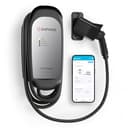
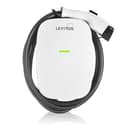
Leviton EV320 32A (hardwired)

Leviton EV320 32A (hardwired)

The plainest well-documented 32A wall charger you can buy: hardwired on a 40A breaker, ENERGY STAR certified under its own model number, and nothing to connect to Wi-Fi. That last point cuts both ways, since there is no app to fail and no app to schedule with, and the 18 ft cable is the shortest here, so measure before you buy.

Best hardwired 32A
$649.00 · View on Amazon

Price as of September 18, 2026. #ad How we’re funded

2
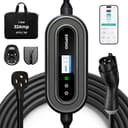
Battery Tender eCharge 32 (Level 1 + 2)

Battery Tender eCharge 32 (Level 1 + 2)

A 32A plug-in charger from a long-established battery-charger brand, ENERGY STAR certified under its own model number, with a 120V adapter in the box so it doubles as a Level 1 travel cord. It has no app by design. You pay well over the budget 32A units for that paper trail and the 3-year warranty.

Best plug-in 32A
$403.53 · View on Amazon

$424.955% off

Price as of September 18, 2026. #ad How we’re funded

3
Enphase IQ 40 32A (hardwired)

Enphase IQ 40 32A (hardwired)

The ClipperCreek line under Enphase's name: a 32A hardwired station with a NEMA 4 enclosure, a 25 ft cable and the longest warranty in our 32A roundup, five years. It is also the most expensive, and its Wi-Fi scheduling earns that premium mainly for a household already running Enphase solar that wants the charger to follow it.

Longest warranty
$779.00 · View on Amazon

Price as of September 18, 2026. #ad How we’re funded

4
EVPOVO Level 2 32A (NEMA 14-50)

EVPOVO Level 2 32A (NEMA 14-50)

The cheapest route to 32A in our roundup that still publishes a safety listing, a 3-year warranty and a 25 ft cable. Every figure is the seller's own claim, and the model number is not among the families EPA certifies, so this is the pick for a buyer who wants the price and accepts a thinner paper trail.

Best budget 32A
$141.53 · View on Amazon

$148.985% off

Price as of September 18, 2026. #ad How we’re funded

5
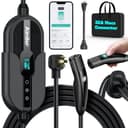
AIMILER Level 2 32A NACS (Wi-Fi)

AIMILER Level 2 32A NACS (Wi-Fi)

A 32A plug-in charger with a native NACS handle, a 25 ft cable and a 3-year warranty, for a Tesla or any car that AC-charges through a NACS port. Its model number fits an ENERGY STAR-certified family registered under a different brand name. One line in its listing, to take out the GFCI breaker if it keeps tripping, is advice to ignore.

Best 32A for a NACS-port car
$199.99 · View on Amazon

Price as of September 18, 2026. #ad How we’re funded

6
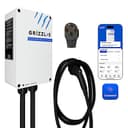
Grizzl-E Classic Connect 40A (J1772)

Grizzl-E Classic Connect 40A (J1772)

The Grizzl-E Classic with a radio in it: the same made-in-Canada metal box, the same UL Type 4 indoor/outdoor rating and the same 25 ft cable, now with Wi-Fi scheduling and 16–40A adjustment. The adjustment is the upgrade worth paying for, because it lets one charger fit whatever circuit your panel can actually spare. The connectivity is the part to think twice about — this line's reputation was built on having nothing to fail.

Best if the 40A circuit is temporary
$349.99 · View on Amazon

Price as of September 18, 2026. #ad How we’re funded

The picks in full

#1Best hardwired 32A

Leviton EV320 32A (hardwired)

The plainest well-documented 32A wall charger you can buy: hardwired on a 40A breaker, ENERGY STAR certified under its own model number, and nothing to connect to Wi-Fi. That last point cuts both ways, since there is no app to fail and no app to schedule with, and the 18 ft cable is the shortest here, so measure before you buy.

Strengths

  • Hardwired, so a plain breaker feeds it and there is no receptacle to wear, overheat or trip a GFCI
  • Leviton publishes its full standards list, including UL 2594, and EPA's ENERGY STAR dataset lists the EV320 by model number
  • NEMA Type 3R enclosure and a cable Leviton says is designed not to freeze and crack, rated -30°C to 50°C
  • Optional RFID access control, switched off out of the box

Trade-offs

  • 18 ft cable, the shortest in our 32A roundup
  • 2-year limited warranty, against 3 to 5 years on the other 32A picks
  • No Wi-Fi or app, so any scheduling has to come from the car
  • Amazon showed 'Only 11 left in stock (more on the way)' when we checked on 18 September 2026
ConnectorJ1772
Max output32 A
Max power7.7 kW
Cable length18 ft
InstallHardwired (40A breaker)
Outdoor ratingNEMA Type 3R (indoor/outdoor)
Warranty2 years (limited)

Spec note. Leviton publishes: 32A, 208/240 VAC, 7.6 kW output, a 40A breaker, an 18 ft (5.5 m) cable, hardwired only, a PC+PBT plastic NEMA Type 3R enclosure, -30°C to 50°C operation, a 20 mA CCID per UL 2231, certification to UL 2594, UL 2231-1/-2, UL 2251 and others with cETLus, and ENERGY STAR. EPA's dataset lists model EV320 (qualified 2022-10-24, 18 ft cord). It has no Wi-Fi; the Wi-Fi sibling is the EV32W. Leviton's own store listed it above the Amazon price when we checked.

Specs read from the product listing, on September 18, 2026. “Not published” means the manufacturer does not state that figure.

#2Best plug-in 32A

Battery Tender eCharge 32 (Level 1 + 2)

A 32A plug-in charger from a long-established battery-charger brand, ENERGY STAR certified under its own model number, with a 120V adapter in the box so it doubles as a Level 1 travel cord. It has no app by design. You pay well over the budget 32A units for that paper trail and the 3-year warranty.

Strengths

  • ENERGY STAR certified: EPA's dataset lists the 022-3017 family, and the maker publishes cETLus to UL 2594
  • Level 1 and Level 2 in one box: a NEMA 14-50 plug plus a 14-50R-to-5-15P adapter
  • 25 ft output cord, an IP66 rating and a 3-year warranty
  • No app to set up or fail; status and error messages show on an LCD

Trade-offs

  • Costs well over twice the cheapest 32A plug-in units
  • Plug-in, so a GFCI-protected garage receptacle can trip with it
  • No scheduling app, so off-peak timing has to come from the car
  • Amazon showed 'Only 4 left in stock (more on the way)' when we checked on 18 September 2026
ConnectorJ1772
Max output32 A
Max power7.7 kW
Cable length25 ft
InstallPlug-in (NEMA 14-50; 120V 5-15 adapter included)
Outdoor ratingIP66
Warranty3 years

Spec note. Battery Tender publishes: 32A Level 2 at about 7.7 kW (about 20-25 miles of range per hour), about 1.9 kW on 120V, a dedicated 240V 40 Amp circuit minimum, a 25 ft output cord, IP66, cETLus (UL 2594), ENERGY STAR, FCC and ICES, 6.37 lb, and a 3-year warranty. EPA's ENERGY STAR dataset lists the 022-3017-XX-XX family as a Level 1/Level 2 dual-input charger (qualified 2024-01-04, 25 ft cord). The maker's own store listed it above the Amazon price when we checked. A bundle with a Tesla adapter is sold as a separate listing.

Specs read from the product listing, on September 18, 2026. “Not published” means the manufacturer does not state that figure.

#3Longest warranty

Enphase IQ 40 32A (hardwired)

The ClipperCreek line under Enphase's name: a 32A hardwired station with a NEMA 4 enclosure, a 25 ft cable and the longest warranty in our 32A roundup, five years. It is also the most expensive, and its Wi-Fi scheduling earns that premium mainly for a household already running Enphase solar that wants the charger to follow it.

Strengths

  • 5-year limited warranty, the longest of the 32A picks
  • 25 ft cable and a sealed NEMA 4-rated enclosure for indoor or outdoor mounting
  • UL 2594 certified per the listing, and EPA's ENERGY STAR dataset names this exact model number
  • Wi-Fi scheduling in the Enphase App, plus solar-surplus charging with an Enphase Energy System

Trade-offs

  • The most expensive of the 32A picks
  • Hardwired, so it stays with the house when you move
  • The listing still says you may qualify for federal tax credits; the federal home-charger credit ended for property placed in service after June 30, 2026
  • Solar-surplus charging needs at least 1.92 kW (8A) of excess solar before a session starts, per Enphase
ConnectorJ1772
Max output32 A
Max power7.7 kW
Cable length25 ft
InstallHardwired (40A circuit)
Outdoor ratingNEMA 4 (indoor/outdoor)
Warranty5 years (limited)

Spec note. The listing publishes: 32A on a 40 Amp circuit, suited to vehicles that accept up to 7.7 kW, up to 31 miles of range per hour (the manufacturer's best case), UL 2594, a sealed NEMA 4-rated enclosure, a 25 ft cable, Wi-Fi with the Enphase App and a 5-year limited warranty. Enphase's store lists the hardwired SKU as IQ-EVSE-NA-1040-0100-0100, and EPA's ENERGY STAR dataset names that exact number among the additional models on an Enphase family record qualified 2023-03-17. Enphase also sells NEMA 14-50 and 6-50 plug-in versions.

Specs read from the product listing, on September 18, 2026. “Not published” means the manufacturer does not state that figure.

#4Best budget 32A

EVPOVO Level 2 32A (NEMA 14-50)

The cheapest route to 32A in our roundup that still publishes a safety listing, a 3-year warranty and a 25 ft cable. Every figure is the seller's own claim, and the model number is not among the families EPA certifies, so this is the pick for a buyer who wants the price and accepts a thinner paper trail.

Strengths

  • Adjustable 16/20/24/32A from the buttons or the app, so it fits a 20A to 40A circuit
  • The listing claims ETL listing to UL 2594 and UL 2231-1/-2, with CCID20 leakage protection
  • 25 ft cable the seller says stays flexible down to -22°F
  • 3-year warranty per the listing, and optional Wi-Fi scheduling (Smart Life app, 2.4 GHz)

Trade-offs

  • Its model number (ZA11 prefix) is not among the families EPA's ENERGY STAR dataset certifies, so it will not satisfy a rebate that requires ENERGY STAR
  • The listing publishes no numeric enclosure rating
  • Plug-in, so a GFCI-protected garage receptacle can trip with it
  • A young brand with far less owner history than Leviton or Battery Tender
ConnectorJ1772
Max output32 A
Max power7.7 kW
Cable length25 ft
InstallPlug-in (NEMA 14-50)
Outdoor ratingNot published
Warranty3 years

Spec note. The listing publishes: 32A, 7.68 kW, a NEMA 14-50 plug, a 25 ft TPU cable rated flexible to -22°F, adjustable 16/20/24/32A, Wi-Fi through the Smart Life app (2.4 GHz) or button control, ETL listing to UL 2594 and UL 2231-1/-2, CCID20 leakage protection and a 3-year warranty, with the seller's estimate of about 22-25 miles of range per hour. Amazon reports model ZA11-U007KBF-F004. EPA's ENERGY STAR dataset certifies the Zopoise ZA05 and ZA10 families at 32A but not ZA11, so we do not treat it as ENERGY STAR certified. The enclosure is described only as weather-resistant, with no rating number.

Specs read from the product listing, on September 18, 2026. “Not published” means the manufacturer does not state that figure.

#5Best 32A for a NACS-port car

AIMILER Level 2 32A NACS (Wi-Fi)

A 32A plug-in charger with a native NACS handle, a 25 ft cable and a 3-year warranty, for a Tesla or any car that AC-charges through a NACS port. Its model number fits an ENERGY STAR-certified family registered under a different brand name. One line in its listing, to take out the GFCI breaker if it keeps tripping, is advice to ignore.

Strengths

  • Native NACS connector, so nothing hangs off the handle on a Tesla or NACS-port EV
  • Adjustable 16-32A (32A for a 40A breaker, 24A for 30A, 16A for 20A) from the buttons or the app
  • 25 ft cable, NEMA Type 4 / IP66 per the listing, and a 3-year warranty
  • The listing claims ETL and FCC listing to UL 2594 and related standards, with CCID-20 built in

Trade-offs

  • The listing says to remove the GFCI breaker if it trips constantly. Do not: that protection is required on garage and EV-charging receptacles under the current National Electrical Code, so the fix belongs to an electrician
  • The ENERGY STAR family its model number fits is registered under the Zopoise brand, not AIMILER, so confirm eligibility before counting on a rebate
  • A J1772-port car needs a separate adapter
  • Sold by a third-party storefront rather than a brand store
ConnectorNACS (Tesla)
Max output32 A
Max power7.7 kW
Cable length25 ft
InstallPlug-in (NEMA 14-50)
Outdoor ratingNEMA Type 4 / IP66 (per listing)
Warranty3 years

Spec note. The listing publishes: a NACS connector, 32A / 7.68 kW max on a NEMA 14-50 plug, 16-32A adjustment (32A for a 40A breaker, 24A for 30A, 16A for 20A), a 25 ft cable, NEMA Type 4 and IP66, Wi-Fi app control (2.4 GHz for setup), built-in CCID-20, ETL/FCC listing against a list of UL standards including UL 2594, and a 3-year warranty. The seller does not recommend mounting it in direct sun or exposed rain. Amazon reports model ZA05-U007KBF-F021, which fits the pattern of the Zopoise ZA05-U007K**-*### family that EPA's ENERGY STAR dataset certifies at 32A (qualified 2023-11-03, 25 ft cord). That record is under the Zopoise brand, so confirm with your rebate program.

Specs read from the product listing, on September 18, 2026. “Not published” means the manufacturer does not state that figure.

#6Best if the 40A circuit is temporary

Grizzl-E Classic Connect 40A (J1772)

The Grizzl-E Classic with a radio in it: the same made-in-Canada metal box, the same UL Type 4 indoor/outdoor rating and the same 25 ft cable, now with Wi-Fi scheduling and 16–40A adjustment. The adjustment is the upgrade worth paying for, because it lets one charger fit whatever circuit your panel can actually spare. The connectivity is the part to think twice about — this line's reputation was built on having nothing to fail.

Strengths

  • 16–40A adjustable output, so one unit fits a 20A, 30A, 40A or 50A circuit — the outgoing Classic was fixed at 40A
  • UL Type 4 indoor/outdoor rated metal enclosure, made in Canada, rated from -30°C to +50°C
  • 25 ft published cable, which is more reach than most wall chargers at any price
  • Plugs into a NEMA 14-50 outlet, so no hardwiring bill and it moves house with you
  • Wi-Fi (2.4 GHz) with scheduling, charging statistics, remote control and utility demand-response participation
  • 3-year warranty as standard, with a 5-year extension sold separately by the manufacturer

Trade-offs

  • Not in EPA's ENERGY STAR certified-EVSE database as of 2 September 2026, although the Classic it succeeds is — check before counting on a rebate that requires ENERGY STAR
  • Wi-Fi is not optional, on a product line whose whole appeal was that there was no app to fail
  • NEMA 14-50 only: the Classic also offered a NEMA 6-50 plug variant, and that option is gone
  • New for December 2025, so there is far less long-term owner feedback than the Classic has
  • United Chargers publishes “40A 10 kW” while the Amazon listing says 9.6 kW; 40A at 240V is 9.6 kW, so size the circuit off 40A, not off either kW figure
ConnectorJ1772
Max output40 A
Max power9.6 kW
Cable length25 ft
InstallPlug-in (NEMA 14-50)
Outdoor ratingUL Type 4 (indoor/outdoor)
Warranty3 years

Spec note. United Chargers publishes: AC Level 2, 40A adjustable down to 16A, NEMA 14-50 plug, J1772 or NACS output cable, 25 ft (7.6 m) cord, UL Type 4 indoor/outdoor rating, UL/cUL listing E510712, Wi-Fi 2.4 GHz with the Grizzl-E Connect app, a 3-year warranty, an operating range of -30°C to +50°C and a 10.25 × 6.25 × 3.75 in enclosure. Two caveats we checked rather than assumed. EPA's ENERGY STAR certified-EVSE database lists eight Grizzl-E models under United Chargers Inc. and the Classic Connect is not among them, so we do not repeat the ENERGY STAR claim that appears on one sibling listing. And ENERGY STAR records the outgoing Classic's cord at 24 ft against the same 25 ft marketing figure, so if reach is tight, plan around 24 ft.

Specs read from the product listing, on September 2, 2026. “Not published” means the manufacturer does not state that figure.

The arithmetic: what 32 amps buys you

These are the same planning figures our amps and circuits guide uses. The miles-per-hour column is approximate and varies with the car, the weather and the battery’s state of charge, so treat it as a range rather than a promise.

ChargerBreakerPower (240V)Miles/hr10-hr night
24A30A5.8 kW~18~180 mi
32A40A7.7 kW~25~250 mi
40A50A9.6 kW~30~300 mi
48A60A11.5 kW~37~370 mi

The makers’ own figures for their 32A units land in the same place. Battery Tender publishes about 20 to 25 miles of range per hour for the eCharge 32, and EVPOVO’s listing estimates about 22 to 25. Enphase quotes up to 31 for the IQ 40, which is a best case. Read every miles-per-hour figure as marketing until you see your own car’s number.

The ceiling that sits above the charger

A charger can only offer current; the car decides how much it takes. If your car’s onboard AC charger is rated around 7.2 to 7.7 kW, a 32A charger already saturates it, and a 40A or 48A unit charges it no faster while needing a bigger circuit. Our Chevy Bolt guide walks through exactly that trap. Plug-in hybrids sit even lower, which is why our plug-in hybrid guide often ends at 16A or 32A. The onboard rating is in the charging section of the owner’s manual; if it is given in kilowatts, divide by 240 to get amps.

If your building has 208-volt service

Some condo and apartment buildings supply 208 volts rather than 240. The amps do not change, but the power does: 32A at 208V is about 6.7 kW rather than 7.7. Leviton rates the EV320 for 208/240 VAC. If you are charging in a shared building, our renters roundup covers the permission side of the problem.

Hardwired or plug-in: the GFCI rule decides more than the charger does

Four of the six picks are plug-in units with a NEMA 14-50 plug, and that choice carries a consequence most listings do not mention. As the installer network Qmerit explains it, NEC 210.8(A) requires GFCI protection for all 125- through 250-volt receptacles in garages, and NEC 625.54 separately requires it for receptacles installed for EV charging, wherever they are.

The trouble is that most Level 2 chargers already contain their own ground-fault protection, usually described as CCID or CCID20. Put a charger like that on a GFCI-protected receptacle and the two protective systems overlap on one circuit. Qmerit describes the result as nuisance tripping: the breaker cuts a session that nothing was wrong with.

The fix is not removing the GFCI. One listing on this page, for the AIMILER NACS unit, tells buyers to take the GFCI breaker out if it trips constantly. Do not. It is code-required protection, and removing it is exactly the kind of change that should go through the electrician and the inspector. What Qmerit recommends instead is hardwiring the charger, because hardwired chargers are not subject to the NEC 625.54 receptacle requirement. That is the strongest practical argument for the two hardwired picks here, the Leviton and the Enphase. Our plug-in vs hardwired guide weighs the rest of that trade.

One more plug-in detail to settle before you buy. Every plug-in unit here ships with a NEMA 14-50 plug, and where a seller publishes a circuit size for 32A, it is 40A: Battery Tender asks for “a dedicated 240V, 40 Amp circuit minimum,” and AIMILER’s listing pairs 32A with a 40A breaker. Whether a 14-50 receptacle on a 40A breaker suits your installation is your electrician’s call under your local code, so raise it at the quote, not after the outlet is in. If the receptacle itself is new, our NEMA 14-50 outlet roundup explains why an industrial-grade receptacle is worth the small extra cost.

Certification you can check, not just read

“UL certified” and “ENERGY STAR” appear on a great many product titles. We checked each pick against EPA’s ENERGY STAR dataset by model number, which is what a rebate program will do.

  • Leviton EV320: listed by its own model number, qualified 24 October 2022.
  • Battery Tender eCharge 32: the 022-3017 family is listed as a Level 1/Level 2 dual-input charger, qualified 4 January 2024.
  • Enphase IQ 40: its hardwired SKU, IQ-EVSE-NA-1040-0100-0100, is named among the additional models on an Enphase family record qualified 17 March 2023.
  • AIMILER 32A NACS: Amazon reports model ZA05-U007KBF-F021, which fits the pattern of a certified 32A family, but that record is registered under the Zopoise brand. Ask your rebate program before counting on it.
  • EVPOVO 32A: Amazon reports model ZA11-U007KBF-F004. The certified families with that numbering start ZA05 and ZA10, not ZA11, so we do not treat it as certified.
  • Grizzl-E Classic Connect: not in the database when we last checked, although its predecessor is.

Why it matters now: the federal section 30C home-charger credit is not available for property placed in service after 30 June 2026, which leaves utility rebates as the incentive still worth chasing, and many of those require ENERGY STAR. One of our picks, the Enphase, still carries federal tax-credit language in its Amazon listing; read it as out of date. Our certification guide explains what UL 2594, ETL and ENERGY STAR each do and do not cover.

J1772 or NACS

Five of the six picks carry a J1772 handle, which charges nearly every non-Tesla EV directly and a Tesla through a J1772-to-Tesla adapter. The AIMILER is the exception: a native NACS handle for a Tesla or any car that AC-charges through a NACS port. Check the port your car actually uses for AC charging before you choose. As our NACS home charger roundup explains, the 2026 Nissan Leaf has a NACS port for DC fast charging and a separate J1772 port for AC, so for this purchase it is a J1772 car.

When a 40A charger turned down is the better buy

A dedicated 32A charger is the right buy when the 40A circuit is the permanent answer. If it might not be, because a panel upgrade, a load-management device or a second look at the load calculation could free up more capacity later, buy an adjustable 40A charger and set it to 32A today. That is why the Grizzl-E Classic Connect is on this list: it adjusts from 16A to 40A, runs on a 40A circuit now and steps up to its full 40A the day an electrician gives it a 50A circuit. Tesla’s wall units work the same way, with a 40A breaker commissioning them to 32A, as we set out in Tesla Wall Connector vs Universal Wall Connector.

One practical note for that route. Changing a breaker later is a small job, while pulling new cable is not, so if an upgrade is plausible, ask the electrician whether the wire run can be sized for the bigger circuit now. Our 40A roundup and load management guide cover the next step up.

Cable length and apps: the tiebreakers

Five of the six picks publish a 25 ft cable. The Leviton’s is 18 ft, and that is the spec most worth checking before you buy it, because a hardwired unit cannot be moved closer later without calling the electrician back. Measure from where the charger will hang to the charge port with the car parked the way you actually park it, then add slack so the cable loops rather than hangs taut. If 18 ft does not reach comfortably, the Enphase is the hardwired alternative with the longer cable.

On apps, the picks split cleanly. The Leviton and the Battery Tender have no Wi-Fi at all. The Enphase, the EVPOVO, the AIMILER and the Grizzl-E connect to an app for scheduling, and on the Grizzl-E the Wi-Fi is not optional. Before paying for connectivity, check whether your car can schedule its own charging, because most modern EVs can, and that removes the most common reason to want a charger app. The EVPOVO and the AIMILER also let you change the current and set a delay from buttons on the unit, so their apps are optional. Our smart charger roundup sets out when connectivity genuinely earns its place.

What we left out, and why

  • Leviton’s Wi-Fi version, the EV32W. Also ENERGY STAR certified, but on the day we checked the Amazon offer came from a third-party seller showing “Only 3 left in stock”, at a higher price than the EV320.
  • The cheapest J1772 32A listings. Several plug-in units sell at or just below the EVPOVO’s price, but two we checked, the EVDANCE and SEGUMA J1772 units, name no safety listing anywhere in their feature text. At this price gap, a published listing is worth the difference.
  • Dual-voltage units cheaper than the Battery Tender. They exist, and some claim a UL 2594 listing, but the ones we looked at published their warranty only in a listing data field, with no maker page to confirm it.

Which should you buy?

Hardwiring anyway? Buy the Leviton EV320 if you want the simplest certified box and can live with 18 ft of cable, or the Enphase IQ 40 if the five-year warranty, the 25 ft cable or solar integration is worth its higher price.

Already have a 14-50 outlet? Buy the Battery Tender eCharge 32 if you want the checkable ENERGY STAR record and a Level 1 cord for trips, or the EVPOVO 32A if price matters most and you accept a paper trail that is the seller’s alone. For a Tesla or NACS-port car, the AIMILER is the native-handle option.

Might the circuit grow? Buy the Grizzl-E Classic Connect, run it at 32A now, and let the next electrical upgrade decide the rest.
Frequently asked questions

What size breaker does a 32 amp EV charger need?

A 40A breaker. EV charging is a continuous load, so code sizes the circuit about 25% above the charger's draw: 32 divided by 0.8 is 40. Leviton, Enphase and Battery Tender all publish a 40 amp circuit for their 32A units. The wire run and receptacle have to suit that circuit too, which is the electrician's call.

How fast does a 32 amp charger charge an EV?

About 7.7 kW at 240 volts, which is roughly 25 miles of range per hour for a typical EV, or about 250 miles across a ten-hour night. Battery Tender publishes about 20 to 25 miles per hour for its 32A unit. Your car's onboard charger can cap it lower, and at 208 volts the same 32A is about 6.7 kW.

Is a 32 amp charger enough?

For most daily driving, yes. The question is whether a night at your charging hours replaces what you drove that day. If you routinely arrive home low and leave early in a long-range car, a 40A or 48A charger on a bigger circuit is worth pricing. If your car's onboard charger is around 7.2 to 7.7 kW, 32A is all it can use anyway.

Can I plug a 32A charger into a NEMA 14-50 outlet on a 40A breaker?

The plug-in units here all ship with a NEMA 14-50 plug, and where a seller publishes a circuit size for 32A output it is 40A. Whether that receptacle-and-breaker pairing suits your installation is your electrician's decision under your local code, so raise it before the outlet goes in. Remember the GFCI requirement on garage and EV-charging receptacles, too.

Why does my GFCI breaker keep tripping with a plug-in EV charger?

Most Level 2 chargers carry their own ground-fault protection, and when that overlaps with a GFCI breaker on the same circuit the breaker can trip on a harmless session. Do not remove the GFCI, whatever a product listing says: it is required on garage and EV-charging receptacles under the current National Electrical Code. Call the electrician; hardwiring the charger is the usual fix, because hardwired chargers are not subject to the EV-receptacle GFCI rule.

Should I buy a 32A charger or a 40A charger set to 32A?

If the 40A circuit is permanent, a dedicated 32A unit is usually cheaper and does the same job. If there is any chance the circuit grows later, buy an adjustable 40A charger such as the Grizzl-E Classic Connect, run it at 32A now, and ask the electrician whether the wire can be sized for the larger circuit while the walls are open.

Do 32A chargers qualify for rebates?

Some do, and it depends on the model number. EPA's ENERGY STAR dataset lists the Leviton EV320, the Battery Tender 022-3017 family and the Enphase IQ 40's hardwired SKU; it does not list the EVPOVO 32A's model prefix. The federal section 30C credit ended for chargers placed in service after June 30, 2026, so check your utility's program and confirm the model number it accepts before you buy.

Sources

  • Leviton — EV320 32 Amp Level 2 Electric Vehicle Charging StationLeviton's own specification: 32A, 208/240 VAC, 7.6 kW, a 40A breaker, an 18 ft cable, hardwired only, NEMA Type 3R, -30°C to 50°C, UL 2594 among its listed standards, ENERGY STAR, no Wi-Fi, and a 2-year limited warranty (accessed September 18, 2026)
  • Enphase — IQ 40 EV Charger (hardwired, 32 A)Enphase's store page for the former ClipperCreek unit: SKU IQ-EVSE-NA-1040-0100-0100, a 25 ft cable, a NEMA 4-rated enclosure, Enphase App scheduling, a 5-year limited warranty, and at least 1.92 kW (8A) of excess solar to start a solar-surplus session (accessed September 18, 2026)
  • Battery Tender — eCharge 32 Amp Level 1+2 EV ChargerThe maker's page: about 7.7 kW and 20-25 miles of range per hour on 240V, about 1.9 kW on 120V, a dedicated 240V 40 Amp circuit minimum, a 25 ft output cord, IP66, cETLus (UL 2594), ENERGY STAR and a 3-year warranty (accessed September 18, 2026)
  • Qmerit — NEMA 14-50 and GFCI Protection for EV Chargers (May 1, 2026)An installer network's explanation: NEC 210.8(A) requires GFCI protection for 125- through 250-volt garage receptacles, NEC 625.54 requires it for receptacles installed for EV charging, the charger's own ground-fault protection can conflict with an external GFCI, and hardwired chargers are not subject to the 625.54 receptacle requirement (accessed September 18, 2026)
  • EPA ENERGY STAR — Certified Electric Vehicle Supply Equipment, AC-Output (dataset 5jwe-c8xm)EPA's machine-readable list of certified chargers. It carries both Tesla wall units, each qualified 2023-09-18 at 48A / 11.52 kW: model 1457768 under brand "Tesla" and model 1734412 under brand "Universal Wall Connector", both with a 22 ft cord on the record (accessed September 16, 2026)
  • IRS — Instructions for Form 8911 (rev. 12/2025)The termination itself, in the IRS's words: the One Big Beautiful Bill Act (P.L. 119-21) moved the section 30C end date from December 31, 2032 to June 30, 2026, and "You can't claim the credit for alternative fuel vehicle refueling property placed in service after June 30, 2026" (accessed September 12, 2026)
  • U.S. DOE Alternative Fuels Data Center — Charging Electric Vehicles at HomeDOE guidance on Level 1 vs Level 2 home charging, 120V/240V service and installation (accessed July 19, 2026)

Keep reading