Amp & Adapter

Grizzl-E vs ChargePoint Home Flex

Two 40-amp plug-in chargers on the same NEMA 14-50 circuit, and one of them costs about 40% less. The split is cast metal and a short spec sheet against plastic and the best documentation in the category.

By Stephen V.Last updated How we rank

Buy the Grizzl-E Classic Connect. Same 40 amps, same NEMA 14-50 plug, two more feet of cable, a cast-metal UL Type 4 enclosure and a published operating range down to -22 °F — for substantially less money than the ChargePoint. Buy the ChargePoint Home Flexinstead if you want the charger scheduled, metered and reported from an app you will actually keep using, or if you want a unit whose hardwired version can be configured up to 50 amps later.

This is a genuinely close comparison between two chargers that are solving the same problem in opposite styles. Both are 40-amp Level 2 units on a 50-amp circuit. Both carry a J1772 connector. Both are UL listed, both are ENERGY STAR certified lines, both carry a three-year warranty. The specification sheets diverge in exactly two places — the enclosure and how much the manufacturer is willing to publish— and the price gap is the third.

One thing to get straight before the picks, because it trips people up when they shop the ChargePoint line. ChargePoint’s own page states that the hardwired Home Flex “Works with circuits rated from 20 to 80A” and “Delivers up to 50A of power”, while bothplug-in models — NEMA 14-50 and NEMA 6-50 — “Work with circuits rated 40 or 50A” and “Deliver up to 40A of power”. So the famous “50-amp ChargePoint” is the hardwired model. Compared plug-in to plug-in, as on this page, both chargers are 40 amps.

We own neither unit and we do not bench-test chargers — here is what we do instead. Every figure below is read from the manufacturer’s own page or datasheet on the date in the sources list, and both prices are live from our daily check.

How this is funded: we earn a commission if you buy through our links, at no extra cost to you. It never changes which product we recommend, and we’ll tell you plainly when we’d skip one. Full disclosure.

Quick picks

Ranked on published specs, install flexibility and buyer fit. Select a row to jump to the full write-up. We have not bench-tested these units — here is exactly what we do instead.

#ProductBest forPrice
1
Grizzl-E Classic Connect 40A (J1772)

Grizzl-E Classic Connect 40A (J1772)

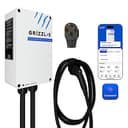
The Grizzl-E Classic with a radio in it: the same made-in-Canada metal box, the same UL Type 4 indoor/outdoor rating and the same 25 ft cable, now with Wi-Fi scheduling and 16–40A adjustment. The adjustment is the upgrade worth paying for, because it lets one charger fit whatever circuit your panel can actually spare. The connectivity is the part to think twice about — this line's reputation was built on having nothing to fail.

Better buy for most people
$349.99 · View on Amazon

Price as of October 18, 2026. #ad How we’re funded

2
ChargePoint Home Flex (NEMA 14-50 plug)

ChargePoint Home Flex (NEMA 14-50 plug)

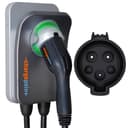
The plug-in Home Flex: 40A on an existing NEMA 14-50 outlet, UL Listed and ENERGY STAR certified, with the most mature app in the category. You pay more than a bare 40A box for the polish and the ChargePoint name, and you no longer get the 16-50A dial — that is the hardwired model, which is not currently sold on Amazon.

Better if you want the app
$599.00 · View on Amazon

$657.999% off

Price as of October 18, 2026. #ad How we’re funded

The picks in full

#1Better buy for most people

Grizzl-E Classic Connect 40A (J1772)

The Grizzl-E Classic with a radio in it: the same made-in-Canada metal box, the same UL Type 4 indoor/outdoor rating and the same 25 ft cable, now with Wi-Fi scheduling and 16–40A adjustment. The adjustment is the upgrade worth paying for, because it lets one charger fit whatever circuit your panel can actually spare. The connectivity is the part to think twice about — this line's reputation was built on having nothing to fail.

Strengths

  • 16–40A adjustable output, so one unit fits a 20A, 30A, 40A or 50A circuit — the outgoing Classic was fixed at 40A
  • UL Type 4 indoor/outdoor rated metal enclosure, made in Canada, rated from -30°C to +50°C
  • 25 ft published cable, which is more reach than most wall chargers at any price
  • Plugs into a NEMA 14-50 outlet, so no hardwiring bill and it moves house with you
  • Wi-Fi (2.4 GHz) with scheduling, charging statistics, remote control and utility demand-response participation
  • 3-year warranty as standard, with a 5-year extension sold separately by the manufacturer

Trade-offs

  • Not in EPA's ENERGY STAR certified-EVSE database as of 2 September 2026, although the Classic it succeeds is — check before counting on a rebate that requires ENERGY STAR
  • Wi-Fi is not optional, on a product line whose whole appeal was that there was no app to fail
  • NEMA 14-50 only: the Classic also offered a NEMA 6-50 plug variant, and that option is gone
  • New for December 2025, so there is far less long-term owner feedback than the Classic has
  • United Chargers publishes “40A 10 kW” while the Amazon listing says 9.6 kW; 40A at 240V is 9.6 kW, so size the circuit off 40A, not off either kW figure
ConnectorJ1772
Max output40 A
Max power9.6 kW
Cable length25 ft
InstallPlug-in (NEMA 14-50)
Outdoor ratingUL Type 4 (indoor/outdoor)
Warranty3 years

Spec note. United Chargers publishes: AC Level 2, 40A adjustable down to 16A, NEMA 14-50 plug, J1772 or NACS output cable, 25 ft (7.6 m) cord, UL Type 4 indoor/outdoor rating, UL/cUL listing E510712, Wi-Fi 2.4 GHz with the Grizzl-E Connect app, a 3-year warranty, an operating range of -30°C to +50°C and a 10.25 × 6.25 × 3.75 in enclosure. Two caveats we checked rather than assumed. EPA's ENERGY STAR certified-EVSE database lists eight Grizzl-E models under United Chargers Inc. and the Classic Connect is not among them, so we do not repeat the ENERGY STAR claim that appears on one sibling listing. And ENERGY STAR records the outgoing Classic's cord at 24 ft against the same 25 ft marketing figure, so if reach is tight, plan around 24 ft.

Specs read from the product listing, on September 2, 2026. “Not published” means the manufacturer does not state that figure.

#2Better if you want the app

ChargePoint Home Flex (NEMA 14-50 plug)

The plug-in Home Flex: 40A on an existing NEMA 14-50 outlet, UL Listed and ENERGY STAR certified, with the most mature app in the category. You pay more than a bare 40A box for the polish and the ChargePoint name, and you no longer get the 16-50A dial — that is the hardwired model, which is not currently sold on Amazon.

Strengths

  • Plugs into a NEMA 14-50 outlet at up to 40A / 9.6 kW, which is a full overnight charge for almost any EV
  • Mature app with scheduling, energy tracking and utility rate integration, backed by ChargePoint's network account
  • UL Listed, ENERGY STAR certified and rated NEMA 3R for indoor or outdoor mounting, with a 23 ft cable
  • 3-year parts warranty

Trade-offs

  • Costs more than 48A hardwired units that deliver more power
  • The plug-in model runs only at 32A or 40A; the 16-50A range that made the Home Flex famous is the hardwired model, which Amazon does not currently list
  • App-forward design is more than a set-and-forget owner needs
ConnectorJ1772
Max output40 A
Max power9.6 kW
Cable length23 ft
InstallPlug-in (NEMA 14-50); hardwired 50A and NEMA 6-50 sold as separate models
Outdoor ratingNEMA 3R (indoor/outdoor)
Warranty3 years

Spec note. ChargePoint sells the Home Flex as three separate models, and the one linked here is the NEMA 14-50 plug-in (part CPH50-NEMA14-50-L23). ChargePoint publishes it for circuits rated 40A or 50A, delivering 32A or 40A respectively (up to 9.6 kW) — its installation FAQ states that all other amperage settings require the hardwired model, which takes circuits from 20A to 80A and reaches 50A on a 60A breaker. Both are UL Listed, ENERGY STAR certified, NEMA 3R rated, carry a 23 ft cable and a 3-year warranty. Use an industrial-grade 14-50 receptacle: the charger is only as safe as the outlet it plugs into.

Specs read from the product listing, on September 20, 2026. “Not published” means the manufacturer does not state that figure.

The published specifications, side by side

Every cell is the manufacturer’s own published figure. “Not published” means we read the maker’s page and datasheet and the figure is not there — an honest gap, not a guess.

SpecificationGrizzl-E Classic Connect 40AChargePoint Home Flex (NEMA 14-50)
Max output40 A — “40A 10kW” direct, 9.6 kW on the listing40 A on the plug-in models
Adjustable current“40A - 16A”Yes, set at install; circuits rated 40 or 50 A
InstallPlug-in, NEMA 14-50Plug-in, NEMA 14-50 (6-50 and hardwired are separate models)
Cable25 ft (7.6 m)23 ft, per the datasheet
EnclosureUL Type 4 indoor/outdoor, cast metalType 3R per UL 50E
Operating temperature-30 °C to +50 °C (-22 °F to 122 °F)-30 °C to 50 °C (datasheet; storage -40 to 60 °C)
ConnectivityWi-Fi 2.4 GHz, mobile appWi-Fi, ChargePoint app, 24/7 support
CertificationUL/cUL E510712UL and cUL to UL 2594, UL 2231-1/-2; NEC Article 625; ENERGY STAR
ConnectorType 1 (SAE J1772); NACS version sold separatelyJ1772 or NACS depending on model
Warranty3 years, with a 5-year option from the maker3 years

Two notes on reading that. First, United Chargers publishes two different output figures for the same unit — “40A 10kW” on its own page against 9.6 kW on the Amazon listing. Both are defensible: 40 A × 240 V = 9.6 kW, and 40 A × 250 V = 10 kW. We quote both rather than pick one. Second, ChargePoint’s cable length, enclosure rating and temperature range are in the datasheet, not on the product page — which is the pattern across this whole category and the reason we read datasheets.

What the enclosure difference actually means

Type 4 and Type 3R are both real outdoor ratings, and this is not a waterproof-versus-not question.

Type 3R is rated against falling rain, sleet and snow. Type 4adds windblown dust, splashing water and hose-directed water. On a sheltered garage wall the distinction is academic. On an exposed driveway wall, under a gutter, or anywhere the charger will get hit by a pressure washer or sprinkler, Type 4 is the one you want.

The material matters at least as much as the digits. The Grizzl-E is a cast-metal shell: there is no plastic to go brittle over a decade of freeze-thaw and no plastic seam to open up. The ChargePoint is a well-made plastic unit with a lower rating. If your charger lives outside, that is the strongest single argument on this page, and it is why the Grizzl-E leads our cold-weather roundup and features on best outdoor chargers.

What the app difference actually means

Both chargers have Wi-Fi and an app. They are not the same kind of app, and we should be straight about which one is better: ChargePoint’s is.

ChargePoint runs a public charging network, so the home app sits inside a product the company has been iterating on for years: scheduling, energy reporting, cost tracking against your utility rate, reminders, and 24/7 support that ChargePoint publishes as part of the offer. If you want to schedule charging to an off-peak window from the charger rather than the car, or you want a tidy monthly kWh figure for an expense claim or a tenant, that is a real reason to pay more. Our smart charger roundup ranks on exactly this.

The counter-argument, which we make at length on best chargers without Wi-Fi: every EV sold in the US can schedule its own charging, the car always knows its own state of charge, and a cloud-dependent charger at the edge of your Wi-Fi is one more thing that can fail to start a session. If you intend to set it up once and never open the app again — which is what most owners do — you are paying for software you will not use.

The price gap, and what it buys

Both live prices are on the cards above with the date we checked them. The gap has been consistently wide: the Grizzl-E is one of the least expensive 40-amp chargers from a named manufacturer with a published enclosure rating, and the Home Flex sits at the top of the 40-amp band on brand and software.

Put plainly, the extra money on the ChargePoint buys software and documentation, not charging. Both units will put the same 9.6 kW into your car, on the same circuit, for the same years of warranty. If that reads as a recommendation for the Grizzl-E, it is — but a charger you enjoy using is worth something too, and nobody has ever described the Grizzl-E app that way.

Where each one wins outright

  • Buy the Grizzl-E if the charger goes outside; if you want metal; if you want the longest cable of the two; if you want the lowest price from a manufacturer that publishes a real temperature range; or if you plan to set it and forget it.
  • Buy the ChargePoint ifyou want scheduling and energy reporting from the charger; if you want the most thoroughly documented charger in the category, certification list and all; if you want the option of the hardwired model configured up to 50 amps for a car that can use it; or if you want a NACS version from the same product line.
  • Buy neither ifyou need 48 amps on a plug-in circuit — neither of these plug-in models goes there. See best 48-amp chargers, and 40A vs 48A for whether you need it at all.

The circuit either way

Both are 40-amp chargers, so both want a 50-amp circuit: a continuous load is sized at 125% of its draw, which is 50 A for a 40-amp charger. Both plug into a NEMA 14-50 receptacle, and the receptacle grade is worth real money — see NEMA 14-50 outlets. A receptacle installed for EV charging needs GFCI protection under NEC 625.54, and a charger’s own ground-fault protection can conflict with an external GFCI breaker, which is the nuisance-tripping complaint; our plug-in versus hardwired guide works through it, and installation cost covers what the electrician will quote.

The short answer

Same amps, same circuit, same warranty. The Grizzl-E gives you a tougher box, more cable and a lower price; the ChargePoint gives you better software and a fuller specification sheet. For a charger bolted to an outside wall and expected to survive a decade, we would take the metal one and schedule charging in the car.
Frequently asked questions

Is the Grizzl-E or the ChargePoint Home Flex better?

For most buyers, the Grizzl-E Classic Connect. Compared plug-in to plug-in they are both 40-amp chargers on a 50-amp circuit with a three-year warranty, but the Grizzl-E publishes a cast-metal UL Type 4 enclosure, a 25 ft cable and an operating range to -22°F, and it costs substantially less. The ChargePoint wins on software — scheduling, energy reporting and 24/7 support — and on how much of its specification it publishes.

Is the ChargePoint Home Flex 40 amps or 50 amps?

Both, depending on the model. ChargePoint's own page states that the hardwired Home Flex works with circuits rated from 20 to 80 amps and delivers up to 50 amps, while both plug-in models — NEMA 14-50 and NEMA 6-50 — work with circuits rated 40 or 50 amps and deliver up to 40 amps. The '50-amp ChargePoint' people refer to is the hardwired version.

What is the difference between NEMA Type 4 and Type 3R?

Both are outdoor enclosure ratings. Type 3R is rated against falling rain, sleet and snow. Type 4 adds windblown dust, splashing water and hose-directed water. On a sheltered garage wall the difference is academic; on an exposed wall, under a gutter or anywhere a sprinkler or pressure washer can reach it, Type 4 is the one to want. The Grizzl-E publishes UL Type 4 in cast metal; the ChargePoint publishes Type 3R per UL 50E.

Does the Grizzl-E have an app?

The Classic Connect does — United Chargers publishes Wi-Fi on 2.4 GHz and a mobile application for it. It is a much simpler piece of software than ChargePoint's, which is a home product inside a company that runs a public charging network. If scheduling and energy reporting from the charger matter to you, the ChargePoint app is the better one.

Which charger has the longer cable?

The Grizzl-E, by two feet: United Chargers publishes 25 ft (7.6 m) and ChargePoint's Home Flex datasheet publishes 23 ft. Two feet sounds trivial and is occasionally decisive — it is the difference between reaching a charge port on the far side of the car and not. If cable length is your constraint, our long-cable roundup covers the whole range and where the market's ceiling is.

Do both chargers need a 50-amp circuit?

Yes. Both are 40-amp chargers, and a continuous load is sized at 125% of its draw, so 40 amps needs a 50-amp circuit. Both plug into a NEMA 14-50 receptacle, which under NEC 625.54 needs GFCI protection when installed for EV charging — the usual source of nuisance-trip complaints, and one reason some buyers prefer a hardwired unit.

Are both chargers ENERGY STAR certified?

ChargePoint publishes ENERGY STAR certification for the Home Flex. For the Grizzl-E Classic Connect the position is less tidy: EPA's certified-EVSE database returns eight Grizzl-E models under United Chargers Inc. and no Classic Connect row, so we record that absence rather than repeat an ENERGY STAR claim we cannot verify for this specific model. Our ENERGY STAR roundup only lists models we found in the database by model number.

Sources

  • United Chargers — Grizzl-E Classic Connect 40A — The maker's own specification block: "Adjustable current 40A - 16A", "Max power 40A 10kW", "Plug type NEMA 14-50", "Connector Type 1 (SAE J1772); NACS", "Output cable length 25ft (7.6m)", a 10.25 x 6.25 x 3.75 in enclosure with "UL Type 4 Indoor/Outdoor Rating", "Operating temperature -30C .. +50C (-22F .. 122F)", "Certifications UL/cUL E510712", "Wi-Fi (2.4 GHz); Mobile Application", and a 3-year or 5-year warranty choice. The description calls it "made-in-Canada"; the formal country-of-origin field is blank (accessed October 12, 2026)
  • ChargePoint — Home charging (Home Flex models) — ChargePoint's own model split: the hardwired Home Flex "Works with circuits rated from 20 to 80A" and "Delivers up to 50A of power", while BOTH plug-in models (NEMA 14-50 and NEMA 6-50) "Work with circuits rated 40 or 50A" and "Deliver up to 40A of power (30 miles of range per hour)". UL Listed, ENERGY STAR certified, J1772 or NACS, a 3-year warranty and 24/7 support. The page publishes no cable length, enclosure rating or temperature range (accessed October 12, 2026)
  • ChargePoint — Home Flex (CPH50) datasheet — ChargePoint's own datasheet: a "Station Enclosure Rating Type 3R per UL 50E", an operating ambient of -30 °C to 50 °C (-22 °F to 122 °F), storage from -40 °C to 60 °C, operating humidity to 95% at 50 °C non-condensing, a 23 ft (7010.4 mm) cable, and UL and cUL listing to UL 2594, UL 2231-1 and UL 2231-2 with NEC Article 625 compliance (accessed October 12, 2026)
  • EPA ENERGY STAR — Electric Vehicle Chargers — ENERGY STAR on certified EV chargers, safety certification and standby energy use (accessed July 19, 2026)
  • EPA ENERGY STAR — Certified Electric Vehicle Supply Equipment, AC-Output (dataset 5jwe-c8xm) — EPA's machine-readable list of certified chargers. It carries both Tesla wall units, each qualified 2023-09-18 at 48A / 11.52 kW: model 1457768 under brand "Tesla" and model 1734412 under brand "Universal Wall Connector", both with a 22 ft cord on the record (accessed September 16, 2026)
  • Qmerit — NEMA 14-50 and GFCI Protection for EV Chargers (May 1, 2026) — An installer network's explanation: NEC 210.8(A) requires GFCI protection for 125- through 250-volt garage receptacles, NEC 625.54 requires it for receptacles installed for EV charging, the charger's own ground-fault protection can conflict with an external GFCI, and hardwired chargers are not subject to the 625.54 receptacle requirement (accessed September 18, 2026)
  • U.S. DOE Alternative Fuels Data Center — Charging Electric Vehicles at Home — DOE guidance on Level 1 vs Level 2 home charging, 120V/240V service and installation (accessed July 19, 2026)

Keep reading