Amp & Adapter

Best Home EV Chargers Under $1,000

The entire residential charger market fits under a thousand dollars — including Tesla's own. So the real question is not what you can afford, it is what each step up the ladder actually buys.

By Stephen V.Last updated How we rank

The charger we would buy under $1,000 is the Emporia Level 2— for the household with a 60-amp circuit and a car that can accept 11.5 kW, because it delivers the full 48 amps of residential Level 2 with a NEMA 4 outdoor enclosure, a 25-foot cable and three years of warranty at well under half the budget. The budget pick is the ELEGRP Level 2 40A at around two hundred dollars, the cheapest ETL-certified 40-amp unit we have found with a 25-foot cable — and the honest headline of this page is that it charges an average car to the same place overnight as everything above it.

A thousand dollars is not a budget in this category; it is the ceiling of the whole category. Every home charger in our registry with a live price sits under it, Tesla’s own Wall Connector included. That changes the question a page like this should answer. It is not “what can I get for my money” — it is what does each step up actually buy, and at which step do you stop getting anything. The short version, before the detail:

Around $200–$300 buys a certified 40-amp box with a long cable and no app. Around $450buys 48 amps, a real outdoor enclosure, three years of warranty and a useful app — which is where we think the value peaks. Around $530–$600 buys a harsher temperature range, a smaller footprint, load management, or a second connector for a second car. Above $900buys a native NACS handle and Tesla’s own ecosystem, which is worth it in exactly one kind of garage. Nothing in this band buys faster charging than 48 amps, because 48 amps is the physical top of residential Level 2.

Every pick was priced under $1,000 at our most recent automated price check — November 23, 2026.We store no prices: each button reads the live figure at page load and reverts to “Check price on Amazon” rather than show a number we cannot stand behind. If your budget is tighter, the under-$500 band is the narrower page; if you want the field ranked editorially rather than by what each step buys, start at best home EV chargers.

How this is funded: we earn a commission if you buy through our links, at no extra cost to you. It never changes which product we recommend, and we’ll tell you plainly when we’d skip one. Full disclosure.

Quick picks

Ranked on published specs, install flexibility and buyer fit. Select a row to jump to the full write-up. We have not bench-tested these units — here is exactly what we do instead.

#ProductBest forPrice
1
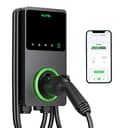
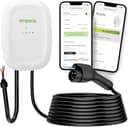
Emporia Level 2 EV Charger

Emporia Level 2 EV Charger

The most charger for the money right now: 48A output and a genuinely useful app at a price that undercuts the premium names. If you have (or can get) a 60A circuit, this is the one that turns the extra amps into the lowest cost per kW installed.

Best overall
$449.00 · View on Amazon

Price as of November 23, 2026. #ad How we’re funded

2
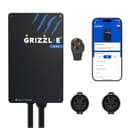
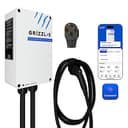
Grizzl-E Classic Connect 40A (J1772)

Grizzl-E Classic Connect 40A (J1772)

The Grizzl-E Classic with a radio in it: the same made-in-Canada metal box, the same UL Type 4 indoor/outdoor rating and the same 25 ft cable, now with Wi-Fi scheduling and 16–40A adjustment. The adjustment is the upgrade worth paying for, because it lets one charger fit whatever circuit your panel can actually spare. The connectivity is the part to think twice about — this line's reputation was built on having nothing to fail.

Best value step
$299.99 · View on Amazon

$349.9914% off

Price as of November 23, 2026. #ad How we’re funded

3
Autel MaxiCharger Home

Autel MaxiCharger Home

A polished 50A unit with Wi-Fi, Bluetooth and a clean app, built to a higher hardware standard than most — and the widest published temperature range in this registry, -40 to 131 °F behind an IP65 / NEMA 4X shell. The catch is the circuit: Autel's own store page asks for a 70-amp feed to reach 50 amps, which is a bigger panel ask than the 60-amp circuit a 48-amp charger needs.

Best features
$450.00 · View on Amazon

$599.0025% off

Price as of November 23, 2026. #ad How we’re funded

4
Grizzl-E Duo Connect 40A (two J1772)

Grizzl-E Duo Connect 40A (two J1772)

One box, two 25 ft cables and one 50A circuit — the answer to two EVs that does not need a second circuit run. Read the manufacturer's own power figure before you buy, though: 40A total means 20A each while both cars are plugged in, so this is one 40A charger with two heads rather than two 40A chargers. For two ordinary commutes that is still more overnight energy than either car will use.

Best for two EVs
$599.99 · View on Amazon

$899.9933% off

Price as of November 23, 2026. #ad How we’re funded

5
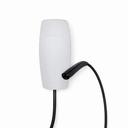
Tesla Wall Connector

Tesla Wall Connector

Tesla's own home charger, and the tidiest thing you can bolt to the wall of a Tesla-only garage: a native NACS handle, 48A output and scheduling from the app you already have open for the car. The handle fits nothing else without an adapter, and it is hardwired only, so it earns its premium in one specific household rather than in general.

Best for a Tesla-only garage
$935.00 · View on Amazon

Price as of November 23, 2026. #ad How we’re funded

6
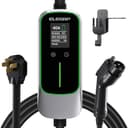
ELEGRP Level 2 EV Charger (40A, NEMA 14-50)

ELEGRP Level 2 EV Charger (40A, NEMA 14-50)

The cheapest way we found to get a genuinely ETL-certified 40A charger with a long cable. It is a plain plug-in unit with no app and no frills, which is exactly why it undercuts the name brands — buy it if the budget is the binding constraint and you already have a 14-50 outlet.

Budget pick
$209.99 · View on Amazon

Price as of November 23, 2026. #ad How we’re funded

The picks in full

#1Best overall

Emporia Level 2 EV Charger

The most charger for the money right now: 48A output and a genuinely useful app at a price that undercuts the premium names. If you have (or can get) a 60A circuit, this is the one that turns the extra amps into the lowest cost per kW installed.

Strengths

  • 48A / 11.5 kW on a 60A circuit — near the top of home output
  • Load management and scheduling in the app, at a budget price
  • Ships with its hardwire whip, and is NEMA 4 outdoor-rated

Trade-offs

  • 48A requires a 60A circuit, which not every panel has room for
  • Hardwired only on the listing we link — there is no plug to unplug if you move
  • Newer brand than ChargePoint or Wallbox, with a shorter track record
ConnectorJ1772
Max output48 A
Max power11.5 kW
Cable length25 ft
InstallHardwired (ships with whip)
Outdoor ratingNEMA 4 (outdoor)
Warranty3 years

Spec note. The listing we link is the hardwired SKU: it ships with a whip and an electrician wires it to a 60A breaker for the full 48A. Emporia sells a NEMA 14-50 plug-in version of the same charger as a SEPARATE, separately preconfigured product, capped at 40A on a 50A breaker, and as of 21 October 2026 that one is not listed on Amazon. Emporia's own Classic install guide says the plug-in version “can be converted to Hardwired”, so the upgrade path does exist — it just means buying the plug-in SKU, which this listing is not. Pairs with Emporia's energy monitor for whole-home load management. Emporia now markets this unit as the Emporia Classic on its own store; the Amazon listing still uses the original name.

Specs read from the product listing, on October 21, 2026. “Not published” means the manufacturer does not state that figure.

#2Best value step

Grizzl-E Classic Connect 40A (J1772)

The Grizzl-E Classic with a radio in it: the same made-in-Canada metal box, the same UL Type 4 indoor/outdoor rating and the same 25 ft cable, now with Wi-Fi scheduling and 16–40A adjustment. The adjustment is the upgrade worth paying for, because it lets one charger fit whatever circuit your panel can actually spare. The connectivity is the part to think twice about — this line's reputation was built on having nothing to fail.

Strengths

  • 16–40A adjustable output, so one unit fits a 20A, 30A, 40A or 50A circuit — the outgoing Classic was fixed at 40A
  • UL Type 4 indoor/outdoor rated metal enclosure, made in Canada, rated from -30°C to +50°C
  • 25 ft published cable, which is more reach than most wall chargers at any price
  • Plugs into a NEMA 14-50 outlet, so no hardwiring bill and it moves house with you
  • Wi-Fi (2.4 GHz) with scheduling, charging statistics, remote control and utility demand-response participation
  • 3-year warranty as standard, with a 5-year extension sold separately by the manufacturer

Trade-offs

  • Not in EPA's ENERGY STAR certified-EVSE database as of 2 September 2026, although the Classic it succeeds is — check before counting on a rebate that requires ENERGY STAR
  • Wi-Fi is not optional, on a product line whose whole appeal was that there was no app to fail
  • NEMA 14-50 only: the Classic also offered a NEMA 6-50 plug variant, and that option is gone
  • On sale only since December 2025, so there is far less long-term owner feedback than the Classic has
  • United Chargers publishes “40A 10 kW” while the Amazon listing says 9.6 kW; 40A at 240V is 9.6 kW, so size the circuit off 40A, not off either kW figure
ConnectorJ1772
Max output40 A
Max power9.6 kW
Cable length25 ft
InstallPlug-in (NEMA 14-50)
Outdoor ratingUL Type 4 (indoor/outdoor)
Warranty3 years

Spec note. United Chargers publishes: AC Level 2, 40A adjustable down to 16A, NEMA 14-50 plug, J1772 or NACS output cable, 25 ft (7.6 m) cord, UL Type 4 indoor/outdoor rating, UL/cUL listing E510712, Wi-Fi 2.4 GHz with the Grizzl-E Connect app, a 3-year warranty, an operating range of -30°C to +50°C and a 10.25 × 6.25 × 3.75 in enclosure. Two caveats we checked rather than assumed. EPA's ENERGY STAR certified-EVSE database lists eight Grizzl-E models under United Chargers Inc. and the Classic Connect is not among them, so we do not repeat the ENERGY STAR claim that appears on one sibling listing. And ENERGY STAR records the outgoing Classic's cord at 24 ft against the same 25 ft marketing figure, so if reach is tight, plan around 24 ft.

Specs read from the product listing, on September 2, 2026. “Not published” means the manufacturer does not state that figure.

#3Best features

Autel MaxiCharger Home

A polished 50A unit with Wi-Fi, Bluetooth and a clean app, built to a higher hardware standard than most — and the widest published temperature range in this registry, -40 to 131 °F behind an IP65 / NEMA 4X shell. The catch is the circuit: Autel's own store page asks for a 70-amp feed to reach 50 amps, which is a bigger panel ask than the 60-amp circuit a 48-amp charger needs.

Strengths

  • Up to 50A / 12 kW, adjustable down to 16A in the app
  • IP65 / NEMA 4X enclosure rated -40 to 131 °F — the widest published range of any charger here
  • Wi-Fi, Bluetooth and Ethernet, with scheduling and access control
  • Autel lists Adaptive Load Management and charger-to-charger Dynamic Load Balancing
  • CSA certified and ENERGY STAR certified, with a 3-year warranty

Trade-offs

  • Autel publishes a 70A circuit for full 50A output — more than the 60A a 48A charger needs, and more than many panels can spare
  • Hardwired only at this output; the plug-in NEMA 14-50 and 6-50 versions are separate 40A models
  • Autel does not publish what sensor hardware Adaptive Load Management needs, so you cannot cost the feature before buying
  • Connectivity adds a failure point a charger with no radio does not have
ConnectorJ1772
Max output50 A
Max power12 kW
Cable length25 ft
InstallHardwired (70A circuit for 50A); plug-in sold as separate 40A models
Outdoor ratingIP65 / NEMA 4X (indoor/outdoor)
Warranty3 years

Spec note. Autel sells this as the MaxiCharger AC Elite Home 50A. Autel's own US store listing publishes: "Maximum 12 kW (240 VAC @ 50 A model)" adjustable 16-50A, hardwired with a 70A circuit required for full output, an SAE J1772 connector on a "25 ft. (7.5 m)" cable, "IP65 / NEMA 4X", "-40 to 131 °F (-40 to 55 °C)" operating temperature, Bluetooth / Wi-Fi / Ethernet / CAN / RS485, "Adaptive Load Management (ALM); Dynamic Load Balancing (DLB)", CSA and ENERGY STAR certification, a 3-year warranty and about 15.4 lb with the in-body holster. Autel's product page repeats the NEMA 4X rating and the -40°F to 131°F figure and describes ALM as sharing power between loads in the home, but neither page states what sensor hardware ALM requires or (on the product page) the circuit size for 50A. The 50A unit is hardwired — the plug-in NEMA 14-50 and NEMA 6-50 versions are separate 40A models, so the install type is chosen at purchase rather than configured on the wall. The listing we link is the hardwired 50A.

Specs read from the product listing, on October 12, 2026. “Not published” means the manufacturer does not state that figure.

#4Best for two EVs

Grizzl-E Duo Connect 40A (two J1772)

One box, two 25 ft cables and one 50A circuit — the answer to two EVs that does not need a second circuit run. Read the manufacturer's own power figure before you buy, though: 40A total means 20A each while both cars are plugged in, so this is one 40A charger with two heads rather than two 40A chargers. For two ordinary commutes that is still more overnight energy than either car will use.

Strengths

  • Two 25 ft cables from one unit, so both cars stay plugged in and nobody moves a plug
  • Runs on a single NEMA 14-50 circuit — it avoids the second circuit, which is the expensive half of a two-charger install
  • Adjustable 40A–16A, so it fits a 50A, 40A, 30A or 20A breaker instead of demanding the biggest one
  • UL Type 4 indoor/outdoor cast metal enclosure rated -30°C to +50°C, on the same footprint as the single-port Classic
  • UL/cUL listed under file E510712, the mark that matters most on a load held for hours unattended
  • 3-year warranty as standard, with a 5-year extension sold separately by the manufacturer

Trade-offs

  • 40A is the TOTAL: United Chargers publishes 20A each when two vehicles charge, so each car gets roughly 4.8 kW, not 9.6 kW
  • Not in EPA's ENERGY STAR certified-EVSE database under this name as of 10 September 2026 — verify the model number before counting on a rebate that requires it
  • Two of the brand's own single-port Classic Connect 40A chargers cost less than one Duo Connect (live check, 10 September 2026) — what the Duo saves you is the second circuit, not the second charger
  • Wi-Fi is not optional, on a product line whose reputation was built on having nothing to fail
  • NEMA 14-50 plug-in only — United Chargers publishes no hardwired or NEMA 6-50 version of this model
  • United Chargers publishes “40A 10kW” while the Amazon listing says 9.6 kW; 40A at 240V is 9.6 kW, so size the circuit off the amps
  • Announced January 2026 and shipping from February 2026, so there is little long-term owner feedback yet
ConnectorJ1772 × 2
Max output40 A
Max power9.6 kW
Cable length25 ft
InstallPlug-in (NEMA 14-50)
Outdoor ratingUL Type 4 (indoor/outdoor)
Warranty3 years

Spec note. United Chargers publishes: AC Level 2, "40A 10kW (20A each when 2 vehicles charging)", adjustable current 40A–16A, a NEMA 14-50 plug, two 25 ft (7.6 m) output cables, a UL Type 4 indoor/outdoor rating, UL/cUL listing E510712, Wi-Fi 2.4 GHz with the Grizzl-E Connect app (statistics, schedules, remote control, utility demand response), a 3-year warranty with a 5-year extension sold separately, an operating range of -30°C to +50°C, a 10.25 × 6.25 × 3.75 in enclosure — the same footprint as the Classic — and two indicator lights, one per connector. Three things we checked rather than assumed. The 20A-each figure is the manufacturer’s own, and it is the number that decides this purchase: two cars charging together get roughly 4.8 kW apiece, not 9.6 kW. EPA’s ENERGY STAR certified-EVSE database returns eight Grizzl-E models under United Chargers Inc. on 10 September 2026 and no Duo Connect row; the closest is the Duo Smart 80A family record, whose additional model numbers include 40A NEMA 14-50 dual-cable variants that match this configuration but not the SKUs the manufacturer publishes for the Duo Connect — so confirm the model number before filing a rebate that requires ENERGY STAR. And United Chargers does not publish whether the 20/20 split can be set per connector in the app, so treat an even split as what you are buying.

Specs read from the product listing, on September 10, 2026. “Not published” means the manufacturer does not state that figure.

#5Best for a Tesla-only garage

Tesla Wall Connector

Tesla's own home charger, and the tidiest thing you can bolt to the wall of a Tesla-only garage: a native NACS handle, 48A output and scheduling from the app you already have open for the car. The handle fits nothing else without an adapter, and it is hardwired only, so it earns its premium in one specific household rather than in general.

Strengths

  • Native NACS handle — a Tesla plugs straight in with nothing hanging off the connector
  • Up to 48A / 11.5 kW with a published 24 ft cable
  • Wi-Fi, over-the-air updates and load management, managed from the Tesla app

Trade-offs

  • Hardwired only — Tesla's manual does not permit a cord-and-plug install, so the electrician is part of the purchase
  • Tesla's manual for it cautions that no adapters or conversion adapters are to be used, so a J1772 car is really the Universal version's job
  • Typically the most expensive route to 48A at home
ConnectorNACS (Tesla)
Max output48 A
Max power11.5 kW
Cable length24 ft
InstallHardwired (60A circuit for full output)
Outdoor ratingIndoor/outdoor rated
Warranty4 years (residential)

Spec note. The listing publishes Level 2, up to 48A and a 24 ft cable. Tesla's own support material adds the rest: hardwired only — cord-and-plug connection is not permitted — a double-pole 60A breaker for full output, approval for indoor or outdoor installation, Wi-Fi, and a 48-month residential warranty. This is the NACS-handle unit (Tesla's Gen 3 Wall Connector manual covers part number 1457768), distinct from the Universal Wall Connector, which docks Tesla's own J1772 adapter on the side of the unit. That manual's safety section states: "No adapters or conversion adapters are allowed to be used" (read 2026-09-16).

Specs read from the product listing, on September 30, 2026. “Not published” means the manufacturer does not state that figure.

#6Budget pick

ELEGRP Level 2 EV Charger (40A, NEMA 14-50)

The cheapest way we found to get a genuinely ETL-certified 40A charger with a long cable. It is a plain plug-in unit with no app and no frills, which is exactly why it undercuts the name brands — buy it if the budget is the binding constraint and you already have a 14-50 outlet.

Strengths

  • ETL certified at 40A — the safety listing is the one thing you should never cut
  • 25 ft cable is longer than several units costing considerably more
  • Plugs into a NEMA 14-50 outlet, so there is no electrician bill for the charger itself

Trade-offs

  • No app, no scheduling — if you need off-peak automation, look at the Emporia
  • ELEGRP is a fixtures brand rather than an EV specialist; long-term support is the open question
  • The listing does not publish an outdoor enclosure rating, so treat it as a garage unit
ConnectorJ1772
Max output40 A
Max power9.6 kW
Cable length25 ft
InstallPlug-in (NEMA 14-50)
Outdoor ratingNot published
WarrantyNot published

Spec note. The listing publishes 40A, 240V, an ETL certification, a NEMA 14-50 plug and a 25 ft cable. It does not publish a NEMA/IP enclosure rating or a warranty term, so both read as not published here. A 40A charger requires a 50A circuit under the 80% rule.

Specs read from the product listing, on August 11, 2026. “Not published” means the manufacturer does not state that figure.

The six, side by side

Every cell is read from the same registry entries as the reviews above. On this page the two columns that justify the price differences are weather rating and warranty— not output, which tops out at 48 amps across the whole band and is identical on the $450 unit and the $935 one.

ProductConnectorMax outputMax powerCableInstallWeather ratingWarrantyPrice
Emporia Level 2 EV ChargerJ177248 A11.5 kW25 ftHardwired (ships with whip)NEMA 4 (outdoor)3 years
$449.00 · View on Amazon

Price as of November 23, 2026. #ad How we’re funded

Grizzl-E Classic Connect 40A (J1772)J177240 A9.6 kW25 ftPlug-in (NEMA 14-50)UL Type 4 (indoor/outdoor)3 years
$299.99 · View on Amazon

$349.9914% off

Price as of November 23, 2026. #ad How we’re funded

Autel MaxiCharger HomeJ177250 A12 kW25 ftHardwired (70A circuit for 50A); plug-in sold as separate 40A modelsIP65 / NEMA 4X (indoor/outdoor)3 years
$450.00 · View on Amazon

$599.0025% off

Price as of November 23, 2026. #ad How we’re funded

Grizzl-E Duo Connect 40A (two J1772)J1772 × 240 A9.6 kW25 ftPlug-in (NEMA 14-50)UL Type 4 (indoor/outdoor)3 years
$599.99 · View on Amazon

$899.9933% off

Price as of November 23, 2026. #ad How we’re funded

Tesla Wall ConnectorNACS (Tesla)48 A11.5 kW24 ftHardwired (60A circuit for full output)Indoor/outdoor rated4 years (residential)
$935.00 · View on Amazon

Price as of November 23, 2026. #ad How we’re funded

ELEGRP Level 2 EV Charger (40A, NEMA 14-50)J177240 A9.6 kW25 ftPlug-in (NEMA 14-50)Not publishedNot published
$209.99 · View on Amazon

Price as of November 23, 2026. #ad How we’re funded

What each step up the ladder buys

Around $200: a certified box and nothing else

The ELEGRP Level 2 40Ais the floor we will recommend: an ETL-certified 40-amp plug-in unit with a 25-foot cable, no app, no scheduling and nothing to configure. Its listing publishes no enclosure rating and no warranty term, which is exactly why it costs what it does, so we would site it in a garage rather than on an exposed wall. For a household with a 14-50 outlet and a car that caps AC charging at 7.2 kW, this is genuinely the whole job done. Our budget roundup has the rest of this tier.

Around $300: build quality and adjustability

The Grizzl-E Classic Connect 40Ais the value step. For about a hundred dollars more than the floor you get a made-in-Canada metal box with a UL Type 4 indoor/outdoor rating, a three-year warranty, and 16–40 A adjustment set inside the unit — which means one charger fits a 20-, 30-, 40- or 50-amp circuit. On a tight panel that adjustability is worth more than any app, and it is the reason this unit appears on more of our pages than any other.

Around $450: 48 amps, and where the value peaks

The Emporia Level 2is the best charger per dollar in the band: 48 A / 11.5 kW, a NEMA 4 outdoor enclosure, a 25-foot cable, three years of warranty and an app that does real work. Two conditions attach, and both are genuine: it is hardwired and ships with a whip, so it is a permanent fixture, and 48 amps needs a 60-amp circuit that many older panels cannot spare. Check both before you buy — chargers for a 100-amp panel is the page for the second case, where load management is usually cheaper than a service upgrade.

Around $530: a harsher climate and a better app

The Autel MaxiCharger Homeis a 50-amp unit with Wi-Fi, Bluetooth and the widest published temperature range in our registry — −40 °F to 131 °F behind an IP65 / NEMA 4X shell. That is a real reason to spend the extra in a climate that genuinely gets there, and the app is the best in this band. The catch is the circuit, and it is a big one: Autel’s own store page asks for a 70-amp feed to reach 50 amps, which is a larger panel ask than the 60-amp circuit a 48-amp charger needs. On a 60-amp circuit it is a 48-amp charger that cost more. Our Autel review works through whether that trade pays.

Around $600: a second connector

The Grizzl-E Duo Connect 40Ais the one thing in this band that no amount of money buys elsewhere under $1,000: two 25-foot cables on one 50-amp circuit, so a two-EV household avoids a second circuit run. Read the manufacturer’s own power figure before you buy, because we would rather you heard it here: 40 A total means 20 A each while both cars are plugged in. It is one 40-amp charger with two heads, not two 40-amp chargers. For two ordinary commutes that is still more overnight energy than either car will use, and our two-EV roundup covers the alternatives.

Above $900: a native NACS handle

The Tesla Wall Connectoris the top of the band and the tidiest thing you can bolt to the wall of a Tesla-only garage: a native NACS handle, 48 amps, a 24-foot cable, a four-year residential warranty — the longest here — and scheduling from the app you already have open for the car. It is hardwired only, needs a 60-amp circuit for full output, and the handle fits nothing else without an adapter. It earns its premium in one specific household rather than in general; if yours has a J1772 car in it too, our Wall Connector alternatives page is the comparison to read, and the Universal Wall Connector is the version with a docked J1772 adapter.

Where the money stops buying anything

Three ceilings cap this entire band, and no price clears them. Forty-eight amps is the top of residential Level 2; above it you are into commercial equipment and three-phase service, which is the subject of Level 2 vs DC fast charging. Your circuit caps the charger at 80% of its breaker rating, so a 48-amp unit on a 40-amp circuit delivers 32 amps. And your car’s onboard charger caps everything— many EVs accept no more than 7.2 kW on AC, in which case the $200 unit and the $935 unit charge at exactly the same speed. Settle the car’s figure first; it is the cheapest decision available and it is the one most often skipped. Our how to choose guide walks it through.

What to ignore in this band

“Up to 80 amps” headline figures. No charger here reaches it and no ordinary house has the service for it. Paying for an app you will not open.Scheduling matters if your utility has a time-of-use tariff, and most cars can schedule charging themselves anyway — see best chargers without Wi-Fi. And a hardwired unit bought on the assumption you can plug it in. Several manufacturers now sell plug-in and hardwired as separate, separately-configured products, so the choice is locked at purchase; the comparison is in NEMA 14-50 vs hardwired.
Frequently asked questions

How much should I spend on a home EV charger?

Between $200 and $450 covers almost every household. Around $200 buys a certified 40-amp box; around $450 buys 48 amps, an outdoor enclosure, three years of warranty and a useful app, which is where the value peaks. Above that you are buying a harsher temperature range, a second connector or a specific brand's ecosystem rather than faster charging.

Is a $900 EV charger faster than a $200 one?

No. Both top out at the same 48 amps of residential Level 2, and in practice the limit is usually your circuit or your car's onboard charger rather than either box. What the extra money buys is enclosure rating, warranty length, app quality, a native NACS handle or a second cable.

Does a home EV charger under $1,000 include installation?

No — every price on this page is hardware only. A 240V circuit typically costs several hundred to a couple of thousand dollars depending on the run and the panel, and it is often more than the charger. Our installation cost guide breaks that down, and federal and utility incentives can cover part of it.

What is the best 48 amp charger under $1,000?

The Emporia Level 2, on published specification per dollar: 48 A, a NEMA 4 outdoor enclosure, a 25 ft cable and a three-year warranty at well under half the budget. It is hardwired and needs a 60-amp circuit, so confirm your panel can carry it before buying.

Is the Tesla Wall Connector worth the price?

In a Tesla-only garage with a 60-amp circuit, yes — the native NACS handle removes an adapter, the four-year residential warranty is the longest in this band, and scheduling lives in the app you already use. In a mixed household it is the wrong handle, and a J1772 charger plus a $40 adapter does the same job for a third of the money.

Can one charger under $1,000 handle two EVs?

Yes, with a caveat worth knowing. The Grizzl-E Duo Connect puts two 25 ft cables on one 50-amp circuit for around $600, but its published figure is 40 A total — so 20 A each while both cars are plugged in. For two ordinary commutes that is still more overnight energy than either car needs; for two large batteries charged from empty it is not.

Sources

  • U.S. DOE Alternative Fuels Data Center — Charging Electric Vehicles at Home — DOE guidance on Level 1 vs Level 2 home charging, 120V/240V service and installation (accessed July 19, 2026)
  • EPA ENERGY STAR — Certified Electric Vehicle Supply Equipment, AC-Output (dataset 5jwe-c8xm) — EPA's machine-readable list of certified chargers. It carries both Tesla wall units, each qualified 2023-09-18 at 48A / 11.52 kW: model 1457768 under brand "Tesla" and model 1734412 under brand "Universal Wall Connector", both with a 22 ft cord on the record (accessed September 16, 2026)
  • Tesla Energy Library — Gen 3 Wall Connector Manual, 48A Single Phase (part number 1457768) — The standard (NACS-handle) Wall Connector: 12-48A output, 60A breaker for 48A, "Do NOT install cord-and-plug type connections", 13.6 x 6.1 x 4.3 in, 10 lb with wirebox, and the safety caution "No adapters or conversion adapters are allowed to be used" (accessed September 16, 2026)
  • Autel Energy (official store) — MaxiCharger AC Elite Home 50A 12 kW EV Charger — Autel's own US store listing: "Maximum 12 kW (240 VAC @ 50 A model)" adjustable 16-50 A, hardwired, and a 70 A circuit required for full output; an SAE J1772 connector on a "25 ft. (7.5 m)" cable; "IP65 / NEMA 4X"; "-40 to 131 °F (-40 to 55 °C)" operating temperature; "Bluetooth, Wi-Fi, Ethernet, CAN, RS485"; "Adaptive Load Management (ALM); Dynamic Load Balancing (DLB)"; CSA and ENERGY STAR certified; "3 years warranty"; about 15.4 lb with the in-body holster. Re-read in full on 2026-11-02, which added: an input rating of "208/240 VAC, 60 Hz, single phase @ 16 A, 24 A, 32 A, 40 A, 48 A, 50 A"; app, AutoStart and RFID authentication with the cards sold separately; "ALM Requires Additional Hardware" for Adaptive Load Management, against Dynamic Load Balancing which "works between chargers without additional hardware"; overcurrent, overvoltage, undervoltage and integrated surge protection; 13.2 x 7.4 x 3.8 in with the in-body holster, and 14.8 lb / 13.2 x 7.4 x 3.3 in with the separate holster. NO UL listing is named anywhere on the page, no breaker or wire-gauge figure is given beyond the 70 A circuit, and the hardware ALM requires is not named (accessed November 2, 2026)
  • United Chargers — Grizzl-E Classic Connect 40A — The maker's own specification block: "Adjustable current 40A - 16A", "Max power 40A 10kW", "Plug type NEMA 14-50", "Connector Type 1 (SAE J1772); NACS", "Output cable length 25ft (7.6m)", a 10.25 x 6.25 x 3.75 in enclosure with "UL Type 4 Indoor/Outdoor Rating", "Operating temperature -30C .. +50C (-22F .. 122F)", "Certifications UL/cUL E510712", "Wi-Fi (2.4 GHz); Mobile Application", and a 3-year or 5-year warranty choice. Re-read in full on 2026-11-02, which added: SKU GRS-14-25J1772-B, model number GRS-077-W-14-25J40-A-GB, a shipped weight of "11.00 kg / 24.25 lbs" and a shipped carton of 245 x 395 x 340 mm. The description calls it "Canadian-made"; the formal country-of-origin and material fields are both blank, and the page describes NO load-management or power-sharing feature beyond the adjustable 16-40A current setting (accessed November 2, 2026)
  • IRS — Alternative Fuel Vehicle Refueling Property Credit — The IRS's own page for the section 30C credit: at a main home it is 30% of the cost, capped at $1,000 per charging port, and it applies to property bought and placed in service from January 1, 2023 to June 30, 2026 (accessed September 12, 2026)

Keep reading