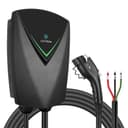
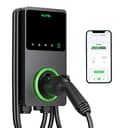
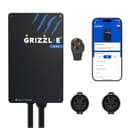
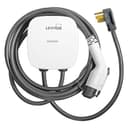
The Pulsar Plus and its six alternatives, side by side
The first row is the original. Every cell below it is read from the same registry entries as the reviews above, and a figure the manufacturer never published prints “Not published” rather than a guess. Read the weather-rating column across the whole table: it is the specification that separates these chargers far more than output does.
| Product | Connector | Max output | Max power | Cable | Install | Weather rating | Warranty | Price |
|---|
| Wallbox Pulsar Plus | J1772 | 48 A | 11.5 kW | 25 ft | Hardwired (48A) or plug-in (40A) | NEMA 3R (indoor/outdoor) | 3 years | |
|---|
| Lectron Nexus Level 2 (48A, hardwired) | J1772 | 48 A | 11.5 kW | 23 ft | Hardwired only | IP66 (indoor/outdoor) | 3 years | |
|---|
| Emporia Level 2 EV Charger | J1772 | 48 A | 11.5 kW | 25 ft | Hardwired (ships with whip) | NEMA 4 (outdoor) | 3 years | |
|---|
| Autel MaxiCharger Home | J1772 | 50 A | 12 kW | 25 ft | Hardwired (70A circuit for 50A); plug-in sold as separate 40A models | IP65 / NEMA 4X (indoor/outdoor) | 3 years | |
|---|
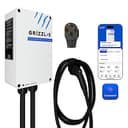
| Grizzl-E Duo Connect 40A (two J1772) | J1772 × 2 | 40 A | 9.6 kW | 25 ft | Plug-in (NEMA 14-50) | UL Type 4 (indoor/outdoor) | 3 years | |
|---|
| Leviton EV40P 40A (NEMA 14-50 plug, Wi-Fi) | J1772 | 40 A | 9.6 kW | 25 ft | Plug-in (NEMA 14-50P, 50A circuit) | NEMA Type 3R (indoor/outdoor) | 2 years (limited) | |
|---|
| Grizzl-E Classic Connect 40A (J1772) | J1772 | 40 A | 9.6 kW | 25 ft | Plug-in (NEMA 14-50) | UL Type 4 (indoor/outdoor) | 3 years | |
|---|
Our four criteria, before the picks
1. The same 48 amps, on the same circuit.The Pulsar Plus reaches 11.5 kW hardwired on a 60-amp circuit. An alternative that only does 40 A is a different purchase, so the 48-amp units come first here and the 40-amp picks are listed for the specific reasons they beat it — price, enclosure, or a plug.
2. A published enclosure rating.If the charger goes on an outside wall, this is the specification that decides its life. Three alternatives here publish a hard figure — IP66, NEMA 4 and IP65 / NEMA 4X — which is more than the Pulsar Plus product page itself states.
3. Cable reach you can verify. Wallbox publishes 25 feet, and four alternatives match or come within two feet of it. Short cable is the most common regret in home charging and the hardest thing to fix afterwards without an extension cable.
4. What happens with two cars. Power Sharing is a real Wallbox advantage, so any honest alternative has to answer it. There are two answers: one charger with two handles, or a load-managed charger. Both are below, and both cost less than two Pulsar Plus units.
Why people look for a Pulsar Plus alternative
“I want 48 amps for less.”That is the most common reason, and the Lectron Nexus 48A answers it directly: identical output, a published IP66 rating, a three-year warranty and an ENERGY STAR record, for far less. The Emporia Level 2 is the same output again with the better app.
“I want a plug, not an electrician’s whip.” Wallbox sells a 40-amp plug-in variant, but its 48-amp model is a hardwired install. If a NEMA 14-50 plug is the point, the Leviton EV40P and the Grizzl-E Classic Connect both give you 40 A on a plug — and our plug-in roundup covers that whole tier.
“I need to charge two cars.” Power Sharing needs two Pulsar Plus units. The Grizzl-E Duo Connect does it with one box and two handles, and our two-EV roundupranks the routes by cost. Read the published figure before you buy either: the Duo is 40 A total, so it is 20 A each while both cars are plugged in.
“My panel is nearly full.”Here we would think twice about switching. Dynamic Load Management is Wallbox’s strongest card and the alternatives handle it differently — see chargers for a 100-amp panel and how load management works before you decide.
How we ranked these six
The Lectron Nexus 48A is the best alternativebecause it matches the Pulsar Plus on the specification you are paying for and publishes more about itself. Forty-eight amps / 11.5 kW hardwired, an IP66 indoor/outdoor rating, a 23-foot cable, a three-year warranty, and specifications that can be cross-checked against EPA’s ENERGY STAR certified-EVSE database, which lists the Nexus under its own model numbers. Two honest cons: the cable is two feet shorter than Wallbox’s, and it is a hardwired-only unit with no plug-in variant, so there is no portability to fall back on. Where its published cord length disagrees with the ENERGY STAR record we print both. Detail in the Nexus review.
The Emporia Level 2 is the best app at 48 amps.Same output, a full 25-foot cable matching Wallbox’s, a NEMA 4 outdoor enclosure, a three-year warranty, and the most capable household app of any alternative here — scheduling, energy reporting and a product line that extends to whole-home energy monitoring. Cons: it is hardwired and ships with a whip, and its housing is substantially bigger than the Pulsar Plus, which matters if the small box was the reason you were shopping Wallbox. Our Emporia vs Wallbox comparison runs the head-to-head and the Emporia review has the figures.
The Autel MaxiCharger is the pick for an exposed wall— and the only charger here that goes past 48 amps. It publishes 50 A, a 25-foot cable, three years of warranty and the strongest ingress rating in this comparison, IP65 / NEMA 4X. The conditions are real: 50 A output needs a 70-amp circuit, which is a bigger ask than the 60 amps the 48-amp units need, and the plug-in Autel models are sold as separate 40-amp units, so this is a hardwired purchase. See Autel vs Wallbox Pulsar Plus for the full side-by-side.
The Grizzl-E Duo Connect is the two-car alternative to Power Sharing.One cast-metal UL Type 4 box, two J1772 handles, a 25-foot cable and a three-year warranty — and it costs less than one Pulsar Plus, where Wallbox’s Power Sharing needs two units. The honest con is the published number: 40 A totalmeans 20 A per car while both are connected, so it is one 40-amp charger with two heads rather than two full-speed chargers. For two ordinary commutes that is still more overnight energy than either car will use. The Duo Connect review sets out the variants, including the J1772-plus-NACS pairing for a mixed household.
The Leviton EV40P is the plug-in alternative.Forty amps on a NEMA 14-50 plug, a 25-foot cable, Wi-Fi with the My Leviton app and a NEMA Type 3R indoor/outdoor shell — a charger you can unplug and take with you, which no 48-amp unit on this page can claim. Two gaps: the output is 40 A rather than 48, and the warranty is two years limited where Wallbox, Emporia, Autel, Lectron and Grizzl-E all publish three. It is still the better buy than Leviton’s own hardwired 32-amp EV320, which was the dearer of the two when we last checked.
The Grizzl-E Classic Connect is the budget pick.The cheapest charger on this page by a wide margin, and the only one with a cast-metal enclosure: UL Type 4, a 25-foot cable, three years of warranty, a NEMA 14-50 plug, and 16–40 A adjustment set inside the unit so it fits whatever circuit your panel can spare. Cons: 40 A is its ceiling, and the Wi-Fi radio on the Connect generation is the newest part of a line whose reputation was built on having nothing to fail. Full detail in the Classic Connect review, and our under-$300 roundup covers the rest of that price band.
When to keep the Wallbox
Three cases, and they are good ones. If the charger has to fit a tight space, nothing here is close — the Pulsar Plus is the smallest 48-amp unit in the category and the alternatives are all noticeably bigger boxes. If you are charging two EVs on one circuit, Power Sharing across two Pulsar Plus units gives each car its own charger with proper load sharing, which the Duo Connect’s single 40-amp supply does not. And if your panel is at its limit, Dynamic Load Management is the cleanest way to add 48 amps to a house that technically has no room for it. In all three cases you are buying something specific, not just a charger, and the price difference is the price of that thing.
What to ignore when comparing
Output above your circuit.A 48-amp charger on a 50-amp circuit delivers 40 A — exactly what the cheaper plug-in picks here deliver — so the upgrade is a panel project first and a shopping decision second; 40 amps vs 48 amps works through whether it pays back. Output above your car.Many EVs cap AC charging at 7.2 kW regardless of the wall, which our amps and circuits guide shows how to check. “Works with all EVs” as a differentiator— every J1772 charger works with every J1772 car, and with a NACS car through a forty-dollar adapter. And an enclosure rating quoted without a source. Where a manufacturer page omits the figure, we say it is not published rather than borrowing one from a datasheet for a different model year.