The published specs, side by side
Read from the same registry entries the reviews above are built from, so the table cannot drift from the write-ups. Each row carries its own live price where our daily price check has one, and a “Check price” link where it does not.
| Product | Connector | Max output | Max power | Cable | Weather rating | Warranty | Price |
|---|
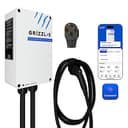
| Grizzl-E Classic Connect 40A (J1772) | J1772 | 40 A | 9.6 kW | 25 ft | UL Type 4 (indoor/outdoor) | 3 years | |
|---|
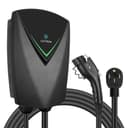
| Lectron Nexus Level 2 (40A, plug-in) | J1772 | 40 A | 9.6 kW | 23 ft | IP66 (indoor/outdoor) | 3 years | |
|---|
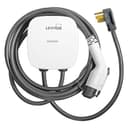
| Leviton EV40P 40A (NEMA 14-50 plug, Wi-Fi) | J1772 | 40 A | 9.6 kW | 25 ft | NEMA Type 3R (indoor/outdoor) | 2 years (limited) | |
|---|
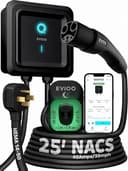
| EVIQO NACS Level 2 Charger (40A, Plug-in) | NACS (Tesla) | 40 A | 9.6 kW | 25 ft | IP66 / NEMA 4 (outdoor) | 3 years | |
|---|
| ChargePoint Home Flex (NEMA 14-50 plug) | J1772 | 40 A | 9.6 kW | 23 ft | NEMA 3R (indoor/outdoor) | 3 years | |
|---|
| ELEGRP Level 2 EV Charger (40A, NEMA 14-50) | J1772 | 40 A | 9.6 kW | 25 ft | Not published | Not published | |
|---|
The outlet is the part that fails, not the charger
This is the one thing to take away from the page. A NEMA 14-50 receptacle was designed for appliances that cycle on and off — a range, an RV hookup. An EV charger pulls 40 amps continuously for hours, every night, which is a far harder life than the part was specified for, and cheap receptacles genuinely overheat and melt at the contacts. It is the single cheapest place in the whole install not to save money. Our NEMA 14-50 outlet roundup covers what separates an industrial-grade receptacle from a $12 one, and NEMA outlet types explains the plug configurations.
The second thing is the GFCI question, and it cuts against plugging in. The installer network Qmerit sets out the rules: NEC 210.8(A) requires GFCI protection for 125–250 volt garage receptacles and NEC 625.54 requires it for receptacles installed for EV charging — and every charger on this page already has its own ground-fault detection inside it. Those two layers can conflict, and nuisance trips are the result. Hardwired chargers are not subject to the receptacle rule; plug-in chargers are. If your garage circuit trips for no visible reason, that is the first place to look, and our troubleshooting guide walks through the rest.
Does 40 amps actually cover it?
Almost always. Forty amps is about 9.6 kW, which is roughly 30 miles of range per hour for a typical EV — so a ten-hour overnight window adds about 300 miles. The US average daily drive is a fraction of that. There are two genuine exceptions: a very large battery on a short charging window (a 130 kWh truck plugged in at midnight and needed full at 6am), and two EVs queuing on one charger. Both are covered in the 48A roundup and two-EV roundup. There is also a third case that argues the other way: if your car’s onboard charger caps out below 40 A — and plenty do at 7.2 or 7.7 kW — the extra amps are spent before they reach the battery. Check the car first.
How we ranked these six
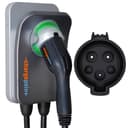
The Grizzl-E Classic Connect leads on published ruggedness per dollar.A cast metal UL Type 4 enclosure with a real UL file number is a different class of claim from “weatherproof” in a listing title, and the 40 A-to-16 A adjustment means it still fits if the circuit you end up with is smaller than the one you hoped for. Wi-Fi and the Grizzl-E Connect app are included rather than charged for. Full figures in our Classic Connect review.
The Lectron Nexus 40A is the documentation pick.Lectron publishes testing to UL 2594, UL 2231, UL 2251 and UL 817 with an ETL listing, an IP66 housing, a 23 ft cable and a 3-year warranty — and EPA’s ENERGY STAR certified-EVSE database carries the same model under its own identifier, which is the cross-check we run on every charger here. See the Nexus review.
The Leviton EV40P is for buyers who want an app and a named enclosure rating from a brand that has been making wiring devices for a century. Leviton publishes 40 A, 9.6 kW, a 50 A breaker, a 25 ft cable, a pre-attached NEMA 14-50P input cable, a PC+PBT NEMA Type 3R enclosure, −30 °C to 50 °C operation and 802.11 b/g/n Wi-Fi with the My Leviton app. The honest mark against it is the warranty: two years, where most of this group gives three.
The EVIQO NACS 40A is the plug-in pick for a Tesla or any NACS-port car— a factory NACS handle, so nothing dangles off an adapter on the wall. EVIQO publishes UL, ETL, FCC and ENERGY STAR certification, roughly 38 miles of range per hour at 40 A and a 25 ft cable. Our Tesla charger roundup covers the category properly.
The ChargePoint Home Flex buys you the most mature software in the category— scheduling, energy tracking, utility rate integration — and it is UL Listed and ENERGY STAR certified with a Type 3R enclosure per its own datasheet. Two things to know: the model we link is the NEMA 14-50 plug-in, which ChargePoint publishes for 40 A or 50 A circuits at 32 A or 40 A output, and the famous 16–50 A dial belongs to the hardwired model. More in the Home Flex review.
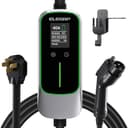
The ELEGRP is where the list bottoms out honestly.ETL listed, 40 A, a NEMA 14-50 plug and a 25 ft cable for roughly a third of what the top of this page costs. What you give up is published: no enclosure rating and no warranty term appear anywhere on the listing, so treat it as an indoor, under-cover unit and read the ELEGRP review for where the money was saved. If the budget is the binding constraint, our budget roundup has the rest of the field.
One rule we will not bend
Buy nothing that refuses to name its certification body in plain text. UL and ETL listings both mean an independent lab tested the unit; “CE” or an unattributed “certified” means nobody you can name has checked a device that draws 40 amps for hours, unattended, on a wall in your house. EPA publishes a searchable ENERGY STAR list of certified chargers, and a model number lookup there takes under a minute. The EVPOVO 40A on our 40A roundup is the live example of this trade-off: a longer cable for less money, with the certification line left for you to verify.