Amp & Adapter

Best Home EV Chargers for a Tesla

Five Level 2 wall chargers that ship with a factory NACS plug, compared on amperage, plug-in vs hardwired install and outdoor rating — plus the honest case for keeping the J1772 charger you already own.

By Stephen V.Last updated How we rank

Here is the part nobody tells Tesla owners up front: you do notneed a Tesla-branded charger, and you do not even strictly need a NACS one. Every Tesla ships with a J1772 adapter, so any of the mainstream J1772 wall boxes will charge your car tonight. What a native NACS charger actually buys you is the removal of a daily annoyance — no adapter to lose, nothing extra hanging off the handle in the rain, and the connector button that pops your charge port open works the way it does at a Supercharger.

So this list is deliberately narrow: only chargers sold with a factory NACS connector, because that is the one thing a Tesla-specific roundup should actually be about. Within that set we ranked on four criteria, in this order:

1. Amperage you can really use— the rated output and the circuit it demands, since a charger draws its amps continuously and code sizes the breaker about 25% higher (the 80% rule). 2. Install path— whether it plugs into a NEMA 14-50 outlet or has to be hardwired by an electrician, which is the single biggest cost difference between two boxes that look identical. 3. Outdoor rating and build— the NEMA/IP number, the published temperature range and how the cable behaves when it is cold. 4. Whether the software earns its place— scheduling to off-peak rates is genuinely useful; an app you have to fight is not.

We have not bench-tested these units, and we will not pretend otherwise. Everything below is read from the manufacturer’s published specifications on the date shown under each pick, with the buyer-fit reasoning argued in the open. If a figure is not published, the spec table says so.

How this is funded:we earn a commission if you buy through our links, at no extra cost to you. It never changes which product we recommend, and we’ll tell you plainly when we’d skip one. Full disclosure.

Quick picks

Ranked on published specs, install flexibility and buyer fit. Select a row to jump to the full write-up. We have not bench-tested these units — here is exactly what we do instead.

#ProductBest forPrice
1
ChargePoint Home Flex NACS (Hardwired)

ChargePoint Home Flex NACS (Hardwired)

The safest default for a Tesla owner who wants a factory NACS plug: the same mature app and the same amperage flexibility as the J1772 Home Flex, with the connector already right. It is hardwired-only, so budget for the electrician.

Best overall
$449.10 · View on Amazon

Price as of July 20, 2026. #ad How we’re funded

2
Emporia Level 2 EV Charger (NACS)

Emporia Level 2 EV Charger (NACS)

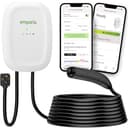
The most NACS charger per dollar right now. It ships on a NEMA 14-50 plug at 40A and converts to hardwired for the full 48A, so one purchase covers both installs — and it is UL-listed and ENERGY STAR certified, which not every budget NACS unit is.

Best 48A value
$479.00 · View on Amazon

Price as of July 20, 2026. #ad How we’re funded

3
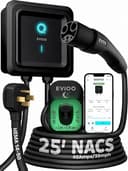
EVIQO NACS Level 2 Charger (40A, Plug-in)

EVIQO NACS Level 2 Charger (40A, Plug-in)

The plug-in answer. If you already have (or are getting) a NEMA 14-50 outlet, this is a fully-featured 40A NACS charger you install yourself in minutes — and 40A is all the overnight charging almost anyone needs.

Best plug-in
$399.99 · View on Amazon

$510.0022% off

Price as of July 20, 2026. #ad How we’re funded

4
Autel MaxiCharger Home NACS (50A)

Autel MaxiCharger Home NACS (50A)

The fastest and best-protected NACS unit on this list: 50A output, a NEMA 4X enclosure and a genuinely flexible cable that still coils in the cold. Worth it only if your panel can actually feed a 60A circuit.

Best for max output
$468.99 · View on Amazon

$569.0018% off

Price as of July 20, 2026. #ad How we’re funded

5

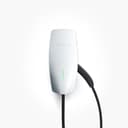
Tesla Universal Wall Connector

The only home unit with BOTH a NACS plug and a built-in J1772 adapter, so it charges a Tesla and a non-Tesla EV from the same box — genuinely useful for a mixed-brand household. Sold mainly direct from Tesla rather than on Amazon.

Best for mixed households

The picks in full

#1Best overall

ChargePoint Home Flex NACS (Hardwired)

The safest default for a Tesla owner who wants a factory NACS plug: the same mature app and the same amperage flexibility as the J1772 Home Flex, with the connector already right. It is hardwired-only, so budget for the electrician.

Strengths

  • Output is app-selectable at 16, 24, 32, 40, 48 or 50A, so it matches whatever circuit you can get
  • Native NACS handle — no adapter hanging off the connector in the weather
  • The most mature app in the category: scheduling, energy tracking, utility rate integration

Trade-offs

  • Hardwired only — you cannot unplug it and take it with you when you move
  • Costs more than a plain 40A box that charges your car just as full overnight
  • A non-Tesla EV needs a NACS-to-J1772 adapter, which is not included
ConnectorNACS (Tesla)
Max output50 A
Max power12 kW
Cable length23 ft
InstallHardwired
Outdoor ratingNEMA 3R (indoor/outdoor)
Warranty3 years

Spec note. ChargePoint publishes hardwire compatibility with 20A-80A breakers; the full 50A output needs a 60A circuit under the 80% continuous-load rule. Rated -22°F to 122°F ambient, Type 3R enclosure per UL 50E.

Specs read from the product listing, on July 20, 2026. “Not published” means the manufacturer does not state that figure.

#2Best 48A value

Emporia Level 2 EV Charger (NACS)

The most NACS charger per dollar right now. It ships on a NEMA 14-50 plug at 40A and converts to hardwired for the full 48A, so one purchase covers both installs — and it is UL-listed and ENERGY STAR certified, which not every budget NACS unit is.

Strengths

  • 48A / 11.5 kW hardwired, or 40A on the included NEMA 14-50 plug — you choose later
  • UL listed and ENERGY STAR certified, with a NEMA 4 outdoor-rated enclosure
  • App scheduling and energy tracking that ties into Emporia's whole-home monitoring

Trade-offs

  • The mounted connector faces upward, so grit and water can settle in the pins outdoors — use a holster
  • 48A means a 60A circuit and a hardwire conversion; on the plug you are capped at 40A
  • Newer brand than ChargePoint, with a shorter service track record
ConnectorNACS (Tesla)
Max output48 A
Max power11.5 kW
Cable length25 ft
InstallPlug-in (NEMA 14-50) or hardwired
Outdoor ratingNEMA 4 (outdoor)
Warranty3 years

Spec note. Ships preconfigured for a NEMA 14-50 plug, which limits it to 40A; converting to hardwired on a 60A breaker unlocks the full 48A. Emporia publishes roughly 46 miles of range per hour at 48A and 38 at 40A.

Specs read from the product listing, on July 20, 2026. “Not published” means the manufacturer does not state that figure.

#3Best plug-in

EVIQO NACS Level 2 Charger (40A, Plug-in)

The plug-in answer. If you already have (or are getting) a NEMA 14-50 outlet, this is a fully-featured 40A NACS charger you install yourself in minutes — and 40A is all the overnight charging almost anyone needs.

Strengths

  • Plugs into a NEMA 14-50 outlet — no hardwiring, and it comes with you if you move
  • IP66 / NEMA 4 sealed and rated from -22°F to 122°F, so an outdoor wall is fine
  • Amperage is app-adjustable from 6A to 40A, which matters on a shared or older panel

Trade-offs

  • 40A is the ceiling — there is no path to 48A the way there is with the Emporia
  • Smallest brand here; support and long-term firmware are the open question
  • Non-Tesla EVs need a NACS-to-J1772 adapter, which is not in the box
ConnectorNACS (Tesla)
Max output40 A
Max power9.6 kW
Cable length25 ft
InstallPlug-in (NEMA 14-50)
Outdoor ratingIP66 / NEMA 4 (outdoor)
Warranty3 years

Spec note. UL, ETL, FCC and ENERGY STAR certified. EVIQO publishes roughly 38 miles of range per hour at 40A, a 25 ft charging cable and a 37 in input cable. A 40A charger needs a 50A circuit under the 80% rule.

Specs read from the product listing, on July 20, 2026. “Not published” means the manufacturer does not state that figure.

#4Best for max output

Autel MaxiCharger Home NACS (50A)

The fastest and best-protected NACS unit on this list: 50A output, a NEMA 4X enclosure and a genuinely flexible cable that still coils in the cold. Worth it only if your panel can actually feed a 60A circuit.

Strengths

  • Up to 50A / 12 kW — the highest AC output here — and app-adjustable down to 6A
  • NEMA 4X dust-tight and water-tight enclosure, plus surge and over-temperature protection
  • Flexible 25 ft cable reaches across a two-car garage without fighting you

Trade-offs

  • Hardwired only, and 50A needs a 60A breaker most older panels do not have spare
  • Your Tesla's onboard charger caps what it can accept, so many cars will never use all 50A
  • Connectivity (Wi-Fi/Bluetooth/Ethernet) is one more thing that can need a reconnect
ConnectorNACS (Tesla)
Max output50 A
Max power12 kW
Cable length25 ft
InstallHardwired
Outdoor ratingNEMA 4X (outdoor)
Warranty3 years

Spec note. Autel publishes an adjustable 6A-50A range on a dedicated 20A-80A circuit depending on the setting, and roughly 48 miles of range per hour at 50A. This is the NACS sibling of the J1772 MaxiCharger we cover in the main home-charger roundup.

Specs read from the product listing, on July 20, 2026. “Not published” means the manufacturer does not state that figure.

#5Best for mixed households

Tesla Universal Wall Connector

The only home unit with BOTH a NACS plug and a built-in J1772 adapter, so it charges a Tesla and a non-Tesla EV from the same box — genuinely useful for a mixed-brand household. Sold mainly direct from Tesla rather than on Amazon.

Strengths

  • Native NACS connector plus an integrated J1772 adapter — charges everything
  • Up to 48A / 11.5 kW, Wi-Fi, and tight integration with the Tesla app
  • Well-built weatherproof housing

Trade-offs

  • Hardwired only, on a 60A circuit for full output
  • Usually bought direct from Tesla, so Amazon stock and price can be spotty
ConnectorNACS + J1772 adapter
Max output48 A
Max power11.5 kW
Cable length24 ft
InstallHardwired
Outdoor ratingOutdoor-rated
Warranty4 years

Spec note. This is the newer 'Universal' unit — distinct from the Tesla-only Wall Connector — and the built-in J1772 adapter is what makes it a legitimate cross-brand home charger.

Specs read from the product listing, on July 19, 2026. “Not published” means the manufacturer does not state that figure.

How to choose between them

Work backwards from your electrical panel, not forwards from the product page. Ask an electrician one question — “what is the biggest dedicated circuit you can give me, and what will it cost?” — and the shortlist collapses almost immediately.

If the answer is a 50A circuit with a NEMA 14-50 outlet, stop at the EVIQO. It is a sealed, ENERGY STAR-certified 40A unit that you hang on the wall and plug in yourself, and 40A adds roughly 38 miles of range per hour by EVIQO’s own published figure — more than 300 miles across a normal overnight charge. That covers essentially every daily-driver Tesla in America.

If the answer is a 60A circuit and you want the extra headroom, the Emporia is the most charger per dollar: it arrives on a 14-50 plug at 40A and converts to a hardwired 48A install later, so you are not locked in on day one. If you want the polish, the longest software track record and an amperage dial that fits whatever circuit you end up with, the ChargePoint Home Flex NACSis the safe default — it is the one we would buy if we only wanted to make this decision once. And if your panel genuinely has room for the maximum, the Autel is the highest-output unit here at 50A with the toughest enclosure rating (NEMA 4X).

The amperage trap

Read this before you pay for 50A. Charging speed is set by the lowestof three numbers: your circuit, the charger, and your car’s onboard AC charger. Teslas do not all accept the same AC input — check your specific model and year in the owner’s manual or the vehicle’s charging screen before you buy amperage the car cannot draw. A 50A charger on a car that accepts 32A of AC charges at exactly the same speed as a 32A charger, while costing you a bigger breaker, thicker wire and a more expensive install. Our amps and circuits guide walks the 80% rule and the breaker sizes in full.

NACS, or J1772 plus the adapter in your frunk?

Both are legitimate, and we would not tell anyone to throw away a working J1772 charger to buy a NACS one. The J1772 route is often cheaper, and it has one real advantage: it charges any EV, so it survives you selling the Tesla or adding a second, non-Tesla car. The trade-offs are that the adapter is one more part to lose, it adds length and weight to a connector that may sit outdoors, and some owners find the combined assembly awkward to seat in the port one-handed.

Native NACS wins on daily friction and looks tidier on the wall, but it locks the charger to NACS cars unless you buy a NACS-to-J1772 adapterin the other direction — and none of the four NACS units above include one. If you already own a J1772 charger, the cheapest correct answer is usually to keep it and read our J1772-to-Tesla adapter roundup instead. That is a $30–$60 decision rather than a $400+ one, and we would rather you spent the difference on the install.

Plug-in or hardwired

This is where the money actually goes. A NEMA 14-50 outlet install lets you unplug the charger and take it when you move, and it usually costs less because the electrician is fitting a standard receptacle. The catch is that a plug caps you at 40A. To pull 48A or 50A you have to hardwire, which also removes the outlet as a failure point — a real consideration, since a cheap receptacle under continuous EV load is one of the more common causes of heat damage in a home install. If you are plugging in, spend the extra on an industrial-grade receptacle; our NEMA 14-50 outlet guide shows what separates them, and the plug-in vs hardwired guide covers the full decision.

What we’d skip

Skip any “Tesla charger” listing that will not state its amperage, its enclosure rating and its certification body in plain text — on a device that pulls 40A continuously for hours, UL or ETL listing is not a nice-to-have. Skip the very cheap NACS units that are really 16A or 32A Level 1/2 hybrids being marketed as home chargers; those are travel units, and we cover the good ones separately in our portable Tesla charger roundup. And skip a 50A charger throttled onto a 40A plug-in circuit — you are paying for headroom you have physically disconnected.

What the install really costs

The charger is frequently the smaller half of the bill. A dedicated 240V circuit run from the panel to the garage wall, a breaker, conduit, and the permit and inspection your jurisdiction requires all sit on top of the price you see on the buy button, and the number swings enormously with distance from the panel and whether your service has spare capacity. Get two written quotes before you commit to an amperage tier — discovering that 48A requires a panel upgrade is the single most common way this project doubles in price. If it does, the 40A plug-in route stops being a compromise and starts being the obviously correct answer.
Frequently asked questions

Do I need a NACS charger for my Tesla?

No. Every Tesla comes with a J1772 adapter, so any mainstream J1772 wall charger will charge it. A native NACS charger just removes the adapter from your daily routine — no extra part to lose and nothing extra hanging off the connector outdoors. It is a convenience upgrade, not a requirement.

Can a non-Tesla EV use these NACS chargers?

Only with a NACS-to-J1772 adapter, and none of the four third-party units here include one. The exception is the Tesla Universal Wall Connector, which has a J1772 adapter built into the unit — that is what makes it the pick for a household with both a Tesla and a non-Tesla EV.

How many amps do I need to charge a Tesla at home?

For nearly everyone, 40A is plenty — manufacturers publish roughly 38 miles of range per hour at 40A, which is over 300 miles across an overnight charge. Step up to 48A or 50A only if you routinely arrive near empty and leave early, and only if your panel has room for a 60A circuit. Also check what your specific Tesla's onboard charger accepts; the car, not the wall box, may be the limit.

Should I buy Tesla's own Wall Connector instead?

It is a good unit and the Universal version is genuinely unique because of its built-in J1772 adapter. But it is hardwired-only and sold mainly direct from Tesla rather than through Amazon, so stock and pricing vary. If you only ever charge Teslas and want a plug-in install, one of the third-party NACS chargers here is usually the simpler buy.

Can I install one of these myself?

You can hang a plug-in unit like the EVIQO on the wall and plug it in yourself. The 240V circuit and outlet behind it must be installed by a licensed electrician to code, and hardwired units are always an electrician's job. Nothing on this site is electrical advice.

Sources

Keep reading