What actually changed from the Classic
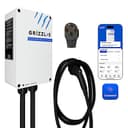
United Chargers describes the Connect as the Classic design with updated electronics and improved performance. In practice, four things are different, and it is worth being precise about which is which because the marketing does not separate them.
- Adjustable output. The Connect is rated 40A and adjustable down to 16A. The Classic was a fixed-40A unit with no field adjustment. This is the biggest functional change.
- Wi-Fi and an app. The Connect has a 2.4 GHz radio and pairs with the Grizzl-E Connect application for charging statistics, schedules, remote control and utility demand-response programs. The Classic had none of that by design.
- A NACS option. The Connect is sold with either a J1772 or a native NACS output cable. The Classic was J1772 only.
- One plug type instead of two. The Classic was offered with a NEMA 14-50 or a NEMA 6-50 plug. The Connect is NEMA 14-50 only. If your garage already has a 6-50 outlet, that is a real regression, and the fix is an adapter rather than a configuration option.
What did not change is most of the reason people bought the Classic: the same 25 ft cable, the same UL Type 4 indoor/outdoor metal enclosure, the same 10.25 × 6.25 × 3.75 in footprint, the same −30 °C to +50 °C operating range, the same 3-year warranty and the same made-in-Canada build.
The certification, and the one claim we could not verify
A home charger holds its rated current for hours, unattended, in a garage, while you sleep. Testing to a recognized standard is the floor, not a feature — our certification guide explains what the individual marks cover and how to check one yourself.
United Chargers publishes a UL/cUL listing under file E510712 for the Classic Connect, and both live Amazon listings describe it as “UL Tested and Certified”. That is the mark that matters most, and it is consistent across the manufacturer’s record and the retail listing.
ENERGY STAR is the part that does not line up. We checked EPA’s certified-EVSE database on 2 September 2026. It returns eight Grizzl-E models under the partner name United Chargers Inc. — the Smart, the Classic, the Mini, the Ultimate, the Ultimate 48A, the Ultimate Fleet 80A, the Ultimate Pro 80A and the Duo Smart 80A. There is no Classic Connect row. The Classic it succeeds is listed (model GR1-14-24-PB, qualified August 2024); the Connect, so far, is not.
United Chargers’ own product record for the Connect is consistent with that: it names the UL/cUL file and does not claim ENERGY STAR, where the record for the Classic names both. A separate Classic Connect listing on Amazon — a black NACS colorway that was itself unavailable when we checked, so we do not link it — does carry “Energy Star” in its title. We are not going to repeat a claim we cannot corroborate in the certifying body’s own database.
For most buyers this changes nothing. But if you are counting on a utility rebate, it can change everything: plenty of programs pay several hundred dollars specifically for an ENERGY STAR-certified connected charger, and they verify by model number. If that is your situation, confirm the exact model with your program before you order, or buy something already on the list. This is the single most important sentence in this review.
The 16-40A adjustment is the real upgrade
Amperage is the specification people get wrong most often, in both directions. A charger draws its rated current continuously, so code sizes the circuit about 25% above the draw — the 80% continuous-load rule. A 40A charger therefore needs a 50A breaker, which is more spare panel capacity than a lot of older houses have. Our amps and circuits guide has the full arithmetic.
The Classic could not help you there. It was 40A or nothing, so if the electrician came back and said your panel could spare a 30A circuit, you had bought the wrong charger. The Connect dials down to 24A on a 30A circuit, or 16A on a 20A circuit, and back up later if you ever upgrade the service. That is the difference between a charger you buy for the house you have and one you buy for the house you hope to have.
It is also worth saying plainly that 40A is enough. At 240V that is 9.6 kW, roughly 250 to 300 miles of range across a ten-hour night — far more than a typical household drives in a day. Our 40A roundup makes the longer case; the 48A page covers the minority of households where more genuinely pays. If the charger you are weighing this against is the best-documented unit in the category, we have put the two side by side in Grizzl-E vs ChargePoint Home Flex — same amps, same plug, and a wide gap in both price and published detail.
One number to be careful with. United Chargers publishes the output as “40A 10 kW”, while the Amazon listings say 9.6 kW. Forty amps at 240 volts is 9.6 kW; 10 kW implies 250 volts, which is a nominal ceiling rather than what comes out of a normal residential panel. Neither figure is wrong, but size your circuit off the 40 amps, not off either kW number.
The cable, and how much reach you actually get
United Chargers publishes 25 ft (7.6 m) of output cable. That is more reach than most wall chargers at any price, and cable length is the specification that causes the most buyer regret, because a cord two feet short is a daily annoyance you cannot fix without moving the charger or the car.
A caution from the sibling model, though. The Classic carries the same 25 ft marketing figure, and EPA’s ENERGY STAR record measures its output cord at 24 ft in 8 AWG. There is no ENERGY STAR record for the Connect to check against, so we cannot say whether the same gap applies. If reach is tight, plan around 24 ft, measure from where the outlet will actually go to where the charge port sits when the car is parked the way you really park it, and add slack for the days you nose in instead of reversing.
Outdoors, and what UL Type 4 means
The enclosure is rated UL Type 4, indoor or outdoor. Type 4 is a real rating — it covers windblown dust, rain, splashing water and hose-directed water — and it is a meaningfully stronger claim than the “weather resistant” phrasing unrated units use. Combined with a −30 °C rating, this is a charger designed for a wall in a cold climate rather than one that merely tolerates a garage. Our outdoor roundup compares the ratings across the field.
The usual caveat applies and it is not the charger’s fault: a rated enclosure does not make a plug-in install outdoor-safe on its own. The receptacle and its in-use cover have to be rated for the location too, and that is the electrician’s call. A cover or a shaded position still helps on a fully exposed wall.
J1772 or NACS?
Buy the connector your car actually has. The J1772 model fits almost every non-Tesla EV and plug-in hybrid sold in North America. The NACS model fits Teslas and the growing number of other EVs shipping with the Tesla-style port, with nothing hanging off the handle — our Tesla and NACS charger roundup compares the native-NACS field.
Either can be made to work with the other type of car using an adapter — a J1772-to-Tesla adapter for a NACS car on the J1772 unit, or a Tesla-to-J1772 adapterthe other way — but an adapter permanently parked on a wall charger is a wear point and a thing to lose. If your household is all one connector type, buy that one.
Who should buy it
The Connect suits a specific buyer: you want a rugged metal charger on a NEMA 14-50 outlet, you are not certain yet what circuit your panel can spare, and you are fine with a connected unit. The adjustment covers the electrical uncertainty, the Type 4 enclosure covers the wall, and 25 ft of cable covers the garage. That is a genuinely useful combination and the Classic could only offer two thirds of it.
It also suits anyone who wants the Grizzl-E build quality but has a NACS car, which simply was not an option before, and anyone whose utility runs a time-of-use tariff their car cannot schedule around on its own. Where the charger genuinely has to be the smart component, our load management guide explains why.
Who should buy something else
- Anyone whose rebate requires ENERGY STAR. Covered above, and it is the one disqualifier that costs real money. Verify the model number with the program first, or buy from our smart charger roundup, where the connected picks we list publish their certifications.
- Anyone who wanted the Classic precisely because it was dumb. The Wi-Fi is not optional here. If “nothing to fail” was the whole appeal, the Lectron Nexus is the current no-radio equivalent, and its ENERGY STAR record confirms it carries no network hardware at all.
- Anyone with a NEMA 6-50 outlet already installed. The Connect does not come in a 6-50 version. You can adapt, but adapting a continuous 40A load is not a place to economize.
- Anyone who needs 48A. This is a 40A unit and always will be. If your panel can carry a 60A circuit and your car’s onboard charger can actually accept 48A on AC — two conditions, not one — the 48A page is the right one to read.
- Anyone on the tightest budget. The Connect sits above the Classic on price, and the radio is most of what you are paying for. Our budget roundup is explicit about what you give up further down.
The one upgrade to buy alongside it
Spend money on the receptacle. An inexpensive NEMA 14-50 outlet is the cheapest part of a plug-in install and the likeliest to fail: ordinary ones are built for the intermittent loads of ranges and RVs, not a 40A draw held for eight hours a night, and overheated outlets are a documented failure mode. An industrial-grade receptacle is the single cheapest safety upgrade in the whole job — our NEMA 14-50 outlet roundup covers the ones worth buying, and our plug-in versus hardwired guide makes the case for skipping the outlet entirely if you are installing outdoors.
The verdict
A good charger, and a more flexible one than the Classic it follows. The 16-40A adjustment is the upgrade that matters, the UL Type 4 metal enclosure and 25 ft cable are unchanged strengths, and the NACS option finally makes Grizzl-E an answer for Tesla owners. If you want a rugged plug-in 40A unit that can be sized to whatever circuit you end up with, this is an easy recommendation.
The honest caveats are three. It is not in EPA’s ENERGY STAR database as we write this, which matters only for rebates but matters a lot there. The Wi-Fi you may not have wanted is not removable. And it has been on the market since December 2025, so it has months of owner feedback behind it rather than the Classic’s years — on a product line whose reputation is built on longevity, that is worth weighing.
If you are buying for a two-EV household, note that the same generation is also sold as a two-cable unit: the Grizzl-E Duo Connect 40Aputs two 25 ft cables on one circuit. It costs more than two of these do, and its 40A is shared — 20A per car while both are charging — so it is worth buying only when a second circuit is the expensive part of your quote.
And if the charger may not stay on this wall — a rental, a second property, or a household that camps — the same generation is sold as a portable: the Grizzl-E Mini Connect 40A puts the same cast-aluminum Type 4 enclosure and the same adjustable output into a 6.9-inch body with four plug adapters and a carrying case. It costs more than this unit does, and its cord is three gauges thinner, which is the trade for being able to pack it.
One buying note. United Chargers sells the Classic Connect direct as well as on Amazon, and the two prices are not always the same. We earn a commission on the Amazon link and nothing on the direct one, and we would still rather you paid less — check both.