What we ranked on, in order
Four criteria, and they are deliberately in this order. The first one eliminates more chargers than the other three combined.
1. A published operating temperature range
This is the whole page. A charger that states “-30 °C to +50 °C” on the manufacturer’s own specification sheet has had that range designed in and tested, and the manufacturer has to honor it. A charger whose page says nothing about temperature may well survive a Vermont winter — but you are buying on hope, and if it dies in January you have no published figure to point at.
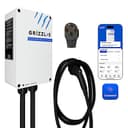
The useful thing is how consistent the numbers are among brands that do publish. -22 °F (-30 °C) is the industry’s de facto floor: Grizzl-E, Leviton and ChargePoint all publish it, within a degree. That means for most buyers in most of the Lower 48, any charger with a published range is cold enough, and the decision moves on to the next three criteria. Only one charger here goes meaningfully further.
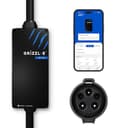
It also explains something you will notice immediately about the picks: Grizzl-E appears three times.That is not brand loyalty. United Chargers publishes the same -30 °C figure and the same UL Type 4 metal enclosure across its whole line — the plug-in wall unit, the NACS version of it and the portable — so when you filter the market down to what manufacturers will actually put in writing, one line covers three different form factors. We would rather look repetitive than rank a charger whose maker publishes nothing.
2. The enclosure: cast metal beats plastic, and the rating says which
Winter is a freeze-thaw problem more than a cold problem. Water gets in, freezes, expands and then a seal that was fine in October is not fine in March. The enclosure rating is how a manufacturer tells you it thought about that.
NEMA Type 4 and 4Xmean the enclosure is rated against windblown dust, rain, splashing water and hose-directed water — 4X adds corrosion resistance, which matters on a driveway that gets road salt walked onto it all winter. Type 3Ris a lower bar: rain, sleet and snow, but not hose-directed water. Both are genuinely outdoor ratings. The practical difference in a cold climate is usually the material rather than the digits — a cast aluminum shell has no plastic to go brittle and no plastic seam to open up, and three of the six picks here are metal.
3. The cable, which is what actually annoys you
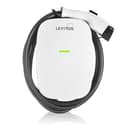
Ask anyone who charges outdoors in a real winter what they hate and they will not say the charger failed. They will say the cable turned into a garden hose left out in January — stiff, coiled in the shape it froze in, and unwilling to reach the charge port. This is the single most under-published specification in the category. Leviton is one of very few brands to make a claim about it directly, which is why it is pick three — though its cable is also the shortest here, which our Leviton EV320 review is blunt about.
Length interacts with this. A 25 ft cable gives you slack to work with when it is stiff; an 18 ft cable that only just reached in summer may not reach at all once it stops bending. If your charger will live outdoors or in an unheated garage, buy more cable than you think you need — see our long-cable roundup for the full range.
4. Hardwired, if the choice is yours
A plug-in charger adds a NEMA 14-50 receptacle to the circuit, and a receptacle outdoors is one more place for water to sit and freeze. There is a code dimension too: NEC 210.8(A) requires GFCI protection for 125- to 250-volt garage receptacles and NEC 625.54 requires it for receptacles installed for EV charging, and a charger’s own ground-fault protection can conflict with an external GFCI breaker — the nuisance-tripping complaint. A hardwired charger is not subject to the 625.54 receptacle requirement at all. Our plug-in versus hardwired guideworks through the trade-off properly, and if you do go plug-in, the receptacle grade is worth real money — see NEMA 14-50 outlets.
We did not rank hardwired above plug-in outright, because for most people the plug-in unit is the one that actually gets installed this month rather than next spring, and an installed 40-amp charger beats a hardwired 48-amp charger still in its box. Pick one is plug-in for exactly that reason.
The published temperature ranges, side by side
Every figure here is the manufacturer’s own, read from its own page or datasheet. Where a row says “Not published” it means we looked and the manufacturer does not state it — not that the charger is unsuitable.
| Charger | Published operating range | Enclosure | Cable |
|---|
| Grizzl-E Classic Connect 40A | -30 °C to +50 °C (-22 °F to 122 °F) | UL Type 4, metal | 25 ft |
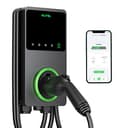
| Autel MaxiCharger AC Elite Home 50A | -40 to 131 °F (-40 to 55 °C) | IP65 / NEMA 4X | 25 ft |
| Leviton EV320 | -30 °C to 50 °C | NEMA Type 3R, PC+PBT plastic | 18 ft, “designed not to freeze and crack” |
| Grizzl-E Classic Connect 40A (NACS) | -30 °C to +50 °C (-22 °F to 122 °F) | UL Type 4, metal | 25 ft |
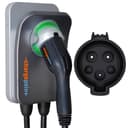
| ChargePoint Home Flex | -30 °C to 50 °C (-22 °F to 122 °F) | Type 3R per UL 50E | 23 ft |
| Grizzl-E Level 2 Portable 40A | -30 °C to +50 °C | NEMA 4X, cast aluminum | 24 ft on the listing |
Two notes on reading that table. ChargePoint’s figure is in its Home Flex datasheet rather than on the product page — the datasheet also publishes a storagerange of -40 °C to 60 °C, so the charger can sit through a harder winter than it can work through. That is the pattern across this whole category: the honest number is in the datasheet or the installation manual, almost never on the page that is trying to sell you the charger. The second note is that these are ambient ratings for the enclosure, not promises about charging speed. None of them says anything about how fast your car will take current at that temperature, because none of them can.
The 70-amp footnote on pick two
The Autel has the best cold-weather specification here by a wide margin, and we have still not made it pick one. The reason is a single line on Autel’s own store page: full 50-amp output needs a 70-amp circuit.
That is worth pausing on, because it is not the number the usual arithmetic gives you. A continuous load is sized at 125% of its draw, so 50 A × 1.25 = 62.5 A, and the next standard breaker above that is 70 A. Most buyers reading “50 amps” assume the 60-amp circuit that a 48-amp charger needs. A 70-amp feed is a materially bigger ask of a panel, and on a 100- or 125-amp service it is frequently the thing that makes the project a service upgrade instead of an afternoon. Autel is being straight with you by publishing it; we are repeating it because almost nobody else does.
You can dial the Autel down — Autel publishes 16 A to 50 A adjustable — and a 40-amp setting on a 50-amp circuit gets you the -40 °F enclosure without the panel work. That is a perfectly sensible way to buy it, and it is the configuration we would choose. Our 40A versus 48A page and 100-amp panel roundup cover the panel side, and Autel vs ChargePoint Home Flex works the 70-amp question against the charger that needs no new circuit at all.
Wi-Fi in an unheated garage
One winter failure mode nobody puts on a spec sheet: the charger is fine and the network is not. A cloud-dependent charger in a detached garage at the edge of your Wi-Fi is a charger that occasionally will not start a scheduled session, and cold weather is exactly when you want the overnight schedule to just work.
Two defenses, both cheap. First, prefer a charger that will charge with no network at all once set — all six picks here will, and pick three has no radio to begin with. Second, do your scheduling in the carrather than in the charger’s app. Every EV sold in the US can schedule departure or charging windows itself, and the car always knows its own state of charge. Our no-Wi-Fi roundup makes that argument at length, and our troubleshooting guide starts in the same place.
Preconditioning does more than any charger on this page
If you take one piece of buying advice from here, it is this: the cheapest winter charging upgrade is not a charger. It is plugging in while the car is still warm from driving, and using the car’s own scheduled-departure feature so it heats the pack on your electricity rather than on the pack’s own.
A cold pack refuses current; a preconditioned pack accepts it. That single habit will do more for your February charging than the difference between a -22 °F charger and a -40 °F one, and it costs nothing. The charger’s job is to be available, reliably, every night, for years — which is precisely why we weighted published ratings and enclosure material over amperage on this page.
What we left out, and why
- Every charger with no published temperature range.That includes units we recommend warmly elsewhere on this site — the EVIQO J1772 wall chargers among them, whose listings publish amperage and connector but state no enclosure rating or operating range at all. They are not bad chargers. They just cannot be ranked on the one criterion this page is about.
- The EVPOVO 32A,which came closer than any unit we left out. Its listing publishes a 25 ft TPU cable the seller says stays flexible down to -22 °F — the cable claim we said is the most under-published figure in the category — but no operating range for the charger itself. If cable stiffness is your specific complaint and 32 amps is enough, it is worth a look on our 32-amp roundup.
- The Emporia Pro,which is our top pick on several other pages. Emporia publishes a NEMA 4 enclosure, which is a genuine outdoor rating, but we could not find a published operating temperature range for it. For a cold-climate page that is a disqualifying gap rather than a mark against the hardware — see our Emporia Pro review for what it is good at.
- The Tesla Wall Connector,which would otherwise be the obvious pick for a Tesla. Tesla’s Gen 3 Wall Connector installation manual — the document we cite for its 48-amp output and its blunt “do NOT install cord-and-plug type connections” instruction — publishes no ambient temperature range. The Universal Wall Connector’s material does publish -22 °F to 122 °F, but that listing returned no live price when we checked for this page, and we do not feature a product we cannot show you a real price for. Pick four is a plug-in NACS charger with the figure published instead; if you want Tesla’s own box, our Wall Connector review covers it on its merits.
- Heated or heated-cable chargers. There is no mainstream residential Level 2 charger in the US with a heated cable. If you see one claimed, check whose specification sheet the claim is on.
- Enclosures and covers as a substitute.A weatherproof box over a charger that is already Type 4 rated buys you very little; over a charger with no published rating it buys you a guess inside a box. Where a cover genuinely helps is sun and sleet on a wall with no eave — see charger covers.
The short answer
For almost everybody in almost every US climate: buy a charger with a published operating range, prefer metal over plastic, buy 25 ft of cable rather than 18, and hardwire it if the choice is yours. Pick one does all four at the lowest price on this page, which is why it leads. Pick two is the one to buy if you are genuinely in interior Alaska or northern Minnesota and your panel can take the circuit. Then go and set up scheduled departure in the car, which will help more than either.
One buying note. Several of these brands sell direct as well as on Amazon and the prices are not always the same — Autel’s own store was running the AC Elite below the Amazon price when we checked. We earn a commission on the links here and nothing on the direct ones, and we would still rather you paid less. Check both.