EV Charging Deals & Gift Guides
Gift guides written for the person buying, not the person driving — plus one deals page that only ever shows the discounts our daily price check actually finds.
This section exists for two people the rest of the site isn’t written for. The first is buying a present for someone who drives electric and doesn’t know a J1772 plug from a NEMA 14-50 — and shouldn’t have to learn, in December, in order to buy a $20 gift. The second is holding out for November, trying to work out whether the thing they want is actually going to get cheaper.
Both get straight answers here. The gift guides are sorted by who you’re buying for and by what you want to spend, and every pick says what to check before you order it. The deals page carries no discount we wrote ourselves: it shows what our daily retailer check found, dated, and an empty board when there is nothing on. Prices across this section were last verified September 11, 2026.
Everything in Deals & Gifts
Black Friday & Cyber Monday EV Charger Deals 2026
Which parts of EV charging actually get cut in November and which never do, whether to buy now or wait — and the live discounts on our picks, updated daily.
Our top pick
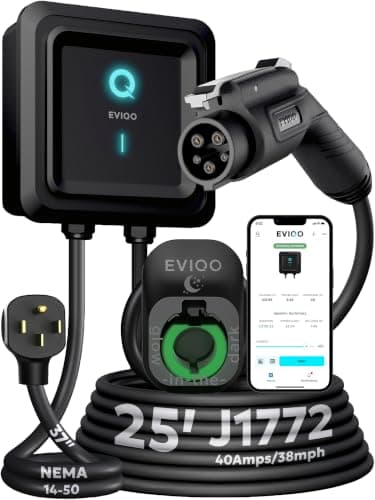
EVIQO Level 2 J1772 Charger (40A, Plug-in)
Best Gifts for Tesla Owners
The NACS-specific presents that land: the spare adapter they will eventually need, the lock that stops it walking off, and somewhere to keep the cable.
Our top pick
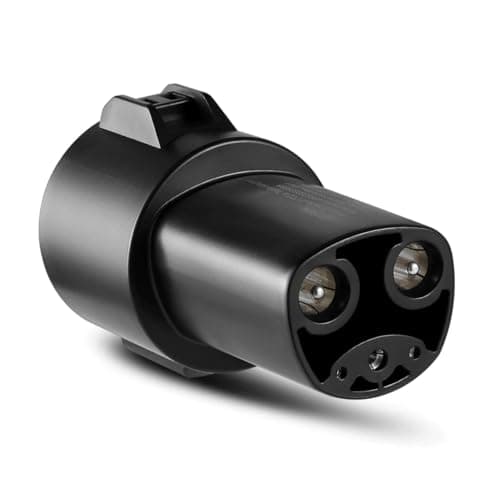
Lectron J1772 to Tesla Adapter
$39.99 · View on AmazonPrice as of September 11, 2026. #ad How we’re funded
Best Gifts for a New EV Owner
What somebody who just took delivery is missing in week one — and why the obvious present, a wall charger, is the one to leave alone.
Our top pick
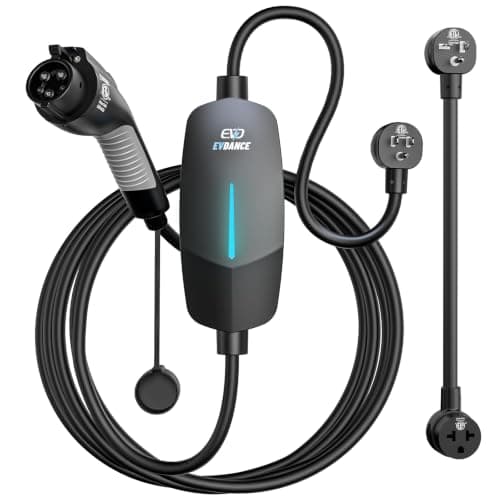
EVDANCE Level 1 & 2 Portable Charger (16A, 25 ft)
Best Gifts for EV Road Trippers
Presents for the driver who leaves the state: the outlets a cabin actually has, the adapters that unlock them, and a charger that lives in the trunk.
Our top pick
Lectron Tesla to J1772 Adapter
$119.99 · View on AmazonPrice as of September 11, 2026. #ad How we’re funded
Best EV Charging Gifts Under $50
Six presents that solve a real annoyance for under fifty dollars — most of them things EV owners keep meaning to buy and never do.
Our top pick
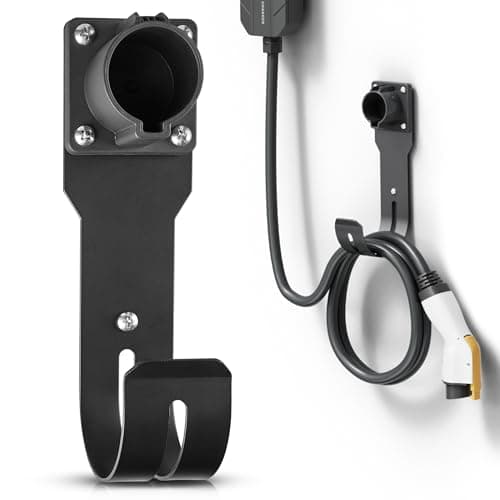
MECMO J1772 Holster & J-Hook Combo
$16.99 · View on AmazonPrice as of September 11, 2026. #ad How we’re funded
Best EV Charging Gifts Under $150
The tier where a gift stops being a stocking filler and starts changing where they can charge — portable chargers, adapters and a proper outlet.
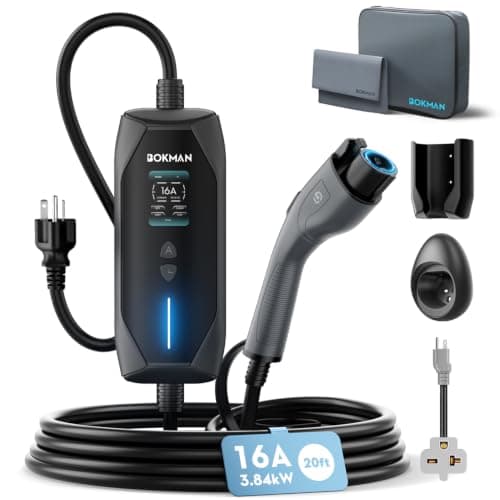
Our top pick
bokman Portable Level 1 & 2 Charger (16A)
$114.99 · View on AmazonPrice as of September 11, 2026. #ad How we’re funded

How to buy an EV charging gift without knowing anything about EVs
One question resolves most of this category, and you can answer it from a photo or by walking past the car: what shape is the charge port? A Tesla or other NACS port is small and round-ish with a flattened top. A J1772 port is noticeably larger, with a round upper section and a flat-bottomed lower one, and it is what almost every non-Tesla EV in North America uses for AC charging. That single observation decides which adapters are useful presents and which are paperweights. Our connector guide describes both in enough detail to identify them with confidence.
If you genuinely cannot check, buy from the connector-agnostic end of the list. Hooks, holsters, cable bags and outlet-side adapters work with any car and any charger, because none of them ever touches the vehicle. That is the safest place for a gifter to shop, and it also happens to be where the highest ratio of usefulness to money sits in this whole category.
The gift nobody should buy: a wall charger
A Level 2 home charger looks like the obvious generous present and it is almost always the wrong one. Which unit is right depends on the recipient’s electrical panel, the circuit they can spare, where they park, and whether they are even allowed to mount hardware on the wall they park next to. The installation routinely costs more than the hardware. If you want to spend at that level, contributing toward the install is worth more than picking the box — and it cannot be the wrong model.
What we mean by a deal
A discount on this site is only ever the retailer’s own reported reduction, pulled by a daily price check and stamped with the date it was pulled. We do not compute discounts against a price we remember, and we do not publish “typical Black Friday savings” percentages, because nobody can verify them. The FTC’s guides on this are worth knowing as a shopper: a struck-through former price is a legitimate comparison only where it is “the actual, bona fide price at which the article was offered to the public on a regular basis for a reasonably substantial period of time.” A large red percentage is not evidence of a bargain; a price the product genuinely sold at last month is.
The lever most gift buyers miss
If the present is a charger rather than an accessory, the rebate side is usually worth more than the sale side. Many utilities pay a rebate on a Level 2 charger purchase or installation, and a good number of those programs require a certified unit — frequently an ENERGY STAR one. Buying the cheapest uncertified charger in a November sale can therefore cost more than it saves. The DOE’s utility-incentive list and EPA’s ZIP-code rebate finder, both linked below, take a couple of minutes to check and are the highest-value thing to do before spending at that level.
One thing that is no longer on the table: the federal section 30C credit, which paid 30% of a home charger installation up to $1,000, does not apply to property placed in service after June 30, 2026. Some consumer pages still describe it. The IRS instructions for Form 8911 are the authority, and they are explicit. If you are budgeting a charger gift for this Christmas, budget it without that credit.
Frequently asked questions
What is the best EV charging gift if I know nothing about their car?
Anything on the cable or outlet side, because none of it touches the vehicle: a cable hook, a connector holster, a padded cable bag. A charging cable living on a garage floor is the most common annoyance in this category and the one most owners never get around to fixing.
How do I find out which connector their car uses?
Look at the charge port, or a photo of it. A Tesla or NACS port is small with a flattened top; a J1772 port is larger, round on top with a flat bottom. That tells you which adapter direction is useful. Our connector guide describes both.
Should I buy them a home charger for Christmas?
Usually not. The right unit depends on their panel, their circuit and their parking, and the install often costs more than the charger. Contributing toward the installation is more useful than choosing the hardware, and it cannot be the wrong model.
Do you publish typical Black Friday discounts for EV chargers?
No. We have no audited price history for this category, so a figure like “chargers are usually 30% off” would be a guess dressed as data. What we publish is the discount the retailer itself is reporting today on the exact products we recommend, with the date it was checked.
Is there still a federal tax credit on a home EV charger?
Not for equipment placed in service after June 30, 2026. The One Big Beautiful Bill Act moved the section 30C termination date, and the IRS instructions for Form 8911 state that the credit cannot be claimed for property placed in service after that date. Utility and state rebates are separate, and many are still running.
Sources
- U.S. Government Publishing Office — 16 CFR Part 233, Guides Against Deceptive Pricing (FTC) — The FTC's rules on "was" pricing. A former price is a legitimate basis for a comparison only where it is "the actual, bona fide price at which the article was offered to the public on a regular basis for a reasonably substantial period of time"; an "artificial, inflated price" set up to enable a big advertised reduction makes the bargain "a false one" (accessed September 12, 2026)
- IRS — Alternative Fuel Vehicle Refueling Property Credit — The IRS's own page for the section 30C credit: at a main home it is 30% of the cost, capped at $1,000 per charging port, and it applies to property bought and placed in service from January 1, 2023 to June 30, 2026 (accessed September 12, 2026)
- IRS — Instructions for Form 8911 (rev. 12/2025) — The termination itself, in the IRS's words: the One Big Beautiful Bill Act (P.L. 119-21) moved the section 30C end date from December 31, 2032 to June 30, 2026, and "You can't claim the credit for alternative fuel vehicle refueling property placed in service after June 30, 2026" (accessed September 12, 2026)
- U.S. DOE Alternative Fuels Data Center — Utility Incentives — DOE's catalog of utility programs by customer type: Level 2 charger purchase and installation rebates, make-ready wiring rebates, EV time-of-use rates and managed-charging incentives (accessed September 12, 2026)
- EPA ENERGY STAR — Rebate Finder — ZIP-code search for local rebates and offers on ENERGY STAR certified products, EV chargers included (accessed September 12, 2026)
- EPA ENERGY STAR — EV Chargers (holiday gift guide) — EPA's own page on giving an EV charger as a gift: look for the ENERGY STAR label, because every certified charger is safety-tested by a nationally recognized testing laboratory. Read its "30% up to $1,000" federal-credit line against the two IRS pages above — the credit ended for property placed in service after June 30, 2026 (accessed September 12, 2026)