Amp & Adapter

Best Gifts for a New EV Owner

What somebody who just took delivery is actually missing in week one — and why the obvious present, a wall charger, is the one to leave alone. Six picks, explained for a gifter.

By Stephen V.Last updated How we rank

The first month with an electric car is the month everything gets figured out at once, usually in the wrong order. The car came with a cable. That cable plugs into a household outlet and adds range at roughly walking pace. Somewhere in the next few weeks there will be a conversation with an electrician, a quote that is higher than expected, and a stretch of time where the car is charging from whatever is already on the wall.

That gap is where a good present sits. Not the charger — that decision belongs to them and their panel — but the things that make the interim work, and the small stuff nobody thinks to buy until the cable has been run over twice. Everything on this list is useful on day one, needs no electrician, and does not require you to know which charger they will eventually choose.

Every pick is a product we recommend elsewhere on this site, re-framed here for somebody who is buying rather than driving. We own no units and bench-test nothing: the specifications on each card are read from the published listing on the date printed beneath it, and prices come from a live daily check rather than being typed into the page.

How this is funded: we earn a commission if you buy through our links, at no extra cost to you. It never changes which product we recommend, and we’ll tell you plainly when we’d skip one. Full disclosure.

Quick picks

Ranked on published specs, install flexibility and buyer fit. Select a row to jump to the full write-up. We have not bench-tested these units — here is exactly what we do instead.

#ProductBest forPrice
1
EVDANCE Level 1 & 2 Portable Charger (16A, 25 ft)

EVDANCE Level 1 & 2 Portable Charger (16A, 25 ft)

The genuinely useful dual-voltage unit: 12A from an ordinary household socket, 16A from a 240V NEMA 6-20, with a 25 ft cable and an ETL listing. It is not a fast charger and does not pretend to be — it is the one to keep in the trunk for wherever you end up parked.

Best gift overall
$107.99 · View on Amazon

$119.9910% off

Price as of September 11, 2026. #ad How we’re funded

2
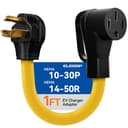
ELEGRP NEMA 10-30P to 14-50R Adapter (1 ft)

ELEGRP NEMA 10-30P to 14-50R Adapter (1 ft)

The one that unlocks the old three-prong dryer outlet in an older house — the most common 240V receptacle people already have and cannot use. Heavy 10-gauge STW cable, from a brand that makes electrical fixtures rather than a marketplace pop-up.

Best hidden upgrade
$19.99 · View on Amazon

$23.9917% off

Price as of September 11, 2026. #ad How we’re funded

3
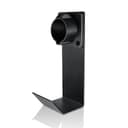
Lectron J1772 Holster / Wall Dock

Lectron J1772 Holster / Wall Dock

A $15 fix that keeps your connector off the garage floor and out of the grit. It looks trivial, but a dropped J1772 head picks up dirt and moisture, and a holster is the cheapest way to make a charger last.

Best for the garage
$19.99 · View on Amazon

Price as of September 11, 2026. #ad How we’re funded

4
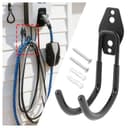
VKQTS Heavy-Duty J-Hook Cable Holder

VKQTS Heavy-Duty J-Hook Cable Holder

The cheapest fix for the most common problem — a charging cable coiled on the garage floor. It is a hook, it publishes a 66 lb rating and a non-slip coating, and it costs less than a coffee. There is no reason to leave a cable on the concrete.

Best stocking filler
$6.29 · View on Amazon

Price as of September 11, 2026. #ad How we’re funded

5
Lectron Tesla to J1772 Adapter

Lectron Tesla to J1772 Adapter

The mirror-image adapter: it lets a non-Tesla EV use a Tesla Wall Connector or Tesla Mobile Connector for AC charging. The right buy if a friend or rental has a Tesla home charger and you drive something else.

Best for public charging
$119.99 · View on Amazon

Price as of September 11, 2026. #ad How we’re funded

6
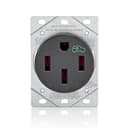
Leviton 1450R Heavy-Duty EV Receptacle (NEMA 14-50)

Leviton 1450R Heavy-Duty EV Receptacle (NEMA 14-50)

If you're plugging a charger into a NEMA 14-50 outlet, buy the industrial-grade receptacle, not the $10 hardware-store one. Continuous 40A EV loads have melted cheap outlets built for ovens that only cycle — this is the one that won't.

Best if an install is booked
$42.00 · View on Amazon

Price as of September 11, 2026. #ad How we’re funded

The picks in full

#1Best gift overall

EVDANCE Level 1 & 2 Portable Charger (16A, 25 ft)

The genuinely useful dual-voltage unit: 12A from an ordinary household socket, 16A from a 240V NEMA 6-20, with a 25 ft cable and an ETL listing. It is not a fast charger and does not pretend to be — it is the one to keep in the trunk for wherever you end up parked.

Strengths

  • ETL listed — a named testing lab, which several cheaper travel units cannot claim
  • Runs from a standard 120V socket or a 240V NEMA 6-20, roughly doubling the rate on the latter
  • 25 ft cable is unusually long for a travel unit, which matters when the outlet is nowhere near the car

Trade-offs

  • 16A maximum — this is a top-up charger, not a replacement for a 40A home install
  • The 240V mode needs a NEMA 6-20 outlet, which most houses do not have
  • No published enclosure rating or warranty term
ConnectorJ1772
Max output16 A
Max power3.8 kW
Cable length25 ft
InstallPlug-in (NEMA 5-15 or 6-20)
Outdoor ratingNot published
WarrantyNot published

Spec note. The listing publishes 12A at 120V and 16A at 240V, a 25 ft cable, an ETL listing and both NEMA 5-15 and 6-20 plug options, stated as compatible with all EVs and PHEVs. It does not publish an enclosure rating or a warranty term.

Specs read from the product listing, on August 11, 2026. “Not published” means the manufacturer does not state that figure.

#2Best hidden upgrade

ELEGRP NEMA 10-30P to 14-50R Adapter (1 ft)

The one that unlocks the old three-prong dryer outlet in an older house — the most common 240V receptacle people already have and cannot use. Heavy 10-gauge STW cable, from a brand that makes electrical fixtures rather than a marketplace pop-up.

Strengths

  • Opens up the 10-30 dryer receptacle, which is otherwise useless to a 14-50 charger
  • 10 AWG STW cable — the gauge is published, which many competing adapters do not do
  • One foot long, so it hangs at the outlet instead of becoming a floor cable

Trade-offs

  • The circuit behind a 10-30 is 30A, so you MUST dial the charger down to 24A — the adapter cannot do it for you
  • 10-30 outlets have no ground conductor, only a bonded neutral; have an electrician confirm the outlet is sound first
  • No published warranty term
ConnectorNEMA 10-30P → NEMA 14-50R
Max output30 A
Max powerNot published
Cable length1 ft
InstallIn-line plug adapter
Outdoor ratingNot published
WarrantyNot published

Spec note. The listing publishes a NEMA 10-30P to 14-50R conversion, 30 amps, 10 AWG STW heavy-duty cable and a 1 ft length. It does not publish a certification body or warranty term. A 30A circuit permits a 24A continuous draw under the 80% rule — set the charger accordingly.

Specs read from the product listing, on August 11, 2026. “Not published” means the manufacturer does not state that figure.

#3Best for the garage

Lectron J1772 Holster / Wall Dock

A $15 fix that keeps your connector off the garage floor and out of the grit. It looks trivial, but a dropped J1772 head picks up dirt and moisture, and a holster is the cheapest way to make a charger last.

Strengths

  • Protects the connector pins from dirt, water and impact
  • Cheap and universal to the J1772 head
  • Tidies the cable so it isn't a trip hazard

Trade-offs

  • Purely mechanical — no function beyond holding the plug
  • Cheap mounts can loosen; anchor into a stud if you can
ConnectorJ1772
Max outputNot published
Max powerNot published
Cable lengthNot published
InstallWall-mounted dock
Outdoor ratingNot published
WarrantyNot published

Spec note. A passive holder for the J1772 connector; check it fits your specific charger's handle, as a few proprietary heads are oversized.

Specs read from the product listing, on July 19, 2026. “Not published” means the manufacturer does not state that figure.

#4Best stocking filler

VKQTS Heavy-Duty J-Hook Cable Holder

The cheapest fix for the most common problem — a charging cable coiled on the garage floor. It is a hook, it publishes a 66 lb rating and a non-slip coating, and it costs less than a coffee. There is no reason to leave a cable on the concrete.

Strengths

  • Published 66 lb load rating — far beyond what any charging cable weighs
  • Non-slip coating keeps the cable from sliding off and protects the jacket
  • Universal shape works with any charger's cable, not just one brand

Trade-offs

  • A hook only — it does not holster the connector head itself
  • You will want two for a long cable, which is still inexpensive
  • No published warranty
ConnectorNot published
Max outputNot published
Max powerNot published
Cable lengthNot published
InstallWall-mounted hook
Outdoor ratingNot published
WarrantyNot published

Spec note. The listing publishes a 66 lb heavy-duty load rating, a non-slip coating and universal fitment for EV charging cables. It does not publish a warranty term. It holds the cable only — pair it with a holster if you also want the connector docked.

Specs read from the product listing, on August 11, 2026. “Not published” means the manufacturer does not state that figure.

#5Best for public charging

Lectron Tesla to J1772 Adapter

The mirror-image adapter: it lets a non-Tesla EV use a Tesla Wall Connector or Tesla Mobile Connector for AC charging. The right buy if a friend or rental has a Tesla home charger and you drive something else.

Strengths

  • Lets a J1772 car charge from a Tesla Wall/Mobile Connector
  • Handles full Level 2 AC amperage
  • Simple, pocketable, no setup

Trade-offs

  • AC only — will not work at a Supercharger
  • Only useful if you actually encounter Tesla AC connectors
ConnectorNACS (Tesla) → J1772
Max output48 A
Max power11.5 kW
Cable lengthNot published
InstallPlug-on adapter
Outdoor ratingNot published
Warranty1 year

Spec note. Works with Tesla's AC equipment (Wall Connector, Mobile Connector). It is not a DC adapter and does not make a non-Tesla car Supercharge — that needs a NACS-to-CCS adapter and vehicle support.

Specs read from the product listing, on July 19, 2026. “Not published” means the manufacturer does not state that figure.

#6Best if an install is booked

Leviton 1450R Heavy-Duty EV Receptacle (NEMA 14-50)

If you're plugging a charger into a NEMA 14-50 outlet, buy the industrial-grade receptacle, not the $10 hardware-store one. Continuous 40A EV loads have melted cheap outlets built for ovens that only cycle — this is the one that won't.

Strengths

  • Industrial-grade contacts built for continuous, not cyclic, load
  • Dramatically lower failure risk than a bargain receptacle
  • The single cheapest safety upgrade on a plug-in install

Trade-offs

  • Costs several times a basic receptacle — worth every dollar
  • Still must be installed on a correctly sized circuit by an electrician
ConnectorNEMA 14-50
Max output50 A
Max powerNot published
Cable lengthNot published
InstallHardwired receptacle
Outdoor ratingNot published
WarrantyNot published

Spec note. A NEMA 14-50 outlet on a 50A breaker supports a charger drawing up to 40A continuous (the 80% continuous-load rule). Cheap 'residential' 14-50 outlets are a known melting hazard under sustained EV load; industrial-spec receptacles are the fix.

Specs read from the product listing, on July 19, 2026. “Not published” means the manufacturer does not state that figure.

The one thing worth checking, and how to check it quietly

Look at the charge port, or a photo of the car. If the port is fairly large, round across the top and flattened along the bottom, that is J1772— the standard almost every non-Tesla EV in North America uses for AC charging, and the assumption behind most of this list. If it is noticeably smaller with a flat top, that is a NACS port, and our gifts for Tesla owners page is the better list. Our connector guide describes both.

If you cannot check at all, three of the six picks below do not care: the hook, the holster and the outlet-side adapter all sit on the wall or in the wall, and never touch the vehicle.

Start with how they are charging tonight

Almost every new EV owner spends their first weeks on Level 1 — the car plugged into an ordinary 120V household outlet. It works, it is genuinely fine for a short commute, and it is slow: DOE’s own guidance puts Level 1 in the range of a few miles of range per hour of charging. Overnight that is enough for a normal day’s driving and nowhere near enough to recover from a long one.

A portable Level 1 and Level 2 charger is the best single present in this situation, for a reason that has nothing to do with speed: it is the only piece of charging hardware that needs no installation, no permission and no decision about their electrical panel. It goes in the trunk. It turns a household outlet into a charging point at a relative’s house, a holiday rental or a parking lot with a sympathetic facilities manager — and if there is a 240V outlet available, the same unit charges several times faster from it.

Buy a certified one. This matters more here than almost anywhere else on this site: a portable charger sits in a household receptacle drawing current for ten or twelve hours at a stretch, unattended. A unit that has been through UL or ETL testing has been evaluated for exactly that duty. One that names no laboratory has not, and that is a specification rather than an omission. Our Level 1 roundup explains what to look for, and our certification guide explains what the marks mean.

The dryer-outlet trick: the biggest change for the least money

This is the pick most people have never heard of and the one that most often produces a genuine “oh”. Many garages and laundry rooms already contain a 240V outlet — the one the electric dryer or an old welder uses. A short NEMA adapter lets a charger designed for a NEMA 14-50 outlet plug into that existing 10-30 or 14-30 dryer receptacle instead. No electrician, no new circuit, no permit: an outlet that was already there becomes a charging point, and overnight range goes from walking pace to a full day’s driving and then some.

There is one serious condition, and it is why this belongs in a guide rather than just on a shelf. The adapter does not limit current — the charger has to be set to a safe amperage for the smaller circuit, and a dryer circuit is smaller than a 14-50 one. Chargers with an adjustable amperage setting handle this; a fixed-output charger must not be forced onto an undersized circuit. Our NEMA adapter roundup and our outlet types guide set out the amp limits for each plug shape.

What to check before ordering: the shape of the outlet in their garage, which you can identify from a photo, and whether their charger has an adjustable current setting. If you are unsure, this is a present to hand over with the explanation attached rather than to leave as a surprise.

The present to avoid: a Level 2 wall charger

It is the one everybody reaches for, and it is the one we would talk you out of. The correct unit depends on their panel’s spare capacity, the circuit an electrician can actually run, where the car parks relative to the port, whether the charger will live outdoors, and — for anyone renting — whether they are allowed to mount hardware at all. Get any of those wrong and it is a return, not a gift.

The installation is also usually the larger number. Our installation cost guide walks through where the money goes and why the quote varies so much between two houses on the same street. If you want to spend at that level, contribute toward the install — it is worth more, and it cannot be the wrong model. And if they ask you to help choose, our home charger roundup and how to choose guide are the two pages to send them.

If the install is already booked, buy the outlet

One exception, and it is a good one. If they have already decided on a plug-in charger and an electrician is coming, the receptacle is a genuinely useful thing to give, and it is the part of the job people cheap out on without realizing.

A bargain-bin NEMA 14-50 outlet is designed for an appliance that cycles on and off, like a range. An EV pulls 40A continuously for hours, which is a completely different duty, and cheap receptacles have a well-documented habit of loosening, overheating and melting under it. An industrial-grade one costs a few times more and is the cheapest insurance in the whole install. Our NEMA 14-50 outlet roundup covers the difference, and our plug-in vs hardwired guide covers when a plug is the right call at all.

What to check before ordering: that the install is actually a plug-in one. A hardwired charger has no outlet, and this present would have nowhere to go.

Public charging: the adapter that opens more stations

For a non-Tesla driver, a Tesla-to-J1772 adapter is the equivalent of the spare-key present: it lets their car use Tesla’s AC Destination Chargers, which are bolted to the walls of a very large number of hotels, restaurants and wineries. Those chargers are frequently empty while the public J1772 units nearby are occupied, and a new owner will not know they are an option.

It is an AC adapter and it does not enable Supercharging — be skeptical of anything claiming otherwise. Our Tesla-to-J1772 roundup compares the options, and our public charging guide explains the landscape a new driver is walking into.

Garage hygiene: the two cheapest presents here

A hook and a holster. The hook takes the cable; the holster takes the connector head. Between them they stop the most expensive part of a charging setup living on a concrete floor in grit and meltwater, being reversed over, and collecting the dirt that eventually works its way into the pins.

These are the highest ratio of usefulness to money in this entire category, they work with any car and any charger, and essentially nobody buys them in the first month because there is always something more urgent. A 25 ft cable genuinely wants two hooks. Our cable organizer roundup and holster roundup cover both properly.

If they rent, the list changes

A new EV owner who rents is in a different position entirely, and it is worth knowing before you buy, because half of this page assumes a wall they are allowed to drill into.

They probably cannot install a charger, may not have an assigned parking space, and in many buildings cannot run a cable to it even if they do. For that person the portable charger is not an interim measure — it is the whole setup, and a longer cable matters more than amperage. The outlet-side presents are useless: there is no receptacle of theirs to upgrade. The cable hook is still fine if they park in a private garage, and pointless if they do not.

Our EV chargers for renters guide covers what is actually installable in a rental and what to negotiate with a landlord, and our rental property guide is the page to forward to a landlord who is open to the conversation.

If the car is a plug-in hybrid, buy differently

A distinction almost every gift list misses, and it will save you money. A plug-in hybrid has a small battery and a small onboard charger — often around 3.3 kW, which is roughly 14 amps. That inverts most of the advice on this site: a 16A portable charger saturates a typical PHEV completely, and a 40A one delivers exactly the same overnight result on a far more expensive circuit.

So for a PHEV owner, the cheap portable is not the compromise option, it is the correct option, and the money is better spent on the cable management or a second charger to leave at work. Our plug-in hybrid charging guide works through the arithmetic, including why a typical PHEV pack fits comfortably inside one night on a household socket.

The three questions they are about to ask

If you want to give something that is not a product, these are the three things a new owner works out in their first month, usually by asking around. Sending one page is a better present than most twenty-dollar items.

  • “What is this actually costing me?” — our cost-to-charge calculator takes their own electricity rate rather than a national average, and our charging vs gas comparison answers the question they are actually asking.
  • “How many amps do I need?”— almost everyone is sold more than they can use. Our amps and circuits guide shows the 80% rule and how to size a circuit before sizing a charger.
  • “Should I charge to 100%?”— the answer depends on the battery chemistry in their specific car, which is not obvious from the brochure. Our battery health and charging limits guide covers it.

What not to buy

A DC fast-charging adapter. Vehicle support varies by model and model year, and an unsupported car simply fails the handshake. Not a first-month present.

An extension cable, unless you know the reach is a problem. They are useful and we recommend them, but the amperage has to match the charger, and in month one nobody knows yet where the charger will be mounted. Our cables and extensions guide covers it for when they do.

Anything promising faster charging. Speed is set by the circuit, the charger and the car’s onboard hardware, in that order. No accessory changes it, and our charging time guide shows where the ceiling actually comes from.

A guess at their electricity plan. Not a product, but worth saying to any gifter who wants to be genuinely helpful: the single biggest saving available to a new EV owner is usually switching to an off-peak rate and charging overnight. Our cost-to-charge calculator takes their own rate and shows the difference. That conversation is free and worth more than most of this page.

Frequently asked questions

What does a new EV owner actually need in the first month?

Somewhere to put the cable, a way to charge faster than a household outlet allows before the electrician arrives, and an understanding of their electricity rate. A portable Level 1 and 2 charger plus a hook and holster covers the first two for well under the price of a wall charger.

Should I buy a new EV owner a home charger?

No. The right unit depends on their electrical panel, the circuit available, where they park and whether they are allowed to mount hardware there — and the install usually costs more than the charger. Contributing to the installation is worth more and cannot be the wrong model.

What is the NEMA adapter for?

It lets a charger built for a NEMA 14-50 outlet plug into an existing 240V dryer or welder receptacle instead, turning an outlet they already have into a charging point with no electrician. The charger must be set to a safe amperage for that smaller circuit — the adapter will not limit current by itself.

How slow is charging from a normal household outlet?

Slow enough to matter on a long day and fine on a short one. DOE puts Level 1 at a few miles of range per hour, so an overnight charge covers a typical commute but will not recover a long drive. That is exactly why the interim presents on this page are useful.

Do I need to know which car they bought?

It helps but it is not essential. Look at the charge port: larger with a flat bottom is J1772, smaller with a flat top is NACS. Three of the picks here — the hook, the holster and the outlet-side adapter — work regardless, because they never touch the car.

Is a portable charger safe to leave plugged in overnight?

A certified one is designed for it. Look for UL or ETL testing on the listing, because the unit will be drawing current in a household receptacle unattended for hours at a time. A charger that names no testing laboratory is not a cheaper version of a certified one.

Sources

Keep reading