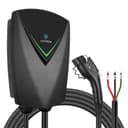
The records, as EPA holds them
This is the table the rest of the page rests on. Every row is read from EPA’s certified EVSE (AC output) dataset, not from a listing.
| Charger | Model on the EPA record | Output on the record | Cord: record vs marketing |
|---|
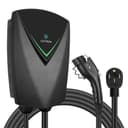
| Lectron Nexus 40A | LECHGNexusNEMA14-50J1772 | 40A / 9.6 kW | 22 ft on the record; 23 ft published |
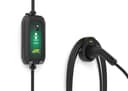
| Battery Tender eCharge 32 | 022-3017-XX-XX family | 32A, Level 1 / Level 2 dual input | 25 ft on both |
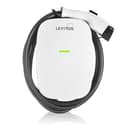
| Leviton EV320 | EV320 | 32A / 7.6 kW | 18 ft on both |
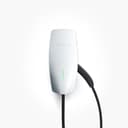
| Tesla Wall Connector | 1457768, brand “Tesla” | 48A / 11.52 kW | 22 ft on the record; 24 ft published |
| Lectron Nexus 48A | LECHGNexusHWJ1772 | 48A / 11.52 kW | 22 ft on the record; 23 ft published |
Qualification dates, where EPA publishes them: the Leviton EV320 from 24 October 2022, the Battery Tender family from 4 January 2024, the Tesla wall units from 18 September 2023, and the Lectron Nexus pair recorded as available from April 2026. A longer record is not a better charger, but it does mean more owners have lived with it.
What the certification actually covers
Two things, and it is worth being precise because the label gets read as a general quality mark.
Standby power.ENERGY STAR’s EVSE specification is largely about how much electricity the charger draws when it is sitting on the wall doing nothing. A charger is plugged in roughly 8,760 hours a year and charging for a few hundred of them, so idle draw is most of its own consumption. That is the efficiency half.
Safety certification.EPA’s own page on EV chargers makes the point that a certified charger has been safety-tested by a nationally recognized testing laboratory. That is the half most buyers actually care about, and it is the one we would not compromise on at any price. Our certification guide explains how UL 2594, ETL listing and ENERGY STAR relate to each other, because they are not the same claim.
What it does notcover: cable quality, app reliability, cold-weather cable flexibility, enclosure rating, or how long the company will answer the phone. A certified charger can still have an 18 ft cord that is too short for your garage — which is precisely why the cord column is in the table above.
Why this matters less than it did in June, and still matters
For three years the certification had a direct cash value: the federal section 30C credit returned 30% of the cost of a home charger, capped at $1,000 per port. The IRS page for it states the window as property bought and placed in service from 1 January 2023 to 30 June 2026, and the Form 8911 instructions give the reason — the One Big Beautiful Bill Act moved the end date from 2032 to mid-2026.
So if you are installing a charger today, that credit is not available to you. Anyone telling you otherwise is working from a 2025 article.
What is still live is the utility and state layer. DOE catalogs utility programs offering Level 2 charger purchase and installation rebates, make-ready wiring rebates and EV time-of-use rates, and a great many of those programs name ENERGY STAR certification as an eligibility condition. EPA runs a ZIP-code rebate finder for exactly this. The order of operations matters: check your utility first, see whether certification is required and whether a specific model list applies, and then buy. Buying first and hunting for a rebate afterwards is how people end up with a fine charger that does not qualify.
The claim we could not verify
One honest note, because it is the reason this page is written from the dataset rather than from listings.
The Grizzl-E Classic Connectis a charger we rate highly and recommend elsewhere on this site. When we checked EPA’s dataset on 2 September 2026, it listed eight Grizzl-E models under United Chargers Inc. and the Classic Connect was not among them, even though an ENERGY STAR claim appears on a sibling listing. So it is not on this page. That is not a verdict on the charger’s quality — it is a statement about what we could check.
The same discipline cuts the other way. Several listings here carry a certification claim we could confirm, and in two cases confirming it turned up a cord length a foot shorter than the marketing figure. Neither fact would have surfaced from reading product pages.
How to use this page
- Check your utility’s program before you buy. If it requires ENERGY STAR, or publishes an approved-model list, that constraint outranks everything below.
- Pick the amperage from your panel, not from this page. 32A needs a 40A circuit, 40A needs 50A, 48A needs 60A. Our amps and circuits guide covers the load calculation, and the 100-amp panel page covers the constrained case.
- Measure the cable against the record, not the box. Down the wall, around the car to the port side, plus slack.
- Keep the model number. It is what the rebate form asks for, and it is what makes the record findable.
The short answer
If certification is a rebate requirement for you, the Lectron Nexus 40A is the cheapest way to satisfy it with a long cable and an outdoor-rated housing. The Leviton EV320 is the pick if you are hardwiring on a 40A circuit and want the oldest record in the field. The Battery Tender covers the case where one charger has to work at home and on a trip. The Tesla Wall Connector is the certified NACS unit for a Tesla-only garage, and the Nexus 48A is the certified way to 48 amps if your panel can genuinely feed it.
One buying note. Several of these brands sell direct as well as on Amazon and the prices are not always the same. We earn a commission on the links here and nothing on the direct ones, and we would still rather you paid less — check both.