Amp & Adapter

Best EV Chargers for the Kia EV6

Kia publishes a 10.9 kW onboard charger and, since the 2025 model year, a NACS inlet — two facts that rule out most of the chargers people buy for this car, including the 40A unit the internet recommends by default.

By Stephen V.Last updated How we rank

Most “best charger for your EV” lists are the same list with a car name on top. The Kia EV6 is one of the few vehicles where that genuinely does not work, because Kia publishes two numbers that disqualify the default recommendation.

The first is the onboard charger: 10.9 kW, on every trim of the current car. The second is the charge port, which on the 2025 model year became NACS— the Tesla-style inlet — where the 2022 to 2024 cars used a CCS1 combo port with a J1772 top half. Taken together, those two facts mean the charger most people buy for an EV6 is both the wrong amperage and the wrong connector.

So this page is organized the way the decision actually works. First, find out which inlet your car has, because that is not a preference. Second, understand why 10.9 kW is an awkward number that 40A chargers cannot fill. Then the picks, which are split between the two connectors rather than pretending one list serves both.

We own no units and we do not bench-test chargers — here is exactly what we do instead. Every EV6 figure below comes from Kia’s own US product and specifications pages, read on 5 October 2026; every charger spec comes from the manufacturer’s published figures and the live listing; and we checked EPA’s ENERGY STAR database rather than trusting listing claims.

How this is funded: we earn a commission if you buy through our links, at no extra cost to you. It never changes which product we recommend, and we’ll tell you plainly when we’d skip one. Full disclosure.

Quick picks

Ranked on published specs, install flexibility and buyer fit. Select a row to jump to the full write-up. We have not bench-tested these units — here is exactly what we do instead.

#ProductBest forPrice
1
ChargePoint Home Flex NACS (Hardwired)

ChargePoint Home Flex NACS (Hardwired)

The safest default for a Tesla owner who wants a factory NACS plug: the same mature app and the same amperage flexibility as the J1772 Home Flex, with the connector already right. It is hardwired-only, so budget for the electrician.

Best overall — and the one Kia itself names
$549.00 · View on Amazon

Price as of October 5, 2026. #ad How we’re funded

2
Autel MaxiCharger Home NACS (50A)

Autel MaxiCharger Home NACS (50A)

The fastest and best-protected NACS unit on this list: 50A output, a NEMA 4X enclosure and a genuinely flexible cable that still coils in the cold. Worth it only if your panel can actually feed a 60A circuit.

Best value at 48A-plus, NACS
$540.55 · View on Amazon

$569.005% off

Price as of October 5, 2026. #ad How we’re funded

3
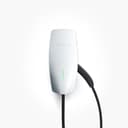
Tesla Wall Connector

Tesla Wall Connector

Tesla's own home charger, and the tidiest thing you can bolt to the wall of a Tesla-only garage: a native NACS handle, 48A output and scheduling from the app you already have open for the car. The handle fits nothing else without an adapter, and it is hardwired only, so it earns its premium in one specific household rather than in general.

Best if the garage is already Tesla
$885.00 · View on Amazon

Price as of October 5, 2026. #ad How we’re funded

4
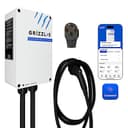
Grizzl-E Classic Connect 40A (NACS)

Grizzl-E Classic Connect 40A (NACS)

The same charger with a factory NACS handle instead of a J1772 one — the version to buy if your car has a Tesla-style port and you would rather not leave an adapter hanging off the connector for the next decade. Everything else about it, good and bad, is identical to the J1772 model.

Best if you have a 14-50 outlet and no electrician
$349.99 · View on Amazon

Price as of October 5, 2026. #ad How we’re funded

5
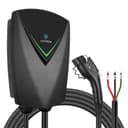
Lectron Nexus Level 2 (48A, hardwired)

Lectron Nexus Level 2 (48A, hardwired)

The same box and the same certification set, hardwired at 48A for 11.5 kW. It is the right buy for a large-battery EV on a panel that can carry a 60A circuit — and the wrong buy for most people, who will pay for amps their car cannot draw and lose the ability to unplug and take it with them.

Best for a 2022-2024 EV6 (J1772)
$429.99 · View on Amazon

Price as of October 5, 2026. #ad How we’re funded

6
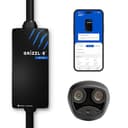
Grizzl-E Mini Connect 40A (NACS)

Grizzl-E Mini Connect 40A (NACS)

A Grizzl-E with the wall taken away: the same cast-aluminum Type 4 enclosure and the same 7-40A range, in a box that fits a glovebox and ships with four plug adapters and a carrying case. For a NACS car it is the rare portable that can genuinely be the only charger a household owns — and the rare one whose standby draw and cord gauge are published in EPA's own database rather than only in marketing copy.

Best that travels with the car
$479.99 · View on Amazon

Price as of October 5, 2026. #ad How we’re funded

The picks in full

#1Best overall — and the one Kia itself names

ChargePoint Home Flex NACS (Hardwired)

The safest default for a Tesla owner who wants a factory NACS plug: the same mature app and the same amperage flexibility as the J1772 Home Flex, with the connector already right. It is hardwired-only, so budget for the electrician.

Strengths

  • Output is app-selectable at 16, 24, 32, 40, 48 or 50A, so it matches whatever circuit you can get
  • Native NACS handle — no adapter hanging off the connector in the weather
  • The most mature app in the category: scheduling, energy tracking, utility rate integration

Trade-offs

  • Hardwired only — you cannot unplug it and take it with you when you move
  • Costs more than a plain 40A box that charges your car just as full overnight
  • A non-Tesla EV needs a NACS-to-J1772 adapter, which is not included
ConnectorNACS (Tesla)
Max output50 A
Max power12 kW
Cable length23 ft
InstallHardwired
Outdoor ratingNEMA 3R (indoor/outdoor)
Warranty3 years

Spec note. ChargePoint publishes hardwire compatibility with 20A-80A breakers; the full 50A output needs a 60A circuit under the 80% continuous-load rule. Rated -22°F to 122°F ambient, Type 3R enclosure per UL 50E.

Specs read from the product listing, on July 20, 2026. “Not published” means the manufacturer does not state that figure.

#2Best value at 48A-plus, NACS

Autel MaxiCharger Home NACS (50A)

The fastest and best-protected NACS unit on this list: 50A output, a NEMA 4X enclosure and a genuinely flexible cable that still coils in the cold. Worth it only if your panel can actually feed a 60A circuit.

Strengths

  • Up to 50A / 12 kW — the highest AC output here — and app-adjustable down to 6A
  • NEMA 4X dust-tight and water-tight enclosure, plus surge and over-temperature protection
  • Flexible 25 ft cable reaches across a two-car garage without fighting you

Trade-offs

  • Hardwired only, and 50A needs a 60A breaker most older panels do not have spare
  • Your Tesla's onboard charger caps what it can accept, so many cars will never use all 50A
  • Connectivity (Wi-Fi/Bluetooth/Ethernet) is one more thing that can need a reconnect
ConnectorNACS (Tesla)
Max output50 A
Max power12 kW
Cable length25 ft
InstallHardwired
Outdoor ratingNEMA 4X (outdoor)
Warranty3 years

Spec note. Autel publishes an adjustable 6A-50A range on a dedicated 20A-80A circuit depending on the setting, and roughly 48 miles of range per hour at 50A. This is the NACS sibling of the J1772 MaxiCharger we cover in the main home-charger roundup.

Specs read from the product listing, on July 20, 2026. “Not published” means the manufacturer does not state that figure.

#3Best if the garage is already Tesla

Tesla Wall Connector

Tesla's own home charger, and the tidiest thing you can bolt to the wall of a Tesla-only garage: a native NACS handle, 48A output and scheduling from the app you already have open for the car. The handle fits nothing else without an adapter, and it is hardwired only, so it earns its premium in one specific household rather than in general.

Strengths

  • Native NACS handle — a Tesla plugs straight in with nothing hanging off the connector
  • Up to 48A / 11.5 kW with a published 24 ft cable
  • Wi-Fi, over-the-air updates and load management, managed from the Tesla app

Trade-offs

  • Hardwired only — Tesla's manual does not permit a cord-and-plug install, so the electrician is part of the purchase
  • Tesla's manual for it cautions that no adapters or conversion adapters are to be used, so a J1772 car is really the Universal version's job
  • Typically the most expensive route to 48A at home
ConnectorNACS (Tesla)
Max output48 A
Max power11.5 kW
Cable length24 ft
InstallHardwired (60A circuit for full output)
Outdoor ratingIndoor/outdoor rated
Warranty4 years (residential)

Spec note. The listing publishes Level 2, up to 48A and a 24 ft cable. Tesla's own support material adds the rest: hardwired only — cord-and-plug connection is not permitted — a double-pole 60A breaker for full output, approval for indoor or outdoor installation, Wi-Fi, and a 48-month residential warranty. This is the NACS-handle unit (Tesla's Gen 3 Wall Connector manual covers part number 1457768), distinct from the Universal Wall Connector, which docks Tesla's own J1772 adapter on the side of the unit. That manual's safety section states: "No adapters or conversion adapters are allowed to be used" (read 2026-09-16).

Specs read from the product listing, on September 30, 2026. “Not published” means the manufacturer does not state that figure.

#4Best if you have a 14-50 outlet and no electrician

Grizzl-E Classic Connect 40A (NACS)

The same charger with a factory NACS handle instead of a J1772 one — the version to buy if your car has a Tesla-style port and you would rather not leave an adapter hanging off the connector for the next decade. Everything else about it, good and bad, is identical to the J1772 model.

Strengths

  • Native NACS handle — a Tesla, or any NACS-port EV, plugs straight in
  • Identical hardware to the J1772 model: 16–40A adjustable, UL Type 4 metal enclosure, 25 ft cable, Wi-Fi
  • Plug-in on a NEMA 14-50 outlet, so no electrician beyond the outlet itself
  • 3-year warranty, made in Canada, rated from -30°C to +50°C

Trade-offs

  • A non-NACS EV needs a NACS-to-J1772 adapter, which is not in the box
  • Same missing ENERGY STAR listing as the J1772 model as of 2 September 2026
  • Same forced Wi-Fi, and the same loss of the NEMA 6-50 plug option the Classic offered
  • The Black NACS colorway was unavailable on Amazon when we checked; the White one is the live listing
ConnectorNACS (Tesla)
Max output40 A
Max power9.6 kW
Cable length25 ft
InstallPlug-in (NEMA 14-50)
Outdoor ratingUL Type 4 (indoor/outdoor)
Warranty3 years

Spec note. Mechanically and electrically the same unit as the J1772 model — United Chargers lists the connector as the only difference, offering the Classic Connect with a “Type 1 (SAE J1772); NACS” output cable across the same four colorways. Same 40A adjustable to 16A, same NEMA 14-50 plug, same 25 ft cord, same UL Type 4 rating and UL/cUL E510712 listing, same Wi-Fi and same 3-year warranty. The ENERGY STAR caveat on the J1772 model applies here too: no Classic Connect row appears in EPA's certified-EVSE database.

Specs read from the product listing, on September 2, 2026. “Not published” means the manufacturer does not state that figure.

#5Best for a 2022-2024 EV6 (J1772)

Lectron Nexus Level 2 (48A, hardwired)

The same box and the same certification set, hardwired at 48A for 11.5 kW. It is the right buy for a large-battery EV on a panel that can carry a 60A circuit — and the wrong buy for most people, who will pay for amps their car cannot draw and lose the ability to unplug and take it with them.

Strengths

  • 48A / 11.5 kW for the minority of EVs whose onboard charger can actually accept it
  • Same certification set as the plug-in model: UL 2594, UL 2231, UL 2251, ETL listed, ENERGY STAR
  • Hardwiring removes the NEMA 14-50 receptacle, which is the part of a plug-in install that overheats
  • Same 23 ft cable and IP66 housing

Trade-offs

  • Hardwired only — there is no plug, so moving it later is an electrician's job
  • Needs a 60A dedicated circuit, which plenty of 100A panels cannot spare
  • Most EVs sold in the US cap AC charging below 48A, so the headroom is often unusable
  • Amazon stock on this variant read as a low remaining count when we checked, so availability may be patchy
ConnectorJ1772
Max output48 A
Max power11.5 kW
Cable length23 ft
InstallHardwired only
Outdoor ratingIP66 (indoor/outdoor)
Warranty3 years

Spec note. Lectron publishes 48A at 240V (11.5 kW), hardwired only, with the same 23 ft cable, IP66 housing, 3-year warranty and UL 2594 / UL 2231 / UL 2251 testing with ETL listing as the 40A model. EPA's ENERGY STAR certified-EVSE database carries it as LECHGNexusHWJ1772 at 48A / 11.52 kW, 8 AWG, network capability 'No', output cord 22 ft. A 48A continuous load requires a 60A circuit under the 80% rule.

Specs read from the product listing, on August 26, 2026. “Not published” means the manufacturer does not state that figure.

#6Best that travels with the car

Grizzl-E Mini Connect 40A (NACS)

A Grizzl-E with the wall taken away: the same cast-aluminum Type 4 enclosure and the same 7-40A range, in a box that fits a glovebox and ships with four plug adapters and a carrying case. For a NACS car it is the rare portable that can genuinely be the only charger a household owns — and the rare one whose standby draw and cord gauge are published in EPA's own database rather than only in marketing copy.

Strengths

  • 7A-40A adjustable in the unit itself, so it fits a 15A household outlet or a 50A circuit without buying a second charger
  • Four plug adapters in the box (NEMA 5-15P, TT-30P, 14-30P, 6-50P) plus a soft carrying case, so campgrounds and RV outlets are covered out of the box
  • Cast-aluminum NEMA 4X enclosure rated −30 °C to +50 °C — the portable field is mostly plastic
  • Native NACS handle, so a Tesla or any NACS-port EV plugs in with no adapter on the connector
  • EPA's ENERGY STAR database certifies a Grizzl-E Mini family at 40A / 9.6 kW with a measured 2.64 W idle draw, so the standby figure is third-party rather than a claim
  • Sold on Amazon by United Chargers Inc. itself, at the same price the manufacturer's own store shows

Trade-offs

  • The cord is 10 AWG where Grizzl-E's wall units use 8 AWG — lighter to coil, but it is the thinnest conductor in the family carrying the same 40A
  • Published cable length does not agree across sources: the manufacturer and this listing say 25 ft, EPA's record measures 24 ft; plan around 24
  • Amazon lists it only with a NACS handle — the J1772 version of the Mini is a separate, older listing without the Wi-Fi radio
  • Wi-Fi is built in and not removable, on a product line whose reputation was built on having nothing to fail
  • Costs more than most fixed 40A wall chargers, including Grizzl-E's own Classic Connect — portability is the premium, not performance
  • Amazon's part-number field reads "GRM" rather than a full model number, so a rebate program asking for an ENERGY STAR model number will need confirmation from the manufacturer
ConnectorNACS (Tesla)
Max output40 A
Max power9.6 kW
Cable length25 ft
InstallPlug-in (NEMA 14-50, with four included adapters)
Outdoor ratingNEMA 4X cast aluminum (indoor/outdoor)
Warranty3 years (5-year option sold by the manufacturer)

Spec note. United Chargers publishes, on its own Mini Connect 40A page: "Adjustable current 7A-40A", AC Level 2, "40A 9.6kW" in the headline and "40A 10kW" in the technical block, a NEMA 14-50 plug "(includes 4 adapters)", a 25 ft (7.6 m) cable, a J1772 or NACS connector option, an aluminum enclosure with a Type 4 indoor/outdoor rating, −30 °C to +50 °C, Wi-Fi (2.4 GHz) with a mobile application, UL file E510712, and a 3-year or 5-year warranty. Three things we checked rather than assumed. EPA's ENERGY STAR certified-EVSE dataset holds one Grizzl-E Mini family record (GRM-070-W-14-25DJ40-A-GB, qualified 2024-11-12, plus GRM-070-W-14-25IJ40-A-GB, GRM-070-W-14-25SN40-A-GB and GRM-070-W-14-25TJ40-A-GB) at 40A / 9.6 kW with network capability "Yes", a 24 ft output cord in 10 AWG and a measured 2.64 W idle draw — so the cord is a foot shorter and three gauges thinner than the record for the Classic and Smart wall units (24 ft, 8 AWG). The manufacturer's spec block calls the unit "AC Level 2" while this listing's title says "Level 1-2"; the included NEMA 5-15P adapter is what makes 120 V operation possible, so both are defensible and we repeat neither as the single truth. And the published 9.00 kg / 19.84 lb figure is the shipped package, not the charger: Amazon's own item-weight field reads 9.8 lb for the J1772 Mini and 19.4 lb for this one, on identical 6.9 × 3.1 × 2.4 in enclosure dimensions.

Specs read from the product listing, on October 5, 2026. “Not published” means the manufacturer does not state that figure.

Step one: which port does your EV6 have?

Kia’s own specifications page for the current EV6 lists the charge port as “North American Charging System (NACS)”on every trim — Light, Light Long Range, Wind and GT-Line. The EV6 product page says the same, and adds that the car has access to “more than 30,000 Tesla Superchargers”, with “a Kia NACS or CCS adapter (sold separately)” possibly required depending on where you charge.

Earlier EV6s did not have that port. The 2022 to 2024 cars shipped with a CCS1 combo inlet, whose upper half is the J1772 connector used for all AC charging. If you are reading this about a used EV6, that is almost certainly your car.

Go and look at the car before you buy anything. A NACS inlet is a small oval with five flattened contacts. A CCS1 inlet is a larger shape with a round J1772 section on top and two big DC pins below it. This is a thirty-second check that prevents the single most expensive mistake in this category, and our connector guide has photos of each.

One point that confuses people: on the current EV6 the same NACS inlet handles both AC home charging and DC fast charging. There is no second J1772 socket hiding elsewhere on the car, which is how some other NACS-era EVs are built. So for a 2025-or-later EV6, a native-NACS wall charger is the correct buy, not a J1772 one with an adapter.

Step two: 10.9 kW is the number that decides the amperage

The onboard charger is the AC ceiling of any EV. It is the hardware inside the car that converts the wall’s alternating current into something the battery can take, and no wall charger can push more than it will accept. Kia publishes 10.9 kW for the EV6, on every trim.

Turn that into amps and the awkwardness appears. At 240 volts, 10.9 kW is about 45 amps. That sits in the gap between the two amperages the home charger market actually sells:

  • A 40A charger delivers 9.6 kW— about 1.3 kW, or roughly 12%, below what the car would take. Not a disaster, but you have bought a car that can charge faster than your charger.
  • A 48A charger delivers 11.5 kW— more than the car can accept, so the car becomes the limit and you are using the full 10.9 kW. This is the right size.
  • A 32A charger delivers 7.7 kW— fine, and plenty for overnight charging, but it leaves nearly a third of the car’s capability unused.

Kia’s own charge times confirm which side of that gap it expects you to be on. Its specifications table quotes 240-volt charging against an 11 kW EVSE: approximately 5 hours 40 minutes for the 63.0 kWh Light, and approximately 7 hours 20 minutes for the 84.0 kWh trims. Those are the published figures for a charger that can deliver the car’s full rate.

Our arithmetic on the gap, from those same published numbers: an 84.0 kWh car taking about 75 kWh from 10% to full at 9.6 kW instead of roughly 10.3 kW average spends something like an extra hour plugged in. That is the real cost of buying 40A — about an hour on a charge you are asleep for. Which is to say it matters a great deal if you ever need a fast turnaround in the evening, and almost not at all if the car sits from 11pm to 7am. Our 40A versus 48A page makes the general case; the EV6 is one of the clearer vehicles for choosing 48.

The catch is electrical, not automotive. A 48A charger needs a 60A circuit, because code sizes a continuous load at 125% of its draw, and a 60A circuit is more spare panel capacity than many older houses have. Our amps and circuits guide walks through how to find out what yours can spare, and installation cost covers what the answer tends to cost. If the panel says no, a 40A plug-in charger is the sensible compromise and pick four below is the one to buy.

How we chose

Four criteria, applied in this order, and we say on each pick where it fails one.

  1. Can it deliver the car’s full 10.9 kW? That means 48A or more. A 40A unit is included only where it buys something else — no electrician, or portability.
  2. Is the connector right without an adapter? For the current car, a factory NACS handle. An adapter permanently parked on a wall charger is a wear point, a thing to lose, and in at least one case a warranty problem.
  3. Is the enclosure rated, and is the rating published? A named NEMA or UL Type rating, not the words “weather resistant”.
  4. Is it purchasable right now, from a seller you can identify? Every pick below returned a real price and a stock state on 5 October 2026, and we say who the merchant is where it is not the manufacturer.

Why the ChargePoint is first

Two reasons, one of which is unusual. The ordinary reason is that its output is app-selectable at 16, 24, 32, 40, 48 or 50 amps, which means one charger fits whatever circuit your electrician ends up giving you — and at 48A it covers the EV6’s full 10.9 kW with margin. It is hardwired only, rated NEMA 3R for outdoor use from −22 °F to 122 °F, and ChargePoint’s app is the most mature in the category for off-peak scheduling.

The unusual reason is that Kia names it. The home-charging section of Kia’s own EV6 page lists the ChargePoint Home Flex as a Level 2 option, noting it is “available with J1772 or NACS connectors”. We do not treat a manufacturer partnership as proof of quality, and it is worth saying plainly that Kia has a commercial relationship here. But when the carmaker’s own recommendation and the amperage arithmetic point at the same product, that is worth recording. Our Home Flex review covers the J1772 version in full.

The honest cost: it is the most expensive non-Tesla pick here and it cannot be unplugged and taken with you. If you rent, that matters — see our charger roundup for renters.

The Tesla Wall Connector question

A 48A NACS charger already on your wall is the cheapest possible answer, and for an EV6 with a NACS inlet the Tesla Wall Connector works exactly as it does for a Tesla. If the household already has one, you are done.

Two warnings before you buy one new for this car. The listing we link is sold by a third-party merchant rather than by Tesla, so price Tesla’s own shop first — our Wall Connector review has the detail. And if your EV6 is a 2022 to 2024 car with a J1772 inlet, do notplan on a Wall Connector plus a NACS-to-J1772 adapter: Tesla’s own Gen 3 manual states that no adapters or conversion adapters are allowed to be used, and its charging-equipment warranty excludes damage from non-genuine accessories. Buy a J1772 charger instead. Tesla’s Universal Wall Connector is the version with a factory J1772 adapter docked on it, and it is the only route through Tesla hardware we would recommend for a J1772 car.

What to buy for a 2022-2024 EV6

If your car has the CCS1 inlet, ignore the NACS picks entirely and buy a 48A J1772 charger. The Lectron Nexus 48A is pick five because it is the cheapest unit we could verify at that amperage with a published UL 2594 certification (ETL listed) and no network radio to fail. It is hardwired only and its cable is 23 ft, which is a little short for a deep garage — measure before you commit.

Two alternatives worth knowing about, both of which we have reviewed: the EVIQO 48A sits a little above it on price with a longer cable, and the Emporia Pro costs considerably more but includes panel-aware load management, which is the answer if a 60A circuit is exactly what your service cannot spare. Our Emporia versus Grizzl-E comparison works through that trade-off properly.

And one thing not to buy for an older EV6: a native-NACS charger plus a NACS-to-J1772 adapter. The adapters exist and they work, but you would be paying for a connector you then have to convert, permanently, in the weather.

If you already have a J1772 charger and a NACS EV6

This is the reverse case and it is far more common, because a lot of households bought a J1772 wall charger for a previous car. You do not have to replace it. A J1772-to-NACS adapter lets the existing charger serve the new car, and our J1772-to-NACS adapter roundupcovers the ones worth buying — it is a cheap, legitimate answer and we would rather you spent $40 than $500.

Two caveats. The adapter hangs off the connector permanently unless you take it off each time, which is a wear point and the reason we rank factory NACS handles above it. And if the existing charger is a Tesla Wall Connector, Tesla’s own adapter caution above applies — though for a NACS car on a NACS charger that question does not arise at all.

Superchargers, CCS stations and the adapter you may still need

Home charging is most of the story, but the port change moves the public picture too, and Kia’s own page is explicit that an adapter “may be required” depending on the network.

A NACS-inlet EV6 plugs into Tesla Superchargers directly and needs a CCS adapter for the CCS1 stations that still make up much of the non-Tesla network. A CCS-inlet EV6 is the opposite: it works on CCS1 stations natively and needs a NACS-to-CCS adapterfor Superchargers — which is what our NACS-to-CCS adapter page for the EV6 is about, including the vehicle-software precondition that stops more sessions than the plug does. Our Supercharger access guide covers how the networks differ once you are plugged in.

The EV6’s 800-volt architecture is genuinely fast on DC — Kia publishes 10% to 80% in approximately 20 minutes on a 350 kW charger. None of that touches home charging, and it is worth saying because the 800-volt headline leads people to assume they need an exotic home charger. They do not. Our Level 2 versus DC fast charging guide explains why the two are separate systems in the same car.

The outlet, and where the money actually goes

Whichever charger you choose, the install is the part that decides whether it is still working in ten years. Hardwiring is electrically the better answer: no receptacle to overheat, and it avoids the GFCI conflict that makes plug-in chargers trip breakers, since NEC 210.8(A) and 625.54 attach GFCI requirements to receptacles rather than to hardwired equipment.

If you go plug-in — which pick four and pick six both are — spend money on the receptacle. An ordinary NEMA 14-50 outlet is built for the intermittent loads of ranges and RVs, not 40 amps held for eight hours a night, and overheated outlets are a documented failure mode. Our NEMA 14-50 outlet roundup covers the industrial-grade ones, and plug-in versus hardwired makes the full case.

What we left out, and why

  • Emporia’s NACS chargers. Both returned “Currently unavailable” on Amazon when we checked on 5 October 2026, so they are not purchasable picks today even though the hardware is good.
  • 32A chargers. They leave nearly a third of this car’s 10.9 kW unused. If a 40A circuit is the most your panel can offer, our 32A roundupis the honest page for that situation — but it is a compromise on this vehicle rather than a match.
  • Chargers without a published enclosure rating. Several cheaper NACS units advertise a price and a cable length and nothing you can verify about weather sealing. On a charger that lives outdoors for a decade, that is not a saving.
  • 80A commercial units. The EV6 cannot use them, your panel almost certainly cannot feed them, and they are the wrong product for a driveway.

The short answer

For a 2025-or-later EV6 with the NACS inlet, buy a native-NACS charger that can do at least 48 amps, and put it on a 60A circuit if your panel allows — that is the ChargePoint or the Autel, or the Tesla unit if the garage is already set up for one. If the panel cannot spare 60 amps, or if there is already a 14-50 outlet on the wall, the 40A Grizzl-E is the right compromise and costs you about an hour of overnight charging you will not notice.

If the car also needs to charge somewhere else — a second property, a workplace outlet, a campground — pick six is the one to read about: our Grizzl-E Mini Connect review covers the only 40A portable we have found with a factory NACS handle and a published enclosure rating.

For a 2022 to 2024 EV6, buy a 48A J1772 charger and skip every NACS pick on this page. And if you already own a working J1772 charger and have just taken delivery of a NACS car, buy a $40 adapter before you buy a $500 charger. Our main home-charger roundup is the wider field if none of these suit.

One buying note. Several of these brands sell direct as well as on Amazon, and the prices are not always the same. We earn a commission on the links here and nothing on the direct ones, and we would still rather you paid less — check both.
Frequently asked questions

What size charger does a Kia EV6 need?

A 48A charger. Kia publishes a 10.9 kW onboard charger on every trim of the current EV6, which at 240 volts is about 45 amps — just above what a 40A charger can deliver. A 48A unit delivers 11.5 kW, so the car becomes the limit and you use its full rate. A 48A charger needs a 60A circuit under the continuous-load rule, so check what your panel can spare before you buy.

Does the Kia EV6 have a NACS or a J1772 port?

Both, depending on model year. Kia's own specifications page lists the charge port on the current EV6 as 'North American Charging System (NACS)' across all trims, a change that arrived for the 2025 model year. The 2022 to 2024 cars use a CCS1 combo inlet whose upper half is the J1772 connector used for AC charging. Look at your own car's inlet before buying a charger — it is the most expensive mistake in this category.

Can I use a J1772 charger with a NACS Kia EV6?

Yes, with a J1772-to-NACS adapter. That is a legitimate and much cheaper answer than replacing a working wall charger, and we would rather you spent $40 than $500. The two trade-offs are that the adapter sits on the connector permanently unless you remove it each time, which is a wear point, and that Tesla's own Gen 3 Wall Connector manual states no adapters or conversion adapters are allowed to be used — so this route applies to ordinary J1772 chargers, not to a Tesla wall unit.

Is a 40A charger enough for a Kia EV6?

It works, and it costs you roughly an hour. A 40A charger delivers 9.6 kW against the car's 10.9 kW ceiling. Working from Kia's own published figures — about 7 hours 20 minutes for an 84.0 kWh trim on an 11 kW charger — our arithmetic puts a 9.6 kW charge at something like an extra hour. If the car sits overnight that is invisible; if you need fast evening turnarounds, buy 48A.

How long does it take to charge a Kia EV6 at home?

Kia publishes 240V charge times against an 11 kW EVSE of approximately 5 hours 40 minutes for the 63.0 kWh Light trim and approximately 7 hours 20 minutes for the 84.0 kWh Light Long Range, Wind and GT-Line. On a Level 1 household outlet it is days rather than hours, which is why a Level 2 charger is not optional on a battery this size.

Do I need a special charger for the EV6's 800-volt system?

No. The 800-volt architecture is about DC fast charging — Kia publishes 10% to 80% in approximately 20 minutes on a 350 kW charger. AC home charging goes through the car's onboard charger at 10.9 kW regardless, so the 800-volt figure has no bearing on which wall charger to buy.

Will a Kia EV6 charge at Tesla Superchargers?

A NACS-inlet EV6 plugs in directly, and Kia's own page cites access to more than 30,000 Tesla Superchargers. A 2022 to 2024 CCS-inlet car needs a NACS-to-CCS adapter, and the vehicle-software precondition matters as much as the plug — our adapter page for the EV6 covers it. In both directions Kia states that a NACS or CCS adapter, sold separately, may be required depending on where you charge.

Can I use a portable charger as the EV6's only charger?

Yes, if you have a NEMA 14-50 outlet on a 50A circuit. A 40A portable delivers the same 9.6 kW as a fixed 40A wall charger, which leaves about 12% of the car's rate unused but charges it fully overnight. The advantage is that it unplugs and travels; the trade-offs are a plug-in connection rather than hardwiring and, on the unit we picked, a thinner 10 AWG cord.

Sources

  • Kia America — EV6 Specs & Compare — Kia's own specification table for the 2026 EV6: "Onboard Charger Power: 10.9 kW" on every trim, "North American Charging System (NACS)" as the charge port on every trim, a 63.0 kWh battery on Light and 84.0 kWh on Light Long Range, Wind and GT-Line, and 240V charge times quoted against an 11 kW EVSE of "Approx. 5 hrs. and 40 min." (Light) and "Approx. 7 hrs. 20 min." (the 84.0 kWh trims) (accessed October 5, 2026)
  • Kia America — EV6 — Kia's own EV6 product page: a "North American Charging System (NACS) Port" as standard, 10%-80% DC fast charging "in 20 min" with a "Kia NACS or CCS adapter (sold separately)" possibly required, access to "more than 30,000 Tesla Superchargers", 237 to 319 miles of EPA range by trim, and a home-charging section that names the ChargePoint Home Flex "available with J1772 or NACS connectors" (accessed October 5, 2026)
  • EPA ENERGY STAR — Certified Electric Vehicle Supply Equipment, AC-Output (dataset 5jwe-c8xm) — EPA's machine-readable list of certified chargers. It carries both Tesla wall units, each qualified 2023-09-18 at 48A / 11.52 kW: model 1457768 under brand "Tesla" and model 1734412 under brand "Universal Wall Connector", both with a 22 ft cord on the record (accessed September 16, 2026)
  • Qmerit — NEMA 14-50 and GFCI Protection for EV Chargers (May 1, 2026) — An installer network's explanation: NEC 210.8(A) requires GFCI protection for 125- through 250-volt garage receptacles, NEC 625.54 requires it for receptacles installed for EV charging, the charger's own ground-fault protection can conflict with an external GFCI, and hardwired chargers are not subject to the 625.54 receptacle requirement (accessed September 18, 2026)
  • U.S. DOE Alternative Fuels Data Center — Charging Electric Vehicles at Home — DOE guidance on Level 1 vs Level 2 home charging, 120V/240V service and installation (accessed July 19, 2026)
  • SAE International — J3400 North American Charging System (NACS) for Electric Vehicles — The SAE standard for the NACS connector (Tesla's plug), alongside the J1772 AC standard (accessed July 19, 2026)

Keep reading