Amp & Adapter

NACS-to-CCS Adapters for a Kia EV6

The 800V problem again: what an EV6 or EV9 can actually pull from a Supercharger through an adapter, and why the number is lower than the badge suggests.

By Stephen V.Last updated How we rank

The Kia EV6 is one of the fastest-charging cars you can buy, and at a Supercharger it can be one of the slower ones. That sentence is not a contradiction, and understanding why is the single most useful thing on this page — because it will change whether you buy an adapter at all.

The EV6 and its EV9 sibling use an 800-volt architecture. Most of the CCS fast-charging network, and most Supercharger stalls, were built around 400-volt cars. When an 800V car meets a 400V-native stall, something has to bridge the gap, and whatever bridges it becomes the limiting factor. The result is that a car capable of extraordinary peak rates on a matched 800V charger can end up charging at a fraction of that through an adapter at a Supercharger.

That does not make the adapter pointless. Supercharger coverage and reliability are genuinely excellent, and a slower charge at a station that exists and works beats a faster one at a station that is broken or forty miles away. But you should buy with the right expectation, and most listings will not give you one.

Check Kia first.Where an automaker supplies or endorses an adapter for its own vehicles, that is the one to use — it has been validated against your car’s charging hardware and keeps warranty questions simple. Kia and Hyundai have run adapter programs on their own timelines; check the Kia Access app and Kia’s owner site before buying anything else.

How this is funded: we earn a commission if you buy through our links, at no extra cost to you. It never changes which product we recommend, and we’ll tell you plainly when we’d skip one. Full disclosure.

Quick picks

Ranked on published specs, install flexibility and buyer fit. Select a row to jump to the full write-up. We have not bench-tested these units — here is exactly what we do instead.

#ProductBest forPrice
1
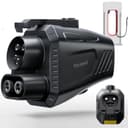
A2Z NACS to CCS1 Adapter (Typhoon Pro)

A2Z NACS to CCS1 Adapter (Typhoon Pro)

This is the DC-fast adapter that lets a CCS car (before its NACS retrofit) pull power from a Tesla Supercharger. A2Z's version is the enthusiast favorite for build quality and higher sustained current — a serious piece of kit, priced like one.

Best built
$169.99 · View on Amazon

Price as of September 2, 2026. #ad How we’re funded

2
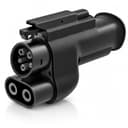
Lectron Vortex NACS to CCS1 Adapter

Lectron Vortex NACS to CCS1 Adapter

Lectron's take on the NACS-to-CCS DC adapter, generally a step cheaper than the A2Z while covering the same core job — Supercharging a CCS car. A sensible value option if your vehicle is on the supported list.

Best known brand
$199.99 · View on Amazon

Price as of September 2, 2026. #ad How we’re funded

3
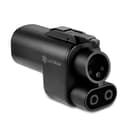
FOCSPROD NACS to CCS1 Adapter (Interlock, 500A)

FOCSPROD NACS to CCS1 Adapter (Interlock, 500A)

The mid-price NACS-to-CCS option that still publishes the two things that matter on a DC adapter: a UL 2252 reference and an electronic interlock. It sits between the budget units and the A2Z, and the interlock is the reason to prefer it over anything cheaper.

Best mid-price with interlock
$109.99 · View on Amazon

$125.9913% off

Price as of September 2, 2026. #ad How we’re funded

The picks in full

#1Best built

A2Z NACS to CCS1 Adapter (Typhoon Pro)

This is the DC-fast adapter that lets a CCS car (before its NACS retrofit) pull power from a Tesla Supercharger. A2Z's version is the enthusiast favorite for build quality and higher sustained current — a serious piece of kit, priced like one.

Strengths

  • Unlocks the Tesla Supercharger network for a CCS1 vehicle
  • Built for high sustained DC current with a metal housing
  • Widely reported to work across V3 Superchargers with Magic Dock-style support

Trade-offs

  • Expensive — this is the priciest adapter category by far
  • Your car and the network must both allow it; compatibility is vehicle-specific
ConnectorNACS (Tesla) → CCS1
Max outputNot published
Max power500 kW
Cable lengthNot published
InstallPlug-on DC adapter
Outdoor ratingNot published
Warranty1 year

Spec note. DC fast charging adapter. Compatibility depends on the specific vehicle and the Supercharger site — confirm your car is on the supported list before relying on it for a trip.

Specs read from the product listing, on August 11, 2026. “Not published” means the manufacturer does not state that figure.

#2Best known brand

Lectron Vortex NACS to CCS1 Adapter

Lectron's take on the NACS-to-CCS DC adapter, generally a step cheaper than the A2Z while covering the same core job — Supercharging a CCS car. A sensible value option if your vehicle is on the supported list.

Strengths

  • Cheaper route to Tesla Supercharger access for a CCS car
  • Compact, from a brand that specializes in adapters
  • Covers the common DC-fast use case

Trade-offs

  • Sustained-current ceiling is generally below the priciest options
  • Same vehicle/site compatibility caveats as any NACS-to-CCS adapter
ConnectorNACS (Tesla) → CCS1
Max outputNot published
Max powerNot published
Cable lengthNot published
InstallPlug-on DC adapter
Outdoor ratingNot published
Warranty1 year

Spec note. A DC fast-charging adapter, not an AC one. As with every NACS-to-CCS adapter, whether it works depends on your specific EV and the Supercharger — check the supported-vehicle list first.

Specs read from the product listing, on July 19, 2026. “Not published” means the manufacturer does not state that figure.

#3Best mid-price with interlock

FOCSPROD NACS to CCS1 Adapter (Interlock, 500A)

The mid-price NACS-to-CCS option that still publishes the two things that matter on a DC adapter: a UL 2252 reference and an electronic interlock. It sits between the budget units and the A2Z, and the interlock is the reason to prefer it over anything cheaper.

Strengths

  • Publishes an electronic interlock, so the adapter cannot be pulled off under load
  • Rated to 500A / 1000V — the full envelope of a Supercharger stall
  • Cites UL 2252, the standard written for exactly this part

Trade-offs

  • Smaller brand than Lectron or A2Z, with less of a support track record
  • Supercharger access still depends on your vehicle and account being enabled — the adapter alone is not enough
  • The listing does not publish a warranty term or a cable/handle weight
ConnectorNACS → CCS1
Max output500 A
Max powerNot published
Cable lengthNot published
InstallPlug-on adapter
Outdoor ratingNot published
WarrantyNot published

Spec note. The listing publishes a maximum 500A / 1000V rating, an interlock mechanism and a UL 2252 reference. It does not publish a kW figure, a warranty term or an operating temperature range, so those read as not published. Confirm your own vehicle is enabled for non-Tesla Supercharging before buying any adapter.

Specs read from the product listing, on August 11, 2026. “Not published” means the manufacturer does not state that figure.

The 800V problem, explained properly

An EV’s charging speed in kilowatts is voltage multiplied by current. A DC fast charger and a car negotiate a session within the limits both can support.

The EV6’s headline fast-charge figures come from an 800V charger feeding an 800V pack— high voltage, moderate current, very high power, and relatively little heat. It is an elegant design and it is why the car’s 10-80% times are so impressive on the right hardware.

A Supercharger stall built for 400V cars cannot supply 800V directly. Something has to step the voltage up, and that conversion — wherever it happens — imposes a ceiling. The practical outcome is that the session settles at a power level well below what the same car achieves on a native 800V charger.

Two things follow. First, the adapter is not the cause. A better adapter does not fix an architecture mismatch; any adapter is passing what the session negotiated. Second, this is improving. Newer Supercharger hardware handles higher voltages, and which stalls you land on matters. It is genuinely worth checking what generation of hardware a site has before planning a long stop there.

The same physics applies to the Hyundai Ioniq 5, which shares the platform — our Ioniq 5 page covers it from that angle. Our AC vs DC guide explains the underlying difference between the two charging processes.

So should an EV6 owner buy an adapter?

Our honest read: yes, but as coverage insurance rather than as a speed upgrade.

The case for buying is straightforward. The Supercharger network is dense, well-maintained and reliable in a way parts of the CCS network are not, and on a long drive the station that is there and workingbeats the theoretically faster one that is occupied or out of service. An adapter turns a large fraction of the country’s most reliable fast-charging infrastructure into something you can use. For road trips, that is worth having in the trunk even if you rarely need it.

The case against: if your driving is local, you charge at home, and you rarely fast-charge at all, this is an expensive part for a situation that does not arise. Home charging covers the overwhelming majority of EV6 owners’ needs, and our home charger roundup is a far better use of the money in that case.

How to verify compatibility before you buy

Work through these in order. Each can independently stop the plan.

1. Look at your charge port.Kia, like the rest of the industry, is transitioning to native NACS ports on new model years. If your car already has one, you do not need this adapter — you plug straight into a Supercharger, and the adapter you might want is the opposite direction for CCS stations.

2. Confirm Supercharger access for your VIN. Non-Tesla Supercharger access is account-based and vehicle-specific. If your vehicle is not enrolled, no adapter will make a stall deliver power.

3. Check whether Kia supplies an adapter. Automaker adapter programs have included free or subsidized units for existing owners at various points. Five minutes on the owner site before spending is worth it.

4. Check the site supports non-Tesla vehicles, and ideally what hardware generation it uses. Both the Tesla app and Kia’s navigation flag supported sites.

Getting the most from a Supercharger session

Given the architecture ceiling, the variables you do control matter more than usual:

  • Precondition the battery.Navigate to the charger in the car’s own system so it warms the pack en route. A cold battery is the largest self-inflicted charging penalty there is, and the EV6 has the capability built in. Our cold weather guide covers it.
  • Arrive low, leave early. The charge curve tapers steeply. On a road trip, two short stops from 10% to 60% are usually faster overall than one long stop to 90%. The arithmetic is in our how long to charge guide.
  • Pick an unshared cabinet where you can. Two cars on one cabinet split the available power.
  • Plan the park.Supercharger cables are short and designed around a Tesla’s rear-left port. The EV6’s port is at the rear-right, so expect to nose in at some stalls where a Tesla would reverse in.

Choosing between the three picks

If Kia’s route is unavailable, all three are rated for the full envelope of a Supercharger stall — comfortably more than an EV6 will draw through one.

The A2Z Typhoon Pro publishes the strongest specification here; our full review covers what the ratings buy you. The Lectronis the most established consumer EV adapter brand — see the Lectron vs A2Z comparison. The FOCSPROD publishes an electronic interlock at a lower price, which prevents the adapter being pulled off under load and is the safety feature cheaper units most often omit. The full roundup covers the wider field.

Do not confuse this with the AC adapter

Everything here concerns DC fast charging at a Supercharger. Using a Tesla Wall Connector or a Destination Charger is AC, and needs a Tesla-to-J1772 adapter— a different, much cheaper part. Buying the wrong direction is the most common mistake in this category.
Frequently asked questions

Why does my Kia EV6 charge slower at a Supercharger?

Because the EV6 uses an 800V architecture and most Supercharger stalls were built for 400V cars. Bridging that gap imposes a ceiling on the session, so the car settles well below the peak rate it achieves on a native 800V charger. The adapter is not the cause — a better adapter cannot fix an architecture mismatch.

Is a NACS-to-CCS adapter worth it for an EV6?

As coverage insurance, usually yes — the Supercharger network is dense and reliable, and a working station beats a theoretically faster one that is occupied or broken. As a speed upgrade, no. If you charge at home and rarely fast-charge, the money is better spent on a good home charger.

Does the EV9 have the same issue?

Yes. The EV9 shares the 800V platform with the EV6, and the same voltage-mismatch ceiling applies at 400V-native Supercharger stalls. Newer Supercharger hardware handles higher voltages better, so which site you use genuinely matters.

Can I use a Tesla Destination Charger with my EV6?

Not with this adapter. Destination Chargers and Wall Connectors are AC; this is a DC part. You need a Tesla-to-J1772 adapter for AC charging, which is a different and much cheaper product.

How do I get the fastest possible Supercharger session in an EV6?

Precondition the battery by navigating to the charger in the car's own system, arrive at a low state of charge and leave before the curve tapers, and pick an unshared cabinet where you can. Those three things are worth more than the choice of adapter.

Sources

Keep reading