Amp & Adapter

Best Home EV Chargers for a Cadillac LYRIQ

Cadillac lists two different AC onboard charging modules by trim: 11.5 kW and 19.2 kW. One of them is more AC power than any home charger sold in the United States can give you — so the buying question is simpler than it looks.

By Stephen V.Last updated How we rank

Buy the Autel MaxiCharger Home NACS. At 50 amps it is the highest-output native-NACS charger we can show you a live price for, it has the widest published operating temperature range in this registry, and it plugs into a LYRIQ with no adapter. If a 70-amp circuit is more than your panel will give up — and Autel publishes that requirement itself — buy the ChargePoint Home Flex NACSat pick two, which delivers the same 50 amps on a circuit most houses can actually carry.

Here is the fact that makes this page worth writing. Cadillac’s own LYRIQ page lists the AC onboard charging module by trim: an 11.5 kW AC onboard charging module on some trims and a 19.2 kW AC onboard charging moduleon the dual-motor all-wheel drive trims. That 19.2 kW figure is 80 amps at 240 volts, and nothing in the US residential charger market we cover goes past about 50 amps. If you have the big module, your charger is the bottleneck and it always will be.

Which, counter-intuitively, makes the decision easier. On most cars the advice is “do not buy more charger than the car can use” — the argument we make to Bolt and plug-in hybrid owners. On a LYRIQ there is no such thing as too much: buy the most amps your panel can feed, and the car will take every one of them. The only question left is which 50-amp charger, and what circuit each one needs.

The second published figure that matters: Cadillac lists a “North American Charging System (NACS) onboard charge port” on the LYRIQ. So like the Toyota bZ, this is a car where the native home charger is a NACS one and a J1772 charger is the one that needs an adapter — the reverse of most of the market.

We own no units and we do not bench-test chargers — here is what we do instead. Every LYRIQ figure here is read from Cadillac’s own page on the date in the sources list; every charger figure is the manufacturer’s published specification; prices are live from our daily check.

How this is funded: we earn a commission if you buy through our links, at no extra cost to you. It never changes which product we recommend, and we’ll tell you plainly when we’d skip one. Full disclosure.

Quick picks

Ranked on published specs, install flexibility and buyer fit. Select a row to jump to the full write-up. We have not bench-tested these units — here is exactly what we do instead.

#ProductBest forPrice
1
Autel MaxiCharger Home NACS (50A)

Autel MaxiCharger Home NACS (50A)

The fastest and best-protected NACS unit on this list: 50A output, a NEMA 4X enclosure and a genuinely flexible cable that still coils in the cold. Worth it only if your panel can actually feed a 60A circuit.

Best overall, if the panel allows
$569.00 · View on Amazon

Price as of October 18, 2026. #ad How we’re funded

2
ChargePoint Home Flex NACS (Hardwired)

ChargePoint Home Flex NACS (Hardwired)

The safest default for a Tesla owner who wants a factory NACS plug: the same mature app and the same amperage flexibility as the J1772 Home Flex, with the connector already right. It is hardwired-only, so budget for the electrician.

Best 50 amps on a normal circuit
$516.71 · View on Amazon

Price as of October 18, 2026. #ad How we’re funded

3
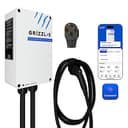
Grizzl-E Classic Connect 40A (NACS)

Grizzl-E Classic Connect 40A (NACS)

The same charger with a factory NACS handle instead of a J1772 one — the version to buy if your car has a Tesla-style port and you would rather not leave an adapter hanging off the connector for the next decade. Everything else about it, good and bad, is identical to the J1772 model.

Best plug-in, best value
$349.99 · View on Amazon

Price as of October 18, 2026. #ad How we’re funded

4
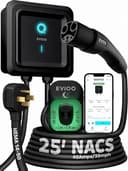
EVIQO NACS Level 2 Charger (40A, Plug-in)

EVIQO NACS Level 2 Charger (40A, Plug-in)

The plug-in answer. If you already have (or are getting) a NEMA 14-50 outlet, this is a fully-featured 40A NACS charger you install yourself in minutes — and 40A is all the overnight charging almost anyone needs.

Best budget plug-in
$479.99 · View on Amazon

$510.006% off

Price as of October 18, 2026. #ad How we’re funded

The picks in full

#1Best overall, if the panel allows

Autel MaxiCharger Home NACS (50A)

The fastest and best-protected NACS unit on this list: 50A output, a NEMA 4X enclosure and a genuinely flexible cable that still coils in the cold. Worth it only if your panel can actually feed a 60A circuit.

Strengths

  • Up to 50A / 12 kW — the highest AC output here — and app-adjustable down to 6A
  • NEMA 4X dust-tight and water-tight enclosure, plus surge and over-temperature protection
  • Flexible 25 ft cable reaches across a two-car garage without fighting you

Trade-offs

  • Hardwired only, and 50A needs a 60A breaker most older panels do not have spare
  • Your Tesla's onboard charger caps what it can accept, so many cars will never use all 50A
  • Connectivity (Wi-Fi/Bluetooth/Ethernet) is one more thing that can need a reconnect
ConnectorNACS (Tesla)
Max output50 A
Max power12 kW
Cable length25 ft
InstallHardwired
Outdoor ratingNEMA 4X (outdoor)
Warranty3 years

Spec note. Autel publishes an adjustable 6A-50A range on a dedicated 20A-80A circuit depending on the setting, and roughly 48 miles of range per hour at 50A. This is the NACS sibling of the J1772 MaxiCharger we cover in the main home-charger roundup.

Specs read from the product listing, on July 20, 2026. “Not published” means the manufacturer does not state that figure.

#2Best 50 amps on a normal circuit

ChargePoint Home Flex NACS (Hardwired)

The safest default for a Tesla owner who wants a factory NACS plug: the same mature app and the same amperage flexibility as the J1772 Home Flex, with the connector already right. It is hardwired-only, so budget for the electrician.

Strengths

  • Output is app-selectable at 16, 24, 32, 40, 48 or 50A, so it matches whatever circuit you can get
  • Native NACS handle — no adapter hanging off the connector in the weather
  • The most mature app in the category: scheduling, energy tracking, utility rate integration

Trade-offs

  • Hardwired only — you cannot unplug it and take it with you when you move
  • Costs more than a plain 40A box that charges your car just as full overnight
  • A non-Tesla EV needs a NACS-to-J1772 adapter, which is not included
ConnectorNACS (Tesla)
Max output50 A
Max power12 kW
Cable length23 ft
InstallHardwired
Outdoor ratingNEMA 3R (indoor/outdoor)
Warranty3 years

Spec note. ChargePoint publishes hardwire compatibility with 20A-80A breakers; the full 50A output needs a 60A circuit under the 80% continuous-load rule. Rated -22°F to 122°F ambient, Type 3R enclosure per UL 50E.

Specs read from the product listing, on July 20, 2026. “Not published” means the manufacturer does not state that figure.

#3Best plug-in, best value

Grizzl-E Classic Connect 40A (NACS)

The same charger with a factory NACS handle instead of a J1772 one — the version to buy if your car has a Tesla-style port and you would rather not leave an adapter hanging off the connector for the next decade. Everything else about it, good and bad, is identical to the J1772 model.

Strengths

  • Native NACS handle — a Tesla, or any NACS-port EV, plugs straight in
  • Identical hardware to the J1772 model: 16–40A adjustable, UL Type 4 metal enclosure, 25 ft cable, Wi-Fi
  • Plug-in on a NEMA 14-50 outlet, so no electrician beyond the outlet itself
  • 3-year warranty, made in Canada, rated from -30°C to +50°C

Trade-offs

  • A non-NACS EV needs a NACS-to-J1772 adapter, which is not in the box
  • Same missing ENERGY STAR listing as the J1772 model as of 2 September 2026
  • Same forced Wi-Fi, and the same loss of the NEMA 6-50 plug option the Classic offered
  • The Black NACS colorway was unavailable on Amazon when we checked; the White one is the live listing
ConnectorNACS (Tesla)
Max output40 A
Max power9.6 kW
Cable length25 ft
InstallPlug-in (NEMA 14-50)
Outdoor ratingUL Type 4 (indoor/outdoor)
Warranty3 years

Spec note. Mechanically and electrically the same unit as the J1772 model — United Chargers lists the connector as the only difference, offering the Classic Connect with a “Type 1 (SAE J1772); NACS” output cable across the same four colorways. Same 40A adjustable to 16A, same NEMA 14-50 plug, same 25 ft cord, same UL Type 4 rating and UL/cUL E510712 listing, same Wi-Fi and same 3-year warranty. The ENERGY STAR caveat on the J1772 model applies here too: no Classic Connect row appears in EPA's certified-EVSE database.

Specs read from the product listing, on September 2, 2026. “Not published” means the manufacturer does not state that figure.

#4Best budget plug-in

EVIQO NACS Level 2 Charger (40A, Plug-in)

The plug-in answer. If you already have (or are getting) a NEMA 14-50 outlet, this is a fully-featured 40A NACS charger you install yourself in minutes — and 40A is all the overnight charging almost anyone needs.

Strengths

  • Plugs into a NEMA 14-50 outlet — no hardwiring, and it comes with you if you move
  • IP66 / NEMA 4 sealed and rated from -22°F to 122°F, so an outdoor wall is fine
  • Amperage is app-adjustable from 6A to 40A, which matters on a shared or older panel

Trade-offs

  • 40A is the ceiling — there is no path to 48A the way there is with the Emporia
  • Smallest brand here; support and long-term firmware are the open question
  • Non-Tesla EVs need a NACS-to-J1772 adapter, which is not in the box
ConnectorNACS (Tesla)
Max output40 A
Max power9.6 kW
Cable length25 ft
InstallPlug-in (NEMA 14-50)
Outdoor ratingIP66 / NEMA 4 (outdoor)
Warranty3 years

Spec note. UL, ETL, FCC and ENERGY STAR certified. EVIQO publishes roughly 38 miles of range per hour at 40A, a 25 ft charging cable and a 37 in input cable. A 40A charger needs a 50A circuit under the 80% rule.

Specs read from the product listing, on July 20, 2026. “Not published” means the manufacturer does not state that figure.

Which module do you have? It changes nothing you buy

Cadillac publishes both figures, so the first thing most LYRIQ owners want to do is work out which one is in their car. Worth knowing, but it does not change the purchase:

  • 11.5 kW module.That is 48 amps at 240 volts. A 48- or 50-amp charger uses essentially all of it; a 40-amp charger gives you 9.6 kW, about 17% less.
  • 19.2 kW module.That is 80 amps. No residential charger on this site reaches it, so a 50-amp charger is the practical ceiling and a 40-amp one costs you a fifth of the car’s AC capability.

Either way the answer is the same: buy 48 to 50 amps if you can. On the small module you are using the car fully; on the big module you are using as much of it as the market allows. This is the one vehicle page on this site where we do not try to talk you down to 40 amps on cost grounds — though if the panel says 40, picks three and four are good chargers and the LYRIQ will charge overnight on them without complaint.

The circuit is the real decision

Both 50-amp chargers here deliver the same output. They do not ask the same thing of your house, and this is the single most useful paragraph on the page.

Autel’s own US store page publishes a 70-amp circuitfor full 50-amp output. That is not the number the usual arithmetic gives you: a continuous load is sized at 125% of its draw, so 50 A × 1.25 = 62.5 A, and the next standard breaker above that is 70 A. Most buyers reading “50 amps” assume the 60-amp circuit a 48-amp charger needs. ChargePoint, by contrast, publishes that its hardwired Home Flex “Works with circuits rated from 20 to 80A” and “Delivers up to 50A of power” — configurable down to whatever your panel can actually carry.

So: if your panel has real headroom and you want the toughest enclosure and the widest temperature rating, the Autel is the better box. If your service is 100 or 125 amps, or your panel is already full, the ChargePoint gets you the same 50 amps without the heavier feed. Our Autel vs ChargePoint Home Flex comparison is the long version of this argument, and best for a 100-amp panelis where to go if the service is the constraint. You can also dial the Autel down to 40 amps on a 50-amp circuit, which is a perfectly sensible way to buy it.

The published figures, side by side

Charger figures are each manufacturer’s own published specification. The last column is arithmetic from Cadillac’s published module ratings, not a measurement.

ChargerOutputCircuit publishedEnclosureShare of 19.2 kW used
Autel MaxiCharger Home NACS50 A / 12 kW70 A for full outputIP65 / NEMA 4X, -40 °F to 131 °F~63%
ChargePoint Home Flex NACS50 A20 to 80 A (configurable)Type 3R per UL 50E~63%
Grizzl-E Classic Connect 40A (NACS)40 A / 9.6–10 kWNEMA 14-50 plug, 50 AUL Type 4, metal, -22 °F~50%
EVIQO NACS 40A40 ANEMA 14-50 plug, 50 ANot published~50%

Read the last column as a reality check rather than a criticism of any charger. If your LYRIQ has the 19.2 kW module, the best available home charger uses under two thirds of it. That capability is there for commercial and workplace AC charging, and on the road the car’s 190 kW DC figure is what matters — see Level 2 vs DC fast charging.

Does the NACS port change anything at home?

It changes which connector you buy and nothing else. A native NACS charger plugs straight in. A J1772 charger needs a J1772-to-NACS adapter at the car end, which works — our J1772-to-Tesla adapter roundup covers the good ones — but adds a connection and a thing to lose. Since the NACS versions of these chargers cost about the same as the J1772 versions, there is no reason to introduce the adapter into a nightly routine. Keep adapters for public stations, which is the argument in are EV charging adapters safe.

On DC, the NACS port means Supercharger hardware fits directly. Whether a given site serves a LYRIQ is a network question rather than a connector one; Supercharger access for non-Tesla EVs covers how that has been going.

What we left out, and why

  • Every 80-amp charger.They exist — in commercial product lines, at commercial prices, needing a 100-amp circuit that almost no US house can spare. We do not list one, because we have not resolved a residential listing for one we would recommend. If you genuinely want to feed 19.2 kW, that is a conversation with an electrician about your service capacity first, not a shopping decision.
  • Emporia’s NACS units. The Level 2 NACS and the Pro NACS are both chargers we rate highly, and both returned no live price in our daily check when this page was written. We will not feature a product we cannot show a real price for.
  • The Tesla Wall Connector.A NACS charger, and a good one — our reviewcovers it — but it is 48 amps at the highest price in the category, and Tesla’s Gen 3 installation manual publishes no ambient temperature range. For a LYRIQ there is no capability reason to pay the premium.
  • Portable chargers. A 40-amp portable is a fine travel companion and a poor primary charger for a car with this much onboard capability. See best portable chargers if you want one as a second cordset.

The short answer

Native NACS, as many amps as your panel will carry, and read the circuit requirement rather than the output number. Pick one is the best box if your panel can take a 70-amp feed; pick two gives you identical output on a circuit most houses already have, which is why plenty of LYRIQ owners should buy it instead. Picks three and four are the right answer if the panel is full and you want this done this month.
Frequently asked questions

What home charger should I buy for a Cadillac LYRIQ?

A native-NACS Level 2 charger rated 48 to 50 amps. Cadillac's own LYRIQ page lists a NACS onboard charge port and an AC onboard charging module of either 11.5 kW or 19.2 kW depending on trim, so the car can use every amp a residential charger can supply. Our top pick is the Autel MaxiCharger Home NACS at 50 amps, with the ChargePoint Home Flex NACS as the alternative when your panel cannot spare the 70-amp circuit Autel publishes for full output.

How many kW can a Cadillac LYRIQ charge at on AC?

Cadillac lists two AC onboard charging modules by trim: 11.5 kW and 19.2 kW, the larger one on the dual-motor all-wheel drive trims. 11.5 kW is about 48 amps at 240 volts and 19.2 kW is about 80 amps. Nothing in the US residential charger market we cover exceeds roughly 50 amps, so on the 19.2 kW module the charger — not the car — is the limit.

Can a home charger use the LYRIQ's 19.2 kW onboard charger?

Not at home, in practice. 19.2 kW is 80 amps at 240 volts, which needs a 100-amp circuit under the 125% continuous-load rule — more than almost any US house can spare, and beyond every residential charger in our registry. A 50-amp charger uses about 63% of that module's capability, which is the realistic ceiling. The full figure is there for commercial and workplace AC charging.

Does the LYRIQ need a NACS charger or a J1772 charger?

Cadillac lists a North American Charging System (NACS) onboard charge port, so a native-NACS charger plugs straight in and a J1772 charger needs a J1772-to-NACS adapter at the car. Both work. We rank native NACS first because the NACS versions cost about the same, and an adapter in a nightly routine adds a connection and something to misplace.

What size circuit does a LYRIQ charger need?

It depends on the charger, not the car, and the difference is bigger than most buyers expect. Autel publishes a 70-amp circuit for its full 50-amp output, because a 50-amp continuous load sized at 125% is 62.5 amps and the next standard breaker is 70. ChargePoint publishes that its hardwired Home Flex works with circuits rated from 20 to 80 amps and delivers up to 50 amps, so it can be configured to what your panel has. A 40-amp charger runs on a 50-amp circuit.

Is a 40-amp charger enough for a Cadillac LYRIQ?

It will charge the car overnight, yes — a 40-amp charger delivers 9.6 kW, which is roughly 50% of the 19.2 kW module and 83% of the 11.5 kW one. This is the one vehicle page where we do not argue you down to 40 amps, because the LYRIQ can genuinely use more. But if your panel is the constraint, a 40-amp plug-in charger installed this month beats a 50-amp one waiting on a service upgrade.

Sources

  • Cadillac — LYRIQ electric SUV (trim specifications) — Cadillac's own LYRIQ page lists the AC onboard charging module BY TRIM: an "11.5 kW AC onboard charging module" on some trims and a "19.2 kW AC onboard charging module" on the dual-motor all-wheel-drive trims, alongside "190 kW DC Fast Charging" and a "North American Charging System (NACS) onboard charge port". The page publishes no AC charge-time figure in hours and no circuit-size guidance (accessed October 17, 2026)
  • Autel Energy (official store) — MaxiCharger AC Elite Home 50A 12 kW EV Charger — Autel's own US store listing: "Maximum 12 kW (240 VAC @ 50 A model)" adjustable 16-50 A, hardwired, and a 70 A circuit required for full output; an SAE J1772 connector on a "25 ft. (7.5 m)" cable; "IP65 / NEMA 4X"; "-40 to 131 °F (-40 to 55 °C)" operating temperature; "Bluetooth, Wi-Fi, Ethernet, CAN, RS485"; "Adaptive Load Management (ALM); Dynamic Load Balancing (DLB)"; CSA and ENERGY STAR certified; "3 years warranty"; about 15.4 lb with the in-body holster (accessed October 12, 2026)
  • Autel Energy — MaxiCharger AC Elite (product page) — Autel's own product page: a "NEMA 4X protection rating", charging at full power from "-40°F to 131°F", up to a maximum of 50 A, and "Adaptive Load Management shares power between loads in the home, so you can charge and do your laundry at the same time." It does NOT state what sensor hardware Adaptive Load Management requires, and it does not state the circuit size needed for 50 A output (accessed October 12, 2026)
  • ChargePoint — Home charging (Home Flex models) — ChargePoint's own model split: the hardwired Home Flex "Works with circuits rated from 20 to 80A" and "Delivers up to 50A of power", while BOTH plug-in models (NEMA 14-50 and NEMA 6-50) "Work with circuits rated 40 or 50A" and "Deliver up to 40A of power (30 miles of range per hour)". UL Listed, ENERGY STAR certified, J1772 or NACS, a 3-year warranty and 24/7 support. The page publishes no cable length, enclosure rating or temperature range (accessed October 12, 2026)
  • ChargePoint — Home Flex (CPH50) datasheet — ChargePoint's own datasheet: a "Station Enclosure Rating Type 3R per UL 50E", an operating ambient of -30 °C to 50 °C (-22 °F to 122 °F), storage from -40 °C to 60 °C, operating humidity to 95% at 50 °C non-condensing, a 23 ft (7010.4 mm) cable, and UL and cUL listing to UL 2594, UL 2231-1 and UL 2231-2 with NEC Article 625 compliance (accessed October 12, 2026)
  • United Chargers — Grizzl-E Classic Connect 40A — The maker's own specification block: "Adjustable current 40A - 16A", "Max power 40A 10kW", "Plug type NEMA 14-50", "Connector Type 1 (SAE J1772); NACS", "Output cable length 25ft (7.6m)", a 10.25 x 6.25 x 3.75 in enclosure with "UL Type 4 Indoor/Outdoor Rating", "Operating temperature -30C .. +50C (-22F .. 122F)", "Certifications UL/cUL E510712", "Wi-Fi (2.4 GHz); Mobile Application", and a 3-year or 5-year warranty choice. The description calls it "made-in-Canada"; the formal country-of-origin field is blank (accessed October 12, 2026)
  • SAE International — J3400 North American Charging System (NACS) for Electric Vehicles — The SAE standard for the NACS connector (Tesla's plug), alongside the J1772 AC standard (accessed July 19, 2026)
  • U.S. DOE Alternative Fuels Data Center — Charging Electric Vehicles at Home — DOE guidance on Level 1 vs Level 2 home charging, 120V/240V service and installation (accessed July 19, 2026)

Keep reading