The one thing these adapters cannot do
They will not let you Supercharge. This is worth stating bluntly because the marketing around EV adapters is genuinely confusing.
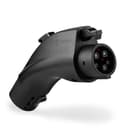
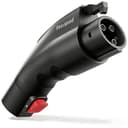
A Tesla-to-J1772 adapter is an ACadapter. It works with Tesla’s alternating-current equipment — Wall Connectors, Mobile Connectors and Destination Chargers — because AC charging is a comparatively simple handshake and the connector pinout can be mechanically translated. Superchargers deliver DCat several hundred volts with an entirely different communication protocol and safety interlocks, and no passive adapter bridges that. Charging a non-Tesla car at a Supercharger depends on Tesla opening the site to other brands with its own built-in “Magic Dock” hardware, not on anything you can buy. Our AC vs DC charging guide explains the distinction properly, and it is the single most useful thing to understand before buying any EV adapter.
The other limit: the charger may refuse you
A Tesla Wall Connector can be configured by its owner to only serve Tesla vehicles. Where that setting is active, no adapter helps — the equipment declines the handshake regardless of what is on the end of the cable. This is most common at commercial Destination Charger sites and is entirely the site owner’s choice. Treat this adapter as something that opens a large number of chargers to you, not all of them.
How to choose between them
Amp rating is not a speed rating here.Every adapter on this page publishes a ceiling far above what any Level 2 AC source will deliver — a Tesla Wall Connector tops out at 48A, a Mobile Connector far lower. An 80A rating does not charge you faster than a 60A one; it means more thermal margin. Your actual speed is set by the lowest of the charger’s output, the circuit and your car’s onboard AC charger, exactly as covered in our amps and circuits guide.
Fit and seating matter more than the number. An adapter that sits loosely in either the Tesla connector or your charge port creates resistance, and resistance under 30-plus amps for hours produces heat. If an adapter feels loose, gets hot, or the charge repeatedly interrupts, stop using it. Warmth is normal; anything you would call hot is not.
Prefer a listing that names a standard. Very few adapters in this direction publish a certification body, which is why our picks are ranked partly on what the seller is willing to state in writing. A listing that publishes an amp rating, a voltage rating and a compatibility list is telling you more than one with a headline number alone.
Where this adapter actually earns its money
Three situations, in descending order of how often they come up.
Destination Chargers. Hotels, restaurants and shopping centers with Tesla Destination Chargers are common, and they are frequently empty while the two J1772 stations next to them are occupied. For a road trip in a non-Tesla EV, this adapter meaningfully widens where you can top up overnight.
Visiting a Tesla household. If a family member has a Wall Connector in the garage, this is a $50 part that turns their charger into your charger for the weekend.
A mixed-brand household.If you already own a Tesla charger and have added a non-Tesla EV, this adapter is dramatically cheaper than a second charger and a second circuit. The alternative worth knowing about is Tesla’s Universal Wall Connector, which has a J1772 adapter built into the unit — but if the Tesla charger is already on the wall, the adapter is the obvious answer. Our Tesla home charger roundup covers the mixed-household case in full.
What we would skip
Skip any adapter claiming to enable Supercharging for a non-Tesla car — it is either mislabeled or misrepresenting what it does. Skip adapters with no published voltage rating. And skip buying this at all if you drive a Tesla: you want the other direction, and your car probably came with one in the frunk. If you are unsure which connector your car even has, start with our connector guide.