Amp & Adapter

Best Home EV Chargers for a Chevy Bolt

The Bolt is the car most likely to be sold a charger it cannot use — the onboard-charger ceiling, what it costs you to ignore it, and the four units worth buying.

By Stephen V.Last updated How we rank

The Bolt is the car where the standard home-charging advice does the most damage. It is bought by people watching their money — that is a large part of the point of it — and then it gets sold a 48A charger and a 60A circuit it will never draw a single extra amp from. That combination can cost more than the difference between two model years of the car.

The reason is the same for every EV, but it bites hardest here. A wall charger does not charge your battery. It supplies 240V AC, and the onboard charger inside the carconverts it to DC. Whatever that onboard unit is rated at is a hard ceiling — a bigger wall charger cannot push past it, any more than a wider hose fills a bucket faster through a narrow tap. And the Bolt’s onboard charger has changed across model years and options, which is exactly why so many owners get this wrong.

So this page is organized around one instruction: find your onboard charger rating first, buy second. Below is where to find it, what each possible answer means for the charger you should buy, and the four units we would actually put on the wall.

How this is funded: we earn a commission if you buy through our links, at no extra cost to you. It never changes which product we recommend, and we’ll tell you plainly when we’d skip one. Full disclosure.

Quick picks

Ranked on published specs, install flexibility and buyer fit. Select a row to jump to the full write-up. We have not bench-tested these units — here is exactly what we do instead.

#ProductBest forPrice
1
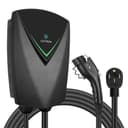
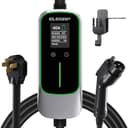
ELEGRP Level 2 EV Charger (40A, NEMA 14-50)

ELEGRP Level 2 EV Charger (40A, NEMA 14-50)

The cheapest way we found to get a genuinely ETL-certified 40A charger with a long cable. It is a plain plug-in unit with no app and no frills, which is exactly why it undercuts the name brands — buy it if the budget is the binding constraint and you already have a 14-50 outlet.

Best value overall
$209.99 · View on Amazon

Price as of September 2, 2026. #ad How we’re funded

2
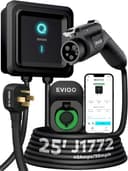
EVIQO Level 2 J1772 Charger (40A, Plug-in)

EVIQO Level 2 J1772 Charger (40A, Plug-in)

The J1772 sibling of the NACS unit we already rate, and the same argument applies: 40A on a NEMA 14-50 plug is the install almost everyone should be doing, and this is a wall-mounted charger rather than a portable pretending to be one. Buy it if you want a permanent box without an electrician's hardwire bill.

Best plug-in wall unit
$395.98 · View on Amazon

$469.9916% off

Price as of September 2, 2026. #ad How we’re funded

3
Grizzl-E Classic

Grizzl-E Classic

The value pick for someone who just wants reliable overnight charging with no app and no fuss. It's a rugged, cast-aluminum 40A box that does one thing well — and the cold-weather cable is a genuine differentiator in a northern garage.

Best no-app pick
4
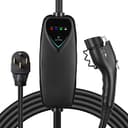
Lectron 40A Portable Level 1/2 Charger

Lectron 40A Portable Level 1/2 Charger

The best all-round portable: a real 40A / 9.6 kW Level 2 charger on a NEMA 14-50 plug, with a Level 1 adapter for a standard outlet. For many people this is all the home charger they need, and it comes with you on trips.

Best dual-purpose
$269.99 · View on Amazon

Price as of September 2, 2026. #ad How we’re funded

The picks in full

#1Best value overall

ELEGRP Level 2 EV Charger (40A, NEMA 14-50)

The cheapest way we found to get a genuinely ETL-certified 40A charger with a long cable. It is a plain plug-in unit with no app and no frills, which is exactly why it undercuts the name brands — buy it if the budget is the binding constraint and you already have a 14-50 outlet.

Strengths

  • ETL certified at 40A — the safety listing is the one thing you should never cut
  • 25 ft cable is longer than several units costing considerably more
  • Plugs into a NEMA 14-50 outlet, so there is no electrician bill for the charger itself

Trade-offs

  • No app, no scheduling — if you need off-peak automation, look at the Emporia
  • ELEGRP is a fixtures brand rather than an EV specialist; long-term support is the open question
  • The listing does not publish an outdoor enclosure rating, so treat it as a garage unit
ConnectorJ1772
Max output40 A
Max power9.6 kW
Cable length25 ft
InstallPlug-in (NEMA 14-50)
Outdoor ratingNot published
WarrantyNot published

Spec note. The listing publishes 40A, 240V, an ETL certification, a NEMA 14-50 plug and a 25 ft cable. It does not publish a NEMA/IP enclosure rating or a warranty term, so both read as not published here. A 40A charger requires a 50A circuit under the 80% rule.

Specs read from the product listing, on August 11, 2026. “Not published” means the manufacturer does not state that figure.

#2Best plug-in wall unit

EVIQO Level 2 J1772 Charger (40A, Plug-in)

The J1772 sibling of the NACS unit we already rate, and the same argument applies: 40A on a NEMA 14-50 plug is the install almost everyone should be doing, and this is a wall-mounted charger rather than a portable pretending to be one. Buy it if you want a permanent box without an electrician's hardwire bill.

Strengths

  • 40A / 9.6 kW is the amperage sweet spot — a full overnight charge for any car on the road
  • Plugs into a NEMA 14-50 outlet, so there is no hardwiring and it comes with you if you move
  • Purpose-built wall-mounted station, not a portable unit hung on a bracket

Trade-offs

  • 40A is the ceiling — there is no upgrade path to 48A the way the Emporia has
  • EVIQO is a young brand; long-term firmware and support are the open question
  • The listing does not publish an enclosure rating or warranty term
ConnectorJ1772
Max output40 A
Max power9.6 kW
Cable lengthNot published
InstallPlug-in (NEMA 14-50)
Outdoor ratingNot published
WarrantyNot published

Spec note. The listing publishes 40A, 240V, a J1772 connector and a NEMA 14-50 plug on a wall-mounted station. It does not publish a cable length, enclosure rating or warranty term in the title, so those read as not published here. A 40A charger requires a 50A circuit under the 80% continuous-load rule.

Specs read from the product listing, on August 11, 2026. “Not published” means the manufacturer does not state that figure.

#3Best no-app pick

Grizzl-E Classic

The value pick for someone who just wants reliable overnight charging with no app and no fuss. It's a rugged, cast-aluminum 40A box that does one thing well — and the cold-weather cable is a genuine differentiator in a northern garage.

Strengths

  • 40A / 9.6 kW is more than enough to add a full day's range overnight
  • Rugged cast-aluminum housing, NEMA 4 outdoor rating
  • No account, no app, no connectivity to fail — it just charges

Trade-offs

  • Its Amazon listing read “Currently unavailable” when we last checked (2 September 2026) — United Chargers still sells the Classic direct, but the Amazon buy link may not resolve to a live offer
  • No scheduling or energy monitoring (by design)
  • The default cable is stiff; the cold-weather variant is worth it up north
ConnectorJ1772
Max output40 A
Max power9.6 kW
Cable length24 ft
InstallPlug-in (NEMA 14-50) or hardwired
Outdoor ratingNEMA 4 (outdoor)
Warranty3 years

Spec note. Ships set for a NEMA 14-50 plug on a 40A circuit. Hardwiring is supported but doesn't raise the 40A ceiling — this is a fixed-40A unit, which is the right amount for the vast majority of overnight charging. Re-checked 2 September 2026: a live availability check returns this Amazon listing as “Currently unavailable”, while United Chargers’ own store still lists the Classic 40A with stock in several colorways — so the product is not discontinued, but the Amazon offer is not currently live. The newer model in the lineup is the Classic Connect 40A, which adds Wi-Fi, 16–40A adjustment and a NACS connector option.

Specs read from the product listing, on July 19, 2026. “Not published” means the manufacturer does not state that figure.

#4Best dual-purpose

Lectron 40A Portable Level 1/2 Charger

The best all-round portable: a real 40A / 9.6 kW Level 2 charger on a NEMA 14-50 plug, with a Level 1 adapter for a standard outlet. For many people this is all the home charger they need, and it comes with you on trips.

Strengths

  • True 40A Level 2 on a 14-50 outlet — same overnight speed as a wall unit
  • Includes a 120V adapter to fall back to any standard outlet
  • Packs in the trunk for road trips and destination charging

Trade-offs

  • Needs a 14-50 outlet installed to hit full speed at home
  • No wall bracket or scheduling — it's a cable, not a smart charger
ConnectorJ1772
Max output40 A
Max power9.6 kW
Cable length21 ft
InstallPlug-in (NEMA 14-50 + 5-15 adapter)
Outdoor ratingIP66 connector
Warranty1 year

Spec note. Adjustable amperage on some units lets you dial it down for a weaker outlet. On a standard 120V outlet it drops to Level 1 speed (a few miles of range per hour), which is the physics of the outlet, not the charger.

Specs read from the product listing, on July 19, 2026. “Not published” means the manufacturer does not state that figure.

Find your onboard charger rating — it is the whole decision

Two minutes, and it determines everything else on this page. In order of reliability:

  1. Your owner’s manual, charging section. Stated directly, specific to your model year and trim. This is the answer.
  2. Chevrolet’s published specifications for your model year. Look for “onboard charger” or “AC charging” — not the DC fast-charging figure, which is a different and irrelevant number here.
  3. The car.Plug into a charger you know exceeds the car’s rating and read the kW on the charging screen. That is your ceiling, measured.

This matters more on a Bolt than on almost anything else because the answer genuinely varies. Some configurations shipped with a modest onboard charger; others were available with a higher-rated unit. A forum post about “the Bolt” may be describing a different car from yours.

What each answer means

The arithmetic is one line: kW ÷ 240 × 1000 = amps. Then round up to a charger you can actually buy.

  • Around 7.2 kW → roughly 30A. A 32A charger already saturates the car. A 40A charger is a sensible buy anyway, because it costs almost nothing more and covers your next car. A 48A charger and its 60A circuit deliver literally zero extra range. This is the single most expensive mistake Bolt owners make.
  • Around 11 kW→ roughly 46A. Now 48A is defensible — but only if an electrician has already confirmed your panel can spare a 60A circuit, and only if the gap between 40A and 48A matters to how you drive. For most people it does not.

The circuit cost is the part people forget. Under the 80% continuous-load rule a 40A charger needs a 50A breaker and a 48A charger needs a 60A breaker. A 50A branch is ordinary; a 60A branch is where panels start running out of room and the conversation turns to a service upgrade. Our amps and circuits guide has the breaker table, and our installation cost guide explains what actually drives the quote.

How much charging does a Bolt actually need?

Run your own numbers rather than trusting a slogan. A 32A charger delivers about 7.7 kW; a 40A charger about 9.6 kW. Divide the kWh you use in a typical day by that figure and you have your nightly charging time. For the overwhelming majority of Bolt owners — a commuter car with a battery sized for a few days of ordinary driving — the answer is a small number of hours inside a window that is ten hours long. Our how-long-to-charge guide works the equation through properly.

The Bolt-specific hardware notes

Your car uses a J1772 port for AC charging. Every pick on this page plugs straight in, no adapter. If you also want to use Tesla Destination chargers, that is a Tesla-to-J1772 adapter and it is one of the cheapest genuinely useful things you can put in the trunk.

Check what came with the car.Some Bolts shipped with a dual-level cordset capable of 240V operation from a suitable outlet. If yours did, and you have or can fit the right receptacle, you may already own a workable Level 2 solution and only need the outlet — which changes the maths considerably. Read the label on the brick before you buy anything.

Cable length is worth more than amperage here. If 32A saturates your car, the specifications left to shop on are cable reach, build quality and whether the thing is weatherproof. A 25 ft cable that reaches the port from wherever the outlet had to go is worth far more to you than two extra amps you cannot use.

Why we picked these four

ELEGRP Level 2 40Ais the value answer and the one we would buy for a Bolt: an ETL-certified 40A unit with a long cable, at a price that respects the fact you bought an affordable car. Certification is the one specification we will not trade away on a budget pick, and this one has it — the full review explains where the money was saved instead.

EVIQO 40A is the purpose-built wall station on a NEMA 14-50 plug: no hardwiring, no electrician for the charger itself if the outlet already exists, and it comes off the wall with you when you move.

Grizzl-E Classic is for the owner who wants nothing to do with an app. It is a rugged fixed-40A box with an outdoor-rated housing, and because it has no connectivity there is no account, no firmware and nothing to fail. The Grizzl-E review makes the case in full. Check availability before you set your heart on it: its Amazon listing read as unavailable on 2 September 2026, and the newer Grizzl-E Classic Connect 40A is the same box with 16-40A adjustment — useful on a Bolt if your panel cannot spare a 50A circuit — but with Wi-Fi you cannot switch off.

Lectron 40A Portabledoes home charging and travel with one purchase. On a Bolt, whose road-trip DC charging is the weakest part of the ownership experience, having a unit that can pull a real Level 2 rate from a dryer or RV outlet at a destination is genuinely valuable — see our road-trip guide.

The honest summary

Buy a certified 40A charger, put it on a 50A circuit, and spend the money you saved on a proper industrial-grade receptacle rather than on amps your car will not draw. That outlet is the component most likely to fail in a cheap install, and it is the one place upgrading actually buys you something. If you want the wider argument for that amperage, our budget charger roundup covers where it is safe to save money and where it is not.
Frequently asked questions

Will a 48A charger charge my Chevy Bolt faster?

Only if the Bolt's onboard AC charger is rated high enough to accept it, and on many configurations it is not. If your onboard charger is around 7.2 kW, a 48A wall charger delivers exactly the same speed as a 32A one — while requiring a 60A circuit that costs meaningfully more to install. Check the rating in your owner's manual before you shop.

What size circuit does a Bolt home charger need?

It depends on the charger, not the car. Under the 80% continuous-load rule a 32A charger needs a 40A breaker, a 40A charger needs a 50A breaker, and a 48A charger needs a 60A breaker. Pick the charger that matches your car's ceiling, then size the circuit to the charger.

Can I just use the cord that came with the car?

Sometimes, and it is worth checking. Some Bolts shipped with a dual-level cordset that can run at 240V from a suitable outlet, which would mean you need a receptacle rather than a charger. Read the label on the unit itself — if it is 120V only, it adds only a few miles of range per hour and is a backup, not a home solution.

Does the Bolt use J1772 or NACS?

The Bolt uses a J1772 connector for AC charging, so every charger on this page plugs in directly with no adapter. If you want to use Tesla's AC equipment, such as Destination chargers, a Tesla-to-J1772 adapter handles that separately.

Is a smart charger worth it for a Bolt?

Only if you will use the scheduling, and only if the car cannot already do it. Most EVs including the Bolt can schedule charging themselves, which makes a Wi-Fi charger redundant for that purpose. Where a smart charger earns its money is energy monitoring and load management — genuinely useful features, but not universal needs.

Sources

Keep reading