Work out whether it is enough for you
Do not take a slogan. Do the sum, which takes thirty seconds.
Miles driven per day ÷ miles gained per hour = hours of charging you need. Call the gain four miles per hour as a working figure for this unit, and check it against your own car once you have it.
- 20 miles a day→ about five hours. Trivially covered by any overnight window. Level 1 is genuinely sufficient for you.
- 40 miles a day→ about ten hours. Covered by a full night if you plug in reliably every time, with no margin for a heavier day.
- 60+ miles a day→ more hours than a night contains. You will fall behind, and each day the deficit compounds. Level 2 is not optional for you.
The share of drivers in the first two categories is much larger than the industry likes to acknowledge. Our how-long-to-charge guide works the equation through properly, and our Level 1 roundup makes the wider case for the category.
The winter caveat, which is not small
At 120V there is very little power to spare, and in genuine cold a meaningful share of it goes into keeping the battery pack in a safe temperature range rather than into range. The comfortable summer figure can drop substantially in winter, and on the coldest nights the net gain can approach zero.
That is not a fault in the charger and no Level 1 unit is immune. Mitigations: plug in everytime the car is parked rather than only overnight, start while the pack is still warm from driving, and park in a garage if one exists — even an unheated one is meaningfully warmer than an exposed driveway. Our cold-weather guide covers it in full. If you live somewhere with real winters and rely on Level 1, that guide is the more important page.
The three situations this unit is genuinely right for
1. Emergency insurance in the trunk. The core case. It is light, small, cheap, and it runs from an outlet that exists in every building in the country. The day you arrive somewhere with a low battery and no station, a slow charger is infinitely better than no charger. It costs almost nothing to own until that day.
2. A low-mileage second car. If the car does short local trips and sits on a driveway for eighteen hours a day, Level 1 simply keeps up. Spending on a 50A circuit for a car that drives twenty miles a day is money spent on a number rather than an outcome.
3. A rental or a temporary situation. When you cannot install anything and the only outlet is an ordinary socket. Our renters guide covers the wider set of options, but this is the floor of that set and it works.
What to check before plugging into an unknown outlet
This matters more on Level 1 than people assume, because the whole point of the unit is plugging into outlets you did not install and cannot vouch for.
- Use a dedicated circuit where you can. A continuous 16A draw plus whatever else is on that branch is how breakers trip and old wiring gets warm.
- Never use a household extension cord. Ordinary extension cords are not built for continuous hours-long loads and are a genuine fire risk here. Move the car, not the electricity.
- Feel the plug after twenty minutes.Warm is normal. Hot is not — stop, and use a different outlet. That is a wiring problem you have just found, not a charger problem.
- Avoid worn or loose sockets. A plug that does not sit firmly is a poor connection, and a poor connection under sustained load generates heat.
Our NEMA outlet types guide covers identifying what you are plugging into.
The specification notes, and how the replacement compares
The MEGEAR listing published a 25 ft cable, a 16A draw on a 120V NEMA 5-15 plug and a one-year warranty. The cable was the best thing about it — the outlet is rarely where you want it — and it is the one figure the replacement does not match.
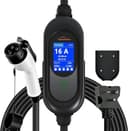
The TopAutoGear 16A priced above publishes a 17 ft cable, the same 16A draw but across a 110-240V range, an IP54 rating and a five-year warranty. So you gain dual voltage, a weather rating and four extra years of cover, and you lose eight feet of reach. Neither listing names a safety-certification body.
If the reach matters more than the price, the EVDANCE dual-level unit publishes a 25 ft cable and an ETL listing. It costs more and is the better buy if you travel often.
Who should buy something else
- Anyone driving normal daily distances.Do the sum above. If it says more hours than a night contains, no amount of good advice fixes it — you need a 40A Level 2 charger.
- Anyone who travels and may find a 240V outlet. The dual-level units are worth the difference.
- Anyone in a severe winter climate relying on this as primary. The cold-weather derate is real and it lands hardest here.
The verdict
A modest product that we recommended without embarrassment, for what it actually was: a cheap, light, long-cabled insurance policy that lives in the trunk, and a genuinely sufficient primary charger for low-mileage drivers. That case has not changed — only the listing has. With the Skysword II off Amazon, the TopAutoGear 16A is the cheapest unit we can currently recommend in the same role, and the whole argument above about whether 16A is enough for your week applies to it unchanged. Buy one with the right expectations and it is one of the better small purchases in EV ownership. Buy one hoping it will replace a Level 2 install and you will be disappointed by the third night.