Amp & Adapter

Tesla Wall Connector vs a NEMA 14-50 Outlet

A hardwired wall station against an outlet and a cord you may already own — what each actually costs, what each actually delivers, and the wrong reason people pick one.

By Stephen V.Last updated How we rank

This is not really a product comparison. It is a comparison of two installations, and confusing the two is why the answers you find elsewhere are so inconsistent.

The wall connector route: an electrician runs a circuit to a junction box and hardwires a permanent charging station to your wall. Higher possible output, nothing to unplug, one clean box.

The NEMA 14-50 route:an electrician runs a circuit to a receptacle. You then plug a mobile or portable charger into it — frequently one you already own, because many EVs ship with a cordset that can use a 240V outlet. Lower output ceiling, but the hardware unplugs and travels.

Both are correct answers for different households. Below are the three questions that actually decide it — cost, speed and flexibility — plus the safety detail that makes the “cheap” route stop being cheap if you get it wrong. The three products below are the components of each route, not three competing chargers.

How this is funded: we earn a commission if you buy through our links, at no extra cost to you. It never changes which product we recommend, and we’ll tell you plainly when we’d skip one. Full disclosure.

Quick picks

Ranked on published specs, install flexibility and buyer fit. Select a row to jump to the full write-up. We have not bench-tested these units — here is exactly what we do instead.

#ProductBest forPrice
1
Tesla Wall Connector

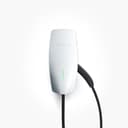
Tesla Wall Connector

Tesla's own home charger, and the tidiest thing you can bolt to the wall of a Tesla-only garage: a native NACS handle, 48A output and scheduling from the app you already have open for the car. The handle fits nothing else without an adapter, and it is hardwired only, so it earns its premium in one specific household rather than in general.

The wall-connector route
$735.00 · View on Amazon

Price as of September 2, 2026. #ad How we’re funded

2
Leviton 1450R Heavy-Duty EV Receptacle (NEMA 14-50)

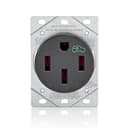
Leviton 1450R Heavy-Duty EV Receptacle (NEMA 14-50)

If you're plugging a charger into a NEMA 14-50 outlet, buy the industrial-grade receptacle, not the $10 hardware-store one. Continuous 40A EV loads have melted cheap outlets built for ovens that only cycle — this is the one that won't.

The outlet route: the receptacle
$40.59 · View on Amazon

Price as of September 2, 2026. #ad How we’re funded

3
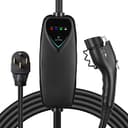
Lectron 40A Portable Level 1/2 Charger

Lectron 40A Portable Level 1/2 Charger

The best all-round portable: a real 40A / 9.6 kW Level 2 charger on a NEMA 14-50 plug, with a Level 1 adapter for a standard outlet. For many people this is all the home charger they need, and it comes with you on trips.

The outlet route: what plugs into it
$269.99 · View on Amazon

Price as of September 2, 2026. #ad How we’re funded

The picks in full

#1The wall-connector route

Tesla Wall Connector

Tesla's own home charger, and the tidiest thing you can bolt to the wall of a Tesla-only garage: a native NACS handle, 48A output and scheduling from the app you already have open for the car. The handle fits nothing else without an adapter, and it is hardwired only, so it earns its premium in one specific household rather than in general.

Strengths

  • Native NACS handle — a Tesla plugs straight in with nothing hanging off the connector
  • Up to 48A / 11.5 kW with a published 24 ft cable
  • Wi-Fi, over-the-air updates and load management, managed from the Tesla app

Trade-offs

  • Hardwired only — Tesla's manual does not permit a cord-and-plug install, so the electrician is part of the purchase
  • A J1772 car needs a separate adapter; the Universal version with one built in is not currently sold on Amazon
  • Typically the most expensive route to 48A at home
ConnectorNACS (Tesla)
Max output48 A
Max power11.5 kW
Cable length24 ft
InstallHardwired (60A circuit for full output)
Outdoor ratingIndoor/outdoor rated
Warranty4 years (residential)

Spec note. The listing publishes Level 2, up to 48A and a 24 ft cable. Tesla's own support material adds the rest: hardwired only — cord-and-plug connection is not permitted — a double-pole 60A breaker for full output, approval for indoor or outdoor installation, Wi-Fi, and a 48-month residential warranty. This is the NACS-handle unit, distinct from the Universal Wall Connector, which has a J1772 adapter built into the handle and is not currently listed on Amazon.

Specs read from the product listing, on August 22, 2026. “Not published” means the manufacturer does not state that figure.

#2The outlet route: the receptacle

Leviton 1450R Heavy-Duty EV Receptacle (NEMA 14-50)

If you're plugging a charger into a NEMA 14-50 outlet, buy the industrial-grade receptacle, not the $10 hardware-store one. Continuous 40A EV loads have melted cheap outlets built for ovens that only cycle — this is the one that won't.

Strengths

  • Industrial-grade contacts built for continuous, not cyclic, load
  • Dramatically lower failure risk than a bargain receptacle
  • The single cheapest safety upgrade on a plug-in install

Trade-offs

  • Costs several times a basic receptacle — worth every dollar
  • Still must be installed on a correctly sized circuit by an electrician
ConnectorNEMA 14-50
Max output50 A
Max powerNot published
Cable lengthNot published
InstallHardwired receptacle
Outdoor ratingNot published
WarrantyNot published

Spec note. A NEMA 14-50 outlet on a 50A breaker supports a charger drawing up to 40A continuous (the 80% continuous-load rule). Cheap 'residential' 14-50 outlets are a known melting hazard under sustained EV load; industrial-spec receptacles are the fix.

Specs read from the product listing, on July 19, 2026. “Not published” means the manufacturer does not state that figure.

#3The outlet route: what plugs into it

Lectron 40A Portable Level 1/2 Charger

The best all-round portable: a real 40A / 9.6 kW Level 2 charger on a NEMA 14-50 plug, with a Level 1 adapter for a standard outlet. For many people this is all the home charger they need, and it comes with you on trips.

Strengths

  • True 40A Level 2 on a 14-50 outlet — same overnight speed as a wall unit
  • Includes a 120V adapter to fall back to any standard outlet
  • Packs in the trunk for road trips and destination charging

Trade-offs

  • Needs a 14-50 outlet installed to hit full speed at home
  • No wall bracket or scheduling — it's a cable, not a smart charger
ConnectorJ1772
Max output40 A
Max power9.6 kW
Cable length21 ft
InstallPlug-in (NEMA 14-50 + 5-15 adapter)
Outdoor ratingIP66 connector
Warranty1 year

Spec note. Adjustable amperage on some units lets you dial it down for a weaker outlet. On a standard 120V outlet it drops to Level 1 speed (a few miles of range per hour), which is the physics of the outlet, not the charger.

Specs read from the product listing, on July 19, 2026. “Not published” means the manufacturer does not state that figure.

Cost: closer than people expect, in both directions

The assumption is that the outlet route is obviously cheaper because an outlet costs less than a charger. That is true of the parts and frequently untrue of the job.

In both routes the expensive item is identical: the circuit. Wire sized for the load, conduit, a breaker, and labor to run it from the panel to wherever the car parks. That is most of the bill either way, and it is set by the distance and the difficulty of the run, not by what sits at the end of it. Our installation cost guide breaks the quote into its four real drivers.

What differs at the end of that run:

  • Wall connector: the charger, plus hardwire termination. No receptacle to buy. The charger price is the visible difference.
  • NEMA 14-50:a receptacle plus termination, and then a portable charger — unless your car came with a capable cordset, in which case that line is zero. This is where the route genuinely wins.

So the honest cost answer: if you already own a capable 240V-ready mobile charger, the outlet route is meaningfully cheaper. If you would be buying a portable anyway, the two routes converge and you should decide on the other criteria instead.

The safety line that erases the saving

One thing must not be economized on. A NEMA 14-50 receptacle intended for a range or an RV is built for a cyclicload — something that draws hard briefly and stops. EV charging is a continuous load, hours at a time, and inexpensive receptacles are a known failure point under it: overheating, discolored contacts, and in the worst cases melting.

Buy an industrial-grade receptacle. It costs several times a bargain one and it is the cheapest safety upgrade in the entire install — the second pick above is ours, and our NEMA 14-50 outlet roundup covers the field. If you would not spend that, the wall connector route removes the receptacle as a failure point entirely, and that is a legitimate reason to choose it.

Speed: a real ceiling, and one you probably will not hit

The technical constraint is straightforward. Under the 80% continuous-load rule a NEMA 14-50 receptacle on a 50A circuit permits a charger drawing up to 40A, or roughly 9.6 kW. A hardwired install can go higher — a 48A charger on a 60A circuit delivers roughly 11.5 kW.

In range terms the gap is about eight miles per hour of charging. Across a ten-hour night: roughly 300 miles replenished versus roughly 380. Both are “full by morning” for the overwhelming majority of drivers, which is why we think speed is the wrong reason to choose the hardwired route for most people.

It becomes the right reason in one specific case: a large battery that regularly arrives near empty and departs early. And even then, check your car’s onboard AC charger ratingfirst — if it caps below 11.5 kW, the hardwired advantage is unreachable regardless of the circuit. Our amps and circuits guide has the breaker table and the arithmetic.

Flexibility: the outlet route’s strongest argument

This is the criterion that decides it for more households than speed does, and it gets discussed least.

  • It moves. A plugged-in charger comes off the wall and into the car in two minutes. A hardwired station stays with the house. If you might move within a few years, that is a real difference in what you actually own.
  • It travels.The same portable that charges at home works at a rental, a relative’s house or a campsite with the right outlet. Our road-trip guide covers what that unlocks, and our NEMA adapter guide covers reaching dryer and welder outlets safely.
  • It fails gracefully. A dead plug-in charger is replaced by unplugging it and plugging in another. A dead hardwired charger is an electrician appointment.
  • The outlet is useful on its own. A NEMA 14-50 serves an RV, a welder, a future charger of any brand. It is infrastructure rather than a product choice.

Against all that, the wall connector route offers: a tidier wall, no receptacle to fail, higher output if you can use it, and a cable that is properly managed rather than a portable hung on a bracket. Those are genuine advantages, not consolation prizes.

The Tesla-specific part

If a Tesla is the car, one detail tips the wall-connector side further than usual. The Tesla Wall Connector carries a native NACS handle, so the car plugs straight in with nothing hanging off the connector. No outlet-and-portable combination matches that, because a portable J1772 unit charging a Tesla always has an adapter on the end. Our full review covers it, and our J1772-to-Tesla adapter roundup covers the alternative if you go the outlet way.

The reverse caveat matters too: that handle fits nothing but a NACS car. Tesla’s Universal Wall Connector has a J1772 adapter built in, but it is not currently listed on Amazon, so a mixed-brand household is choosing between a NACS charger plus an adapter and a J1772 charger plus the adapter the Tesla came with.

Note also that this is a hardwired-onlyunit wanting a 60A circuit for full output. If your panel cannot spare that, the comparison is settled for you and the outlet route is the answer — our load management guide covers the alternatives if the panel is the obstacle.

How to decide, in four lines

  • Already own a 240V-capable mobile charger? Install the outlet. You are one industrial-grade receptacle away from being finished.
  • Might move in the next few years? Install the outlet. Take the charger with you.
  • Large battery, low arrivals, early departures, and a panel that can feed 60A? Hardwire the wall connector.
  • Mixed Tesla and non-Tesla household?Install the outlet and use a J1772 portable — one adapter, supplied with the Tesla, covers the gap in the cheapest direction.

And if you are still weighing plug-in against hardwired in general terms rather than for these specific products, our plug-in vs hardwired guide is the brand-neutral version of this argument.
Frequently asked questions

Is a NEMA 14-50 outlet cheaper than a Tesla Wall Connector?

The parts are, but the job usually is not by as much as expected — the circuit run is most of the bill either way. The outlet route is genuinely cheaper if you already own a 240V-capable mobile charger. If you would be buying a portable charger anyway, the two routes cost similar amounts and you should decide on flexibility and output instead.

How fast can you charge from a NEMA 14-50?

Up to 40A, or roughly 9.6 kW, because the 80% continuous-load rule caps a 50A circuit at 40A of continuous draw. That is around 300 miles of range replenished across a ten-hour night — full by morning for almost everyone. A hardwired 48A install delivers roughly 11.5 kW.

Can I use any NEMA 14-50 outlet for EV charging?

Electrically yes, safely no. Inexpensive receptacles built for ranges and RVs handle cyclic loads, not the continuous hours-long draw of EV charging, and they are a known overheating and melting risk. Buy an industrial-grade receptacle — it is the cheapest safety upgrade in the whole install.

Does the Tesla Wall Connector have to be hardwired?

Yes. Tesla's manual does not permit a cord-and-plug connection, and full output wants a 60A circuit under the 80% rule. If your panel cannot spare a 60A branch, that settles the comparison in favor of the outlet route — or of a load-managed charger, which our load management guide covers.

Can I install a NEMA 14-50 outlet myself?

No. A 50A 240V branch circuit is licensed electrician work, and it must be inspected where your jurisdiction requires it. What you can do yourself afterwards is plug a portable charger into the finished outlet — that part is genuinely plug-and-play.

Sources

Keep reading