Tesla Wall Connector vs Grizzl-E Classic
A connected wall station against a deliberately dumb cast-aluminum box — the honest case for each, and the install cost that usually settles it.
These two get cross-shopped by people who have narrowed the field to “a proper wall charger” and are now deciding how much charger that means. They answer the question completely differently.
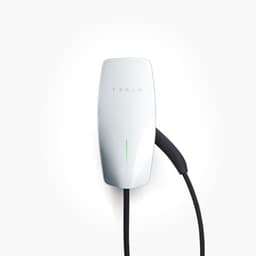
The Tesla Wall Connector is a connected station with a native NACS handle, hardwired, sold on Amazon and direct by Tesla. The Grizzl-E Classicis a fixed-amperage cast-aluminum box with a J1772 handle, an outdoor-rated housing, and—deliberately—no app, no account and no network at all.
The short answer: buy the Tesla if every car in the household is a Tesla and you want the factory handle and the factory app. Buy the Grizzl-E if you drive a J1772 car and want the fewest possible things that can fail, at the lowest install cost.
How this is funded: we earn a commission if you buy through our links, at no extra cost to you. It never changes which product we recommend, and we’ll tell you plainly when we’d skip one. Full disclosure.
Availability note — 5 September 2026
The Grizzl-E Classic is no longer sold on Amazon. A live check on this date returned no offer, and a brand-wide search found no Classic listing under any other product number, so the price cell below reads “Check price” rather than a figure. This is an Amazon change, not a discontinuation — United Chargers still lists the Classic 40A on its own store, and everything the comparison below says about the hardware still holds. If you want this charger from Amazon, the current model is the Grizzl-E Classic Connect 40A: the same metal box with 16–40A adjustment and a NACS option, but with Wi-Fi you cannot switch off — which changes the “nothing to fail” argument this page makes for the Classic.
 Tesla Wall Connector Tesla Wall Connector |  Grizzl-E Classic Grizzl-E Classic | |
|---|---|---|
| Connector | NACS (Tesla) | J1772 |
| Max output | 48 A | 40 A |
| Max power | 11.5 kW | 9.6 kW |
| Cable length | 24 ft | 24 ft |
| Install | Hardwired (60A circuit for full output) | Plug-in (NEMA 14-50) or hardwired |
| Outdoor rating | Indoor/outdoor rated | NEMA 4 (outdoor) |
| Warranty | 4 years (residential) | 3 years |
| Price | $883.99 · View on Amazon Price as of October 18, 2026. #ad How we’re funded |
The connector is the first fork, and it is decisive
Everything else on this page is a preference. This one is closer to a requirement.
The Tesla unit carries a native NACS handle. It plugs straight into a Tesla with nothing dangling off the connector, which is the nicest version of this to live with day to day. It also fits nothing else: a J1772 car needs a NACS-to-J1772 adapter that Tesla does not supply, so in a mixed-brand garage the Tesla unit is the one that needs the extra part.
Tesla’s Universal Wall Connector — the version with a J1772 adapter built into the handle — would remove that caveat, at a higher price and with the same hardwired install.
The Grizzl-E carries a plain J1772 handle. For a J1772 car, perfect. For a Tesla, it works with the adapter every Tesla ships with, and thousands of owners charge exactly that way every night — but you now have a small expensive part hanging off the connector, outdoors, that you can drop or lose. Our J1772-to-Tesla adapter roundup covers the better ones if that is your route.
Install: this is where the money actually is
The Tesla unit is hardwired. The Grizzl-E can be plug-in on a NEMA 14-50 or hardwired, at the same 40A output either way.
That difference cascades further than the spec sheet suggests. A plug-in install means the electrician fits a receptacle on a 50A circuit — a commodity job — and you hang the charger yourself. It also means the charger comes off the wall when you move, and swaps out in five minutes if it ever fails. A hardwired install ties the charger to the house and requires the electrician for any future change. Our plug-in vs hardwired guide works through the whole trade.
There is a second-order cost too. The Tesla’s higher output wants a 60A circuitunder the 80% continuous-load rule; the Grizzl-E’s 40A wants 50A. Sixty amps is where panels start running out of room and where a service upgrade enters the conversation — frequently a larger number than the price difference between these two chargers. Get a load calculation before you decide this on the product page. Our amps and circuits guide has the breaker table.
Output: 48A versus 40A, and whether you will notice
Roughly 11.5 kW against roughly 9.6 kW. In range terms that is somewhere near eight miles per hour of charging — across a ten-hour night, the difference between about 380 miles and about 300 miles of replenishment.
Both of those numbers are “full by morning” for almost everyone. The gap only becomes real if you have a large battery and routinely arrive home near empty andleave early. And a third ceiling sits above both: your car’s onboard AC charger. If it is rated below 11.5 kW, the Tesla’s extra amps are unreachable no matter what the circuit can do. Check that figure in your owner’s manual before paying for output. Our 40A roundup argues the case for stopping at 40A in full.
Connectivity: a genuine philosophical split
The Tesla unit is a connected device with Wi-Fi and app integration. The Grizzl-E has no connectivity by design — the Classic has no account, no app and no firmware to update.
Both positions are defensible and we will not pretend otherwise. Connectivity earns its place when you have time-of-use electricity rates and want scheduling, or want energy data. It costs you when the app changes, the account has an outage, or a firmware update lands badly — failure modes a passive box simply does not have.
The honest tiebreaker: most modern EVs can schedule charging themselves, from the car, using the car’s own clock. If yours can, the single most-cited reason to buy a smart charger evaporates. Our smart charger roundup sets out the test for whether connectivity is worth paying for on your particular setup.
Enclosure and cold weather
Both are rated for outdoor use; check the published ratings in the table above rather than trusting a marketing phrase. The Grizzl-E’s specific reputation is the cast-aluminum housing, which is unusually robust for the money, and a cold-weather cable variant that is a genuine differentiator in a northern garage — stiff cable jackets are the thing owners actually complain about in January.
Whichever you buy, the real outdoor enemy is UV rather than water. Our covers and enclosures guide explains why, and our cold-weather guide covers what else changes below freezing.
Buying and support
One practical asymmetry worth naming: the Tesla unit is sold both direct from Teslaand through retail, so stock and pricing can differ between the two on any given day. The Grizzl-E Classic is now the opposite case: as of 5 September 2026 it is no longer carried on Amazon, so United Chargers’ own store is where you buy it, with that store’s return policy rather than a marketplace one. If you want the Grizzl-E hardware from Amazon, that means the Classic Connect instead. Check both routes before you commit.
If your car is not a Tesla, the more useful fight is the Grizzl-E against the other brand we recommend most often: our Emporia versus Grizzl-E comparison puts 48A hardwired charging with panel-aware load management up against this same 40A plug-in metal box, and the panel question decides it rather than the badge.
The verdict
Buy the Tesla Wall Connector if every car in the household is a Tesla and you have or can get a 60A circuit. The native handle, the load management and the app you already use for the car are what the premium buys, and in a Tesla-only garage they are worth having.
Buy the Grizzl-E Classicif you drive a J1772 car, want the cheapest sound install, and would rather own a piece of hardware than a connected device. It is the pick for the owner whose ideal charger is one they never think about again — buy it direct from United Chargers, since Amazon no longer lists it.
If neither quite fits, our main home charger roundup covers the wider field with the same criteria applied.
Frequently asked questions
Can the Grizzl-E charge a Tesla?
Yes, using the J1772 adapter that ships with every Tesla. It charges at the same rate as any other 40A J1772 charger would. The trade-off is a small removable adapter permanently attached to the connector outdoors, which you can drop or lose — the Tesla unit's native NACS handle avoids that.
Can the Tesla Wall Connector charge a non-Tesla EV?
Not on its own. The handle is NACS only, so a J1772 car needs a NACS-to-J1772 adapter, which is not in the box. Tesla's Universal Wall Connector has one built into the handle, at a higher price — in a mixed-brand garage the Grizzl-E's J1772 handle is the simpler answer.
Which is cheaper to install?
The Grizzl-E, usually by a meaningful margin. It can run plug-in on a NEMA 14-50 receptacle fed by a 50A circuit, which is an ordinary electrical job. The Tesla unit is hardwired and wants a 60A circuit for full output, and 60A is where panels start running out of spare capacity.
Is 48A meaningfully faster than 40A?
About eight miles of range per hour, or roughly 80 miles across a ten-hour night. That matters only if you have a large battery, arrive home near empty and leave early. It also requires your car's onboard AC charger to accept that much — many cap lower, in which case the extra amps do nothing at all.
Does the Grizzl-E's lack of an app matter?
Only if you need what the app provides. Scheduling to off-peak rates is the usual reason, and most modern EVs can schedule charging themselves from the car — which makes charger connectivity redundant for that purpose. Energy monitoring and load management are the features a car cannot replicate.
Sources
- U.S. DOE Alternative Fuels Data Center — Charging Electric Vehicles at Home — DOE guidance on Level 1 vs Level 2 home charging, 120V/240V service and installation (accessed July 19, 2026)
- EPA ENERGY STAR — Electric Vehicle Chargers — ENERGY STAR on certified EV chargers, safety certification and standby energy use (accessed July 19, 2026)
- SAE International — J3400 North American Charging System (NACS) for Electric Vehicles — The SAE standard for the NACS connector (Tesla's plug), alongside the J1772 AC standard (accessed July 19, 2026)
- U.S. DOE Alternative Fuels Data Center — Electric Vehicle Charging Stations — DOE overview of charging levels, power output and connector types (J1772, CCS, NACS) (accessed July 19, 2026)
Keep reading
Grizzl-E Classic review
The full review of the unit on the right — why a rugged fixed-amperage box suits most single-EV homes.
Read the Grizzl-E reviewTesla Wall Connector review
The full review of the unit on the left — the NACS handle, the hardwired install and the circuit it assumes.
Read the Tesla reviewTesla Wall Connector vs Emporia
The same Tesla unit against the mid-range charger that starts on a plug and converts later.
See that comparisonNEMA 14-50 vs hardwired
Plug-in flexibility against hardwired output — the trade that decides this comparison for most people.
Read the install guide