Amp & Adapter

Best EV Charger Covers & Outdoor Enclosures

What actually threatens a charger on an exterior wall — UV, not rain — and the covers and lockable boxes that answer it at four very different prices.

By Stephen V.Last updated How we rank

Start with the question most listings would rather you did not ask: do you need one of these at all?

If your charger publishes a NEMA 3R, NEMA 4 or IP65-and-above rating, it is already engineered to live outdoors in the rain. Buying a cover to keep the rain off a weatherproof charger is solving a problem the manufacturer solved. Our outdoor charger roundup decodes those ratings.

There are, however, three genuine reasons to add a cover or an enclosure, and none of them is rain:

  1. UV.This is the real one. Sunlight degrades plastics and rubber over years — housings chalk and go brittle, cable jackets harden and crack. A charger’s NEMA rating says nothing about ultraviolet exposure, and on a south-facing wall UV will age a charger long before water ever bothers it. A $20 fabric cover is a real answer to a real problem.
  2. Security. A charger on a street-facing wall or an unfenced driveway is an item of value that anyone can reach. A lockable enclosure is the only thing on this page that addresses that.
  3. Impact and grit. Reversing, wheelbarrows, strimmers, blown debris. A hard box protects against knocks that no ingress rating covers.

We ranked these four by what they actually protect against per dollar, and we say plainly where the expensive ones stop earning their money. Everything is read from published listings on the date shown under each pick; unpublished figures read “Not published”.

How this is funded: we earn a commission if you buy through our links, at no extra cost to you. It never changes which product we recommend, and we’ll tell you plainly when we’d skip one. Full disclosure.

Quick picks

Ranked on published specs, install flexibility and buyer fit. Select a row to jump to the full write-up. We have not bench-tested these units — here is exactly what we do instead.

#ProductBest forPrice
1
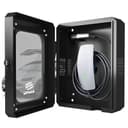
Ufixed Outdoor Charger Enclosure with Lock

Ufixed Outdoor Charger Enclosure with Lock

The one to buy if the charger is on a street-facing wall. It is the cheapest enclosure here that publishes an actual lock, and a lock is the entire reason to choose a hard box over a fabric cover.

Best overall — the lockable one
$109.99 · View on Amazon

Price as of September 2, 2026. #ad How we’re funded

2
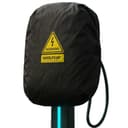
WOLFCAR EV Charger Cover (4-Layer, Large)

WOLFCAR EV Charger Cover (4-Layer, Large)

The cheap answer to sun and driving rain on an exterior wall. A soft cover is not an enclosure and will not stop anyone taking the charger, but UV is what actually kills outdoor plastics, and this costs less than a tank of anything.

Best value UV protection
$16.99 · View on Amazon

$18.197% off

Price as of September 2, 2026. #ad How we’re funded

3
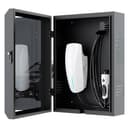
PROHIKER Wall Charger Station Box

PROHIKER Wall Charger Station Box

The middle option: a real hard box at roughly a third of what the big enclosures cost, with cable management built in. If the goal is keeping weather and casual hands off the charger without a $150 spend, this is the sensible bracket.

Best hard box for the money
$59.99 · View on Amazon

Price as of September 2, 2026. #ad How we’re funded

4
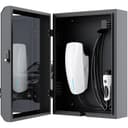
NOTASA Outdoor Charger Enclosure (Black)

NOTASA Outdoor Charger Enclosure (Black)

The premium bracket, and honestly a hard one to justify on specs alone — the listing publishes very little beyond the finish. Buy it if the charger is on a wall you look at every day and the enclosure needs to be furniture rather than a box.

Best-looking, if appearance matters
$149.99 · View on Amazon

$159.996% off

Price as of September 2, 2026. #ad How we’re funded

The picks in full

#1Best overall — the lockable one

Ufixed Outdoor Charger Enclosure with Lock

The one to buy if the charger is on a street-facing wall. It is the cheapest enclosure here that publishes an actual lock, and a lock is the entire reason to choose a hard box over a fabric cover.

Strengths

  • Publishes a lock — the only genuine security feature in this category
  • Weatherproof with a visible window, so you can read the charger's status light without opening it
  • Includes a holder, which keeps the connector docked inside the box

Trade-offs

  • Fitment is stated for Tesla Wall Connector and ChargePoint — check your charger's dimensions first
  • A lock deters opportunists; it is not a serious anti-theft device
  • No published warranty term
ConnectorNot published
Max outputNot published
Max powerNot published
Cable lengthNot published
InstallWall-mounted lockable enclosure
Outdoor ratingWeatherproof lockable box
WarrantyNot published

Spec note. The listing publishes an outdoor weatherproof wall box with a lock, a visible window and a connector holder, stated for Tesla Wall Connector and ChargePoint chargers. It does not publish interior dimensions or a warranty term.

Specs read from the product listing, on August 11, 2026. “Not published” means the manufacturer does not state that figure.

#2Best value UV protection

WOLFCAR EV Charger Cover (4-Layer, Large)

The cheap answer to sun and driving rain on an exterior wall. A soft cover is not an enclosure and will not stop anyone taking the charger, but UV is what actually kills outdoor plastics, and this costs less than a tank of anything.

Strengths

  • Published as four-layer, waterproof, windproof and UV-resistant
  • Buckle straps hold it on in wind, which the elastic-hem covers do not
  • Costs a fraction of a hard enclosure and fits chargers of different shapes

Trade-offs

  • Offers no security whatsoever — it is fabric
  • You must take it off to charge, so it suits a car that is parked out for long periods
  • No published warranty term or dimensions in the title beyond the size name
ConnectorNot published
Max outputNot published
Max powerNot published
Cable lengthNot published
InstallSlip-over cover with buckle straps
Outdoor ratingWaterproof fabric cover
WarrantyNot published

Spec note. The listing publishes four-layer waterproof and windproof construction, UV resistance, buckle straps and a Large size, stated for Tesla Wall Connector and Level 2 chargers. It does not publish exact dimensions or a warranty term. A cover is weather protection only, not a substitute for a charger's own NEMA rating.

Specs read from the product listing, on August 11, 2026. “Not published” means the manufacturer does not state that figure.

#3Best hard box for the money

PROHIKER Wall Charger Station Box

The middle option: a real hard box at roughly a third of what the big enclosures cost, with cable management built in. If the goal is keeping weather and casual hands off the charger without a $150 spend, this is the sensible bracket.

Strengths

  • A rigid box rather than fabric — it protects against knocks as well as weather
  • Published as waterproof and dustproof, with a cable organizer included
  • Stated for universal connectors, not just one brand's charger

Trade-offs

  • The listing does not publish a lock, so treat it as weather protection rather than security
  • No published interior dimensions — measure your charger before ordering
  • No published warranty term
ConnectorNot published
Max outputNot published
Max powerNot published
Cable lengthNot published
InstallWall-mounted enclosure
Outdoor ratingWaterproof / dustproof box
WarrantyNot published

Spec note. The listing publishes an outdoor waterproof and dustproof wall box with a cable organizer, stated for Tesla Wall Connector and universal connectors. It does not publish interior dimensions, a lock or a warranty term.

Specs read from the product listing, on August 11, 2026. “Not published” means the manufacturer does not state that figure.

#4Best-looking, if appearance matters

NOTASA Outdoor Charger Enclosure (Black)

The premium bracket, and honestly a hard one to justify on specs alone — the listing publishes very little beyond the finish. Buy it if the charger is on a wall you look at every day and the enclosure needs to be furniture rather than a box.

Strengths

  • A finished, purpose-designed enclosure rather than a generic utility box
  • Sold in matching black and silver-gray finishes for different wall colors
  • Currently in stock with a real price, which several enclosures in this bracket are not

Trade-offs

  • The listing publishes almost no specifications — no dimensions, no lock, no material
  • Costs roughly eight times a fabric cover for protection that is not eight times better
  • No published warranty term
ConnectorNot published
Max outputNot published
Max powerNot published
Cable lengthNot published
InstallWall-mounted enclosure
Outdoor ratingOutdoor enclosure
WarrantyNot published

Spec note. The listing publishes an outdoor wall EV charger enclosure in black. It does not publish dimensions, material, a lock, an ingress rating or a warranty term — an unusually thin spec sheet for the price, which is why it ranks where it does here.

Specs read from the product listing, on August 11, 2026. “Not published” means the manufacturer does not state that figure.

Covers versus enclosures: two different products

These get sold together and do entirely different jobs.

A cover is fabric. It slips over the charger when it is not in use and comes off when you charge. It is excellent against UV, adequate against rain and dust, and worth nothing against theft or a reversing car. It costs around $20 and, for the majority of outdoor installs, it is the correct purchase.

An enclosureis a rigid box the charger lives inside permanently, with cable entry ports so you can charge without opening it. It protects against weather, impact and — if it locks — casual theft. It costs from around $60 to $150, and it needs to physically fit your charger, which is where most of the buying difficulty lies.

The decision is straightforward. Buy a cover if the concern is sun and general weather on a charger nobody can reach. Buy an enclosure if the charger is somewhere the public can walk up to, or where it will take knocks.

Why UV is the threat, not water

This is the part worth internalizing, because it inverts most people’s instincts.

An outdoor-rated charger has been tested against water ingress. That is what the NEMA and IP numbers mean, and manufacturers do not get those ratings by accident. Rain, sleet, snow, even hose spray on the higher ratings — all handled by design.

Ultraviolet is different. It is not in the ingress rating at all, and its damage is cumulative and invisible until it is not. Polymer housings chalk, discolor and lose impact strength. Rubber gaskets harden, which eventually compromises the water sealing the rating was based on. Cable jackets stiffen — and a stiff cable is a cable that cracks when you coil it, particularly in the cold.

That last point connects to something we cover in our cold weather guide: cable flexibility falls sharply below freezing, and a UV-aged jacket starts from a worse place. Keeping sun off the cable is one of the cheapest life-extension measures available on the whole install.

So: if your charger faces south or west and gets direct sun for hours, a cover is worth $20 regardless of how good its ingress rating is.

How we ranked these four

The Ufixed leads because it locks.Every other product here protects the charger from the weather; only this one protects it from people. It also publishes a visible window — so you can read the charger’s status light without opening the box — and includes a holder to dock the connector inside. If the charger is on a driveway that faces a street, this is the buy, and the price is reasonable for what it is. Check your charger’s dimensions against the listing first; fitment is stated for Tesla Wall Connector and ChargePoint units.

The WOLFCAR cover is the value answer, and probably the right purchase for more readers than the enclosures are. Four-layer, waterproof, windproof, UV-resistant, with buckle straps that keep it on in wind — which is the specification that separates a cover you keep using from one that ends up in the bin after a storm. It offers no security at all, and you take it off to charge, so it suits a car that is parked out for long stretches rather than one plugged in nightly.

The PROHIKER is the sensible middle.A genuine rigid box at roughly a third of what the premium enclosures cost, with cable management included and universal-connector fitment. The listing does not publish a lock, so treat it as weather-and-impact protection rather than security. It also does not publish interior dimensions — measure your charger before ordering.

The NOTASA is the appearance pick, and we will be honest about it. It is a finished, purpose-designed enclosure sold in black and silver-gray, and it costs roughly eight times what the fabric cover does for protection that is not eight times better. Its listing publishes remarkably little — no dimensions, no lock, no material, no ingress rating. If the charger is on a front-of-house wall you look at every day and it needs to read as furniture rather than as a utility box, that is a legitimate reason to buy it. As a protection purchase, the other three are better value.

Before you buy an enclosure: measure

This is where most returns come from. Enclosure listings state compatibility by brand name — “fits Tesla Wall Connector, ChargePoint, Grizzl-E” — but chargers vary in depth, in where the cable exits, and in how much clearance the connector needs when docked.

Measure four things before ordering:

  • Charger height, width and depth, including any mounting bracket standing it off the wall.
  • Where the cable exits and which side the entry port needs to be on.
  • Whether the connector docks inside the box or hangs outside. A connector docked inside needs the box to be considerably taller.
  • Wall clearancearound the mount — doorframes, gutters, light fittings, and enough room for the box to open.

One more thing worth checking: ventilation. Chargers dissipate heat, more so at 48A than at 40A. An enclosure that seals tightly around a hard-working charger can raise its operating temperature. Enclosures designed for the job account for this with entry ports and airflow gaps, which is a reason to buy one sold for EV chargers rather than repurposing a generic utility box. If your charger runs at high output, our 48A roundup covers which units those are.

What a cover does not fix

It does not upgrade an indoor charger.If your charger publishes no outdoor rating — and several budget units do not, including some on our budget roundup— a fabric cover does not make it outdoor-safe. The rating covers the enclosure, the terminals, the seals and the internal creepage distances. A cover you remove to charge is protection precisely when the charger is not working. Buy an outdoor-rated charger for an outdoor wall.

It does not protect the connector. The single most vulnerable part of the whole setup is the connector head, and it is usually outside the cover, docked or hanging. A holster keeps it off the ground and out of standing water, and a hook keeps the cable off cold concrete. Between them they cost less than any enclosure here and prevent the failure that actually happens most.

It does not substitute for a good install.A charger mounted under an eave, out of the sun and rain, needs far less protection than one on an exposed wall — and mounting position is free at install time. If you have not fitted the charger yet, our installation guide covers siting it well.

Frequently asked questions

Do I need a cover if my EV charger is already outdoor-rated?

Not for rain — the rating covers that. You might for UV, which is not part of any NEMA or IP rating and which degrades plastics and cable jackets over years. On a south or west-facing wall in direct sun, a $20 cover is worthwhile regardless of the charger's ingress rating.

Can a cover make an indoor charger safe outdoors?

No. An outdoor rating covers the enclosure, terminals, seals and internal clearances, and a fabric cover changes none of that — and you remove it to charge, so the protection is absent exactly when the charger is working. If the charger is going outside, buy one with a published outdoor rating.

What size enclosure do I need?

Measure your charger's height, width and depth including its mounting bracket, note which side the cable exits, decide whether the connector docks inside the box, and check the wall clearance around the mount. Enclosure listings state fitment by brand name, but chargers vary enough that measuring is the only reliable approach.

Will an enclosure make my charger overheat?

It can if it seals tightly and your charger works hard — chargers dissipate heat, more at 48A than 40A. Enclosures designed for EV chargers account for this with cable entry ports and airflow gaps, which is a reason to buy one sold for the purpose rather than repurposing a generic utility box.

Does a lockable enclosure actually prevent theft?

It deters opportunists, which is most of what happens. It is not a serious anti-theft device and nobody should present it as one. Its real value is that it makes the charger a considered target rather than a convenient one, which for a street-facing driveway is worth the price.

Sources

Keep reading