Amp & Adapter

Is It Safe to Charge an EV in the Rain?

Yes. The connector is designed to be handled wet and the car will not energize the cable until it has confirmed a valid connection. The real risks are mundane ones, and they are about where the hardware sits rather than about water.

By Stephen V.Last updated How we rank

How this is funded: we earn a commission if you buy through our links, at no extra cost to you. It never changes which product we recommend, and we’ll tell you plainly when we’d skip one. Full disclosure.

Yes, and the design intent is not subtle: public chargers stand in open car parks in Seattle and Florida with no canopy over them, and they are handled by people with wet hands all day. Rain is a condition EV charging equipment is built for, not an exception to it. The things genuinely worth worrying about are where your charger is mounted, what rating it publishes, and where the connector sits when it is not plugged in.

Why the connection is safe before the water question arises

The reassuring part is not that the plastic is waterproof. It is that nothing is live until the system agrees it should be.

When you plug in, the charger and the car run a handshake over a dedicated pilot conductor before any power moves. The charger confirms the connector is fully seated and the ground path is intact; the car tells the charger how much current it will accept; only then do the high-current contacts energize. Unplug mid-session and the same pilot drops first, so the contacts de-energize before they separate.

On top of that, the charger carries its own ground-fault protection, continuously comparing the current going out against the current coming back. A leakage path — which is what water intrusion would create — is exactly what that circuit is watching for, and it opens in a fraction of a second. This is also why plug-in chargers have a reputation for nuisance tripping when an external GFCI breaker is stacked on top of the charger’s own protection: NEC 210.8(A) requires GFCI for 125- to 250-volt garage receptacles and NEC 625.54 requires it for receptacles installed for EV charging, and the two protection schemes can argue with each other. The arguing is a nuisance, not a danger.

Finally, the connector geometry. A mated J1772 or NACS connection is a sealed interface by shape: the contacts are recessed inside the housing and surrounded by the port’s collar, so water runs off the outside of a joint rather than standing in it. Our connector guide covers what each pin does.

What the rating on your charger actually promises

This is where an honest answer gets more specific than “it’s fine”. The connector and cable are built for weather on any decent charger. The box on the wall is a separate question, and manufacturers publish it.

  • NEMA 3R— protects against falling rain and sleet. The common rating on wall chargers approved for outdoor mounting, and sufficient for a sheltered exterior wall.
  • NEMA 4 / UL Type 4— adds protection against windblown dust and splashing or hose-directed water. The rating to want on an exposed wall or a carport post.
  • IP65 / IP66— the international equivalents. IP66 covers powerful water jets, which in practice means driving rain is a non-event.
  • “Weather-resistant” with no number— not a rating. Treat that charger as a garage unit. We say so explicitly on every product card where the maker does not publish a figure, rather than filling the gap.

Pick one below is rated UL Type 4 and published for operation from -30°C to +50°C, which is about as unambiguous as an outdoor claim gets. Our outdoor charger roundup is the full field ranked on exactly this, and the certification guideexplains how the enclosure rating relates to the safety listing — they are different claims.

The three things that actually go wrong

None of them is electrocution. All three are worth five minutes of attention.

1. The connector living on the ground

This is the real one. A connector dropped on a wet driveway between sessions collects grit, road salt and standing water in the recess around its contacts, and then gets pushed into your car’s port. Over a winter that is how port contacts corrode — not from rain falling on a connected cable.

The fix costs less than twenty dollars: a holster on the wall, which is pick three. Tesla publishes an operating range for its Mobile Connector down to -22°F, and that robustness is about the equipment, not about being dragged through slush. Our holster picks cover the options.

2. An unrated charger on an exposed wall

A garage-rated box bolted to the outside of the house will work for a while and then fail, usually at a seal or a cable gland. If that is already your situation, an enclosure is the cheap retrofit — pick two is a rigid box with cable management for a fraction of what replacing the charger costs. Our covers and enclosures page ranks the field.

3. The receptacle, if you are plugged in rather than hardwired

A NEMA 14-50 outdoors is the weakest point in an outdoor plug-in install, because it is a mechanical contact carrying a continuous 40-amp load in the weather. It needs a proper in-use (bubble) cover and an industrial-grade receptacle, not a $10 one — see NEMA 14-50 outlets. For an outdoor installation, hardwiring removes this failure point entirely, which is the single best argument for it; our plug-in versus hardwired guide makes the general case.

Lightning is a different question from rain

Worth separating, because the two get asked as one.

Rain is handled by the equipment. A lightning strike is a grid event: it can put a surge through your service that reaches anything connected to it, charger included. The honest answer is that this is an appliance-protection question rather than an EV question, and the same reasoning applies as to a television or a furnace control board. If storms where you live routinely trip breakers or kill electronics, unplugging during one is reasonable and whole-house surge protection is a conversation to have with your electrician.

What we would not do is treat it as a nightly ritual. The cost of not charging is a car you cannot drive in the morning, and the probability of a damaging strike on any given rainy night is very low.

Standing water is the one real stop

There is a line, and it is flooding rather than rain. Do not operate charging equipment that is submerged or standing in water, and do not plug in while standing in water yourself. If a storm has put water across the garage floor or over the base of a pedestal charger, leave it alone until it has drained and dried, and have it inspected if it was actually underwater.

Same answer for a damaged cable. A cut in the jacket, a cracked connector housing or exposed conductor is a stop-using-it condition in any weather, and rain makes it worse rather than creating it. Our troubleshooting guide covers what to check when a session will not start, which is the far more common outcome of a wet connector than anything dangerous.

Public charging in the rain

Same physics, slightly different etiquette. DC fast chargers run much higher voltages and currents, and they carry correspondingly heavier liquid-cooled cables and more interlocks — the handshake and isolation checks on the DC side are more involved than on AC, not less. Stations are specified to operate outdoors.

Two practical notes. Wipe the connector face before plugging in if it has been lying in rain, which keeps grit out of your port. And if a station’s cable or screen is visibly damaged, use a different stall and report it, rather than deciding the weather is the problem. Our public charging guide covers how the sessions work.

The short answer

Charge in the rain. The connector is designed to be handled wet, nothing is energized until the car and charger agree, and ground-fault protection watches the whole session. Buy a charger with a published enclosure rating if it lives outside, put the connector in a holster instead of on the ground, use a proper in-use cover and an industrial receptacle if you are plugged in, and stop only for standing water or visible damage.
Quick picks

Ranked on published specs, install flexibility and buyer fit. Select a row to jump to the full write-up. We have not bench-tested these units — here is exactly what we do instead.

#ProductBest forPrice
1
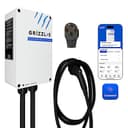
Grizzl-E Classic Connect 40A (J1772)

Grizzl-E Classic Connect 40A (J1772)

The Grizzl-E Classic with a radio in it: the same made-in-Canada metal box, the same UL Type 4 indoor/outdoor rating and the same 25 ft cable, now with Wi-Fi scheduling and 16–40A adjustment. The adjustment is the upgrade worth paying for, because it lets one charger fit whatever circuit your panel can actually spare. The connectivity is the part to think twice about — this line's reputation was built on having nothing to fail.

The charger rated for an outside wall
$349.99 · View on Amazon

Price as of October 10, 2026. #ad How we’re funded

2
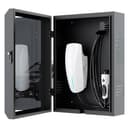
PROHIKER Wall Charger Station Box

PROHIKER Wall Charger Station Box

The middle option: a real hard box at roughly a third of what the big enclosures cost, with cable management built in. If the goal is keeping weather and casual hands off the charger without a $150 spend, this is the sensible bracket.

If the charger is already outside
$59.99 · View on Amazon

Price as of October 10, 2026. #ad How we’re funded

3
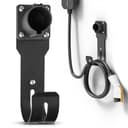
MECMO J1772 Holster & J-Hook Combo

MECMO J1772 Holster & J-Hook Combo

A holster and a cable J-hook in one, so the connector and the coiled cable both have a home on the wall. The tidier option if your cable is long and ends up in a heap on the garage floor.

Keeps the connector off the ground
$16.99 · View on Amazon

Price as of October 10, 2026. #ad How we’re funded

The three products, in full

#1The charger rated for an outside wall

Grizzl-E Classic Connect 40A (J1772)

The Grizzl-E Classic with a radio in it: the same made-in-Canada metal box, the same UL Type 4 indoor/outdoor rating and the same 25 ft cable, now with Wi-Fi scheduling and 16–40A adjustment. The adjustment is the upgrade worth paying for, because it lets one charger fit whatever circuit your panel can actually spare. The connectivity is the part to think twice about — this line's reputation was built on having nothing to fail.

Strengths

  • 16–40A adjustable output, so one unit fits a 20A, 30A, 40A or 50A circuit — the outgoing Classic was fixed at 40A
  • UL Type 4 indoor/outdoor rated metal enclosure, made in Canada, rated from -30°C to +50°C
  • 25 ft published cable, which is more reach than most wall chargers at any price
  • Plugs into a NEMA 14-50 outlet, so no hardwiring bill and it moves house with you
  • Wi-Fi (2.4 GHz) with scheduling, charging statistics, remote control and utility demand-response participation
  • 3-year warranty as standard, with a 5-year extension sold separately by the manufacturer

Trade-offs

  • Not in EPA's ENERGY STAR certified-EVSE database as of 2 September 2026, although the Classic it succeeds is — check before counting on a rebate that requires ENERGY STAR
  • Wi-Fi is not optional, on a product line whose whole appeal was that there was no app to fail
  • NEMA 14-50 only: the Classic also offered a NEMA 6-50 plug variant, and that option is gone
  • New for December 2025, so there is far less long-term owner feedback than the Classic has
  • United Chargers publishes “40A 10 kW” while the Amazon listing says 9.6 kW; 40A at 240V is 9.6 kW, so size the circuit off 40A, not off either kW figure
ConnectorJ1772
Max output40 A
Max power9.6 kW
Cable length25 ft
InstallPlug-in (NEMA 14-50)
Outdoor ratingUL Type 4 (indoor/outdoor)
Warranty3 years

Spec note. United Chargers publishes: AC Level 2, 40A adjustable down to 16A, NEMA 14-50 plug, J1772 or NACS output cable, 25 ft (7.6 m) cord, UL Type 4 indoor/outdoor rating, UL/cUL listing E510712, Wi-Fi 2.4 GHz with the Grizzl-E Connect app, a 3-year warranty, an operating range of -30°C to +50°C and a 10.25 × 6.25 × 3.75 in enclosure. Two caveats we checked rather than assumed. EPA's ENERGY STAR certified-EVSE database lists eight Grizzl-E models under United Chargers Inc. and the Classic Connect is not among them, so we do not repeat the ENERGY STAR claim that appears on one sibling listing. And ENERGY STAR records the outgoing Classic's cord at 24 ft against the same 25 ft marketing figure, so if reach is tight, plan around 24 ft.

Specs read from the product listing, on September 2, 2026. “Not published” means the manufacturer does not state that figure.

#2If the charger is already outside

PROHIKER Wall Charger Station Box

The middle option: a real hard box at roughly a third of what the big enclosures cost, with cable management built in. If the goal is keeping weather and casual hands off the charger without a $150 spend, this is the sensible bracket.

Strengths

  • A rigid box rather than fabric — it protects against knocks as well as weather
  • Published as waterproof and dustproof, with a cable organizer included
  • Stated for universal connectors, not just one brand's charger

Trade-offs

  • The listing does not publish a lock, so treat it as weather protection rather than security
  • No published interior dimensions — measure your charger before ordering
  • No published warranty term
ConnectorNot published
Max outputNot published
Max powerNot published
Cable lengthNot published
InstallWall-mounted enclosure
Outdoor ratingWaterproof / dustproof box
WarrantyNot published

Spec note. The listing publishes an outdoor waterproof and dustproof wall box with a cable organizer, stated for Tesla Wall Connector and universal connectors. It does not publish interior dimensions, a lock or a warranty term.

Specs read from the product listing, on August 11, 2026. “Not published” means the manufacturer does not state that figure.

#3Keeps the connector off the ground

MECMO J1772 Holster & J-Hook Combo

A holster and a cable J-hook in one, so the connector and the coiled cable both have a home on the wall. The tidier option if your cable is long and ends up in a heap on the garage floor.

Strengths

  • Combines a connector holster with a cable hook — two problems, one mount
  • Universal to the J1772 connector head
  • Keeps a long cable off the floor and out of the way

Trade-offs

  • Purely mechanical — no function beyond holding the plug and cable
  • Anchor into a stud; drywall anchors can pull out under a heavy cable
ConnectorJ1772
Max outputNot published
Max powerNot published
Cable lengthNot published
InstallWall-mounted dock + hook
Outdoor ratingNot published
WarrantyNot published

Spec note. A passive holder for the J1772 connector plus a hook for the cable; check it fits your charger's handle, as a few proprietary heads are oversized.

Specs read from the product listing, on July 19, 2026. “Not published” means the manufacturer does not state that figure.

General guidance, not electrical advice. Amp & Adapter is written by an EV-charging enthusiast, not a licensed electrician. Circuit sizing, breakers and hardwired installs must be done by a qualified electrician to local code — the figures here are for planning a purchase, not a wiring job.

Frequently asked questions

Is it safe to charge an electric car in the rain?

Yes. EV charging equipment is designed to be used outdoors and handled with wet hands — that is why public chargers stand in open car parks with no canopy. Before any current flows, the car and the charger exchange a pilot signal and confirm the connection is valid and properly grounded, and the charger's own ground-fault protection monitors the session throughout. Water on the outside of a mated connector is a condition the hardware is built for.

Can you charge an EV in heavy rain or a thunderstorm?

Heavy rain makes no difference to the connection — the mated connector is sealed by its own geometry and the equipment is rated for outdoor use. A thunderstorm is a different question, and it is about the grid rather than the water: a nearby strike can put a surge through the house wiring. If storms in your area routinely trip breakers or damage appliances, unplugging is a reasonable precaution, the same one you would take with any expensive appliance.

Can I charge my EV outside with no cover?

Yes, provided the charger itself is rated for it. Look for a published enclosure rating — NEMA 3R, NEMA 4 or IP65/IP66 — rather than the word 'weather-resistant' with no number. A charger with no published rating should be treated as a garage unit. The cable and connector on a quality charger are rated for outdoor use even where the box is not.

What happens if water gets into the charge port?

On a mated connection, very little: the pins are not energized until the handshake completes, and the port and connector are designed to shed water. The case worth avoiding is a connector left lying on wet ground or in a puddle between sessions, because that lets grit and standing water sit against contacts that then get plugged into your car. Dock the connector on a holster rather than leaving it on the floor.

Should I unplug my EV during a storm?

For the rain, no. For lightning, it is a judgment call about your local grid and your house's surge protection rather than about the car. The practical argument for unplugging is the same one that applies to a desktop computer or a television — a surge on the service can damage electronics. The practical argument against is that you wake up to an uncharged car.

Is it safe to plug in with wet hands?

Yes, and that is a deliberate design requirement for public charging. The connector's exposed surfaces are not live, and the contacts that carry current are recessed and only energized after the car has confirmed a valid, grounded connection. It is still worth drying the connector face if it is streaming with water, mostly to keep grit out of the port.

Sources

Keep reading