Amp & Adapter

Best Home EV Chargers for the Volkswagen ID.4

Volkswagen publishes one figure that settles the amperage question: the ID.4 charges at up to 11 kW. That is 46 amps, which sits just above what a 40A charger can give and exactly inside what a 48A one can.

By Stephen V.Last updated How we rank

Buy the EVIQO 48A and hardwire it. It is the cheapest charger here that delivers the full 11 kW the ID.4 can accept. Hardwired on a 60A circuit, it puts 11.5 kW at the car, which is more than Volkswagen’s published ceiling — so the car becomes the limit rather than your charger. If your panel cannot spare a 60A circuit, skip to the Emporia Pro at pick three; it manages the panel rather than demanding more of it.

The ID.4 is one of the easier vehicles to buy a charger for, because Volkswagen publishes the number that matters. Its own model page states AC charging of up to 11 kW with the available home wall charger, and that a completely empty battery takes up to 8 hours to fill on it. EPA range is published as 291 miles on the ID.4 Pro and Pro S, and 263 miles on the all-wheel-drive trims.

Turn 11 kW into amps at 240 volts and you get about 46 amps. That number is the whole page. A 40A charger delivers 9.6 kW, which is roughly 13% short. A 48A charger delivers 11.5 kW, so the car becomes the limit and you use everything Volkswagen says it will take. There is no 46A product category, which is why the answer here is 48.

We own no units and we do not bench-test chargers — here is exactly what we do instead. Every ID.4 figure below is quoted from Volkswagen’s own US model page, read on 5 October 2026, and every charger spec comes from the manufacturer’s published figures and the live listing.

How this is funded: we earn a commission if you buy through our links, at no extra cost to you. It never changes which product we recommend, and we’ll tell you plainly when we’d skip one. Full disclosure.

Quick picks

Ranked on published specs, install flexibility and buyer fit. Select a row to jump to the full write-up. We have not bench-tested these units — here is exactly what we do instead.

#ProductBest forPrice
1
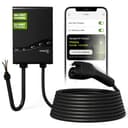
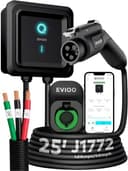
EVIQO Level 2 J1772 Charger (48A, Hardwired)

EVIQO Level 2 J1772 Charger (48A, Hardwired)

The step up for a panel that can genuinely feed a 60A circuit: 48A hardwired, at a price that undercuts the premium names by a wide margin. It is only the right buy if an electrician has already told you the circuit is available — otherwise you are paying for amps you cannot use.

Best overall at 48A
$449.99 · View on Amazon

$510.0012% off

Price as of October 5, 2026. #ad How we’re funded

2
Lectron Nexus Level 2 (48A, hardwired)

Lectron Nexus Level 2 (48A, hardwired)

The same box and the same certification set, hardwired at 48A for 11.5 kW. It is the right buy for a large-battery EV on a panel that can carry a 60A circuit — and the wrong buy for most people, who will pay for amps their car cannot draw and lose the ability to unplug and take it with them.

Best value at 48A
$429.99 · View on Amazon

Price as of October 5, 2026. #ad How we’re funded

3
Emporia Pro (48A, hardwired, J1772)

Emporia Pro (48A, hardwired, J1772)

Not a faster charger than the Emporia Classic — Emporia's own comparison puts both at 48A — but a charger you can install where 48A would not otherwise fit. The premium buys PowerSmart load management and the Vue 3 panel monitor it depends on, which throttles charging to whatever headroom your service has left. On a 100A panel that is the difference between charging fast and rewiring the house; on a roomy 200A panel it is a feature you are paying for and will not use.

Best when the panel is the constraint
$599.00 · View on Amazon

Price as of October 5, 2026. #ad How we’re funded

4
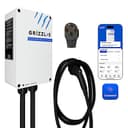
Grizzl-E Classic Connect 40A (J1772)

Grizzl-E Classic Connect 40A (J1772)

The Grizzl-E Classic with a radio in it: the same made-in-Canada metal box, the same UL Type 4 indoor/outdoor rating and the same 25 ft cable, now with Wi-Fi scheduling and 16–40A adjustment. The adjustment is the upgrade worth paying for, because it lets one charger fit whatever circuit your panel can actually spare. The connectivity is the part to think twice about — this line's reputation was built on having nothing to fail.

Best if you have a 14-50 outlet already
$349.99 · View on Amazon

Price as of October 5, 2026. #ad How we’re funded

5
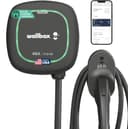
Wallbox Pulsar Plus

Wallbox Pulsar Plus

The compact one. It's the smallest 48A charger here by a wide margin, so it suits a tight garage wall or a design-conscious install — with power sharing if you end up charging two cars.

Best compact unit for a tight garage
$799.99 · View on Amazon

Price as of October 5, 2026. #ad How we’re funded

The picks in full

#1Best overall at 48A

EVIQO Level 2 J1772 Charger (48A, Hardwired)

The step up for a panel that can genuinely feed a 60A circuit: 48A hardwired, at a price that undercuts the premium names by a wide margin. It is only the right buy if an electrician has already told you the circuit is available — otherwise you are paying for amps you cannot use.

Strengths

  • 48A / 11.5 kW is near the top of what a house can deliver on AC
  • Hardwired install removes the receptacle as a failure point
  • Considerably cheaper than the premium 48A units it competes with

Trade-offs

  • Hardwired only — an electrician is mandatory and the charger stays with the house
  • 48A needs a 60A breaker that many older panels cannot spare
  • The listing does not publish a cable length, enclosure rating or warranty term
ConnectorJ1772
Max output48 A
Max power11.5 kW
Cable lengthNot published
InstallHardwired
Outdoor ratingNot published
WarrantyNot published

Spec note. The listing publishes 48A, 240V, a J1772 connector and a hardwired wall-mounted station. Cable length, enclosure rating and warranty are not stated in the title and read as not published. 48A requires a 60A circuit under the 80% continuous-load rule.

Specs read from the product listing, on August 11, 2026. “Not published” means the manufacturer does not state that figure.

#2Best value at 48A

Lectron Nexus Level 2 (48A, hardwired)

The same box and the same certification set, hardwired at 48A for 11.5 kW. It is the right buy for a large-battery EV on a panel that can carry a 60A circuit — and the wrong buy for most people, who will pay for amps their car cannot draw and lose the ability to unplug and take it with them.

Strengths

  • 48A / 11.5 kW for the minority of EVs whose onboard charger can actually accept it
  • Same certification set as the plug-in model: UL 2594, UL 2231, UL 2251, ETL listed, ENERGY STAR
  • Hardwiring removes the NEMA 14-50 receptacle, which is the part of a plug-in install that overheats
  • Same 23 ft cable and IP66 housing

Trade-offs

  • Hardwired only — there is no plug, so moving it later is an electrician's job
  • Needs a 60A dedicated circuit, which plenty of 100A panels cannot spare
  • Most EVs sold in the US cap AC charging below 48A, so the headroom is often unusable
  • Amazon stock on this variant read as a low remaining count when we checked, so availability may be patchy
ConnectorJ1772
Max output48 A
Max power11.5 kW
Cable length23 ft
InstallHardwired only
Outdoor ratingIP66 (indoor/outdoor)
Warranty3 years

Spec note. Lectron publishes 48A at 240V (11.5 kW), hardwired only, with the same 23 ft cable, IP66 housing, 3-year warranty and UL 2594 / UL 2231 / UL 2251 testing with ETL listing as the 40A model. EPA's ENERGY STAR certified-EVSE database carries it as LECHGNexusHWJ1772 at 48A / 11.52 kW, 8 AWG, network capability 'No', output cord 22 ft. A 48A continuous load requires a 60A circuit under the 80% rule.

Specs read from the product listing, on August 26, 2026. “Not published” means the manufacturer does not state that figure.

#3Best when the panel is the constraint

Emporia Pro (48A, hardwired, J1772)

Not a faster charger than the Emporia Classic — Emporia's own comparison puts both at 48A — but a charger you can install where 48A would not otherwise fit. The premium buys PowerSmart load management and the Vue 3 panel monitor it depends on, which throttles charging to whatever headroom your service has left. On a 100A panel that is the difference between charging fast and rewiring the house; on a roomy 200A panel it is a feature you are paying for and will not use.

Strengths

  • PowerSmart load management is bundled, not an upsell — the Vue 3 panel monitor it needs is in the box
  • 48A / 11.5 kW hardwired, or 40A on a NEMA 14-50 outlet, from the same unit
  • NEMA 4 rated for indoor or outdoor installation, with a 25 ft cable
  • Rear-entry hardwire option the Classic does not offer, which hides the conduit
  • Solar excess-charging and whole-home energy monitoring in the same app, with no subscription
  • 3-year warranty, and Emporia publishes UL Listed, NEMA rated and ENERGY STAR certification

Trade-offs

  • No faster than the cheaper Emporia Classic — both are 48A, so if you do not need load management you are paying for nothing
  • PowerSmart depends on the Vue 3 sending load data to Emporia's cloud, so the throttling that protects your panel is a connected service, not local hardware
  • The Vue 3 clamps onto your service mains, so an electrician still has to open the panel — 'no panel upgrade' does not mean 'no panel work'
  • Emporia's own “$3,000-$8,000 panel upgrade” saving is the manufacturer's marketing figure, not an independent estimate
  • Emporia does not publish the Pro's ENERGY STAR model number, which rebate forms usually ask for
ConnectorJ1772
Max output48 A
Max power11.5 kW
Cable length25 ft
InstallHardwired (48A); a NEMA 14-50 plug-in SKU runs at 40A
Outdoor ratingNEMA 4 (outdoor)
Warranty3 years

Spec note. Emporia publishes: up to 48A hardwired on a 60A circuit, up to 40A on a NEMA 14-50 outlet (50A circuit), a 25 ft cable, a NEMA 4 indoor/outdoor rating, a rear-entry hardwire option, a 3-year warranty, and UL Listed / NEMA Rated / ENERGY STAR Certified marks. Its own Classic-vs-Pro table lists BOTH models at up to 48A, 25 ft and 3 years — the Pro's differences are PowerSmart load management, the bundled Vue 3 energy monitor, solar and peak-demand features, the square case and rear entry. EPA's ENERGY STAR certified-EVSE database holds one Emporia Corp. family record (EMEVSE1, 48A, 25 ft output cord, 6 AWG, network capability 'Yes', qualified May 2022) covering fifteen further model numbers; Emporia does not publish which one the Pro carries, so confirm the model number with Emporia before filing a rebate that requires it.

Specs read from the product listing, on September 2, 2026. “Not published” means the manufacturer does not state that figure.

#4Best if you have a 14-50 outlet already

Grizzl-E Classic Connect 40A (J1772)

The Grizzl-E Classic with a radio in it: the same made-in-Canada metal box, the same UL Type 4 indoor/outdoor rating and the same 25 ft cable, now with Wi-Fi scheduling and 16–40A adjustment. The adjustment is the upgrade worth paying for, because it lets one charger fit whatever circuit your panel can actually spare. The connectivity is the part to think twice about — this line's reputation was built on having nothing to fail.

Strengths

  • 16–40A adjustable output, so one unit fits a 20A, 30A, 40A or 50A circuit — the outgoing Classic was fixed at 40A
  • UL Type 4 indoor/outdoor rated metal enclosure, made in Canada, rated from -30°C to +50°C
  • 25 ft published cable, which is more reach than most wall chargers at any price
  • Plugs into a NEMA 14-50 outlet, so no hardwiring bill and it moves house with you
  • Wi-Fi (2.4 GHz) with scheduling, charging statistics, remote control and utility demand-response participation
  • 3-year warranty as standard, with a 5-year extension sold separately by the manufacturer

Trade-offs

  • Not in EPA's ENERGY STAR certified-EVSE database as of 2 September 2026, although the Classic it succeeds is — check before counting on a rebate that requires ENERGY STAR
  • Wi-Fi is not optional, on a product line whose whole appeal was that there was no app to fail
  • NEMA 14-50 only: the Classic also offered a NEMA 6-50 plug variant, and that option is gone
  • New for December 2025, so there is far less long-term owner feedback than the Classic has
  • United Chargers publishes “40A 10 kW” while the Amazon listing says 9.6 kW; 40A at 240V is 9.6 kW, so size the circuit off 40A, not off either kW figure
ConnectorJ1772
Max output40 A
Max power9.6 kW
Cable length25 ft
InstallPlug-in (NEMA 14-50)
Outdoor ratingUL Type 4 (indoor/outdoor)
Warranty3 years

Spec note. United Chargers publishes: AC Level 2, 40A adjustable down to 16A, NEMA 14-50 plug, J1772 or NACS output cable, 25 ft (7.6 m) cord, UL Type 4 indoor/outdoor rating, UL/cUL listing E510712, Wi-Fi 2.4 GHz with the Grizzl-E Connect app, a 3-year warranty, an operating range of -30°C to +50°C and a 10.25 × 6.25 × 3.75 in enclosure. Two caveats we checked rather than assumed. EPA's ENERGY STAR certified-EVSE database lists eight Grizzl-E models under United Chargers Inc. and the Classic Connect is not among them, so we do not repeat the ENERGY STAR claim that appears on one sibling listing. And ENERGY STAR records the outgoing Classic's cord at 24 ft against the same 25 ft marketing figure, so if reach is tight, plan around 24 ft.

Specs read from the product listing, on September 2, 2026. “Not published” means the manufacturer does not state that figure.

#5Best compact unit for a tight garage

Wallbox Pulsar Plus

The compact one. It's the smallest 48A charger here by a wide margin, so it suits a tight garage wall or a design-conscious install — with power sharing if you end up charging two cars.

Strengths

  • Up to 48A / 11.5 kW in the smallest housing in its class
  • Power Boost and Power Sharing for multi-car or limited-panel homes
  • App scheduling and energy metering

Trade-offs

  • Hardwired only for the 48A version — no plug option at full output
  • The compact body runs the cable management tighter than a bigger box
ConnectorJ1772
Max output48 A
Max power11.5 kW
Cable length25 ft
InstallHardwired (48A) or plug-in (40A)
Outdoor ratingNEMA 3R (indoor/outdoor)
Warranty3 years

Spec note. The 40A plug-in variant exists, but the 48A model is hardwired on a 60A circuit. Power Sharing lets two Pulsar Plus units split one circuit — the cleanest answer to charging two EVs without a panel upgrade.

Specs read from the product listing, on July 19, 2026. “Not published” means the manufacturer does not state that figure.

Why 11 kW is the only ID.4 number you need

A car’s onboard chargeris the hardware inside it that converts the wall’s alternating current into something the battery can take. It is the hard ceiling on AC charging. No wall charger can push more than the car will accept, which is why the first question on any vehicle page should be what the car accepts rather than what the charger can give.

Volkswagen answers it directly: up to 11 kW. At 240 volts that is about 46 amps. Here is what each amperage on the market does against it:

  • 32A delivers 7.7 kW— about 30% of the car’s rate left unused. Workable overnight, wasteful as a deliberate choice.
  • 40A delivers 9.6 kW— roughly 13% short. The car can charge faster than your charger, which is the wrong way round.
  • 48A delivers 11.5 kW— more than the car takes, so the car is the limit and you get the full 11 kW. This is the right size.

Volkswagen’s own 8-hour figure is the sanity check. That is quoted against the 11 kW wall charger. Drop to 9.6 kW and the same empty-to-full charge stretches by something like an hour on our arithmetic from VW’s own numbers — invisible if the car sits from 11pm to 7am, and annoying if you need a quick evening turnaround before a second trip.

The catch is your electrical panel, not the car

A 48A charger needs a 60A circuit, because code sizes a continuous load at 125% of its draw. A 40A charger needs 50A. That ten-amp difference is more than it sounds in an older house with a 100A or 125A service and a furnace, a dryer and an air conditioner already on it.

Find out before you buy, not after the electrician arrives. Our amps and circuits guide walks through how to read what your panel can spare, and installation cost covers what the answer usually costs to fix.

If the answer is no, you have two honest options and we would not rank them the same way for everybody. The cheap one is to buy a 40A charger and accept 9.6 kW — pick four. The better one, if you can afford it, is pick three: the Emporia Pro reads your panel and throttles the car when the house is drawing hard, which means a 48A charger can live on a service that could not otherwise support one. Our load management guide explains how that works and when it is worth paying for.

Which connector does your ID.4 have?

Volkswagen’s model page does not state the charge-port connector type, so we are not going to assert one. Look at your own car. A J1772 inlet is round with five pins, and on a fast-charging car it sits as the top half of a larger CCS1 port with two big DC pins below it. A NACS inlet is a small flattened oval. Our connector guide has both shapes side by side.

Every pick here is a J1772 charger. If your car has a NACS inlet, buy a native-NACS unit from our NACS charger roundup rather than hanging an adapter permanently off a J1772 handle. And if you already own a working J1772 charger and have just taken delivery of a NACS car, a J1772-to-NACS adapteris a legitimate forty-dollar answer — we would rather you spent that than five hundred.

How we chose

  1. Can it deliver 11 kW? That means 48A or more. Picks one, two and three all do. Pick four is 40A and is here only because it needs no electrician, and pick five is 48A hardwired or 40A plug-in depending on which version you buy.
  2. Is the enclosure rating published and named?A NEMA or UL Type number, not the phrase “weather resistant”. We say so where a listing does not publish one.
  3. Is the install path honest about what it needs? Several chargers advertise 48A and then turn out to be 40A in their plug-in version. We note that on every pick where it is true.
  4. Is it purchasable right now? Every pick returned a real price and a stock state when we checked.

Why the EVIQO is first and the Lectron is second

The EVIQO 48A is first because it is the cheapest unit we can verify at the amperage this car actually needs. Hardwired-only is the better electrical answer anyway: it sidesteps the GFCI conflict that makes plug-in chargers nuisance-trip, because NEC 210.8(A) and 625.54 attach GFCI requirements to receptacles rather than to hardwired equipment, and the charger already has its own ground-fault protection.

Its honest gap is the enclosure: the listing does not publish a NEMA or IP rating, and we are not going to infer one. If the box is going outside, pick two is the better buy — the Lectron Nexus 48A publishes IP66 and is a few dollars less, at the cost of a 23 ft cable instead of the 25 ft most units here carry. Our EVIQO review and our Lectron Nexus review cover both in full.

Neither is removable. If you rent, or expect to move inside a few years, buy pick four — a 40A plug-in unit you can take off the wall — and accept the 13% you give up. Our roundup for renters is the page for that situation.

If you go plug-in, spend money on the outlet

An ordinary NEMA 14-50 receptacle is designed for the intermittent loads of ranges and RVs, not 40 amps held for eight hours every night, and overheated outlets are a documented failure mode rather than a theoretical one. Our NEMA 14-50 outlet roundup covers the industrial-grade ones, and plug-in versus hardwired makes the full case for each route.

The short answer

Volkswagen says the ID.4 takes up to 11 kW. Buy a 48A charger on a 60A circuit and you use all of it — the EVIQO if the electrician is already booked, the Lectron Nexus if the box is going outdoors, the Emporia Pro if your service is the problem. Buy 40A only if the panel forces it or you need the charger to be removable, and know you are giving up about an hour on an overnight charge you are asleep for.

One buying note. Several of these brands sell direct as well as on Amazon, and the prices are not always the same. We earn a commission on the links here and nothing on the direct ones, and we would still rather you paid less — check both. Our main home-charger roundup is the wider field if none of these suit.
Frequently asked questions

What size charger does a VW ID.4 need?

A 48A charger. Volkswagen's own model page publishes AC charging of up to 11 kW, which at 240 volts is about 46 amps — just above what a 40A charger can deliver. A 48A unit gives 11.5 kW, so the car becomes the limit and you use its full rate. A 48A charger needs a 60A circuit under the continuous-load rule, so confirm your panel can spare one before buying.

How long does it take to charge a VW ID.4 at home?

Volkswagen publishes up to 8 hours from a completely empty battery on an 11 kW home wall charger. On a 40A (9.6 kW) charger the same charge takes roughly an hour longer on our arithmetic from VW's own figures. On a standard 120-volt household outlet it is days rather than hours.

Is a 40A charger enough for an ID.4?

It works and it costs you about an hour. A 40A charger delivers 9.6 kW against the car's published 11 kW ceiling, roughly 13% short. If the car sits overnight that gap is invisible. If you need fast evening turnarounds, or if your panel can take a 60A circuit anyway, buy 48A.

Does the ID.4 have a J1772 or a NACS charge port?

Volkswagen's model page does not state the connector type, so check your own car before buying. A J1772 inlet is round with five pins and forms the top half of a CCS1 port on a fast-charging car; a NACS inlet is a small flattened oval. Every pick on this page is a J1772 charger, which is what the large majority of non-Tesla cars use for AC charging.

Can I use a 48A charger if my panel is only 100 amps?

Sometimes, with load management. A charger like the Emporia Pro reads the whole-home draw and throttles the car when the house is working hard, which lets a 48A unit live on a service that could not otherwise feed a 60A circuit. The alternative is a 40A charger on a 50A circuit. Either way, have an electrician do the load calculation rather than guessing.

What is the ID.4's EPA range?

Volkswagen publishes 291 miles for the ID.4 Pro and Pro S, and 263 miles for the AWD Pro, AWD Pro S and AWD Pro S Plus. Range does not change which charger you buy — the onboard charger's 11 kW ceiling does — but it does change how often you need it.

Sources

Keep reading