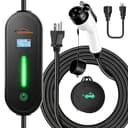
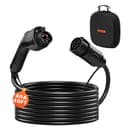
EVDANCE against the alternatives, side by side
EVDANCE’s 40-amp portable is the first row, because it is the product most of these searches are about. Every cell is read from the same registry entries the reviews above are built from, and each row carries its own live price.
| Product | Max output | Max power | Cable | Install | Weather rating | Warranty | Price |
|---|
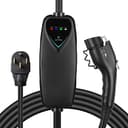
| EVDANCE 40A Portable Level 2 Charger | 40 A | 9.6 kW | 25 ft | Plug-in (NEMA 14-50, adapters vary) | IP67 connector | 1 year | |
|---|
| Lectron 40A Portable Level 1/2 Charger | 40 A | 9.6 kW | 21 ft | Plug-in (NEMA 14-50 + 5-15 adapter) | IP66 connector | 1 year | |
|---|
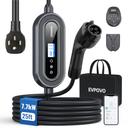
| EVPOVO Level 2 32A (NEMA 14-50) | 32 A | 7.7 kW | 25 ft | Plug-in (NEMA 14-50) | Not published | 3 years | |
|---|
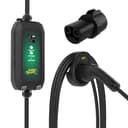
| Battery Tender eCharge 32 (Level 1 + 2) | 32 A | 7.7 kW | 25 ft | Plug-in (NEMA 14-50; 120V 5-15 adapter included) | IP66 | 3 years | |
|---|
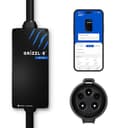
| Grizzl-E Mini 40A Portable (J1772) | 40 A | 9.6 kW | 24 ft | Plug-in (NEMA 14-50, with four included adapters) | NEMA 4X cast aluminum (indoor/outdoor) | Not published | |
|---|
| TopAutoGear Portable Level 1 & 2 Charger (16A) | 16 A | Not published | 17 ft | Plug-in (NEMA 6-20, with a 5-15 adapter) | Not published | Not published | |
|---|
What EVDANCE sells, and what each line publishes
“EVDANCE alternatives” is really four different questions, because the brand sells four different things. Taking them in order of how often people buy them:
The 40-amp portable Level 2.This is the flagship: 40 A, about 9.6 kW on a NEMA 14-50 outlet, a 25 ft cable and an IP67 rating on the connector. Forty amps on a 50-amp circuit is the full ceiling for a plug-in charger, so this unit is not a compromise on speed — it does what a fixed wall charger at the same amperage does. The published gaps are the warranty (one year) and the box: the listing states that configurations and included adapters vary, so the plug you receive, and therefore the speed you get, is not a settled fact until it arrives.
The 16-amp Level 1 and 2.A travel unit: 12 A at 120 V, 16 A at 240 V, both NEMA 5-15 and 6-20 plug options, an ETL listing and an unusually long 25 ft cable for the class. It is a good product for a plug-in hybrid or a glovebox, and the cable length is the reason to prefer it over most of its direct rivals — our Level 1 and 2 dual-voltage roundup ranks that whole class.
The Tesla-to-J1772 adapter.Published at 80 A / 250 V, which is far more headroom than any home or destination AC charger will ask for. This is the line where EVDANCE wins on price and we are not going to pretend otherwise.At our last check it sat at a fraction of the established brand’s equivalent adapter, with the same AC-only function and a higher published current rating. If that is the product you came for, buy it, read our review of it, and see the category roundup for the second-source options worth knowing about.
The 40 ft J1772 extension cable.Published at 32 A over 40 ft. Here the alternative is straightforwardly better on paper: the VEVOR extension in our registry publishes the same 40 ft at 40 A and has priced lower. Both are covered on our charging cable roundup, along with the reason extension cables are a last resort rather than a first move.
The four reasons people replace an EVDANCE
1. Warranty length. Both EVDANCE portables publish one year. The EVPOVO 32A, the Battery Tender eCharge 32 and the Grizzl-E Mini all publish three. On a device that pulls 32 to 40 amps continuously for a decade, the warranty term is the clearest signal of what a manufacturer expects to stand behind, and it is the single biggest difference on this page.
2. A rating on the body, not just the handle. An IP67 connector is excellent, but EVDANCE publishes no enclosure rating for the unit itself. The Battery Tender publishes IP66 and the Grizzl-E Mini publishes a cast aluminum Type 4 indoor/outdoor enclosure. If the charger is going to live on a garage wall or travel in a truck bed, that is the spec to compare.
3. Knowing what is in the box.The adapter that ships with a portable charger decides its speed, and the spread is enormous: on Tesla’s published figures for its own cordset, the same cable delivers 32 A and 7.6 kW on a NEMA 14-50 but 12 A and 1.3 kW on an ordinary household socket. The Grizzl-E Mini publishes four included adapters by name — 5-15, TT-30, 14-30 and 6-50. Where a listing does not publish its contents, assume the plug in the photograph is all you are getting.
4. Certification you can look up.EVDANCE names ETL on the 16-amp unit. The EVPOVO goes further and names the standards behind the listing — UL 2594 and UL 2231-1/-2 with CCID20 leakage protection — and the Battery Tender carries both cETLus and an ENERGY STAR record in EPA’s own database as a Level 1 / Level 2 dual-input unit. We check model numbers against that database rather than trusting a listing adjective, and it is the reason the Battery Tender is on this page at nearly double the price of the EVDANCE.
How we ranked these six
The Lectron 40A Portable is the closest like-for-like swap. Same 40 A and 9.6 kW, same dual-purpose idea — a NEMA 14-50 plug with a 5-15 adapter so it works at home and on the road — from the brand with the deepest catalog in this niche, with a published IP66 connector. Two honest cons: the cable is 21 ft against EVDANCE’s 25, and the warranty is also one year, so this swap buys you track record and reach rather than paper protection. It is the top pick on our main portable roundup and has a full review.
The EVPOVO 32A is the value answer, and the one most EVDANCE shoppers should look at.It costs meaningfully less than the EVDANCE 40A while publishing a longer warranty (three years), a 25 ft TPU cable rated flexible to −22 °F, adjustable 16/20/24/32 A output, Wi-Fi through an app or plain button control, and an ETL listing that names UL 2594 and UL 2231 with CCID20. The trade is real: 32 A rather than 40, so about 7.7 kW instead of 9.6 — roughly 20 to 25 miles of range an hour against 30. For most households charging overnight, that difference never shows up.
The Battery Tender eCharge 32 is the documentation pick. Battery Tender publishes about 7.7 kW and 20–25 miles of range per hour on 240 V, about 1.9 kW on 120 V, a minimum 40-amp circuit, a 25 ft cord, IP66, cETLus to UL 2594, ENERGY STAR, FCC and ICES, a weight of 6.37 lb and a 3-year warranty — and EPA’s dataset carries the 022-3017 family as a dual-input unit. That is more verifiable detail than any other portable in our registry. The con is the price: it is the most expensive 32-amp portable we cover, and it buys paperwork and build rather than speed.
The Grizzl-E Mini is the rugged pick.A cast aluminum NEMA 4X enclosure made in Canada, a published UL file number (E510712), four named NEMA adapters in the box, 7–40 A adjustment and three years of warranty. Two cons worth knowing before ordering: the published cable length disagrees with itself across the maker’s page, the listing text and EPA’s record (25 ft against 24, so plan for 24), and the J1772 listing is the non-connected Mini rather than the Wi-Fi Connect model even though both list at similar money — our Mini Connect review sets out that trap in detail.
The TopAutoGear 16A is the budget pickbecause it undercuts EVDANCE’s own 16-amp unit while still naming a lab: an ETL certification, 8–16 A adjustment across 110 and 240 V, a 17 ft cable, an LCD display and a NEMA 6-20 plug with a 5-15 adapter. What it does not publish: a kW figure, an enclosure rating or a warranty term. Eight feet less cable than the EVDANCE is the specification you are trading away, and on a travel charger that is a real loss.
The VEVOR J1772 extension is the replacement for EVDANCE’s extension cable, and the only pick here chosen on a straight spec win: the same 40 ft of reach at 40 A rather than 32, for less money at our last check. Read why an extension is a last resort before you buy either one — the problem with extending a charging circuit is the duration of the load, not the voltage, and a longer charger cable or a better-placed outlet beats both of these products.
Where we would not switch
Two cases. The first is the adapter, covered above: at these prices EVDANCE is the sensible buy and the alternative costs more for the same AC-only function. The second is cable length at the bottom of the market. The EVDANCE 16-amp unit publishes 25 ft; its direct rivals publish 17 and 20 ft. If you are buying a travel charger precisely because you do not know what the outlet situation will be, reach is the specification that decides whether you charge at all, and paying a few dollars more for eight more feet is the right call.
One thing no alternative changes: the outlet sets your speed, not the charger. A 40-amp portable on a household socket is a trickle charger, and a 16-amp unit on a NEMA 6-20 is most of the way to Level 2. Identify what you will actually plug into first — our NEMA outlet types guide does that, and the NEMA adapter roundup covers the one-foot adapters that turn a dryer or welder receptacle into a charging outlet, with the derating each one forces on you.