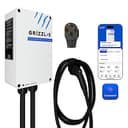
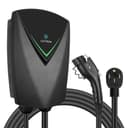
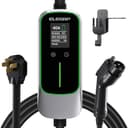
The four chargers, side by side
Read from the same registry entries as the reviews above. The weather-rating column is the one to read differently on this page than on any other: inside a dry garage, an italic “Not published” there is a saving rather than a red flag.
| Product | Max output | Max power | Cable | Install | Weather rating | Warranty | Price |
|---|
| Grizzl-E Classic Connect 40A (J1772) | 40 A | 9.6 kW | 25 ft | Plug-in (NEMA 14-50) | UL Type 4 (indoor/outdoor) | 3 years | |
|---|
| Lectron Nexus Level 2 (40A, plug-in) | 40 A | 9.6 kW | 23 ft | Plug-in (NEMA 14-50) | IP66 (indoor/outdoor) | 3 years | |
|---|
| Emporia Level 2 EV Charger | 48 A | 11.5 kW | 25 ft | Hardwired (ships with whip) | NEMA 4 (outdoor) | 3 years | |
|---|
| ELEGRP Level 2 EV Charger (40A, NEMA 14-50) | 40 A | 9.6 kW | 25 ft | Plug-in (NEMA 14-50) | Not published | Not published | |
|---|
Where the charger goes decides which one to buy
Do this before you choose a product, with a tape measure and the car parked where it actually parks. Measure from the mounting point, down the wall, along the floor, around the vehicle, to the charge port.Then add the slack you need to plug in without stretching the cable taut, because a cable under tension pulls on the connector every night. Most people discover they need more than they thought, which is why 25 ft is the spec that matters and why the Leviton EV320’s 18 ft cord — a fine charger otherwise — constrains where it can go.
Three things that change the answer. Which side the port is on. A driver’s-side front port and a wall on the passenger side is the classic 25-foot problem. Whether you back in. Reversing in can halve the reach you need, or double it. Whether the garage holds two cars. A charger mounted for bay one may not reach bay two at all, and that is a question about chargers for two EVs rather than about cable length. Our long-cable roundup is the page for this single specification.
Mounting height, and the part everyone skips
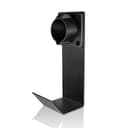
Mount the unit where the connector can hang without the cable touching the floor — roughly chest height is the convention, and a holster or hook takes the weight. This is not cosmetic. A connector left on a garage floor collects grit and water on the pins that carry 40 amps continuously, and a cable coiled on concrete is a trip hazard that gets driven over eventually. The fifth pick on this page is a twenty-dollar holster for that reason; our holster roundup and cable organizer roundup cover the alternatives, including combination units that hold the head and the cable on one mount.
Plug in or hardwire, in a garage
Plug in if you might move, or want to swap a dead unit yourself.A NEMA 14-50 receptacle on a 50-amp circuit gives you 40 amps, about 9.6 kW, roughly 30 miles of range per hour. The charger comes off the wall with you. Two cautions specific to a garage: the receptacle must be industrial-grade, because a continuous 40-amp draw is far harder on a 14-50 than the oven it was designed for (see NEMA 14-50 outlets), and the GFCI requirement above applies to it.
Hardwire if the unit is staying and you want 48 amps.A permanent connection has no receptacle to fail, sidesteps the 625.54 receptacle rule, and is the only way past 40 amps — which needs a 60-amp circuit. The trade is that an electrician does the whole job and the charger belongs to the house. Our hardwired roundup and plug-in vs hardwired have the full argument, and how to install a home charger covers what the work involves.
How we ranked these
The Grizzl-E Classic Connect leads because it fits the widest range of garages.Forty amps adjustable down to 16, so one unit works whether the panel gives you a 50-amp circuit or a 20-amp one; a NEMA 14-50 plug, so you can hang it yourself; 25 ft of cable; Wi-Fi scheduling; and a cast metal UL Type 4 enclosure with a published UL file number, which inside is simply overkill you happen to be getting. Full figures in our review.
The Lectron Nexus 40A is the documentation pick— UL 2594, UL 2231, UL 2251 and UL 817 testing with an ETL listing, an IP66 housing, a 23 ft cable, three years, and an entry in EPA’s ENERGY STAR certified-EVSE database under its own identifier. Two feet less cable than the Grizzl-E, which on a tight garage wall is worth knowing before you order.
The Emporia Level 2 is the pick if you are hardwiring anyway. Forty-eight amps on a 60-amp circuit, UL Listed, ENERGY STAR certified, 25 ft of cable, ships with its whip, three years — and it is the least expensive hardwired unit in our registry. Check the circuit before the charger: 60 amps is where many panels run out of room. Our 100-amp panel roundup is the page if the service is the constraint.
The ELEGRP is the budget pick, and a garage is where it makes sense.ETL listed, 40 amps, a NEMA 14-50 plug, 25 ft of cable, no app. What it does not publish is an enclosure rating or a warranty term — which is exactly why we would not hang it outside, and why indoors it is the honest way to spend less. Read the ELEGRP review for where the money was saved, and the budget roundup for the rest of that end of the market.
The holster is the cheapest thing on the page and the one we would not skip. Twenty dollars to keep the connector off the concrete, mounted into a stud rather than drywall, for the life of the charger.
Two garage questions that are not about the charger
Is it safe to charge indoors?Yes, and the equipment is built for it — Tesla’s own Mobile Connector manual states that ventilation is not required, and every charger here is approved for indoor installation. What matters is a correctly sized dedicated circuit, a clear area around the unit and not running the cable where a car drives over it. Our garage charging guide covers the question properly, including heat and clearance.
What about a detached garage?That is a different and more expensive problem — a feeder, a subpanel and a trench, not just a branch circuit — and it is worth pricing before you choose amperage. We wrote a guide to the detached-garage install for exactly that case.