Amp & Adapter

Is It Safe to Charge an EV in a Garage?

Yes — a garage is the easiest place to charge safely, because the hardware is out of the weather and out of the way. The thing worth checking is not the garage. It is whether the charger is genuinely safety-certified, which EPA warns is not a given.

By Stephen V.Last updated How we rank

How this is funded: we earn a commission if you buy through our links, at no extra cost to you. It never changes which product we recommend, and we’ll tell you plainly when we’d skip one. Full disclosure.

Yes, and a garage is the easiest place in the world to charge an EV safely. Charging produces no exhaust and nothing to vent, so a closed garage is fine; the hardware is out of the weather; the cable is out of the way; and the car is parked there for eight hours anyway. The thing actually worth checking is not the garage. It is whether the charger you bought is genuinely safety-certified— because EPA says plainly that plenty on sale are not.

Why the garage itself is not the risk

People arrive at this question carrying a mental model from gasoline cars, where a running engine in a closed garage is lethal within minutes. Charging has no equivalent. There is no combustion, no exhaust, no fuel vapor and nothing that consumes oxygen. An EV on a charger in a sealed garage is doing less than a refrigerator.

The U.S. Department of Energy’s own home-charging guidance treats the garage as the default location, and the electrical work is ordinary branch-circuit work: a dedicated circuit, correctly sized, installed by a licensed electrician. The protections are already layered. Nothing is energized until the charger and the car complete a handshake over a pilot conductor confirming a valid, properly grounded connection. The charger monitors for ground faults throughout the session. The car’s battery management system controls how much current it accepts and stops when it is full. Four independent things have to be satisfied before any power moves.

The one genuine risk: equipment that is not what it says it is

This is the part of the answer most pages skip, and it is the part EPA puts in writing. In its own ENERGY STAR material on EV chargers, EPA warns that not all EV chargers for sale are safety certified, including some from large online and storefront retailers — and goes further: “many products sold by some major retailers may have false safety certifications displayed.” Its recommendation is to buy a charger that has earned the ENERGY STAR label, because every certified charger is safety-tested by a nationally recognized testing laboratory.

That reframes the whole question. A certified charger in a closed garage is safe. An uncertified charger with a convincing-looking UL logo in the listing photos is a device drawing 40 amps continuously for hours, mounted to the wall of the room your house is attached to, with nobody awake. That is the risk worth caring about, and it is a purchasing decision rather than a garage decision.

How to check, in order of reliability:

  • Look the model number up in a certification database.EPA publishes its certified-EVSE dataset by model number — that is how we built our ENERGY STAR roundup, and it is why some chargers we otherwise like are deliberately absent from it.
  • Look for a standards list, not a logo.Leviton publishes “UL2594, UL 2231-1, UL 2231-2, UL 2251, UL 62, UL 991, UL 1998, NFPA 70 Article 625” for the EV320 at pick two. A manufacturer willing to enumerate that is a manufacturer that has been through it. Grizzl-E publishes a UL/cUL file number, E510712, which is the same kind of commitment.
  • Treat silence as information. Several chargers we cover publish no certification line and no warranty term. Our certification guide explains what each mark means, and the comparison chart shows which brands fill those cells in.

Where to put it, which is the part people get wrong

Garage charging goes wrong in mundane, physical ways far more often than electrical ones. Four placement rules cover nearly all of it.

Mount it on the right wall, at the right height

Nearest your car’s charge port, at roughly chest height so the connector hangs clear of the floor, and offset from the parking position so an opening car door cannot swing into it. If the charge port is on the diagonally opposite corner from the only usable wall, buy cable length rather than fighting it — see best chargers with a long cable.

Give the connector somewhere to live

A connector on a concrete floor collects grit and water and eventually gets driven over. A holster is the cheapest meaningful upgrade in home charging — pick three is under twenty dollars at the time of writing — and our holster roundup covers the category. The same goes for the cable: a hook, not a heap.

Keep the area around it clear

Garages are where paint thinner, gas cans for the mower, cardboard and the overflow from the recycling live. None of that should be stacked against the charger or under the cable run. This is not an EV-specific rule — it is the same rule as for a water heater or a furnace — but the charger is new and the stacking habit is old.

No extension cords. Ever.

Charging is a continuous high-current load for hours, which is precisely what household extension cords are not designed for, and most charger manuals prohibit it — Tesla’s own installation manual is blunt about not using cord-and-plug arrangements it did not specify. If the charger does not reach, fix the reach. Our extension cord guidetreats the one narrow exception honestly, and the answer is still “mostly no”.

Does a garage charger need an outdoor rating?

Not strictly. A sheltered garage is an indoor environment and an indoor-rated unit is adequate. We would still buy an outdoor rating, for three unglamorous reasons: an unheated garage in February is closer to outdoors than indoors; a wet car dripping under a wall-mounted charger is a damp environment; and people move. An outdoor-rated charger costs very little more.

The ratings in plain English: Type 3R covers rain, sleet and snow; Type 4 adds windblown dust, splashing and hose-directed water; 4Xadds corrosion resistance. Pick one here publishes UL Type 4 in cast metal, which is more than a garage needs and exactly what you want if the unit ever moves outside. Best outdoor chargers ranks the category on those ratings.

The GFCI question, briefly

If you install a plug-in charger, the receptacle is likely to need GFCI protection: NEC 210.8(A) requires it for 125- to 250-volt garage receptacles and NEC 625.54 requires it for receptacles installed for EV charging. That protection can conflict with the charger’s own internal ground-fault detection and cause nuisance trips — the complaint behind a lot of “my charger keeps stopping” posts. A hardwired charger is not subject to the 625.54 receptacle requirement at all.

That is one of several arguments in plug-in versus hardwired, and if your charger is already tripping, start with why is my EV charger not charging rather than replacing hardware.

Five things to do before the first overnight charge

  1. Confirm the charger’s certification by model number, not by the logo in the listing photos.
  2. Have a licensed electrician do the circuit.A dedicated circuit, sized at 125% of the charger’s draw, permitted and inspected where your jurisdiction requires it. Our installation guide and cost guide cover what to expect.
  3. Check the smoke alarm in or adjacent to the garage. Ordinary good practice that gets skipped in houses where the garage is treated as outdoors.
  4. Clear a two-foot radius around the charger and keep the cable off any walking route.
  5. Set the charge limit in the car,not just the charger. Day-to-day charging to 80–90% is kinder to the pack and stops the session earlier — see battery health and charge limits and leaving an EV plugged in.

The short answer

Charge in the garage, closed door and all. It is the normal, intended, safest place to do it. Spend your caution budget on buying a charger whose certification you can actually verify, on having the circuit done properly, and on mounting the thing where a car door cannot hit it — and then stop worrying about it, because the hardware is designed for precisely this.
Quick picks

Ranked on published specs, install flexibility and buyer fit. Select a row to jump to the full write-up. We have not bench-tested these units — here is exactly what we do instead.

#ProductBest forPrice
1
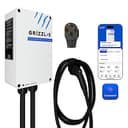
Grizzl-E Classic Connect 40A (J1772)

Grizzl-E Classic Connect 40A (J1772)

The Grizzl-E Classic with a radio in it: the same made-in-Canada metal box, the same UL Type 4 indoor/outdoor rating and the same 25 ft cable, now with Wi-Fi scheduling and 16–40A adjustment. The adjustment is the upgrade worth paying for, because it lets one charger fit whatever circuit your panel can actually spare. The connectivity is the part to think twice about — this line's reputation was built on having nothing to fail.

Certified, and the right shape for a garage
$349.99 · View on Amazon

Price as of October 18, 2026. #ad How we’re funded

2
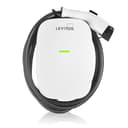
Leviton EV320 32A (hardwired)

Leviton EV320 32A (hardwired)

The plainest well-documented 32A wall charger you can buy: hardwired on a 40A breaker, ENERGY STAR certified under its own model number, and nothing to connect to Wi-Fi. That last point cuts both ways, since there is no app to fail and no app to schedule with, and the 18 ft cable is the shortest here, so measure before you buy.

The longest published standards list here
$649.00 · View on Amazon

Price as of October 18, 2026. #ad How we’re funded

3
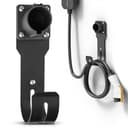
MECMO J1772 Holster & J-Hook Combo

MECMO J1772 Holster & J-Hook Combo

A holster and a cable J-hook in one, so the connector and the coiled cable both have a home on the wall. The tidier option if your cable is long and ends up in a heap on the garage floor.

Gets the connector off the floor
$16.99 · View on Amazon

Price as of October 18, 2026. #ad How we’re funded

The three products, in full

#1Certified, and the right shape for a garage

Grizzl-E Classic Connect 40A (J1772)

The Grizzl-E Classic with a radio in it: the same made-in-Canada metal box, the same UL Type 4 indoor/outdoor rating and the same 25 ft cable, now with Wi-Fi scheduling and 16–40A adjustment. The adjustment is the upgrade worth paying for, because it lets one charger fit whatever circuit your panel can actually spare. The connectivity is the part to think twice about — this line's reputation was built on having nothing to fail.

Strengths

  • 16–40A adjustable output, so one unit fits a 20A, 30A, 40A or 50A circuit — the outgoing Classic was fixed at 40A
  • UL Type 4 indoor/outdoor rated metal enclosure, made in Canada, rated from -30°C to +50°C
  • 25 ft published cable, which is more reach than most wall chargers at any price
  • Plugs into a NEMA 14-50 outlet, so no hardwiring bill and it moves house with you
  • Wi-Fi (2.4 GHz) with scheduling, charging statistics, remote control and utility demand-response participation
  • 3-year warranty as standard, with a 5-year extension sold separately by the manufacturer

Trade-offs

  • Not in EPA's ENERGY STAR certified-EVSE database as of 2 September 2026, although the Classic it succeeds is — check before counting on a rebate that requires ENERGY STAR
  • Wi-Fi is not optional, on a product line whose whole appeal was that there was no app to fail
  • NEMA 14-50 only: the Classic also offered a NEMA 6-50 plug variant, and that option is gone
  • New for December 2025, so there is far less long-term owner feedback than the Classic has
  • United Chargers publishes “40A 10 kW” while the Amazon listing says 9.6 kW; 40A at 240V is 9.6 kW, so size the circuit off 40A, not off either kW figure
ConnectorJ1772
Max output40 A
Max power9.6 kW
Cable length25 ft
InstallPlug-in (NEMA 14-50)
Outdoor ratingUL Type 4 (indoor/outdoor)
Warranty3 years

Spec note. United Chargers publishes: AC Level 2, 40A adjustable down to 16A, NEMA 14-50 plug, J1772 or NACS output cable, 25 ft (7.6 m) cord, UL Type 4 indoor/outdoor rating, UL/cUL listing E510712, Wi-Fi 2.4 GHz with the Grizzl-E Connect app, a 3-year warranty, an operating range of -30°C to +50°C and a 10.25 × 6.25 × 3.75 in enclosure. Two caveats we checked rather than assumed. EPA's ENERGY STAR certified-EVSE database lists eight Grizzl-E models under United Chargers Inc. and the Classic Connect is not among them, so we do not repeat the ENERGY STAR claim that appears on one sibling listing. And ENERGY STAR records the outgoing Classic's cord at 24 ft against the same 25 ft marketing figure, so if reach is tight, plan around 24 ft.

Specs read from the product listing, on September 2, 2026. “Not published” means the manufacturer does not state that figure.

#2The longest published standards list here

Leviton EV320 32A (hardwired)

The plainest well-documented 32A wall charger you can buy: hardwired on a 40A breaker, ENERGY STAR certified under its own model number, and nothing to connect to Wi-Fi. That last point cuts both ways, since there is no app to fail and no app to schedule with, and the 18 ft cable is the shortest here, so measure before you buy.

Strengths

  • Hardwired, so a plain breaker feeds it and there is no receptacle to wear, overheat or trip a GFCI
  • Leviton publishes its full standards list, including UL 2594, and EPA's ENERGY STAR dataset lists the EV320 by model number
  • NEMA Type 3R enclosure and a cable Leviton says is designed not to freeze and crack, rated -30°C to 50°C
  • Optional RFID access control, switched off out of the box

Trade-offs

  • 18 ft cable, the shortest in our 32A roundup
  • 2-year limited warranty, against 3 to 5 years on the other 32A picks
  • No Wi-Fi or app, so any scheduling has to come from the car
  • Amazon showed 'Only 11 left in stock (more on the way)' when we checked on 18 September 2026
ConnectorJ1772
Max output32 A
Max power7.7 kW
Cable length18 ft
InstallHardwired (40A breaker)
Outdoor ratingNEMA Type 3R (indoor/outdoor)
Warranty2 years (limited)

Spec note. Leviton publishes: 32A, 208/240 VAC, 7.6 kW output, a 40A breaker, an 18 ft (5.5 m) cable, hardwired only, a PC+PBT plastic NEMA Type 3R enclosure, -30°C to 50°C operation, a 20 mA CCID per UL 2231, certification to UL 2594, UL 2231-1/-2, UL 2251 and others with cETLus, and ENERGY STAR. Its published standards line also includes "OCPP 1.6 Compliant", which is unusual on a charger with no radio. EPA's dataset lists model EV320 (qualified 2022-10-24, 18 ft cord). It has no Wi-Fi; the Wi-Fi sibling is the EV32W. Leviton's own store listed it above the Amazon price when we checked.

Specs read from the product listing, on September 18, 2026. “Not published” means the manufacturer does not state that figure.

#3Gets the connector off the floor

MECMO J1772 Holster & J-Hook Combo

A holster and a cable J-hook in one, so the connector and the coiled cable both have a home on the wall. The tidier option if your cable is long and ends up in a heap on the garage floor.

Strengths

  • Combines a connector holster with a cable hook — two problems, one mount
  • Universal to the J1772 connector head
  • Keeps a long cable off the floor and out of the way

Trade-offs

  • Purely mechanical — no function beyond holding the plug and cable
  • Anchor into a stud; drywall anchors can pull out under a heavy cable
ConnectorJ1772
Max outputNot published
Max powerNot published
Cable lengthNot published
InstallWall-mounted dock + hook
Outdoor ratingNot published
WarrantyNot published

Spec note. A passive holder for the J1772 connector plus a hook for the cable; check it fits your charger's handle, as a few proprietary heads are oversized.

Specs read from the product listing, on July 19, 2026. “Not published” means the manufacturer does not state that figure.

General guidance, not electrical advice. Amp & Adapter is written by an EV-charging enthusiast, not a licensed electrician. Circuit sizing, breakers and hardwired installs must be done by a qualified electrician to local code — the figures here are for planning a purchase, not a wiring job.

Frequently asked questions

Is it safe to charge an electric car in a garage?

Yes. A garage is the best place to charge: the equipment is out of the weather, the cable is out of the way, and the car is parked for hours anyway. EV charging equipment is designed for exactly this, and an attached garage is where the large majority of home charging in the US happens. The one thing worth verifying is that the charger itself is genuinely safety-certified — EPA warns that not all chargers sold are, including some from large retailers.

Is it safe to charge an EV in a closed garage?

Yes. Charging produces no exhaust and no combustion. Unlike a gasoline car, there is nothing to vent — which is why a closed garage is a normal, safe place to charge overnight. The car's battery management system and the charger's own ground-fault detection monitor the session throughout, and charging stops on its own when the car is full.

Should I be worried about an EV fire in my garage?

Battery fires in parked EVs are rare, and charging a healthy car with certified equipment is not the risk people imagine. The sensible precautions are the ordinary ones: use safety-certified equipment on a dedicated circuit installed by a licensed electrician, do not run the charger through an extension cord, keep the area around the charger clear of stored flammables, and have a working smoke alarm in or adjacent to the garage. If your car is ever subject to a battery recall, follow the manufacturer's parking and charging instructions exactly.

Does a garage charger need to be weatherproof?

Not strictly, but it is worth having. A garage charger is sheltered, so an indoor-rated unit is adequate. An outdoor-rated enclosure — NEMA 3R, 4 or 4X — costs little more and covers an unheated garage, a wet car dripping underneath it, and the possibility that you later move the unit outside. Most chargers we cover publish an outdoor rating; a few publish nothing at all.

Where should I mount an EV charger in a garage?

On the wall nearest your car's charge port, high enough that the connector hangs clear of the floor — roughly chest height — and far enough from the parking position that an opening car door cannot hit it. Mount a holster or hook for the connector so it never rests on concrete, and route the cable so it does not cross a walkway. If the charge port is on the opposite corner of the car, buy a longer cable rather than stretching a short one.

Can I use an extension cord to charge in the garage?

No. EV charging is a continuous high-current load for hours, which is exactly what household extension cords are not built for, and most charger manuals prohibit it outright — Tesla's installation manual is explicit about not using cord-and-plug arrangements it did not specify. If the charger does not reach, the answer is a longer charger cable or an outlet in the right place, not a cord. Our extension cord guide covers the one narrow exception properly.

Does charging in a garage need a GFCI breaker?

It depends on the install. NEC 210.8(A) requires GFCI protection for 125- to 250-volt garage receptacles, and NEC 625.54 requires it for receptacles installed for EV charging — so a plug-in charger on a NEMA 14-50 outlet generally needs one. A hardwired charger is not subject to the 625.54 receptacle requirement, which is one reason hardwiring avoids the nuisance-tripping complaints that come from stacking an external GFCI breaker on top of a charger's own ground-fault protection.

Sources

  • EPA ENERGY STAR — Electric Vehicle Chargers — ENERGY STAR on certified EV chargers, safety certification and standby energy use (accessed July 19, 2026)
  • EPA ENERGY STAR — Certified Electric Vehicle Chargers (AC Output) — The list of ENERGY STAR certified AC (Level 2) EV chargers (accessed July 19, 2026)
  • EPA ENERGY STAR — Certified Electric Vehicle Supply Equipment, AC-Output (dataset 5jwe-c8xm) — EPA's machine-readable list of certified chargers. It carries both Tesla wall units, each qualified 2023-09-18 at 48A / 11.52 kW: model 1457768 under brand "Tesla" and model 1734412 under brand "Universal Wall Connector", both with a 22 ft cord on the record (accessed September 16, 2026)
  • U.S. DOE Alternative Fuels Data Center — Charging Electric Vehicles at Home — DOE guidance on Level 1 vs Level 2 home charging, 120V/240V service and installation (accessed July 19, 2026)
  • Qmerit — NEMA 14-50 and GFCI Protection for EV Chargers (May 1, 2026) — An installer network's explanation: NEC 210.8(A) requires GFCI protection for 125- through 250-volt garage receptacles, NEC 625.54 requires it for receptacles installed for EV charging, the charger's own ground-fault protection can conflict with an external GFCI, and hardwired chargers are not subject to the 625.54 receptacle requirement (accessed September 18, 2026)
  • Leviton — EV320 32 A Level 2 Charging Station (specifications tab) — Leviton's published specification list, read in full on this date: 32 A, 208/240 VAC, "7.6kW Output", a 40 A breaker, an "18 ft. (5.5 m)" cable, "HARDWIRED ONLY", a "Plastic (PC+PBT)" enclosure at "NEMA Type 3R", -30 °C to 50 °C operation, a "20 mA CCID per UL 2231", "Optional access control; station comes with RFID disabled", "Energy Star Certified", a "2-Year Limited" warranty, and a standards line reading "UL2594, UL 2231-1, UL 2231-2, UL 2251, UL 62, UL 991, UL 1998, NFPA 70 Article 625, UL840, CSA Std. C22.2#280, OCPP 1.6 Compliant, cETLus". The Wi-Fi sibling is named as the EV32W; no price is listed on the page (accessed October 12, 2026)
  • United Chargers — Grizzl-E Classic Connect 40A — The maker's own specification block: "Adjustable current 40A - 16A", "Max power 40A 10kW", "Plug type NEMA 14-50", "Connector Type 1 (SAE J1772); NACS", "Output cable length 25ft (7.6m)", a 10.25 x 6.25 x 3.75 in enclosure with "UL Type 4 Indoor/Outdoor Rating", "Operating temperature -30C .. +50C (-22F .. 122F)", "Certifications UL/cUL E510712", "Wi-Fi (2.4 GHz); Mobile Application", and a 3-year or 5-year warranty choice. The description calls it "made-in-Canada"; the formal country-of-origin field is blank (accessed October 12, 2026)
  • Tesla Energy Library — Gen 3 Wall Connector Manual, 48A Single Phase (part number 1457768) — The standard (NACS-handle) Wall Connector: 12-48A output, 60A breaker for 48A, "Do NOT install cord-and-plug type connections", 13.6 x 6.1 x 4.3 in, 10 lb with wirebox, and the safety caution "No adapters or conversion adapters are allowed to be used" (accessed September 16, 2026)

Keep reading