What Enphase publishes, and what it does not
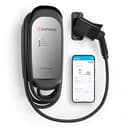
We read Enphase’s own store page for the hardwired 32 A model, SKU IQ-EVSE-NA-1040-0100-0100, on the date in the sources list. Here is what is on it:
- A “ruggedized, impact-resistant J1772 connector” and “the 25 ft charging cable”.
- “An all-weather NEMA 4-rated enclosure allows for indoor or outdoor use”.
- “Backed by a 5-year limited warranty”.
- Energy management and custom scheduling in the Enphase App, plus excess-solar charging with an Enphase Energy System.
- The model stated as 32 A, with NEMA 14-50R and NEMA 6-50R plug-in siblings sold separately.
And here is what is not on it, which matters just as much on a device that lives outdoors: no maximum kW figure, no breaker size for the hardwired version, no UL 2594 reference and no ENERGY STAR mark. Those four gaps are not evidence of anything bad — the retail listing names UL 2594, and EPA’s ENERGY STAR dataset carries this exact model number among the additional models on an Enphase family record qualified in March 2023, so the certifications exist. It is simply a reminder that Enphase’s store is built for installers logging in to order, not for a homeowner comparing spec sheets. You will find more hard numbers in the Amazon listing than on the manufacturer’s own page, which is an unusual way round.
32 amps, and what that actually gets you
At 240 volts, 32 amps is about 7.7 kW. The listing claims up to 31 miles of range per hour, which is the manufacturer’s best case on an efficient car; a more realistic planning figure across the cars people actually own is in the low-to-mid twenties. Either way, a 32-amp charger refills a 40-mile commuting day in under two hours and a 200-mile day overnight with room to spare.
The reason to care about 32 rather than 40 or 48 is almost never the car — it is the panel. 32 amps is the most you can continuously draw on a 40-amp circuit under the 125% continuous-load rule, which is why a whole class of chargers exists at exactly this rating. If your service can spare a 40-amp circuit and no more, this is your tier, and our best 32-amp chargers roundup is the full field. If you are not sure what your panel can carry, amps, circuits and the 125% rule is the ten-minute version, and best chargers for a 100-amp panel is the persona page if the service itself is the constraint.
It is worth being blunt about the upgrade path too. If your panel cancarry a 50-amp circuit, a 40-amp plug-in charger is a better buy than any 32-amp unit and frequently costs less — best 40-amp chargers covers that tier. The IQ 40 is for the household that genuinely cannot go higher, or that wants this specific feature set.
The solar feature is the actual product
Strip away the brand and the IQ 40 is a competent, expensive 32-amp box. The thing that is not replicable elsewhere is what it does inside an Enphase Energy System: it can charge the car from excess solar production rather than from the grid.
Enphase publishes the rules, and they are worth reading before you budget for this. A solar-surplus session needs a minimum of 1.92 kW (8 amps) of excess solar power to start. Production and Consumption CTs are required to calculate that excess — extra metering hardware, in other words. And the charge rate steps in 25% intervals only, so it tracks a moving cloud roughly rather than smoothly.
If you have the Enphase system, that is genuinely useful and nothing else in the 32-amp class does it. If you do not have one, you are paying a premium for a feature you cannot switch on. Our guide to charging an EV with solar covers the general case, including the simpler and much cheaper route of scheduling the charger for your cheapest hours instead.
The five-year warranty, in context
This is the IQ 40’s strongest non-solar argument. Five years is the longest term of any 32-amp charger we have registered: the Leviton EV320 publishes a two-year limited warranty and the Battery Tender eCharge 32 publishes three. On a hardwired device that is going to sit on a garage wall through a decade of temperature cycling, three extra years of coverage is not nothing.
Read it in proportion, though. The price gap between the IQ 40 and the cheaper hardwired 32-amp units in our registry is substantial — look at the live prices on the cards above, which we refresh daily rather than quoting from memory. For many buyers that gap is a meaningful fraction of a replacement charger. A longer warranty is worth paying somethingfor; whether it is worth paying this much is a judgment you can only make against today’s numbers. Our guide to how long EV chargers last is the background on what actually fails.
Hardwired means hardwired
The unit reviewed here has no plug. It is wired permanently into a 40-amp circuit by an electrician, it stays with the house when you move, and it cannot travel. Enphase sells NEMA 14-50R and NEMA 6-50R plug-in versions of the same family if you want the other arrangement — they are separate products, bought separately, so decide before you order.
There is one upside to hardwiring that buyers routinely miss, and it is a code point rather than a preference. A 240-volt receptacle installed for EV charging generally requires GFCI protection, and a charger’s own internal ground-fault detection can nuisance-trip against an external GFCI breaker. A hardwired charger is not subject to that receptacle requirement, which removes a common and genuinely annoying failure mode. We lay out both sides in plug-in vs hardwired.
Who should buy it, and who should not
Buy it if: you have an Enphase solar system and want the car to follow it; or you are hardwiring a 40-amp circuit, you intend to keep the house, and the five-year warranty plus the NEMA 4 shell and 25-foot cable are worth the premium to you.
Buy something else if:you have no Enphase hardware and are simply shopping for a 32-amp charger — the alternatives on this page do the same job for less. Or if your panel can carry a 50-amp circuit, in which case buy 40 amps instead of 32 and spend less doing it. Or if you want a charger you can unplug and take with you, which this is not.
One more thing to check before you budget: the retail listing still mentions federal tax credits. The federal home-charger credit ended for property placed in service after June 30, 2026, so do not plan on it. Utility and state programs are a different matter and are often worth more — the rebate finders are linked from what an EV charger install costs.
The short answer
A good 32-amp charger with an honest five-year warranty, a misleading name and a price that only makes sense inside the Enphase ecosystem. If you own Enphase solar, it is the one to buy. If you do not, the charger two cards down does the same work, carries the same 25-foot cable and an ENERGY STAR record of its own, and leaves money in your pocket for the electrician.