Amp & Adapter

Best EV Chargers for a Home with Solar

Only a handful of home chargers can actually follow your solar production, and every one of them needs extra hardware from the same vendor. Here is which, what it needs, and the cheaper way to do most of it.

By Stephen V.Last updated How we rank

The charger we would buy for a solar home is the Enphase IQ 40 — for an owner whose roof is already an Enphase system, because inside that ecosystem it is the only unit here that genuinely follows your surplus, and Enphase publishes exactly what that requires. The charger stands up on its own terms too: NEMA 4, a 25 ft cable, UL 2594 per the listing, an ENERGY STAR record under its exact model number and a five-year warranty, the longest on this page. Our second pick, the Emporia Pro, is the one to want if you are not in an Enphase house — excess-solar charging plus whole-home monitoring in one app with no subscription, and the Vue 3 panel monitor the feature needs is in the box rather than an upsell — but its listing showed no live offer at our most recent price check, so its buy row will read “Check price” until it returns. The budget pick is the Grizzl-E Classic Connect 40A, the cheapest charger in our registry that can do the useful 90% of “charging on solar” — schedule the session for the middle of the day and dial the output down to something your array can actually cover.

That distinction is the whole page, so we will put it bluntly: almost no home charger follows your solar production. Two products here publish that they can, and both need a piece of vendor hardware to do it. Enphase’s own store page for the IQ 40 states that a solar-surplus session needs Production and Consumption CTs, an Enphase Energy System, and a minimum of 1.92 kW (8 A) of excess solar power to start, with power levels changing in 25% intervals only. Wallbox’s own US page says its solar charging “Requires Wallbox Power Meter.” Anyone selling you “solar-compatible” without naming the meter is selling you a clock.

Everything else on this page is honest second-best, and it is good enough for most people: a scheduler that starts the car at 11am instead of 11pm, and an amperage dial that lets you charge at 16 A on a bright afternoon rather than 40 A off the grid. All figures are read from each manufacturer’s published material on the date shown under each pick; unpublished figures read “Not published” rather than being guessed. We have not bench-tested these units and we do not model your array — our solar charging guide does the arithmetic with your own numbers.

How this is funded: we earn a commission if you buy through our links, at no extra cost to you. It never changes which product we recommend, and we’ll tell you plainly when we’d skip one. Full disclosure.

Quick picks

Ranked on published specs, install flexibility and buyer fit. Select a row to jump to the full write-up. We have not bench-tested these units — here is exactly what we do instead.

#ProductBest forPrice
1
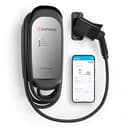
Enphase IQ 40 32A (hardwired)

Enphase IQ 40 32A (hardwired)

The ClipperCreek line under Enphase's name: a 32A hardwired station with a NEMA 4 enclosure, a 25 ft cable and the longest warranty in our 32A roundup, five years. It is also the most expensive, and its Wi-Fi scheduling earns that premium mainly for a household already running Enphase solar that wants the charger to follow it.

Best overall for solar
$779.00 · View on Amazon

Price as of November 20, 2026. #ad How we’re funded

2
Emporia Pro (48A, hardwired, J1772)

Emporia Pro (48A, hardwired, J1772)

Not a faster charger than the Emporia Classic — Emporia's own comparison puts both at 48A — but a charger you can install where 48A would not otherwise fit. The premium buys PowerSmart load management and the Vue 3 panel monitor it depends on, which throttles charging to whatever headroom your service has left. On a 100A panel that is the difference between charging fast and rewiring the house; on a roomy 200A panel it is a feature you are paying for and will not use.

Best energy data
$599.00 · View on Amazon

Price as of November 20, 2026. #ad How we’re funded

3
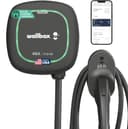
Wallbox Pulsar Plus

Wallbox Pulsar Plus

The compact one. It's the smallest 48A charger here by a wide margin, so it suits a tight garage wall or a design-conscious install — with power sharing if you end up charging two cars.

Best with a Wallbox meter
$594.99 · View on Amazon

$799.9926% off

Price as of November 20, 2026. #ad How we’re funded

4
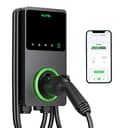
Autel MaxiCharger Home

Autel MaxiCharger Home

A polished 50A unit with Wi-Fi, Bluetooth and a clean app, built to a higher hardware standard than most — and the widest published temperature range in this registry, -40 to 131 °F behind an IP65 / NEMA 4X shell. The catch is the circuit: Autel's own store page asks for a 70-amp feed to reach 50 amps, which is a bigger panel ask than the 60-amp circuit a 48-amp charger needs.

Widest amperage range
$450.00 · View on Amazon

$599.0025% off

Price as of November 20, 2026. #ad How we’re funded

5
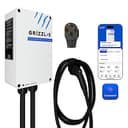
Grizzl-E Classic Connect 40A (J1772)

Grizzl-E Classic Connect 40A (J1772)

The Grizzl-E Classic with a radio in it: the same made-in-Canada metal box, the same UL Type 4 indoor/outdoor rating and the same 25 ft cable, now with Wi-Fi scheduling and 16–40A adjustment. The adjustment is the upgrade worth paying for, because it lets one charger fit whatever circuit your panel can actually spare. The connectivity is the part to think twice about — this line's reputation was built on having nothing to fail.

Budget pick
$299.99 · View on Amazon

$349.9914% off

Price as of November 20, 2026. #ad How we’re funded

The picks in full

#1Best overall for solar

Enphase IQ 40 32A (hardwired)

The ClipperCreek line under Enphase's name: a 32A hardwired station with a NEMA 4 enclosure, a 25 ft cable and the longest warranty in our 32A roundup, five years. It is also the most expensive, and its Wi-Fi scheduling earns that premium mainly for a household already running Enphase solar that wants the charger to follow it.

Strengths

  • 5-year limited warranty, the longest of the 32A picks
  • 25 ft cable and a sealed NEMA 4-rated enclosure for indoor or outdoor mounting
  • UL 2594 certified per the listing, and EPA's ENERGY STAR dataset names this exact model number
  • Wi-Fi scheduling in the Enphase App, plus solar-surplus charging with an Enphase Energy System

Trade-offs

  • The most expensive of the 32A picks
  • Hardwired, so it stays with the house when you move
  • The listing still says you may qualify for federal tax credits; the federal home-charger credit ended for property placed in service after June 30, 2026
  • Solar-surplus charging needs at least 1.92 kW (8A) of excess solar before a session starts, per Enphase
ConnectorJ1772
Max output32 A
Max power7.7 kW
Cable length25 ft
InstallHardwired (40A circuit)
Outdoor ratingNEMA 4 (indoor/outdoor)
Warranty5 years (limited)

Spec note. The listing publishes: 32A on a 40 Amp circuit, suited to vehicles that accept up to 7.7 kW, up to 31 miles of range per hour (the manufacturer's best case), UL 2594, a sealed NEMA 4-rated enclosure, a 25 ft cable, Wi-Fi with the Enphase App and a 5-year limited warranty. Enphase's store lists the hardwired SKU as IQ-EVSE-NA-1040-0100-0100, and EPA's ENERGY STAR dataset names that exact number among the additional models on an Enphase family record qualified 2023-03-17. Enphase also sells NEMA 14-50 and 6-50 plug-in versions.

Specs read from the product listing, on September 18, 2026. “Not published” means the manufacturer does not state that figure.

#2Best energy data

Emporia Pro (48A, hardwired, J1772)

Not a faster charger than the Emporia Classic — Emporia's own comparison puts both at 48A — but a charger you can install where 48A would not otherwise fit. The premium buys PowerSmart load management and the Vue 3 panel monitor it depends on, which throttles charging to whatever headroom your service has left. On a 100A panel that is the difference between charging fast and rewiring the house; on a roomy 200A panel it is a feature you are paying for and will not use.

Strengths

  • PowerSmart load management is bundled, not an upsell — the Vue 3 panel monitor it needs is in the box
  • 48A / 11.5 kW hardwired, or 40A on a NEMA 14-50 outlet, from the same unit
  • NEMA 4 rated for indoor or outdoor installation, with a 25 ft cable
  • Rear-entry hardwire option the Classic does not offer, which hides the conduit
  • Solar excess-charging and whole-home energy monitoring in the same app, with no subscription
  • 3-year warranty, and Emporia publishes UL Listed, NEMA rated and ENERGY STAR certification

Trade-offs

  • No faster than the cheaper Emporia Classic — both are 48A, so if you do not need load management you are paying for nothing
  • PowerSmart depends on the Vue 3 sending load data to Emporia's cloud, so the throttling that protects your panel is a connected service, not local hardware
  • The Vue 3 clamps onto your service mains, so an electrician still has to open the panel — 'no panel upgrade' does not mean 'no panel work'
  • Emporia's own “$3,000-$8,000 panel upgrade” saving is the manufacturer's marketing figure, not an independent estimate
  • Emporia does not publish the Pro's ENERGY STAR model number, which rebate forms usually ask for
ConnectorJ1772
Max output48 A
Max power11.5 kW
Cable length25 ft
InstallHardwired (48A); a NEMA 14-50 plug-in SKU runs at 40A
Outdoor ratingNEMA 4 (outdoor)
Warranty3 years

Spec note. Emporia publishes: up to 48A hardwired on a 60A circuit, up to 40A on a NEMA 14-50 outlet (50A circuit), a 25 ft cable, a NEMA 4 indoor/outdoor rating, a rear-entry hardwire option, a 3-year warranty, and UL Listed / NEMA Rated / ENERGY STAR Certified marks. Its own Classic-vs-Pro table lists BOTH models at up to 48A, 25 ft and 3 years — the Pro's differences are PowerSmart load management, the bundled Vue 3 energy monitor, solar and peak-demand features, the square case and rear entry. EPA's ENERGY STAR certified-EVSE database holds one Emporia Corp. family record (EMEVSE1, 48A, 25 ft output cord, 6 AWG, network capability 'Yes', qualified May 2022) covering fifteen further model numbers; Emporia does not publish which one the Pro carries, so confirm the model number with Emporia before filing a rebate that requires it.

Specs read from the product listing, on November 18, 2026. “Not published” means the manufacturer does not state that figure.

#3Best with a Wallbox meter

Wallbox Pulsar Plus

The compact one. It's the smallest 48A charger here by a wide margin, so it suits a tight garage wall or a design-conscious install — with power sharing if you end up charging two cars.

Strengths

  • Up to 48A / 11.5 kW in the smallest housing in its class
  • Power Boost and Power Sharing for multi-car or limited-panel homes
  • App scheduling and energy metering

Trade-offs

  • Hardwired only for the 48A version — no plug option at full output
  • The compact body runs the cable management tighter than a bigger box
ConnectorJ1772
Max output48 A
Max power11.5 kW
Cable length25 ft
InstallHardwired (48A) or plug-in (40A)
Outdoor ratingNEMA 3R (indoor/outdoor)
Warranty3 years

Spec note. The 40A plug-in variant exists, but the 48A model is hardwired on a 60A circuit. Power Sharing lets two Pulsar Plus units split one circuit — the cleanest answer to charging two EVs without a panel upgrade.

Specs read from the product listing, on July 19, 2026. “Not published” means the manufacturer does not state that figure.

#4Widest amperage range

Autel MaxiCharger Home

A polished 50A unit with Wi-Fi, Bluetooth and a clean app, built to a higher hardware standard than most — and the widest published temperature range in this registry, -40 to 131 °F behind an IP65 / NEMA 4X shell. The catch is the circuit: Autel's own store page asks for a 70-amp feed to reach 50 amps, which is a bigger panel ask than the 60-amp circuit a 48-amp charger needs.

Strengths

  • Up to 50A / 12 kW, adjustable down to 16A in the app
  • IP65 / NEMA 4X enclosure rated -40 to 131 °F — the widest published range of any charger here
  • Wi-Fi, Bluetooth and Ethernet, with scheduling and access control
  • Autel lists Adaptive Load Management and charger-to-charger Dynamic Load Balancing
  • CSA certified and ENERGY STAR certified, with a 3-year warranty

Trade-offs

  • Autel publishes a 70A circuit for full 50A output — more than the 60A a 48A charger needs, and more than many panels can spare
  • Hardwired only at this output; the plug-in NEMA 14-50 and 6-50 versions are separate 40A models
  • Autel does not publish what sensor hardware Adaptive Load Management needs, so you cannot cost the feature before buying
  • Connectivity adds a failure point a charger with no radio does not have
ConnectorJ1772
Max output50 A
Max power12 kW
Cable length25 ft
InstallHardwired (70A circuit for 50A); plug-in sold as separate 40A models
Outdoor ratingIP65 / NEMA 4X (indoor/outdoor)
Warranty3 years

Spec note. Autel sells this as the MaxiCharger AC Elite Home 50A. Autel's own US store listing publishes: "Maximum 12 kW (240 VAC @ 50 A model)" adjustable 16-50A, hardwired with a 70A circuit required for full output, an SAE J1772 connector on a "25 ft. (7.5 m)" cable, "IP65 / NEMA 4X", "-40 to 131 °F (-40 to 55 °C)" operating temperature, Bluetooth / Wi-Fi / Ethernet / CAN / RS485, "Adaptive Load Management (ALM); Dynamic Load Balancing (DLB)", CSA and ENERGY STAR certification, a 3-year warranty and about 15.4 lb with the in-body holster. Autel's product page repeats the NEMA 4X rating and the -40°F to 131°F figure and describes ALM as sharing power between loads in the home, but neither page states what sensor hardware ALM requires or (on the product page) the circuit size for 50A. The 50A unit is hardwired — the plug-in NEMA 14-50 and NEMA 6-50 versions are separate 40A models, so the install type is chosen at purchase rather than configured on the wall. The listing we link is the hardwired 50A.

Specs read from the product listing, on October 12, 2026. “Not published” means the manufacturer does not state that figure.

#5Budget pick

Grizzl-E Classic Connect 40A (J1772)

The Grizzl-E Classic with a radio in it: the same made-in-Canada metal box, the same UL Type 4 indoor/outdoor rating and the same 25 ft cable, now with Wi-Fi scheduling and 16–40A adjustment. The adjustment is the upgrade worth paying for, because it lets one charger fit whatever circuit your panel can actually spare. The connectivity is the part to think twice about — this line's reputation was built on having nothing to fail.

Strengths

  • 16–40A adjustable output, so one unit fits a 20A, 30A, 40A or 50A circuit — the outgoing Classic was fixed at 40A
  • UL Type 4 indoor/outdoor rated metal enclosure, made in Canada, rated from -30°C to +50°C
  • 25 ft published cable, which is more reach than most wall chargers at any price
  • Plugs into a NEMA 14-50 outlet, so no hardwiring bill and it moves house with you
  • Wi-Fi (2.4 GHz) with scheduling, charging statistics, remote control and utility demand-response participation
  • 3-year warranty as standard, with a 5-year extension sold separately by the manufacturer

Trade-offs

  • Not in EPA's ENERGY STAR certified-EVSE database as of 2 September 2026, although the Classic it succeeds is — check before counting on a rebate that requires ENERGY STAR
  • Wi-Fi is not optional, on a product line whose whole appeal was that there was no app to fail
  • NEMA 14-50 only: the Classic also offered a NEMA 6-50 plug variant, and that option is gone
  • On sale only since December 2025, so there is far less long-term owner feedback than the Classic has
  • United Chargers publishes “40A 10 kW” while the Amazon listing says 9.6 kW; 40A at 240V is 9.6 kW, so size the circuit off 40A, not off either kW figure
ConnectorJ1772
Max output40 A
Max power9.6 kW
Cable length25 ft
InstallPlug-in (NEMA 14-50)
Outdoor ratingUL Type 4 (indoor/outdoor)
Warranty3 years

Spec note. United Chargers publishes: AC Level 2, 40A adjustable down to 16A, NEMA 14-50 plug, J1772 or NACS output cable, 25 ft (7.6 m) cord, UL Type 4 indoor/outdoor rating, UL/cUL listing E510712, Wi-Fi 2.4 GHz with the Grizzl-E Connect app, a 3-year warranty, an operating range of -30°C to +50°C and a 10.25 × 6.25 × 3.75 in enclosure. Two caveats we checked rather than assumed. EPA's ENERGY STAR certified-EVSE database lists eight Grizzl-E models under United Chargers Inc. and the Classic Connect is not among them, so we do not repeat the ENERGY STAR claim that appears on one sibling listing. And ENERGY STAR records the outgoing Classic's cord at 24 ft against the same 25 ft marketing figure, so if reach is tight, plan around 24 ft.

Specs read from the product listing, on September 2, 2026. “Not published” means the manufacturer does not state that figure.

The published specs, side by side

Read from the same registry entries as the reviews above, with each row’s own live price where our daily check has one.

ProductMax outputMax powerCableInstallWeather ratingWarrantyPrice
Enphase IQ 40 32A (hardwired)32 A7.7 kW25 ftHardwired (40A circuit)NEMA 4 (indoor/outdoor)5 years (limited)
$779.00 · View on Amazon

Price as of November 20, 2026. #ad How we’re funded

Emporia Pro (48A, hardwired, J1772)48 A11.5 kW25 ftHardwired (48A); a NEMA 14-50 plug-in SKU runs at 40ANEMA 4 (outdoor)3 years
$599.00 · View on Amazon

Price as of November 20, 2026. #ad How we’re funded

Wallbox Pulsar Plus48 A11.5 kW25 ftHardwired (48A) or plug-in (40A)NEMA 3R (indoor/outdoor)3 years
$594.99 · View on Amazon

$799.9926% off

Price as of November 20, 2026. #ad How we’re funded

Autel MaxiCharger Home50 A12 kW25 ftHardwired (70A circuit for 50A); plug-in sold as separate 40A modelsIP65 / NEMA 4X (indoor/outdoor)3 years
$450.00 · View on Amazon

$599.0025% off

Price as of November 20, 2026. #ad How we’re funded

Grizzl-E Classic Connect 40A (J1772)40 A9.6 kW25 ftPlug-in (NEMA 14-50)UL Type 4 (indoor/outdoor)3 years
$299.99 · View on Amazon

$349.9914% off

Price as of November 20, 2026. #ad How we’re funded

The three ways a charger can use your solar

Surplus following (rare, needs hardware).The charger watches what your house is exporting and raises or lowers the car’s draw to soak it up. This is the real thing, and it exists on the Enphase IQ 40 inside an Enphase Energy System and on the Wallbox Pulsar Plus with a Wallbox Power Meter. Note Enphase’s published floor: nothing starts until there is 1.92 kW of surplus, and adjustments come in 25% steps rather than smoothly. On a 4 kW array in February, that threshold matters.

Energy-aware charging (common, useful).The charger knows what the house is drawing, because a panel monitor tells it, and it keeps the total under a limit. Emporia calls this PowerSmart and ships the Vue 3 monitor with the Pro; Autel publishes Adaptive Load Management and charger-to-charger Dynamic Load Balancing, though it does not publish what sensor hardware that needs — so you cannot cost the feature before buying. This is primarily a panel-capacity tool rather than a solar tool, but on a solar home it is the thing that lets you add a charger without touching the service.

Scheduling plus an amperage dial (cheap, boring, effective). You decide the car charges from 10am to 4pm at 16 or 24 amps. No meter, no CTs, no cloud. Every connected charger on this page can do it, the Grizzl-E does it at the lowest price in the group, and if your car can set a departure time it can do half of it without the charger’s help at all. The limitation is real and worth stating: a fixed schedule cannot tell a sunny Tuesday from a cloudy one.

Why the amperage dial is the under-rated spec here

A 40-amp charger pulls about 9.6 kW. A 6 kW array on a good day in June produces less than that, which means a full-rate charging session is partly grid-powered no matter when you start it. Being able to run the charger at 16 A (about 3.8 kW) or 24 A (about 5.8 kW) is what makes a session genuinely solar-fed. The Grizzl-E publishes 16–40 A adjustment, Autel publishes a 16–50 A range in the app, and the Enphase unit is a 32 A charger to begin with. Chargers with no adjustment — the cheap fixed-40 A boxes on our budget roundup— are the wrong tool for this job even though they are cheaper.

How we ranked these five

The Emporia Pro wins on what is in the box.Solar excess-charging and whole-home energy monitoring live in the same app with no subscription, the Vue 3 monitor is included, and the charger itself is a 48 A NEMA 4 unit with a 25 ft cable, a rear-entry hardwire option and UL / ENERGY STAR marks. Two honest cons: PowerSmart sends load data to Emporia’s cloud, so the protection is a connected service rather than local hardware, and the Vue 3 clamps onto your service mains — an electrician still opens the panel. Full detail in our Emporia Pro review.

The Enphase IQ 40 is the pick if your roof is already Enphase.Inside that ecosystem it is the cleanest integration on the market, and the hardware is good on its own terms: NEMA 4, a 25 ft cable, UL 2594 per the listing, an ENERGY STAR record under its exact model number and the longest warranty here at five years. Outside that ecosystem, you are paying the most money in this group for a 32 A charger — and 32 A means a 40-amp circuit, which is the one part of this page that is good news. Our IQ 40 review is blunt about the price.

The Wallbox Pulsar Plus is the solar option for everyone else — its own US page names solar charging and Dynamic Load Management, with the Power Meter as the stated requirement, in the smallest housing in the class at up to 48 A. The caveat is documentation: Wallbox publishes no enclosure rating, no temperature range, no certifications and no warranty term on that page, which is unusual at this price. See the Pulsar Plus review.

The Autel MaxiCharger is here for the dial and the climate range.Sixteen to fifty amps in the app, IP65 / NEMA 4X, and a published operating range from −40 °F — the widest of any charger we cover. Price the circuit first: Autel publishes a 70-amp circuit for full 50-amp output.

The Grizzl-E Classic Connect is the budget pick and the one we would actually recommend to most solar ownerswho are not already in an Enphase or Emporia house. It plugs into a NEMA 14-50 outlet, adjusts from 16 A to 40 A, schedules in the app, publishes a cast UL Type 4 enclosure with a real UL file number and a 25 ft cord, and costs a little over half the top pick. One thing to check before you count on a rebate: it was not in EPA’s ENERGY STAR certified-EVSE database when we last looked, even though the Classic it replaces is.

Before you spend money on the charger

Two cheaper moves usually beat a smarter charger. The first is your car’s own scheduler, which costs nothing and already knows your departure time. The second is your utility’s rate plan: in much of the US, a time-of-use rate makes overnight grid power cheaper than the credit you receive for exporting solar at midday, which flips the entire calculation and means charging at night is the financially correct answer even with panels on the roof. Work it through with your own numbers in our cost-to-charge guide before you buy hardware to solve it.
Frequently asked questions

Can any EV charger charge from solar?

Any charger will use solar power when your array is producing and the car is plugged in — the electricity does not know where it came from. What almost no charger can do is match the car's draw to your surplus. That needs the charger to see your production and consumption, which in practice means vendor hardware: Enphase requires an Enphase Energy System with Production and Consumption CTs, and Wallbox requires its own Power Meter.

How much solar do I need to charge an EV?

Enphase publishes the practical floor for its own system: a surplus session will not start below 1.92 kW, which is 8 amps. For reference, a 40-amp charger at full output pulls about 9.6 kW, so a full-rate session needs more surplus than most residential arrays produce — which is why an adjustable charger that can run at 16 or 24 amps matters more here than a fast one.

Is it cheaper to charge an EV from solar or at night?

It depends entirely on your rate plan, and the answer is often night. If your utility pays you less for exported solar than it charges you for off-peak power, every kWh you put in the car at midday has an opportunity cost. Run it with your own rates rather than assuming — our cost-to-charge guide has the calculator.

Do I need a special charger if I have a solar battery?

No, but the interaction is worth understanding: without a charger that can see the house, charging the car can simply drain the home battery, which is rarely what you wanted. That is what the energy-aware chargers on this page are for — the Emporia Pro ships with the panel monitor and Wallbox and Autel offer equivalent load management.

Will a solar-aware charger work without internet?

Generally no. Surplus following and load management on these products are connected services — Emporia's PowerSmart sends load data to Emporia's cloud, and Enphase and Wallbox both run through their own apps. If an app-free charger is what you want, our no-WiFi roundup covers units with no radio at all; you then schedule from the car instead.

Does a smaller charger make more sense with solar?

Often, yes — and that is an unusual thing to hear on a page selling chargers. A 32-amp charger on a 40-amp circuit is closer to what a residential array can actually feed, costs less to install and is easier on an older panel. Our 32A roundup covers the field.

Sources

  • Enphase — IQ 40 EV Charger (hardwired, 32 A) — Enphase's store page for the former ClipperCreek unit: SKU IQ-EVSE-NA-1040-0100-0100, a "ruggedized, impact-resistant J1772 connector", "the 25 ft charging cable", "An all-weather NEMA 4-rated enclosure allows for indoor or outdoor use", Enphase App scheduling, "Backed by a 5-year limited warranty", and a solar-surplus session that needs "a minimum of 1.92 kW (8 Amps) of excess solar power to start" with power levels changing in "25% intervals only" and Production and Consumption CTs required. The page states the model as 32 A and publishes NO maximum kW figure, NO breaker size for the hardwired version, NO UL 2594 reference and NO ENERGY STAR mark; it is an installer store behind a login, with the plug-in siblings listed as 240 V NEMA 14-50R and NEMA 6-50R. Re-read on October 26, 2026 with every figure unchanged from the September 18, 2026 reading (accessed October 26, 2026)
  • Wallbox — Pulsar Plus (United States) — Wallbox's own current US product page: "Choose between 40 and 48 Amps", "Up to 11.5 kW, for up to 8x faster charging", "SAE J1772, NACS | 25ft" with "no adapters needed", "Pulsar Plus 40A offers easy NEMA 14-50 plug installation" (the page does not state how the 48 A model connects), "Bluetooth & WiFi", an LED status light, "Dynamic Load Management" to keep charging within the home's power limit, and solar charging that "Requires Wallbox Power Meter". The page publishes NO enclosure or ingress rating, NO operating temperature range, NO dimensions or weight, NO certifications and NO warranty term — it links to a datasheet and a warranty page rather than stating them. The en_ca page carries the same copy and the same omissions (accessed October 26, 2026)
  • Autel Energy (official store) — MaxiCharger AC Elite Home 50A 12 kW EV Charger — Autel's own US store listing: "Maximum 12 kW (240 VAC @ 50 A model)" adjustable 16-50 A, hardwired, and a 70 A circuit required for full output; an SAE J1772 connector on a "25 ft. (7.5 m)" cable; "IP65 / NEMA 4X"; "-40 to 131 °F (-40 to 55 °C)" operating temperature; "Bluetooth, Wi-Fi, Ethernet, CAN, RS485"; "Adaptive Load Management (ALM); Dynamic Load Balancing (DLB)"; CSA and ENERGY STAR certified; "3 years warranty"; about 15.4 lb with the in-body holster. Re-read in full on 2026-11-02, which added: an input rating of "208/240 VAC, 60 Hz, single phase @ 16 A, 24 A, 32 A, 40 A, 48 A, 50 A"; app, AutoStart and RFID authentication with the cards sold separately; "ALM Requires Additional Hardware" for Adaptive Load Management, against Dynamic Load Balancing which "works between chargers without additional hardware"; overcurrent, overvoltage, undervoltage and integrated surge protection; 13.2 x 7.4 x 3.8 in with the in-body holster, and 14.8 lb / 13.2 x 7.4 x 3.3 in with the separate holster. NO UL listing is named anywhere on the page, no breaker or wire-gauge figure is given beyond the 70 A circuit, and the hardware ALM requires is not named (accessed November 2, 2026)
  • United Chargers — Grizzl-E Classic Connect 40A — The maker's own specification block: "Adjustable current 40A - 16A", "Max power 40A 10kW", "Plug type NEMA 14-50", "Connector Type 1 (SAE J1772); NACS", "Output cable length 25ft (7.6m)", a 10.25 x 6.25 x 3.75 in enclosure with "UL Type 4 Indoor/Outdoor Rating", "Operating temperature -30C .. +50C (-22F .. 122F)", "Certifications UL/cUL E510712", "Wi-Fi (2.4 GHz); Mobile Application", and a 3-year or 5-year warranty choice. Re-read in full on 2026-11-02, which added: SKU GRS-14-25J1772-B, model number GRS-077-W-14-25J40-A-GB, a shipped weight of "11.00 kg / 24.25 lbs" and a shipped carton of 245 x 395 x 340 mm. The description calls it "Canadian-made"; the formal country-of-origin and material fields are both blank, and the page describes NO load-management or power-sharing feature beyond the adjustable 16-40A current setting (accessed November 2, 2026)
  • EPA ENERGY STAR — Electric Vehicle Chargers — ENERGY STAR on certified EV chargers, safety certification and standby energy use (accessed July 19, 2026)
  • EPA ENERGY STAR — Certified Electric Vehicle Supply Equipment, AC-Output (dataset 5jwe-c8xm) — EPA's machine-readable list of certified chargers. It carries both Tesla wall units, each qualified 2023-09-18 at 48A / 11.52 kW: model 1457768 under brand "Tesla" and model 1734412 under brand "Universal Wall Connector", both with a 22 ft cord on the record (accessed September 16, 2026)
  • fueleconomy.gov (DOE/EPA) — Electricity — The government's cost-to-charge model (kWh/100 mi × electricity rate) (accessed July 19, 2026)
  • U.S. DOE Alternative Fuels Data Center — Charging Electric Vehicles at Home — DOE guidance on Level 1 vs Level 2 home charging, 120V/240V service and installation (accessed July 19, 2026)

Keep reading