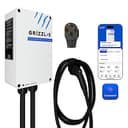
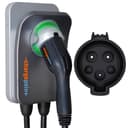
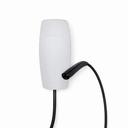
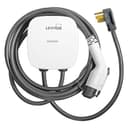
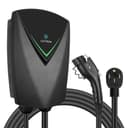
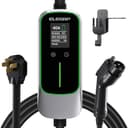
One unit per brand, side by side
Read from the same registry entries as the reviews above. Note how the warranty and weather-rating columns, not the amperage column, are where these brands actually separate.
| Product | Connector | Max output | Max power | Cable | Install | Weather rating | Warranty | Price |
|---|
| Emporia Level 2 EV Charger | J1772 | 48 A | 11.5 kW | 25 ft | Hardwired (ships with whip) | NEMA 4 (outdoor) | 3 years | |
|---|
| Grizzl-E Classic Connect 40A (J1772) | J1772 | 40 A | 9.6 kW | 25 ft | Plug-in (NEMA 14-50) | UL Type 4 (indoor/outdoor) | 3 years | |
|---|
| ChargePoint Home Flex (NEMA 14-50 plug) | J1772 | 40 A | 9.6 kW | 23 ft | Plug-in (NEMA 14-50); hardwired 50A and NEMA 6-50 sold as separate models | NEMA 3R (indoor/outdoor) | 3 years | |
|---|
| Tesla Wall Connector | NACS (Tesla) | 48 A | 11.5 kW | 24 ft | Hardwired (60A circuit for full output) | Indoor/outdoor rated | 4 years (residential) | |
|---|
| Leviton EV40P 40A (NEMA 14-50 plug, Wi-Fi) | J1772 | 40 A | 9.6 kW | 25 ft | Plug-in (NEMA 14-50P, 50A circuit) | NEMA Type 3R (indoor/outdoor) | 2 years (limited) | |
|---|
| Lectron Nexus Level 2 (40A, plug-in) | J1772 | 40 A | 9.6 kW | 23 ft | Plug-in (NEMA 14-50) | IP66 (indoor/outdoor) | 3 years | |
|---|
| ELEGRP Level 2 EV Charger (40A, NEMA 14-50) | J1772 | 40 A | 9.6 kW | 25 ft | Plug-in (NEMA 14-50) | Not published | Not published | |
|---|
The four criteria, and why they are these four
1. Disclosure.The single most useful signal about a charger brand is how hard it is to find out what the charger does. ChargePoint publishes a datasheet with an enclosure rating per UL 50E, an operating ambient range, a cable length and a standards list. Leviton publishes a specification tab that names UL 2594, UL 2231-1/-2, UL 2251, NFPA 70 Article 625 and a 20 mA CCID. At the other end, Wallbox’s own US page for the Pulsar Plus publishes a connector, a kW figure and a cable length, and links out for the enclosure rating, temperature range, certifications and warranty. Neither is a safety judgment — it is a measure of how much you can know before you buy.
2. Verifiable certification.We check model numbers against EPA’s ENERGY STAR certified-EVSE dataset rather than trusting a listing adjective, and brands differ in how easy they make that. Lectron’s Nexus appears under its own identifiers at 40 A and 48 A. Tesla’s Wall Connector appears as model 1457768. Grizzl-E’s Classic appears but the newer Classic Connect did not when we last looked, which matters only if you are counting on a rebate that requires the certification — several utility programs do. Emporia publishes UL, NEMA and ENERGY STAR marks for the Pro but not the Pro’s ENERGY STAR model number, which rebate forms usually ask for. These are the small frictions that decide whether a $300 rebate actually arrives.
3. Warranty.Tesla publishes four years residential, the longest of any charger we cover. Enphase publishes five on the IQ 40. Emporia, ChargePoint, Autel, Grizzl-E, EVIQO and Lectron publish three. Leviton publishes two. Several value listings publish none at all. On a device that will draw 40 amps continuously, unattended, for a decade, the term a manufacturer commits to in writing is the clearest statement of what it expects to stand behind.
4. Honest model naming. This is the criterion nobody warns new buyers about, and it has cost readers real money. ChargePoint sells the Home Flex as threeseparate models — hardwired, NEMA 6-50 and NEMA 14-50 — and only the hardwired one carries the famous 16–50 A range; the plug-in versions run at 32 or 40 A. Emporia sells hardwired and plug-in versions of the same charger as different products with different ceilings (48 A against 40 A). Autel’s 50-amp MaxiCharger is hardwired, and its plug-in siblings are separate 40-amp models. Enphase’s IQ 40 is a 32-amp charger— the 40 is the circuit. None of that is deceptive, but all of it means the model name alone will not tell you what you are buying, and our per-brand reviews lead with it.
The brands, ranked
1. Emporia — best overall.The brand our roundups recommend more than any other, on specification per dollar: 48 A and 11.5 kW, UL Listed, ENERGY STAR certified, NEMA 4, a 25 ft cable, load management and scheduling in the app, three years, and the lowest price of any hardwired unit we track. The cons are real: it is a younger company than ChargePoint or Leviton with a shorter track record, the listing we link is the hardwired SKU so an electrician terminates it and the full 48 A wants a 60-amp circuit, and the plug-in version of the same charger is a separate product capped at 40 A. Reviews: Emporia Level 2 and Emporia Pro.
2. Grizzl-E (United Chargers) — best value.A Canadian manufacturer that publishes more on its own site than most of the industry: a cast metal UL Type 4 indoor/outdoor enclosure, a real UL/cUL file number (E510712), 16–40 A adjustment, a 25 ft cord, an operating range to −30 °C and three years as standard with a five-year option. The cons: Wi-Fi is no longer optional on the Classic Connect, which was a product line whose appeal was that there was no app to fail; the Connect was not in EPA’s ENERGY STAR database when we last checked even though its predecessor is; and United Chargers publishes “40A 10 kW” on its own page against 9.6 kW on the listing — size the circuit from the amps, not from either kW figure. Review: Grizzl-E Classic Connect.
3. ChargePoint — best software.The most mature app in home charging, with scheduling, energy tracking and utility rate integration behind a network account, plus a published datasheet, UL listing, ENERGY STAR certification and a Type 3R enclosure per UL 50E. Two cons. It costs more than 48-amp units that deliver more power. And the model split above is a trap: the unit on Amazon is the NEMA 14-50 plug-in at 32 or 40 A, not the 16–50 A hardwired model people remember from reviews. Review: ChargePoint Home Flex.
4. Tesla — best for a Tesla garage.A factory NACS handle, Wi-Fi, a 24 ft cable, indoor or outdoor approval, power sharing across multiple units, and the longest residential warranty here at four years — with the clearest installation documentation of any brand on this page. The cons: it is the most expensive wall charger we track, Tesla’s own manual forbids cord-and-plug installation so there is no plug-in route, and its safety section says no adapters are to be used with it, which makes a J1772 car a job for the Universal model. If the price is what brought you here, we wrote Tesla Wall Connector alternatives. Review: Tesla Wall Connector.
5. Leviton — best legacy electrical brand.A company that has made wiring devices for over a century, and it shows in the paperwork: the EV40P publishes 40 A, 9.6 kW, a 50 A breaker, a 25 ft cable, a pre-attached NEMA 14-50P input, a PC+PBT NEMA Type 3R enclosure, −30 °C to 50 °C operation and 802.11 b/g/n Wi-Fi. The con is the warranty: two years, the shortest of any established brand here, on hardware priced above several three-year rivals. Reviews: Leviton EV320, and the EV40P appears on the plug-in roundup.
6. Lectron — most disclosure per dollar.Better known for adapters, and now making chargers that publish an unusual amount for the price: the Nexus names UL 2594, UL 2231, UL 2251 and UL 817 testing with an ETL listing, an IP66 housing, a 23 ft cable and three years, and EPA’s database carries it under its own model identifiers at both 40 and 48 A. The cons: a younger charger line than the brand’s adapter business, 23 ft rather than the 25 most rivals publish, and the 48-amp model is hardwired only. Review: Lectron Nexus Level 2.
7. ELEGRP — the budget pick.The floor of the market with a certification still attached: ETL listed, 40 A, a NEMA 14-50 plug and a 25 ft cable for roughly a third of what the top of this page costs. What you give up is published rather than hidden — no enclosure rating and no warranty term appear anywhere on the listing — so treat it as an indoor, under-cover unit. Below this point, listings stop naming a lab at all, which is where we stop recommending. Review: ELEGRP Level 2 40A.
Four more brands worth knowing
Autelpublishes the widest operating range in our registry — −40 °F to 131 °F behind an IP65 / NEMA 4X enclosure — plus CSA and ENERGY STAR marks, 50 A and 12 kW, and adjustable output from 16 A. It leads our outdoor roundup for that reason. The catch is the circuit: Autel publishes a 70-amp requirement for full 50-amp output, which is more than many panels can spare. Review: Autel MaxiCharger.
Wallbox makes the most compact 48-amp charger in the class, with Power Sharing for two cars and dynamic load management. It publishes the least of any premium brand here on its own US page, and the 48-amp version is hardwired only. Review: Wallbox Pulsar Plus.
Enphaseis the pick inside an Enphase solar system, where the IQ 40 is the only charger in our registry that genuinely follows solar surplus — and it publishes exactly what that needs, down to a minimum 1.92 kW of excess production before a session starts. It is also the most expensive 32-amp charger we track, and remember the naming point: the 40 is the circuit, not the output. Review: Enphase IQ 40, and chargers for a home with solar.
EVIQO, EVPOVO and Battery Tenderare the value and portable end. EVIQO publishes UL, ETL, FCC and ENERGY STAR certification on a 40-amp plug-in with 25 ft of cable, in J1772 and NACS. EVPOVO offers the cheapest route to 32 A with an ETL listing naming UL 2594 and UL 2231 and a 3-year warranty, with no enclosure rating published. Battery Tender’s eCharge 32 is the best-documented portable we cover, with an ENERGY STAR record as a Level 1 / Level 2 dual-input unit — see the dual-voltage roundup.
What brand does not decide
Charging speed.A 40-amp charger from the cheapest brand here and a 40-amp charger from the most expensive deliver the identical 9.6 kW, and both are capped by your car’s onboard charger if that is lower. Price in this category buys enclosure quality, cable length, software, load management and warranty length — not kilowatts. Our comparison chart puts every unit we cover in one table so that is impossible to miss.
Install cost. The circuit, the breaker, the wire run and the receptacle or hardwire termination are the same work whatever badge is on the box, and on a panel with no spare capacity they can cost more than the charger several times over. Price that first: installation cost and chargers for a 100-amp panel.
Whether the listing stays alive. Worth saying plainly on a brand page: the most common failure we deal with on this site is not a bad charger, it is a discontinued listing. We have had to repoint or retire entries from several of the brands above when a specific SKU left the marketplace, including the original Grizzl-E Classic, ChargePoint’s hardwired Home Flex and Emporia’s plug-in versions. That is normal churn in a young industry rather than a mark against any company — but it is why every price on this site is read live and why a dead listing shows “Check price” instead of a number we remember. If the budget is the binding question rather than the badge, start at the best chargers under $500.