Nobody publishes a lifespan. Not one manufacturer in this category states how many years its charger is expected to last, which means every “EV chargers last 10–15 years” figure you will read online is somebody’s estimate dressed up as a specification. So we are going to do something different and read the one durability number every manufacturer doespublish: the warranty. Across the chargers we cover it runs from two years to five, with several brands publishing nothing at all — and that spread is genuinely informative.
What the warranties actually say
These are published terms, read from each manufacturer’s own material or the retail listing our registry cites, on the dates recorded there. A warranty is not a lifespan — but it is the period a company is contractually prepared to stand behind its own hardware, which is the closest thing to a published durability claim that exists here.
| Charger | Published warranty | What else it publishes |
|---|
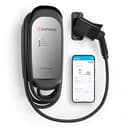
| Enphase IQ 40 | 5 years (limited) | 32 A hardwired, 25 ft cord |
| Tesla Wall Connector | 4 years (residential) | 48 A, 24 ft; no ambient range in the Gen 3 manual |
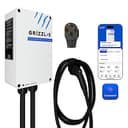
| Grizzl-E Classic Connect 40A | 3 years, 5-year option from the maker | UL Type 4 metal, -22 °F, UL/cUL file E510712 |
| ChargePoint Home Flex | 3 years | Type 3R per UL 50E, full standards list, 24/7 support |
| Emporia Pro | 3 years | NEMA 4, UL Listed, ENERGY STAR certified |
| Autel MaxiCharger Home | 3 years | IP65 / NEMA 4X, -40 °F to 131 °F, CSA + ENERGY STAR |
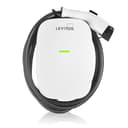
| Leviton EV320 | 2 years (limited) | Nine named standards, NEMA 3R, -30 °C to 50 °C |
| Several budget 40 A units | Not published | Amperage and cord length; no enclosure rating |
Read that table twice, because the interesting row is the last one and the second-most interesting is Leviton. Leviton publishes the shortest warranty on this page and the longest standards list in the entire category— nine named UL standards plus NFPA 70 Article 625 — which tells you a warranty term is a commercial decision as much as an engineering one. A 120-year-old wiring-devices company writes conservative warranties. That does not make the EV320 the least durable charger here; our EV320 review is blunt about what it does and does not give you.
And the bottom row is the one to act on. A charger that publishes no warranty at all has told you something: there is no term, so there is nothing to claim against. Several perfectly serviceable budget 40-amp units sit in that position. You can see which in the comparison chart, where the warranty column is built from the same published data as this table.
What actually wears out, in order
1. The connector and the cable — by a wide margin
The box on your wall has no moving parts. The connector has a latch, a set of contacts and a cable, and it gets plugged in and pulled out a few hundred times a year, dropped on concrete, flexed when it is stiff with cold and occasionally driven over. That is where chargers die.
Which has a practical consequence most buyers miss: on most home chargers the cable is not a user-replaceable part. A damaged cable can mean replacing the whole unit. That is why a twenty-dollar holster is the highest-return purchase in home charging — see best charger holsters— and why cable stiffness in the cold is worth paying attention to, as our cold-weather roundup argues.
2. The enclosure and its seals
Freeze-thaw cycling is the environmental factor that shortens a charger’s life most: water gets into a seam, freezes, expands, and the seal that was fine in October is not fine in March. This is what the enclosure rating is really about, and it is why a cast-metal shell has an argument over plastic for an outdoor install — no plastic to go brittle and no plastic seam to open up. Best outdoor chargers ranks on those ratings.
3. The electronics, which mostly do not
A charger is a contactor, some current sensing, a ground-fault detector and a pilot-signal circuit. None of it is working hard. EPA publishes a figure that makes the point better than we can: EV chargers are typically in standby mode — notactively charging — for about 85% of the time, which is also why ENERGY STAR has a standby-power specification at all (certified units use 40% less standby energy than non-certified ones). A device that idles 85% of its life and is designed for continuous duty the other 15% is not being stressed.
4. The cloud service, which is the modern failure mode
The newest way a charger “dies” is that its app stops working. A charger whose scheduling, metering or load management depends on a manufacturer’s servers is a charger with a dependency that can be discontinued, acquired or paywalled. Almost every unit we cover will still charge a car with no network once configured — worth confirming before you buy, and the core argument of best chargers without Wi-Fi.
How to make a charger outlive its warranty
- Hang the connector up, every time. The single highest-value habit. A connector that never touches the floor avoids grit in the contacts, water in the barrel and being run over.
- Buy more cable than you need. A cable at full stretch every night is a cable being pulled at the gland where it enters the box. See best chargers with a long cable.
- Get the circuit right, once. A charger on an undersized or loose-lugged circuit runs hot at the terminations, which is the one electrical failure mode that is genuinely shortened by installation quality. Our amps and circuits guide covers sizing, and the installation guide covers who should do it.
- Mount it out of the weather if you can, and out of the swing of a car door if you cannot. Freeze-thaw and physical impact do more damage than years do.
- Do not improvise. No extension cords, no unrated adapters. Our extension cord guide explains why this is a heat question, not a voltage one.
Is it worth paying for the longer warranty?
Sometimes. Here is how we would think about it.
A charger is bolted to a wall and wired into a panel, so a failure costs you an electrician’s visit on top of the hardware. That asymmetry makes a longer term genuinely worth something — more than it would be on an appliance you can unplug and carry to a store. Enphase’s five years and Grizzl-E’s five-year option are real value if you intend to keep the house.
But a warranty is only as good as the company behind it, and a long warranty from a brand that publishes no certification, no enclosure rating and no model number traceable in any database is a promise with nothing underneath it. Given a choice between the longest warranty and the fullest specification sheet, take the specification sheet. A manufacturer that publishes nine standards and a file number has been audited; one that publishes a five-year term and nothing else has made a marketing decision.
When to replace one, and when not to
Age is not a reason. A working charger on a sound circuit does not become unsafe at eight years old. Replace it for a reason you can name:
- A cut, cracked or overheated cable, or a connector with damaged or discolored contacts.
- Water ingress, corrosion inside the enclosure, or a cracked housing.
- A new car whose onboard charger can accept more than the unit delivers — the one genuinely good upgrade reason. Check the car first: why is my EV charging slowly and 40A vs 48A.
- Repeated faults that survive the diagnostics in our troubleshooting guide.
- A discontinued cloud service you actually depended on.
The short answer
Expect a decent charger to work for well over a decade, understand that nobody has published that figure, and buy on the two- to five-year warranty that they have. Hang the connector up, buy cable length you will not have to stretch, and have the circuit done properly — those three habits will do more for the charger’s life than the difference between a three-year and a five-year term. If you want the warranty column for every unit we cover, it is in the comparison chart.