Amp & Adapter

Why Is My EV Charging Slowly at Home?

Nine times out of ten the charger is doing exactly what it was asked to and the ceiling is somewhere else — usually the car's own onboard charger. Here is how to find which of the seven causes it is, in the order worth checking.

By Stephen V.Last updated How we rank

How this is funded: we earn a commission if you buy through our links, at no extra cost to you. It never changes which product we recommend, and we’ll tell you plainly when we’d skip one. Full disclosure.

Start by assuming your charger is fine. In most cases it is delivering exactly what it was asked for, and the lower number is inside the car. There are seven realistic causes of slow home charging, and they are worth checking in the order below — because the first one explains the majority of cases and costs nothing to rule out, while the expensive fix is near the bottom.

1. The car’s onboard charger is the real ceiling

This is the answer most of the time, and it is the one nobody mentions when they sell you a charger.

AC electricity from your wall cannot go into a battery. It has to be converted to DC, and the converter doing it — the onboard charger— lives inside the car. Whatever that converter is rated for is the hard ceiling on home charging, no matter what is bolted to your wall. A wall charger is a switch and a safety interlock; the car does the conversion.

Published figures, from manufacturers’ own pages, to show the spread:

  • Kia EV6 (2026)— Kia’s specification table states “Onboard Charger Power: 10.9 kW” on every trim.
  • Nissan Leaf (2026) — Nissan’s press kit publishes a 7.2 kW onboard charger standard on S+, SV+ and PLATINUM+.
  • Nissan Leaf (2025, outgoing)— a “6.6 kW onboard charger (6.0 kW output)”, with Nissan’s own 240V charging estimate of about 11.5 hours.
  • Volkswagen ID.4 (2026)— VW publishes AC charging “up to 11 kW with the available home wall charger”.
  • BMW— BMW’s i4 charging article gives up to 9.6 kW on a 240V, 40A circuit, and builds both its included cable and its own Wallbox around that figure.

Now the arithmetic that matters. 40 amps at 240 volts is 9.6 kW. 48 amps is 11.5 kW. A 2026 Leaf rated at 7.2 kW draws 7.2 kW from a 40-amp charger and 7.2 kW from a 48-amp charger — which is 30 amps, not 40. If you measured your session and got “only” 30 amps, the car is working perfectly and so is the charger.

How to check yours:the owner’s manual charging section, the manufacturer’s specification page, or simplest of all, the charging power the car reports on its own screen while plugged in. That last number is the measured truth for your vehicle.

2. The charger is set lower than it could be

The second-most-common cause, and the cheapest to fix: many chargers ship with an adjustable output and a conservative default, or were dialled down at install to suit a smaller circuit.

Check the charger’s app, buttons or DIP switches for a current setting. If it is on 16 or 24 amps and your circuit supports 40, that is your whole problem. Do not raise it without knowing the circuit: code sizes a continuous load at 125% of its draw, so a 40-amp setting needs a 50-amp circuit and a 48-amp setting needs 60. Our amps and circuits guide covers the sizing.

Also check the car for a charging-current limit. Several EVs let you cap the amps per location, which is a useful feature and an easy thing to have set once and forgotten.

3. The circuit is smaller than you think

Read the number on the breaker handle rather than inferring it from the receptacle.

A 30-amp circuit permits 24 amps continuous, which is about 5.7 kW — Tesla publishes exactly that figure for its Mobile Connector on NEMA 14-30 and 10-30 outlets, against 32 amps and 7.6 kW on a 14-50. If someone adapted a dryer outlet for your charger, 24 amps is the correct and expected result, not a fault. Our guide to charging from a dryer outlet covers that case in full.

And if you are on a standard 120V household socket, you are on Level 1: roughly 1.4 kW, a few miles of range per hour. That is not slow charging, that is a different tier of charging. Our types of chargers guide sets out the levels.

4. It is cold

If charging got slower in November and nothing else changed, this is almost certainly it.

A cold battery accepts charge more slowly as a matter of chemistry, and the car diverts some of the incoming power into warming the pack instead of filling it. The energy is not wasted — a warm pack charges and drives better — but the kWh landing in the battery per hour genuinely drops. On Level 1 the conditioning load can eat most of the charging rate, which is why a 120V cord that coped in summer can lose ground overnight in January.

Nothing to fix here, and nothing to buy. Our cold-weather guide covers what helps (plugging in sooner, preconditioning while still plugged in) and what does not.

5. A schedule, a charge limit, or a utility program

Four settings that look like slow charging and are not:

  • Scheduled charging in the car. Plug in at 7pm, car starts at midnight, and at 6am you find it unfinished. Nothing is slow; it started five hours late.
  • A charge limit. An 80% cap will look like a session that stops early. Our battery health guide covers why that cap is usually a good idea.
  • Utility managed charging. If you enrolled in a program that pays you to let the utility shift or throttle your charging, it is doing that. Worth re-reading the terms.
  • Departure-time optimisation. Some cars deliberately stretch a charge to finish just before you leave, which is gentler on the pack and indistinguishable from slowness if you did not know it was on.

6. Load management is throttling the session

If your charger has a sensor on the panel’s main feed, it is supposedto reduce the car’s draw when the house is drawing hard. An electric dryer, an oven and a heat pump running together is exactly when it will back the car off — and that is the feature working, not failing.

The tell is a session that is slow early in the evening and fast after midnight. Most load-managing chargers report this in their app. If it is throttling all night, the panel headroom may genuinely be the constraint. Our load management guide explains the mechanism, and the 100-amp panel page covers living with a tight service.

The same applies to power sharing between two chargers on one circuit: two cars plugged in means each gets a share.

7. A connection is degrading — check this one by hand

Last on the list by likelihood, first on the list by seriousness. Put your hand on the plug and the receptacle after an hour of charging.

A NEMA 14-50 receptacle carrying 40 amps continuously for six hours a night is a far harder duty than the oven or dryer load most receptacles were designed for. Contacts loosen, loosen contacts run warm, warm contacts oxidise, and oxidised contacts run warmer. A cheap residential-grade 14-50 under sustained EV load is a known melting hazard; an industrial-grade receptacle is the fix, and it is pick two below.

Warm is a warning. Hot, discoloured, scorched or loose is a stop.Turn the breaker off and get an electrician. Do not treat this as a charging-speed question. For a new install, hardwiring removes the receptacle from the equation entirely — and sidesteps the GFCI conflict behind most nuisance tripping, since NEC 210.8(A) and 625.54 attach GFCI requirements to receptacles rather than to hardwired equipment. See plug-in versus hardwired and NEMA 14-50 outlets.

A five-minute diagnosis

  1. Read the car’s reported charging power while plugged in.Compare it against your car’s published onboard-charger rating. Equal? Nothing is wrong — the car is at its ceiling and no charger will beat it.
  2. Compare it against the charger’s setting. Lower than both? The charger is dialled down, or something is throttling.
  3. Read the breaker. Confirm the circuit size, and whether 24 amps is actually the correct answer for it.
  4. Check for a schedule, a charge limit and a managed-charging enrolment.
  5. Touch the plug. If it is warm, stop here and call an electrician.

The short answer

Find your car’s onboard-charger rating before you buy anything. If the car is at its ceiling, slow charging is a specification rather than a fault and a bigger charger is money on a 60-amp circuit you do not need. If the charger or the circuit is the lower number, raising the charger’s setting is usually free and a 40-amp unit is usually enough. And if the plug is warm, that outranks everything else on this page.
Quick picks

Ranked on published specs, install flexibility and buyer fit. Select a row to jump to the full write-up. We have not bench-tested these units — here is exactly what we do instead.

#ProductBest forPrice
1
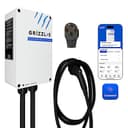
Grizzl-E Classic Connect 40A (J1772)

Grizzl-E Classic Connect 40A (J1772)

The Grizzl-E Classic with a radio in it: the same made-in-Canada metal box, the same UL Type 4 indoor/outdoor rating and the same 25 ft cable, now with Wi-Fi scheduling and 16–40A adjustment. The adjustment is the upgrade worth paying for, because it lets one charger fit whatever circuit your panel can actually spare. The connectivity is the part to think twice about — this line's reputation was built on having nothing to fail.

If the charger is the limit
$349.99 · View on Amazon

Price as of October 10, 2026. #ad How we’re funded

2
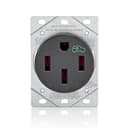
Leviton 1450R Heavy-Duty EV Receptacle (NEMA 14-50)

Leviton 1450R Heavy-Duty EV Receptacle (NEMA 14-50)

If you're plugging a charger into a NEMA 14-50 outlet, buy the industrial-grade receptacle, not the $10 hardware-store one. Continuous 40A EV loads have melted cheap outlets built for ovens that only cycle — this is the one that won't.

If the outlet is the limit
$42.48 · View on Amazon

Price as of October 10, 2026. #ad How we’re funded

3
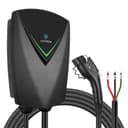
Lectron Nexus Level 2 (48A, hardwired)

Lectron Nexus Level 2 (48A, hardwired)

The same box and the same certification set, hardwired at 48A for 11.5 kW. It is the right buy for a large-battery EV on a panel that can carry a 60A circuit — and the wrong buy for most people, who will pay for amps their car cannot draw and lose the ability to unplug and take it with them.

If your car can genuinely take 48A
$429.99 · View on Amazon

Price as of October 10, 2026. #ad How we’re funded

The three products, in full

#1If the charger is the limit

Grizzl-E Classic Connect 40A (J1772)

The Grizzl-E Classic with a radio in it: the same made-in-Canada metal box, the same UL Type 4 indoor/outdoor rating and the same 25 ft cable, now with Wi-Fi scheduling and 16–40A adjustment. The adjustment is the upgrade worth paying for, because it lets one charger fit whatever circuit your panel can actually spare. The connectivity is the part to think twice about — this line's reputation was built on having nothing to fail.

Strengths

  • 16–40A adjustable output, so one unit fits a 20A, 30A, 40A or 50A circuit — the outgoing Classic was fixed at 40A
  • UL Type 4 indoor/outdoor rated metal enclosure, made in Canada, rated from -30°C to +50°C
  • 25 ft published cable, which is more reach than most wall chargers at any price
  • Plugs into a NEMA 14-50 outlet, so no hardwiring bill and it moves house with you
  • Wi-Fi (2.4 GHz) with scheduling, charging statistics, remote control and utility demand-response participation
  • 3-year warranty as standard, with a 5-year extension sold separately by the manufacturer

Trade-offs

  • Not in EPA's ENERGY STAR certified-EVSE database as of 2 September 2026, although the Classic it succeeds is — check before counting on a rebate that requires ENERGY STAR
  • Wi-Fi is not optional, on a product line whose whole appeal was that there was no app to fail
  • NEMA 14-50 only: the Classic also offered a NEMA 6-50 plug variant, and that option is gone
  • New for December 2025, so there is far less long-term owner feedback than the Classic has
  • United Chargers publishes “40A 10 kW” while the Amazon listing says 9.6 kW; 40A at 240V is 9.6 kW, so size the circuit off 40A, not off either kW figure
ConnectorJ1772
Max output40 A
Max power9.6 kW
Cable length25 ft
InstallPlug-in (NEMA 14-50)
Outdoor ratingUL Type 4 (indoor/outdoor)
Warranty3 years

Spec note. United Chargers publishes: AC Level 2, 40A adjustable down to 16A, NEMA 14-50 plug, J1772 or NACS output cable, 25 ft (7.6 m) cord, UL Type 4 indoor/outdoor rating, UL/cUL listing E510712, Wi-Fi 2.4 GHz with the Grizzl-E Connect app, a 3-year warranty, an operating range of -30°C to +50°C and a 10.25 × 6.25 × 3.75 in enclosure. Two caveats we checked rather than assumed. EPA's ENERGY STAR certified-EVSE database lists eight Grizzl-E models under United Chargers Inc. and the Classic Connect is not among them, so we do not repeat the ENERGY STAR claim that appears on one sibling listing. And ENERGY STAR records the outgoing Classic's cord at 24 ft against the same 25 ft marketing figure, so if reach is tight, plan around 24 ft.

Specs read from the product listing, on September 2, 2026. “Not published” means the manufacturer does not state that figure.

#2If the outlet is the limit

Leviton 1450R Heavy-Duty EV Receptacle (NEMA 14-50)

If you're plugging a charger into a NEMA 14-50 outlet, buy the industrial-grade receptacle, not the $10 hardware-store one. Continuous 40A EV loads have melted cheap outlets built for ovens that only cycle — this is the one that won't.

Strengths

  • Industrial-grade contacts built for continuous, not cyclic, load
  • Dramatically lower failure risk than a bargain receptacle
  • The single cheapest safety upgrade on a plug-in install

Trade-offs

  • Costs several times a basic receptacle — worth every dollar
  • Still must be installed on a correctly sized circuit by an electrician
ConnectorNEMA 14-50
Max output50 A
Max powerNot published
Cable lengthNot published
InstallHardwired receptacle
Outdoor ratingNot published
WarrantyNot published

Spec note. A NEMA 14-50 outlet on a 50A breaker supports a charger drawing up to 40A continuous (the 80% continuous-load rule). Cheap 'residential' 14-50 outlets are a known melting hazard under sustained EV load; industrial-spec receptacles are the fix.

Specs read from the product listing, on July 19, 2026. “Not published” means the manufacturer does not state that figure.

#3If your car can genuinely take 48A

Lectron Nexus Level 2 (48A, hardwired)

The same box and the same certification set, hardwired at 48A for 11.5 kW. It is the right buy for a large-battery EV on a panel that can carry a 60A circuit — and the wrong buy for most people, who will pay for amps their car cannot draw and lose the ability to unplug and take it with them.

Strengths

  • 48A / 11.5 kW for the minority of EVs whose onboard charger can actually accept it
  • Same certification set as the plug-in model: UL 2594, UL 2231, UL 2251, ETL listed, ENERGY STAR
  • Hardwiring removes the NEMA 14-50 receptacle, which is the part of a plug-in install that overheats
  • Same 23 ft cable and IP66 housing

Trade-offs

  • Hardwired only — there is no plug, so moving it later is an electrician's job
  • Needs a 60A dedicated circuit, which plenty of 100A panels cannot spare
  • Most EVs sold in the US cap AC charging below 48A, so the headroom is often unusable
  • Amazon stock on this variant read as a low remaining count when we checked, so availability may be patchy
ConnectorJ1772
Max output48 A
Max power11.5 kW
Cable length23 ft
InstallHardwired only
Outdoor ratingIP66 (indoor/outdoor)
Warranty3 years

Spec note. Lectron publishes 48A at 240V (11.5 kW), hardwired only, with the same 23 ft cable, IP66 housing, 3-year warranty and UL 2594 / UL 2231 / UL 2251 testing with ETL listing as the 40A model. EPA's ENERGY STAR certified-EVSE database carries it as LECHGNexusHWJ1772 at 48A / 11.52 kW, 8 AWG, network capability 'No', output cord 22 ft. A 48A continuous load requires a 60A circuit under the 80% rule.

Specs read from the product listing, on August 26, 2026. “Not published” means the manufacturer does not state that figure.

General guidance, not electrical advice. Amp & Adapter is written by an EV-charging enthusiast, not a licensed electrician. Circuit sizing, breakers and hardwired installs must be done by a qualified electrician to local code — the figures here are for planning a purchase, not a wiring job.

Frequently asked questions

Why is my EV charging slower than the charger's rating?

Almost always because the car's onboard charger is the lower of the two numbers. The onboard charger is the AC-to-DC converter inside the vehicle, and it sets the real ceiling: Kia publishes 10.9 kW for the 2026 EV6, Nissan publishes 7.2 kW for the 2026 Leaf, and BMW builds its own home equipment around 9.6 kW. A 48-amp wall charger cannot push a 7.2 kW car past 7.2 kW.

How do I find out my car's onboard charger rating?

Check the owner's manual charging section for 'onboard charger' or 'maximum AC charging power', or the manufacturer's specification page. Failing that, plug into any 240V charger and read the charging power the car reports on its own screen or app — that is the measured ceiling for your actual vehicle.

Why did my charger suddenly get slower than it used to be?

A change over time points at four things rather than at the car's fixed rating: cold weather (energy going into conditioning the pack rather than filling it), a schedule or charge limit that got set in the car or the app, utility managed charging or load management throttling the session, or a degrading connection. The last one matters most — check the plug and receptacle for heat.

Does cold weather make home charging slower?

Yes, and more than people expect. A cold pack accepts charge more slowly and some of the power goes to warming the battery rather than filling it, so the kWh reaching the battery over a given hour drops. On Level 1 this can swallow most of the charging rate. The effect is temporary and does no harm.

Will a bigger charger fix slow charging?

Only if the charger was actually the constraint. If your car accepts 7.2 kW and your charger delivers 9.6 kW, a 48-amp unit changes nothing and costs you a 60-amp circuit. Establish the car's ceiling first, then compare it against what your charger is set to — in that order.

Can a bad outlet make charging slow?

It can make it stop, and it can make it dangerous before it makes it slow. A worn NEMA 14-50 receptacle carrying 40 amps continuously develops resistance at the contacts, which produces heat; chargers may back off or fault, and a cheap residential-grade receptacle under sustained EV load is a known melting hazard. Heat or discolouration at the plug is a stop-and-replace condition, not a performance problem to tune around.

Sources

  • U.S. DOE Alternative Fuels Data Center — Charging Electric Vehicles at Home — DOE guidance on Level 1 vs Level 2 home charging, 120V/240V service and installation (accessed July 19, 2026)
  • Kia America — EV6 Specs & Compare — Kia's own specification table for the 2026 EV6: "Onboard Charger Power: 10.9 kW" on every trim, "North American Charging System (NACS)" as the charge port on every trim, a 63.0 kWh battery on Light and 84.0 kWh on Light Long Range, Wind and GT-Line, and 240V charge times quoted against an 11 kW EVSE of "Approx. 5 hrs. and 40 min." (Light) and "Approx. 7 hrs. 20 min." (the 84.0 kWh trims) (accessed October 5, 2026)
  • Nissan USA Newsroom — 2026 Nissan LEAF Press Kit — Nissan's own release for the redesigned Leaf: a 7.2 kW onboard charger standard on S+, SV+ and PLATINUM+, a 75-kWh liquid-cooled pack, "a familiar J1772 charge port on the driver's-side fender allows for plugging in at home and many Level 2 public chargers", "the NACS fast charge port on the passenger-side fender unlocks the faster speeds of over 20,000 Tesla Superchargers", DC fast charging from 10% to 80% in 35 minutes at up to 150 kW, 303/288/259 miles of range by trim, V2L of 1,500 watts that "requires adapter for exterior J1772 port", a portable charge cable (120V / 240V EVSE) as standard equipment, and a 240V charging time still listed as TBD (accessed September 25, 2026)
  • Nissan USA Newsroom — 2025 Nissan LEAF Press Kit — Nissan's own release for the outgoing Leaf: a "6.6 kW onboard charger (6.0 kW output)", a 40 kWh battery on the S and 60 kWh on the SV PLUS (149 and 212 miles), an estimated 240V charging time of "~ 11.5 hours", quick charge to 80% in 40 minutes (S) or 60 minutes (SV PLUS), and a portable charge cable (120V / 240V EVSE) in the standard equipment list (accessed September 25, 2026)
  • BMW USA FAQ — BMW i4: high-voltage battery charging — BMW's i4 charging article: the car can "charge at up to 9.6kW (enough to fully charge your vehicle overnight)" on a 240V, 40A circuit using the NEMA 14-50 adapter, and the BMW Wallbox provides "Level 2 charging of up to 9.6 kW". It gives no AC charge-time figure in hours and does not state the vehicle connector type (accessed October 11, 2026)
  • Volkswagen of America — 2026 ID.4 — Volkswagen's own ID.4 model page: AC charging "up to 11 kW with the available home wall charger", a full charge from a completely empty battery quoted as taking "up to 8 hours" on that charger, and EPA range of 291 miles (ID.4 Pro and Pro S) and 263 miles (AWD Pro, AWD Pro S and AWD Pro S Plus). The page does not state the charge-port connector type (accessed October 5, 2026)
  • Tesla — Mobile Connector Gen 3 Owner's Manual (North America) — Tesla's published specification for the Mobile Connector: 100-240 volt AC single phase, "Maximum Current: 32A maximum (controlled by the appropriate adapter)", a 20 ft (6 m) cable with adapter installed, Enclosure Type 4X, 5.2 lb (2.4 kg), an operating range of -22°F to +122°F, ventilation not required, and the charging-rate table: 32A / 7.6 kW on NEMA 14-50 and 6-50, 24A / 5.7 kW on 14-30 and 10-30, 16A / 3.8 kW on 6-20, 12A / 2.8 kW on 6-15, 16A / 1.7 kW on 5-20 and 12A / 1.3 kW on 5-15 (accessed September 30, 2026)
  • Qmerit — NEMA 14-50 and GFCI Protection for EV Chargers (May 1, 2026) — An installer network's explanation: NEC 210.8(A) requires GFCI protection for 125- through 250-volt garage receptacles, NEC 625.54 requires it for receptacles installed for EV charging, the charger's own ground-fault protection can conflict with an external GFCI, and hardwired chargers are not subject to the 625.54 receptacle requirement (accessed September 18, 2026)

Keep reading