Black Friday & Cyber Monday EV Charger Deals 2026
Black Friday is November 27 and Cyber Monday is November 30. Here is which part of an EV charging setup actually gets cut, which part never does, and whether to buy now or wait — with the live discounts on our picks, checked daily.
How this is funded: we earn a commission if you buy through our links, at no extra cost to you. It never changes which product we recommend, and we’ll tell you plainly when we’d skip one. Full disclosure.
Live reductions on the gear we recommend
Everything below is a reduction the retailer itself is reporting right now, pulled by our daily price check and stamped with the date it was pulled. We never calculate a discount ourselves and we never carry one over from yesterday — if the check stops running, this board empties out rather than going stale.
17 products we recommend are showing a reduced price at the retailer as of September 11, 2026, the 9 deepest shown here. Deepest cut first.
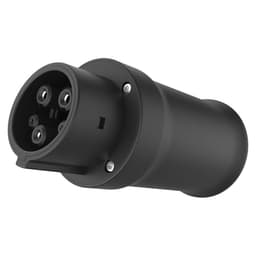
58% off right now
ENERGYGENIE Tesla to J1772 Adapter (80A)
The budget option in the same direction. Check the listing's own struck-through price carefully before treating the percentage as a saving.
Compare it properly
20% off right now
EVDANCE Tesla to J1772 Adapter (80A)
The other direction: a non-Tesla EV on Tesla's AC Destination Chargers, which are all over hotel and restaurant parking lots.
See the adapter roundup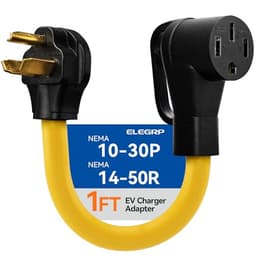
17% off right now
ELEGRP NEMA 10-30P to 14-50R Adapter (1 ft)
Turns an existing dryer outlet into a charging point. One of the few sub-$25 buys that genuinely changes how fast someone can charge.
See the NEMA adapters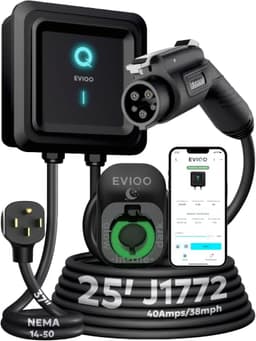
16% off right now
EVIQO Level 2 J1772 Charger (40A, Plug-in)
The 40A plug-in unit we point most single-EV homes at. It runs on the NEMA 14-50 outlet an electrician can fit without rewiring the panel.
See the 40A roundup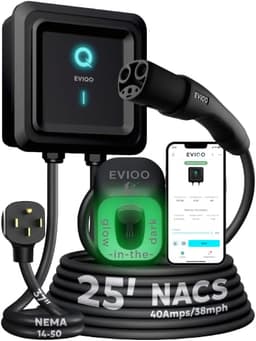
16% off right now
EVIQO NACS Level 2 Charger (40A, Plug-in)
The same charger with a factory NACS handle, for a Tesla or any other NACS-port car — no adapter left dangling off the connector.
See the NACS roundup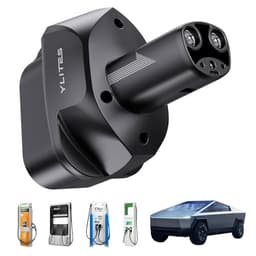
16% off right now
YLITES CCS1 to Tesla Adapter
The cheaper CCS-to-NACS option we would consider, for the same job at a lower price.
See the CCS-to-Tesla roundup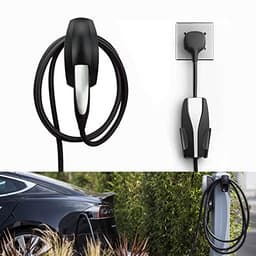
15% off right now
SEVEN SPARTA Charging Cable Holder Wall Mount
A wall mount shaped for the cable rather than the connector — the tidier half of the same job.
See the Tesla accessories
13% off right now
LENZ CCS1 to NACS Adapter
CCS-to-NACS, for a Tesla using a non-Tesla DC fast charger. Useful anywhere the Supercharger network is thin.
See the CCS-to-Tesla roundup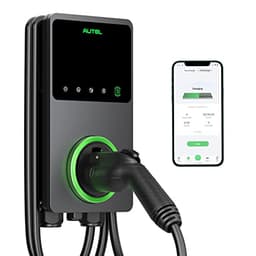
12% off right now
Autel MaxiCharger Home
Our outdoor pick: a 50A unit in a sealed enclosure with a long cable, for a charger that has to live on an exterior wall.
See the outdoor roundup
What actually gets discounted in EV charging
Start with something checkable rather than a prediction. As of September 11, 2026, our daily price check found live prices on 64 of the listings behind the products on this site, and 17 of them were reporting a reduction against a struck-through former price. The other 47 were reporting no reduction at all: either the price today simply is the price, or the listing publishes no former price to compare it against. That second number is the more interesting one, and it is the single most useful thing to understand before November.
A listing that never publishes a list price cannot show you a discount, even when the seller has cut what they charge. There is no badge, no percentage and no struck-through figure — the number simply changes. On a large share of this category, therefore, “is it on sale?” is not a question the page can answer. The only way to know is to have watched what the same listing charged last month. If you are planning to buy a charger in November, start watching the price now; that costs nothing and is worth more than any Black Friday badge.
Where reductions do show up in this category, they cluster at the ends rather than the middle. Accessories and adapters— hooks, holsters, covers, NEMA adapters, connector adapters — move frequently, all year, and often carry the deeper percentages, because the underlying prices are low and there are many sellers competing on the same shelf. Wall chargers move less often, but when they do the dollar amount is far larger, because the base price is ten to thirty times higher. A 10% cut on a $20 hook is two dollars. A 10% cut on a $529 charger is fifty.
What essentially never gets cut
The installation. An electrician’s day rate has no Black Friday, and on a typical hardwired Level 2 job the labor and the circuit work are the larger half of the total — our installation cost guide walks through where the money goes. If you are optimizing the hardware and ignoring the install, you are haggling over the small number.
Anything with one seller and one published price. Where a manufacturer sells its own hardware direct at a single list price, there is no second retailer to undercut it, so the price tends to be the price. The competitive pressure that produces a discount comes from several sellers listing the same product, which is exactly why the accessory shelf moves so much more than the first-party charger does.
Certification. This is not a price, but it behaves like one. A charger that has been through UL or ETL testing costs more to make than one that has not, and the units that get spectacularly cheap in a sale are frequently the ones that name no testing laboratory at all. Our certification guide explains what the marks mean. Treat “no named laboratory” as a specification, not an omission.
Buy now or wait? By product class
We are not going to tell you what will be discounted on November 27, because we do not know and neither does anyone publishing a percentage about it in September. What we can do is tell you where the amount at stake is large enough that waiting is rational, and where it plainly is not.
Accessories under about $25 — buy now
Hooks, holsters, cable bags, adapter cases, charger covers. Even a generous cut on a $17 holster saves a few dollars, and the thing it fixes — a charging cable sitting in grit and standing water on a garage floor — is doing damage in the meantime. Ten weeks of waiting is a bad trade for a saving that small. If you want one, get it.
Connector adapters, roughly $25 to $200 — buy now if there is a need
Adapters are the category where our check finds reductions most consistently, which cuts both ways: it means a November cut is plausible, and it also means the price you see today is often already a reduced one rather than a full-price waiting to fall. If the adapter solves a problem the driver has now — a trip, a station they cannot use, a spare for the one they will inevitably leave behind — buy it. If it is purely speculative, it is a reasonable thing to leave on a watchlist.
One caveat specific to this class: DC fast-charging adapters depend on the vehicle’s own support, which varies by model and model year. A discount is not a reason to buy one for a car you have not checked. Our adapter hub covers which direction goes with which port.
Portable chargers, roughly $100 to $270 — watch, then decide
The middle of the market, and the one class where the decision is genuinely close. A portable Level 1 or Level 2 unit is a real purchase rather than an impulse, and the dollar swing on a reduction is meaningful without being large. If the buyer has a use case in the next two months — a holiday trip, a rental with no charger, a relative’s house — the utility of having it beats the saving. If it is a want rather than a need, this is a sensible thing to wait on.
Level 2 wall chargers, roughly $200 to $900 — wait, with two conditions
This is where the absolute dollars live, so if the purchase is not time-bound, November is a reasonable window to check. Two conditions attach to that, and both have caught people out.
The first is the installation calendar. Electricians get busy at the end of the year, and permits and inspections add weeks in many jurisdictions. A charger bought on Black Friday that cannot be installed until February has saved money on the cheaper half of the job while the car charges from a household outlet for three months. Book the electrician first, then buy the hardware to fit that date.
The second is the rebate. Many utility programs run on annual budgets and stop paying when the year’s funding is exhausted; some also require the charger to be certified, and a handful require pre-approval before you purchase. A rebate on a Level 2 charger is frequently worth more than any retail discount on one, so check your utility before you let a sale date drive the decision. DOE’s utility-incentive list and EPA’s rebate finder are both linked in the sources below.
Anything with a deadline attached — buy now, full stop
A car arriving in December. A trip in three weeks. A gift that has to be wrapped. A sale you have to gamble on is not a discount, it is a bet with a delivery date attached. Buy the thing, and if it happens to get cheaper afterwards, many retailers will honor a price adjustment within a short window if you ask.
How to tell a real deal from a decorated one
The percentage on a listing is a claim about a former price, not about value. The FTC’s guides on deceptive pricing put the test plainly: a former price is a legitimate basis for a comparison only where it is “the actual, bona fide price at which the article was offered to the public on a regular basis for a reasonably substantial period of time.” Where an inflated figure has been set up specifically to enable a large advertised reduction, the guides call the bargain “a false one.”
Three practical checks, in the order we would run them:
- Compare the price to the category, not to the badge. If a 40A charger is $250 and the comparable units are $350 to $450, the number is doing the work. If it is $430 with a large percentage next to it, the badge is doing the work.
- Check what the same listing charged recently. Browser tools and price-history sites exist for this and cost nothing. A price that has bounced between two figures all autumn is not on sale in November; it is simply at the lower of its two settings.
- Read the specification the discount is attached to. A deep cut on a charger that names no testing laboratory, publishes no cable length and gives no enclosure rating is not a cheap version of a good charger. Every product page on this site prints “Not published” where a manufacturer declines to state a figure, precisely so those gaps are visible next to the price.
The price lever that closed this year
If you last looked at home charging before the summer, one number has changed and it is larger than any Black Friday discount. The federal section 30C credit — 30% of the cost of a home charging installation, capped at $1,000 per port — was terminated early. The One Big Beautiful Bill Act moved its end date from December 31, 2032 to June 30, 2026, and the IRS instructions for Form 8911 state it without qualification: the credit cannot be claimed for alternative fuel vehicle refueling property placed in service after that date.
Some consumer-facing pages, including one of EPA’s own, still describe the credit in the present tense. The IRS pages linked below are the authority. Plan any charger purchase this Q4 as if the credit does not exist, because for equipment going in now, it does not.
What is still open is the rebate side: state programs and utility programs, which are unrelated to the federal credit and many of which are still running. Those are the ones worth ten minutes before you spend. They frequently exceed what a retail sale would have saved, and unlike a sale they are not a race against a weekend.
What happens on this page in November
Nothing dramatic, and that is deliberate. The board at the top of this page is not a hand-written list that somebody remembers to update on Black Friday morning. It is generated from the same daily retailer check that runs every day of the year, so on November 27 and November 30 it will show whatever is genuinely reduced on the products we recommend, with the date it was checked printed on it — and it will empty itself again when those reductions end.
There will be no invented percentages here, no “expected” discounts and no countdown to a deal we have not seen. If a product we recommend is cheaper, it will be on the board. If nothing is, the board will say so. That is a less exciting promise than most Black Friday pages make, and it is the only one we can keep.
Our current picks, at whatever they cost today
These do not change because it is November. They are the same recommendations the rest of the site argues in full, each with its live price. If one of them appears on the board at the top of this page, that is the buy.
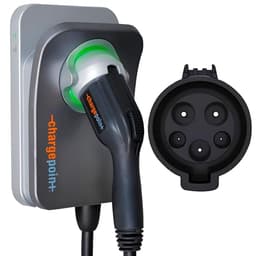
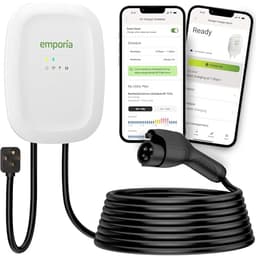
Best home charger overall. Adjustable 16-50A, so it fits the circuit you actually have rather than the one you wish you had.
$528.00 · View on AmazonSee the home charger roundupPrice as of September 11, 2026. #ad How we’re funded
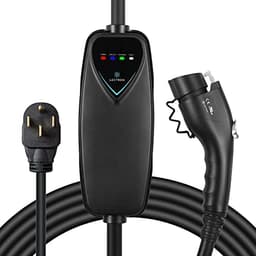
Best 40A plug-in. The amperage most single-EV households should buy, on the outlet most panels can feed.
See the 40A roundupBest value. Plug-in now, hardwired later, without buying a second charger.
$449.00 · View on AmazonSee the budget roundupPrice as of September 11, 2026. #ad How we’re funded
Best portable. The only charger on this list that works at home, at a relative's house and at a rental.
$269.99 · View on AmazonSee the portable roundupPrice as of September 11, 2026. #ad How we’re funded
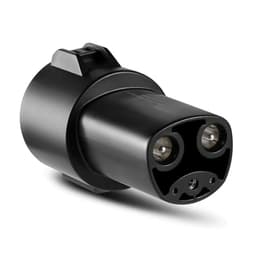
Best J1772-to-Tesla adapter. The spare every NACS driver eventually wishes they had.
$39.99 · View on AmazonSee the adapter roundupPrice as of September 11, 2026. #ad How we’re funded
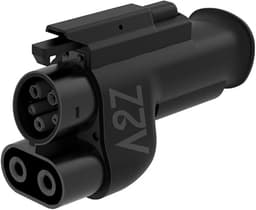
Best NACS-to-CCS adapter. Opens the Supercharger network to a CCS car, where the car supports it.
$169.99 · View on AmazonSee the adapter roundupPrice as of September 11, 2026. #ad How we’re funded
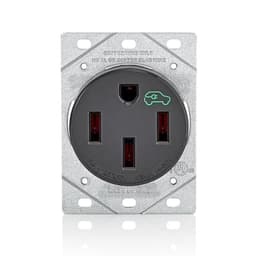
Best NEMA 14-50 outlet. The part of a plug-in install that is genuinely unsafe to buy cheap.
$42.00 · View on AmazonSee the outlet roundupPrice as of September 11, 2026. #ad How we’re funded
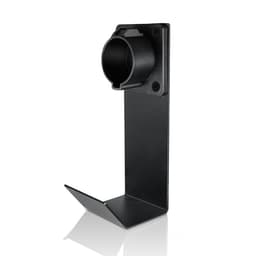
Best holster. Twenty dollars that keeps the connector off a wet, gritty garage floor for the life of the charger.
$19.99 · View on AmazonSee the holster roundupPrice as of September 11, 2026. #ad How we’re funded
Frequently asked questions
When is Black Friday 2026?
Thanksgiving falls on Thursday, November 26, 2026, which puts Black Friday on Friday, November 27 and Cyber Monday on Monday, November 30. In practice most retailers run promotions across the whole week rather than the single day.
Do EV chargers actually go on sale on Black Friday?
Some do and some don't, and we will not pretend to know in advance which. What we can tell you is that reductions in this category appear year-round rather than only in November — our daily check finds them regularly on adapters and accessories — and that the board at the top of this page shows exactly what is reduced today, with the date.
Should I wait until Black Friday to buy a home EV charger?
Only if nothing depends on the timing. A wall charger is where the absolute dollars are big enough for waiting to be worth a gamble. But the installation is usually the larger line item, electricians book out toward the end of the year, and a charger you cannot get installed until February has saved money on the smaller half of the job.
Is there still a federal tax credit on a home EV charger?
No, not for property placed in service after June 30, 2026. The One Big Beautiful Bill Act moved the section 30C termination date from 2032 to that date, and the IRS instructions for Form 8911 say plainly that the credit cannot be claimed for property placed in service after it. Budget any charger purchase this Christmas without it.
How do I tell a real discount from a decorated one?
Check what the struck-through price means. Under the FTC's guides, a former price is only a legitimate comparison where the product was genuinely offered at it, openly and for a reasonably substantial period. A percentage against a list price nobody ever paid is not a saving. Comparing the current price against what the same listing charged a month ago is worth more than any badge on it.
Will you post Black Friday deals on this page?
The board at the top already does it, automatically. It renders whatever our daily retailer check finds reduced on the products we recommend, so it will fill up over Black Friday weekend without anyone editing the page. We will not add deals by hand, because a hand-typed discount is a discount we cannot verify.
What about utility rebates instead of a sale?
For a Level 2 charger they are often worth more than any retail discount, and they are not tied to November. DOE's utility-incentive list and EPA's ZIP-code rebate finder both take a couple of minutes to check. Many programs require a certified charger, so the cheapest uncertified unit in a sale can cost you more than it saves.
Sources
- U.S. Government Publishing Office — 16 CFR Part 233, Guides Against Deceptive Pricing (FTC) — The FTC's rules on "was" pricing. A former price is a legitimate basis for a comparison only where it is "the actual, bona fide price at which the article was offered to the public on a regular basis for a reasonably substantial period of time"; an "artificial, inflated price" set up to enable a big advertised reduction makes the bargain "a false one" (accessed September 12, 2026)
- IRS — Alternative Fuel Vehicle Refueling Property Credit — The IRS's own page for the section 30C credit: at a main home it is 30% of the cost, capped at $1,000 per charging port, and it applies to property bought and placed in service from January 1, 2023 to June 30, 2026 (accessed September 12, 2026)
- IRS — Instructions for Form 8911 (rev. 12/2025) — The termination itself, in the IRS's words: the One Big Beautiful Bill Act (P.L. 119-21) moved the section 30C end date from December 31, 2032 to June 30, 2026, and "You can't claim the credit for alternative fuel vehicle refueling property placed in service after June 30, 2026" (accessed September 12, 2026)
- U.S. DOE Alternative Fuels Data Center — Utility Incentives — DOE's catalog of utility programs by customer type: Level 2 charger purchase and installation rebates, make-ready wiring rebates, EV time-of-use rates and managed-charging incentives (accessed September 12, 2026)
- EPA ENERGY STAR — Rebate Finder — ZIP-code search for local rebates and offers on ENERGY STAR certified products, EV chargers included (accessed September 12, 2026)
- EPA ENERGY STAR — Electric Vehicle Chargers — ENERGY STAR on certified EV chargers, safety certification and standby energy use (accessed July 19, 2026)
- U.S. DOE Alternative Fuels Data Center — Charging Electric Vehicles at Home — DOE guidance on Level 1 vs Level 2 home charging, 120V/240V service and installation (accessed July 19, 2026)
Keep reading
EV charging gift guides
The other half of this section — presents sorted by who you are buying for and what you want to spend.
See the gift guidesBest home EV chargers
The roundup behind most of the picks above, with the circuit-size math for each one shown.
See the roundupWhat an EV charger install actually costs
The line item that does not go on sale, and the reason a November hardware deal can be the smaller saving.
Read the cost guideUL, ETL and ENERGY STAR explained
Why the certification on the box decides whether a cheap sale charger still qualifies for a rebate.
Read the guideBest EV charging adapters
The category where our daily check finds reductions most often, all year rather than only in November.
See all adaptersBest EV gifts under $150
If the purchase is a present rather than an upgrade, start here instead.
See the picks