How to choose without asking and ruining the surprise
One question answers almost everything: what does the charge port look like? You can see it in a photo, or by walking past the car.
A Tesla or other NACS port is small and round-ish with a distinctive flat-topped shape. A J1772 port is larger, with a round upper section and a flattened bottom, and it is what almost every non-Tesla EV uses for AC charging in North America. That single observation tells you which adapters are relevant and which are useless. Our connector guide has pictures-in-words if you want to be certain.
If you cannot check at all, buy from the connector-agnostic picks: the hook and the holster work with any cable, and the Level 1 charger works with any car that has a J1772 port, which is most non-Tesla EVs — and works with a Tesla via the adapter that came with the car.
Shopping by recipient, or by budget
This page is the general list — the one to use when you know very little about the car. If you know more than that, there is a narrower list. We have separate guides for Tesla and other NACS owners, for someone who has just taken delivery of their first EV, and for drivers who take long road trips. If the budget is the fixed part rather than the recipient, the same thinking is sorted by price under $50 and under $150. And if the timing is flexible, our Black Friday and Cyber Monday page shows which of these is actually reduced today rather than which one a badge says is.
Under $20: the ones that punch above their price
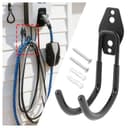
A cable hookis the single best cheap gift for an EV owner, and it is the one most of them have not got around to buying. It stops the charging cable living on the garage floor, which is where cables collect grit, get driven over and sit in salty winter water. It works with any charger, any car, any cable. If you want it to look like more than a hook, buy two — a 25 ft cable genuinely wants two, and it still costs very little.
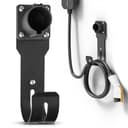
A connector holster is the companion piece: the dock the connector head clicks into so the business end is off the ground. Combination units do both jobs. Our cable organizer roundup and holster roundup cover the category properly.
Under $50: fixes for a specific annoyance
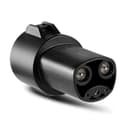
If they drive a Tesla, a spare J1772 adapter is a genuinely good present. Their car came with one, which means they have exactly one, which means they will eventually leave it at a charging station. A spare in the glovebox is the kind of thing people are pleased to own and never buy for themselves. See our J1772-to-Tesla roundup.
If they drive a non-Tesla EV, the equivalent is a Tesla-to-J1772 adapter, which opens Tesla Destination Chargers at hotels and restaurants to their car. Both are AC adapters — neither enables Supercharging, and you should be skeptical of anything claiming otherwise.
The bigger gift
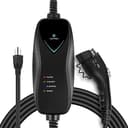
A certified Level 1 chargeris the most useful larger present on this list, because it is the thing an EV owner benefits from without any electrical work. It lives in the trunk and turns any household outlet into a charging point — a relative’s house, a holiday rental, a workplace parking lot with a sympathetic facilities manager.
Buy a certified one. This matters more than usual: a Level 1 charger sits in a household receptacle drawing current for ten or twelve hours at a time, unattended. A unit that has been through UL or ETL testing has been evaluated for that duty; one that names no laboratory has not. Our Level 1 roundup explains what to look for and how slow Level 1 honestly is.
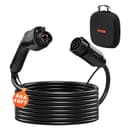
An extension cableis the other strong option if you happen to know their charger will not quite reach — a very common complaint, and one people put up with for years. The amp rating has to match the charger, so this one needs a little inside knowledge; our cables and extensions guide covers what matters.
What not to buy
A Level 2 home charger.Tempting, and almost always wrong. The right unit depends on their panel, their circuit, their parking arrangement and whether they can even install one where they live. The install typically costs more than the charger. If you want to contribute to one, contribute to the install rather than picking the hardware — our home charger roundup is a better present than a box they have to return.
A DC fast-charging adapter unless you know precisely what they drive and that it is supported. These depend on vehicle compatibility that varies by model and year, and an unsupported car simply fails the handshake.
Anything claiming to make charging faster.Charging speed is set by the circuit, the charger and the car’s onboard hardware. No accessory changes that, and products implying otherwise are misrepresenting what they do.